Melissa Nicolas - Böcker
Visar alla böcker från författaren Melissa Nicolas. Handla med fri frakt och snabb leverans.
4 produkter
4 produkter
2 096 kr
Skickas inom 10-15 vardagar
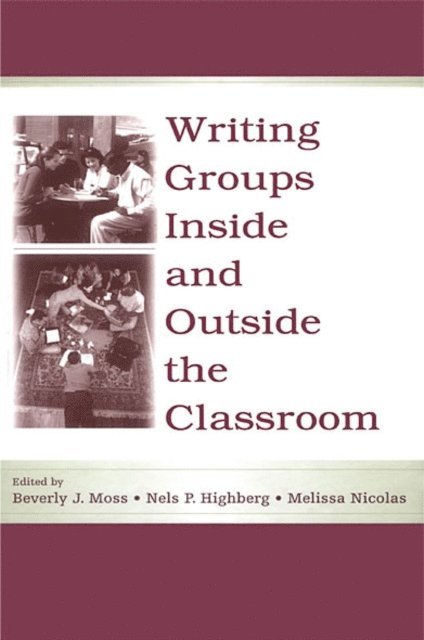
This unique collection considers the nature of writing groups inside and outside the academic environment. Exploring writing groups as contextual literacy events, editors Beverly J. Moss, Nels P. Highberg, and Melissa Nicolas bring together contributors to document and reflect on the various types of collaborations that occur in writing groups in a wide range of settings, both within and outside the academy. The chapters in this volume respond to a variety of questions about writing groups, including: *What is the impact of gender, race, and socioeconomic class on power dynamics in writing groups? *When is a writing group a community and are all writing groups communities? *How does the local community of a writing group impact the participation of group members in other local or global communities? *How does the local community of a writing group impact the participation of group members in other local or global communities? *What actions contribute to a strong community of writers and what actions contribute to the breakdown of community? *When and for whom are writing groups ineffective? *What is it about belonging to a community of writers that makes writing groups appealing to so many within and beyond the academy?Each chapter highlights how writing groups, whether or not they are labeled as such, function in various spaces and locations, and how collaboration works when writers from a variety of backgrounds with diverse interests come together. Writing Groups Inside and Outside the Classroom illustrates that writing groups outside of the academy are worthy of study and serve as important sites of writing and literacy instruction. Offering significant insights into the roles of writing groups in literacy and writing practice, this volume is appropriate for scholars and teachers of writing, rhetoric, composition, and literacy; for writing center administrators and staff; and for writing group participants.
793 kr
Skickas inom 10-15 vardagar
This unique collection considers the nature of writing groups inside and outside the academic environment. Exploring writing groups as contextual literacy events, editors Beverly J. Moss, Nels P. Highberg, and Melissa Nicolas bring together contributors to document and reflect on the various types of collaborations that occur in writing groups in a wide range of settings, both within and outside the academy. The chapters in this volume respond to a variety of questions about writing groups, including: *What is the impact of gender, race, and socioeconomic class on power dynamics in writing groups? *When is a writing group a community and are all writing groups communities? *How does the local community of a writing group impact the participation of group members in other local or global communities? *How does the local community of a writing group impact the participation of group members in other local or global communities? *What actions contribute to a strong community of writers and what actions contribute to the breakdown of community? *When and for whom are writing groups ineffective? *What is it about belonging to a community of writers that makes writing groups appealing to so many within and beyond the academy?Each chapter highlights how writing groups, whether or not they are labeled as such, function in various spaces and locations, and how collaboration works when writers from a variety of backgrounds with diverse interests come together. Writing Groups Inside and Outside the Classroom illustrates that writing groups outside of the academy are worthy of study and serve as important sites of writing and literacy instruction. Offering significant insights into the roles of writing groups in literacy and writing practice, this volume is appropriate for scholars and teachers of writing, rhetoric, composition, and literacy; for writing center administrators and staff; and for writing group participants.
448 kr
Skickas inom 5-8 vardagar
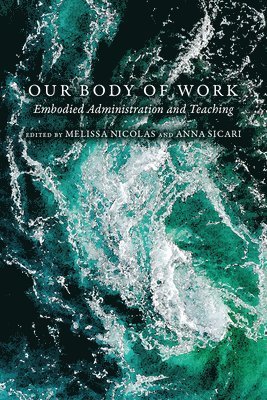
Our Body of Work invites administrators and teachers to consider how physical bodies inform everyday work and labor as well as research and administrative practices in writing programs. Combining academic and personal essays from a wide array of voices, it opens a meaningful discussion about the physicality of bodily experiences in the academy. Open exchanges enable complex and nuanced conversations about intersectionality and how racism, sexism, classism, and ableism (among other “isms”) create systems of power. Contributors examine how these conversations are framed around work, practices, policies, and research and identify ways to create inclusive, embodied practices in writing programs and classrooms. The collection is organized to maximize representation in the areas of race, gender, identity, ability, and class by featuring scholarly chapters followed by narratively focused interchapters that respond to and engage with the scholarly work. The honest and emotionally powerful stories in Our Body of Work expose problematic and normalizing policies, practices, and procedures and offer diverse theories and methodologies that provide multiple paths for individuals to follow to make the academy more inclusive and welcoming for all bodies. It will be an important resource for researchers, as well a valuable addition to graduate and undergraduate syllabi on embodiment, writing instruction/pedagogy, and WPA work. Contributors: Dena Arendall, Janel Atlas, Hayat Bedaiwi, Elizabeth Boquet, Lauren Brentnell, Triauna Carey, Denise Comer, Joshua Daniel, Michael Faris, Rebecca Gerdes-McClain, Morgan Gross, Nabila Hijazi, Jacquelyn Hoermann-Elliott, Maureen Johnson, Jasmine Kar Tang, Elitza Kotzeva, Michelle LaFrance, Jasmine Lee, Lynn C. Lewis, Mary Lourdes Silva, Rita Malenczyk, Anna Rita Napoleone, Julie Prebel, Rebecca Rodriguez Carey, Ryan Skinnell, Trixie Smith, Stacey Waite, Kelsey Walker, Shannon Walters, Isaac Wang, Jennie Young
318 kr
Skickas inom 5-8 vardagar
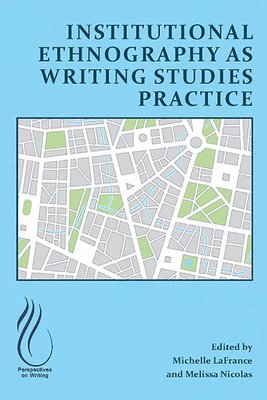
The editors and contributors to this collection offer insights into the use of institutional ethnography for three primary purposes: to investigate and interrogate the cultures of work that are of interest to writing studies researchers, to understand more deeply what constitutes this work, and to consider how work takes shape within institutional contexts. Building on prior conversations about institutional ethnography, critical ethnography, and the complexities of writing programs, the editors and chapter authors consider their application to sites of writing and writing instruction. In doing so, they reveal the power of material conditions, institutional and field-based values, and the cultures of writing to shape how people carry out their everyday work in writing programs and other venues in which writing plays a central role. The findings shared in this edited collection provide insights into how institutional ethnography as a form of inquiry can make important contributions to the fields’ many ongoing conversations about the nature of our work, labor, and other writing-related interests.