
Merve Kütük-Kuris – författare
Visar alla böcker från författaren Merve Kütük-Kuris. Handla med fri frakt och snabb leverans.
2 produkter
2 produkter
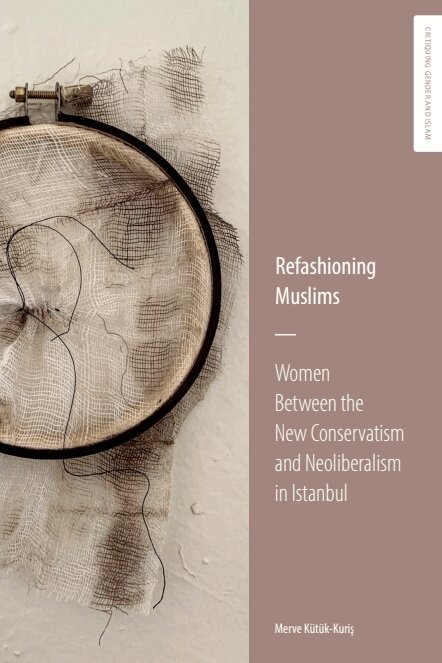
Refashioning Muslims
Women between the New Conservatism and Neoliberalism in Istanbul
Inbunden, Engelska, 2025
1 140 kr
Skickas inom 7-10 vardagar
Refashioning Muslims explores the self-presentations and daily performances of young, bourgeois, fashion-conscious Muslim female entrepreneurs who emerged as new social actors in fields of fashion, leisure, charity and the family during the 2010s. It examines how these Muslim fashionistas significantly bolster governmental capacity to build public consent by projecting images of successful entrepreneurs, benevolent philanthropists and ideal mothers. However, their performances entail moments of imperfection and moral dilemma as they navigate market demands and everyday aspirations often conflicting with Islamic orthodoxy and traditional gender order. The book analyses how Muslim fashionistas cooperate with and challenge religious, classed, and gendered ideals, shaping a neoliberal Muslim subjectivity in the new Turkey. Drawing on Ricoeur's notion of 'narrative identity' and Bourdieu's notion of 'regulated liberties', the book argues that women's subjectivities are guided by the dynamic unity of the narrative configuration of the self, and formed through a complex interplay between autonomy and (self-)regulation.
Refashioning Muslims
Women between the New Conservatism and Neoliberalism in Istanbul
Häftad, Engelska, 2026
297 kr
Kommande
Refashioning Muslims explores the self-presentations and daily performances of young, bourgeois, fashion-conscious Muslim female entrepreneurs who emerged as new social actors in fields of fashion, leisure, charity and the family during the 2010s. It examines how these “Muslim fashionistas” significantly bolster governmental capacity to build public consent by projecting images of successful entrepreneurs, benevolent philanthropists and ideal mothers. However, their performances entail moments of imperfection and moral dilemma as they navigate market demands and everyday aspirations often conflicting with Islamic orthodoxy and traditional gender order.The book analyses how Muslim fashionistas cooperate with and challenge religious, classed, and gendered ideals, shaping a neoliberal Muslim subjectivity in the new Turkey. Drawing on Ricoeur’s notion of ‘narrative identity’ and Bourdieu’s notion of ‘regulated liberties’, the book argues that women’s subjectivities are guided by the dynamic unity of the narrative configuration of the self, and formed through a complex interplay between autonomy and (self-)regulation.