Michael D. Gordin - Böcker
Visar alla böcker från författaren Michael D. Gordin. Handla med fri frakt och snabb leverans.
16 produkter
16 produkter
108 kr
Skickas inom 5-8 vardagar
Everyone has heard of the term "pseudoscience," typically used to describe something that looks like science, but is somehow false, misleading, or unproven. Many would be able to agree on a list of things that fall under its umbrella - astrology, phrenology, UFOlogy, creationism, and eugenics might come to mind. But defining what makes these fields “pseudo” is a far more complex issue. It has proved impossible to come up with a simple criterion that enables us to differentiate pseudoscience from genuine science. Given the virulence of contemporary disputes over the denial of climate change and anti-vaccination movements - both of which display allegations of “pseudoscience” on all sides - there is a clear need to better understand issues of scientific demarcation.Pseudoscience: A Very Short Introduction explores the philosophical and historical attempts to address this problem of demarcation. This book argues that by understanding doctrines that are often seen as antithetical to science, we can learn a great deal about how science operated in the past and does today. This exploration raises several questions: How does a doctrine become demonized as pseudoscientific? Who has the authority to make these pronouncements? How is the status of science shaped by political or cultural contexts? How does pseudoscience differ from scientific fraud?Michael D. Gordin both answers these questions and guides readers along a bewildering array of marginalized doctrines, looking at parapsychology (ESP), Lysenkoism, scientific racism, and alchemy, among others, to better understand the struggle to define what science is and is not, and how the controversies have shifted over the centuries. Pseudoscience: A Very Short Introduction provides a historical tour through many of these fringe fields in order to provide tools to think deeply about scientific controversies both in the past and in our present.
194 kr
Skickas
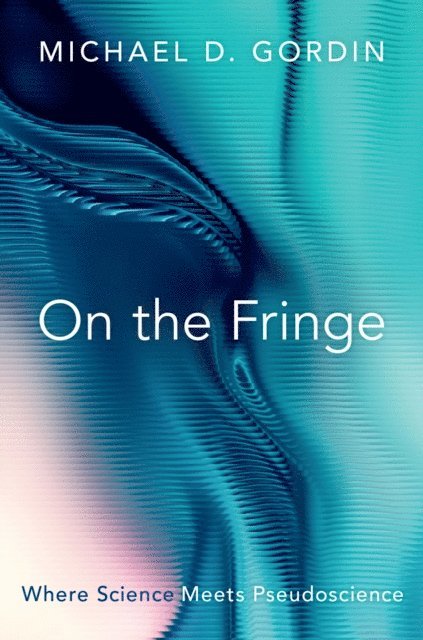
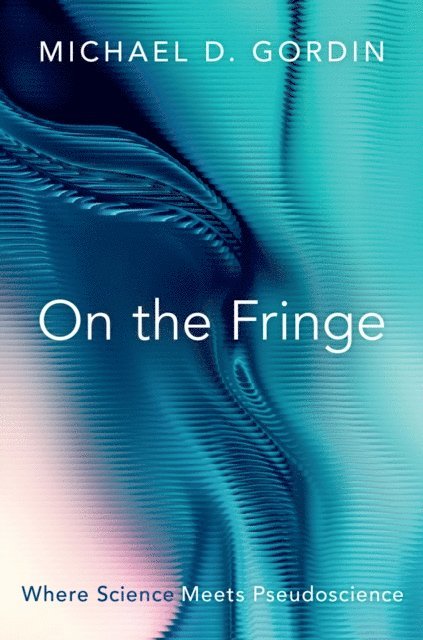
Everyone has heard of the term "pseudoscience", typically used to describe something that looks like science, but is somehow false, misleading, or unproven. Many would be able to agree on a list of things that fall under its umbrella-- astrology, phrenology, UFOlogy, creationism, and eugenics might come to mind. But defining what makes these fields "pseudo" is a far more complex issue. It has proved impossible to come up with a simple criterion that enables us to differentiate pseudoscience from genuine science. Given the virulence of contemporary disputes over the denial of climate change and anti-vaccination movements--both of which display allegations of "pseudoscience" on all sides-- there is a clear need to better understand issues of scientific demarcation.On the Fringe explores the philosophical and historical attempts to address this problem of demarcation. This book argues that by understanding doctrines that are often seen as antithetical to science, we can learn a great deal about how science operated in the past and does today. This exploration raises several questions: How does a doctrine become demonized as pseudoscientific? Who has the authority to make these pronouncements? How is the status of science shaped by political or cultural contexts? How does pseudoscience differ from scientific fraud?Michael D. Gordin both answers these questions and guides readers along a bewildering array of marginalized doctrines, looking at parapsychology (ESP), Lysenkoism, scientific racism, and alchemy, among others, to better understand the struggle to define what science is and is not, and how the controversies have shifted over the centuries. On the Fringe provides a historical tour through many of these fringe fields in order to provide tools to think deeply about scientific controversies both in the past and in our present.
163 kr
Skickas
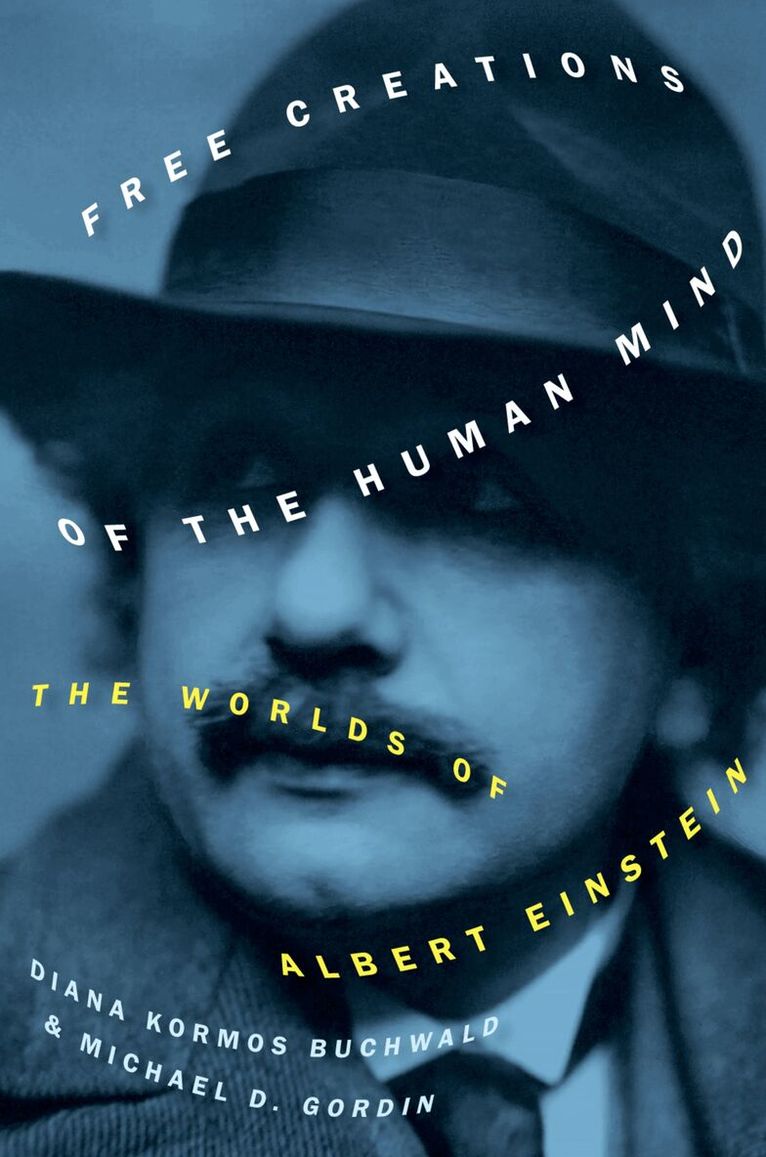
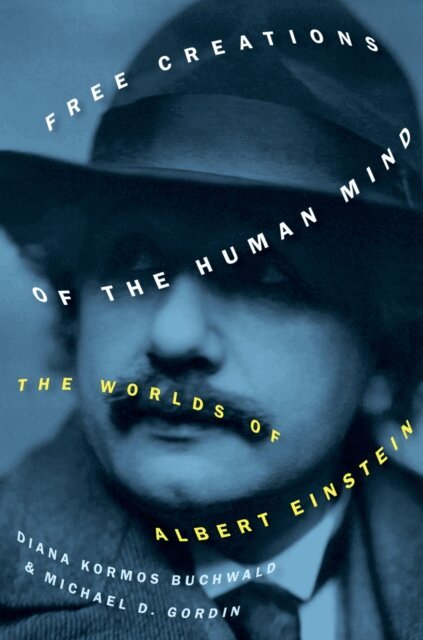
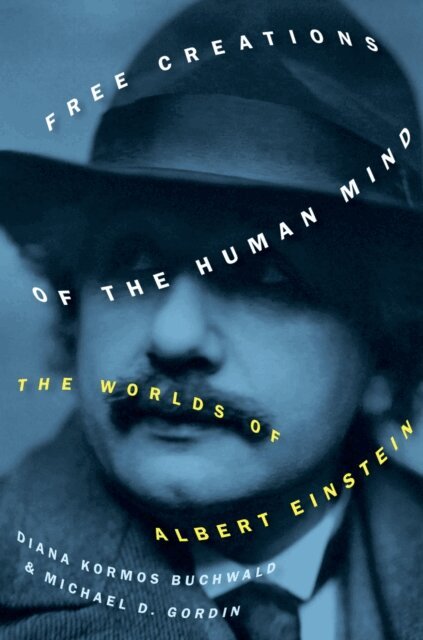
A nuanced portrait of Albert Einstein, a world citizen pivotally engaged in politics, humanitarianism, and science.Albert Einstein (1879-1955) was the most influential scientist of the twentieth century, and his influence shows little sign of abating. His work comprises of much of today's understanding of the structure of the microphysical and cosmic universes. Einstein was a man of the modern world, faced with intellectual and existential challenges of extraordinary magnitude, a working scientist immersed in epochal theories of special relativity, the quantum theory, but also in organizational activities and teaching at Princeton's Institute for Advanced Study. More than any other past scientist, Einstein still pervades popular iconography and has come to symbolize genius, creativity, and innovation infused with humanism, wisdom, and humor. His life is interconnected with so many of the important political and intellectual movements of his era - Zionism, pacifism, Nazism, nuclear weapons, philosophy, civil rights, McCarthyism, the League of Nations, and more- that his views shaped the world he lived in while his persona acquired a formidable patina deposited by generations of apocryphal mythmaking, both during and after his lifetime. Free Creations of the Human Mind: The Worlds of Albert Einstein presents a concise and nuanced account of Einstein's life and work embedded in his intellectual and social contexts, based on the substantial discoveries made through the study of his tremendous personal archive and several generations of assiduous scholarship. By disentangling the public persona from the private man, the rhetorical statement from the heartfelt conviction, this book shows Einstein as a man of the modern world, faced with intellectual and existential challenges of extraordinary magnitude, whose life was framed by turbulent, violent historical events.
173 kr
Skickas inom 7-10 vardagar
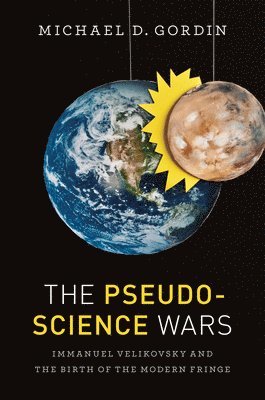
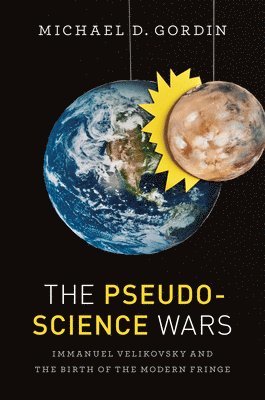
The publication of Immanuel Velikovsky's Worlds in Collision in 1950 was an event: the book was an instant best seller and launched Velikovsky on a long career as a writer and public figure opining on questions of science, history, myth, and more. But at the same time, Velikovsky and his theories - which claimed that ancient mythological and religious writings revealed Earth's hitherto unknown history of natural disasters and cosmic near-misses - were vigorously attacked by scientists, who saw them as unscientific nonsense. In The Pseudoscience Wars, Michael D. Gordin resurrects the largely forgotten figure of Velikovsky and uses his strange career and surprisingly influential writings to explore the changing definitions of the line that separates legitimate scientific inquiry from what is deemed bunk and to show how vital this question remains to us today.
370 kr
Skickas inom 11-20 vardagar
Properly analyzed, the collective mythological and religious writings of humanity reveal that around 1500 BC, a comet swept perilously close to Earth, triggering widespread natural disasters and threatening the destruction of all life before settling into solar orbit as Venus, our nearest planetary neighbor. Sound implausible? Well, from 1950 until the late 1970s, a huge number of people begged to differ, as they devoured Immanuel Velikovsky’s major best-seller, Worlds in Collision, insisting that perhaps this polymathic thinker held the key to a new science and a new history. Scientists, on the other hand, assaulted Velikovsky’s book, his followers, and his press mercilessly from the get-go. In The Pseudoscience Wars, Michael D. Gordin resurrects the largely forgotten figure of Velikovsky and uses his strange career and surprisingly influential writings to explore the changing definitions of the line that separates legitimate scientific inquiry from what is deemed bunk, and to show how vital this question remains to us today. Drawing on a wealth of previously unpublished material from Velikovsky’s personal archives, Gordin presents a behind-the-scenes history of the writer’s career, from his initial burst of success through his growing influence on the counterculture, heated public battles with such luminaries as Carl Sagan, and eventual eclipse. Along the way, he offers fascinating glimpses into the histories and effects of other fringe doctrines, including creationism, Lysenkoism, parapsychology, and more—all of which have surprising connections to Velikovsky’s theories. Science today is hardly universally secure, and scientists seem themselves beset by critics, denialists, and those they label “pseudoscientists”—as seen all too clearly in battles over evolution and climate change. The Pseudoscience Wars simultaneously reveals the surprising Cold War roots of our contemporary dilemma and points readers to a different approach to drawing the line between knowledge and nonsense.
539 kr
Skickas inom 3-6 vardagar
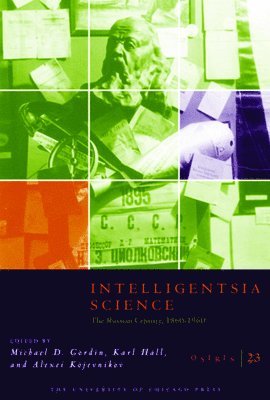
The newest annual volume of "Osiris, Intelligentsia Science" explores the transformations in science in the history of Russia and the Soviet Union, from serfdom to Sputnik, as a series of developments in Russian culture.The contributors argue that it was the generation of the 1860s that transformed "intelligentsia" into a central notion of Russian popular discourse, cementing its association with revolutionary politics - and with science. Science became the cornerstone of the intelligentsia's ideological and political projects, either as an alternative to socialism, or more often as its nominal raison d'etre. The Russian century may in fact be over, but the interrelation of the intelligentsia and science to form "intelligentsia science" proves enduring.
333 kr
Skickas inom 5-8 vardagar
373 kr
Skickas inom 7-10 vardagar
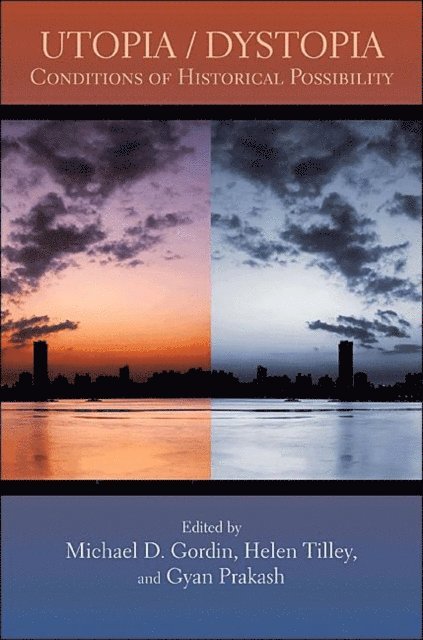
The concepts of utopia and dystopia have received much historical attention. Utopias have traditionally signified the ideal future: large-scale social, political, ethical, and religious spaces that have yet to be realized. Utopia/Dystopia offers a fresh approach to these ideas. Rather than locate utopias in grandiose programs of future totality, the book treats these concepts as historically grounded categories and examines how individuals and groups throughout time have interpreted utopian visions in their daily present, with an eye toward the future. From colonial and postcolonial Africa to pre-Marxist and Stalinist Eastern Europe, from the social life of fossil fuels to dreams of nuclear power, and from everyday politics in contemporary India to imagined architectures of postwar Britain, this interdisciplinary collection provides new understandings of the utopian/dystopian experience.The essays look at such issues as imaginary utopian perspectives leading to the 1856-57 Xhosa Cattle Killing in South Africa, the functioning racist utopia behind the Rhodesian independence movement, the utopia of the peaceful atom and its global dissemination in the mid-1950s, the possibilities for an everyday utopia in modern cities, and how the Stalinist purges of the 1930s served as an extension of the utopian/dystopian relationship. The contributors are Dipesh Chakrabarty, Igal Halfin, Fredric Jameson, John Krige, Timothy Mitchell, Aditya Nigam, David Pinder, Marci Shore, Jennifer Wenzel, and Luise White.
209 kr
Skickas inom 7-10 vardagar
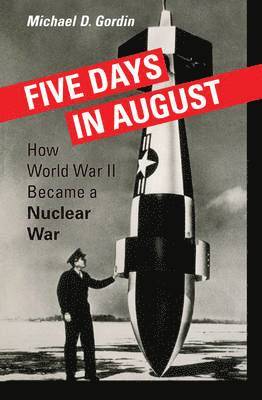
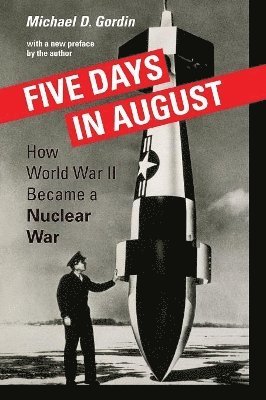
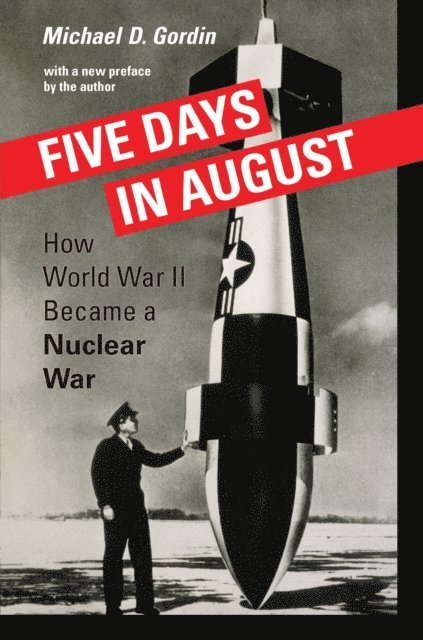
Most Americans believe that the Second World War ended because the two atomic bombs dropped on Japan forced it to surrender. Five Days in August boldly presents a different interpretation: that the military did not clearly understand the atomic bomb's revolutionary strategic potential, that the Allies were almost as stunned by the surrender as the Japanese were by the attack, and that not only had experts planned and fully anticipated the need for a third bomb, they were skeptical about whether the atomic bomb would work at all. With these ideas, Michael Gordin reorients the historical and contemporary conversation about the A-bomb and World War II. Five Days in August explores these and countless other legacies of the atomic bomb in a glaring new light. Daring and iconoclastic, it will result in far-reaching discussions about the significance of the A-bomb, about World War II, and about the moral issues they have spawned.
Well-Ordered Thing
Dmitrii Mendeleev and the Shadow of the Periodic Table, Revised Edition
Häftad, Engelska, 2018
581 kr
Skickas inom 3-6 vardagar
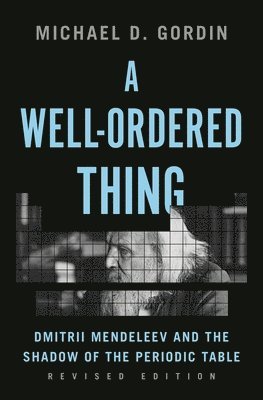
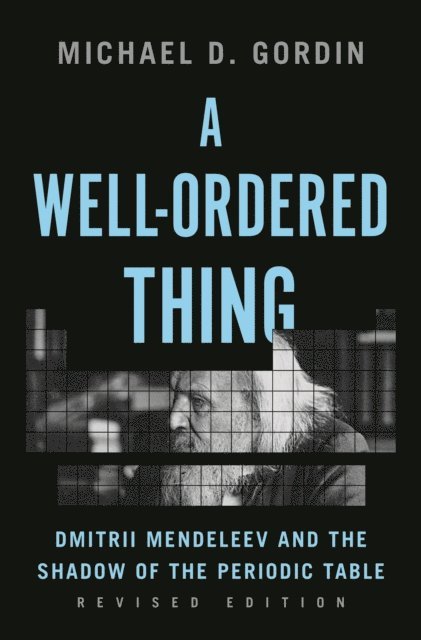
Dmitrii Mendeleev (1834–1907) is a name we recognize, but perhaps only as the creator of the periodic table of elements. Generally, little else has been known about him. A Well-Ordered Thing is an authoritative biography of Mendeleev that draws a multifaceted portrait of his life for the first time. As Michael Gordin reveals, Mendeleev was not only a luminary in the history of science, he was also an astonishingly wide-ranging political and cultural figure. From his attack on Spiritualism to his failed voyage to the Arctic and his near-mythical hot-air balloon trip, this is the story of an extraordinary maverick. The ideals that shaped his work outside science also led Mendeleev to order the elements and, eventually, to engineer one of the most fascinating scientific developments of the nineteenth century. A Well-Ordered Thing is a classic work that tells the story of one of the world’s most important minds.
259 kr
Skickas inom 7-10 vardagar
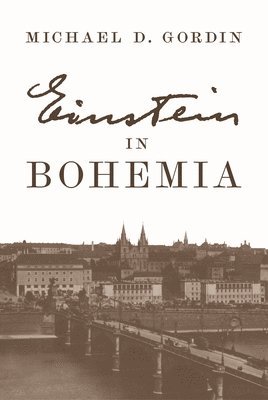
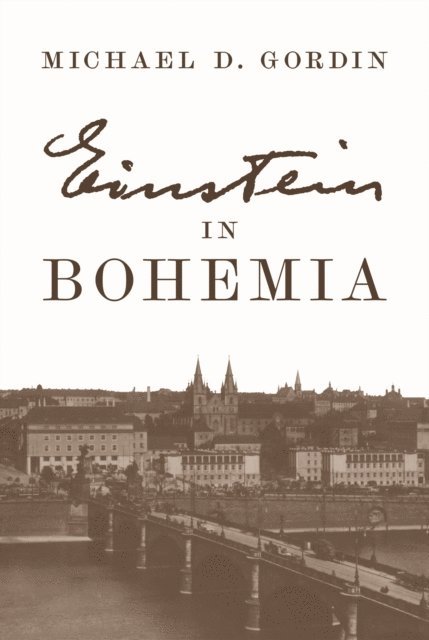
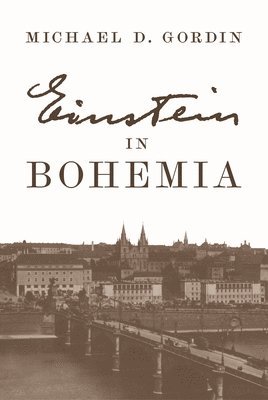
A finely drawn portrait of Einstein's sixteen months in PragueIn the spring of 1911, Albert Einstein moved with his wife and two sons to Prague, the capital of Bohemia, where he accepted a post as a professor of theoretical physics. Though he intended to make Prague his home, he lived there for just sixteen months, an interlude that his biographies typically dismiss as a brief and inconsequential episode. Einstein in Bohemia is a spellbinding portrait of the city that touched Einstein's life in unexpected ways—and of the gifted young scientist who left his mark on the science, literature, and politics of Prague.Michael Gordin's narrative is a masterfully crafted account of a person encountering a particular place at a specific moment in time. Despite being heir to almost a millennium of history, Einstein's Prague was a relatively marginal city within the sprawling Austro-Hungarian Empire. Yet Prague, its history, and its multifaceted culture changed the trajectories of Einstein's personal and scientific life. It was here that his marriage unraveled, where he first began thinking seriously about his Jewish identity, and where he embarked on the project of general relativity. Prague was also where he formed lasting friendships with novelist Max Brod, Zionist intellectual Hugo Bergmann, physicist Philipp Frank, and other important figures.Einstein in Bohemia sheds light on this transformative period of Einstein's life and career, and brings vividly to life a beguiling city in the last years of the Austro-Hungarian Empire.
332 kr
Skickas inom 7-10 vardagar
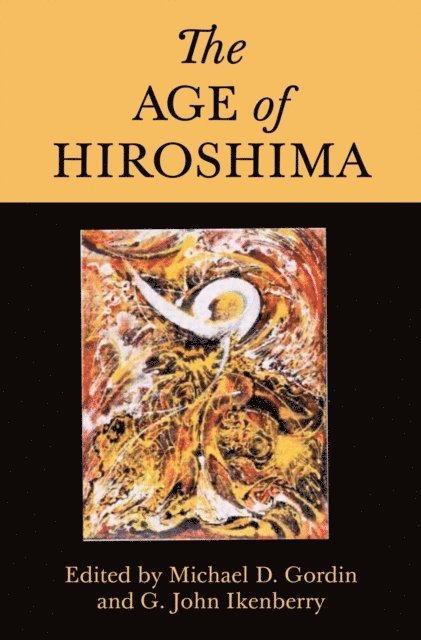
A multifaceted portrait of the Hiroshima bombing and its many legaciesOn August 6, 1945, in the waning days of World War II, the United States dropped an atomic bomb on the Japanese city of Hiroshima. The city's destruction stands as a powerful symbol of nuclear annihilation, but it has also shaped how we think about war and peace, the past and the present, and science and ethics. The Age of Hiroshima traces these complex legacies, exploring how the meanings of Hiroshima have reverberated across the decades and around the world.Michael D. Gordin and G. John Ikenberry bring together leading scholars from disciplines ranging from international relations and political theory to cultural history and science and technology studies, who together provide new perspectives on Hiroshima as both a historical event and a cultural phenomenon. As an event, Hiroshima emerges in the flow of decisions and hard choices surrounding the bombing and its aftermath. As a phenomenon, it marked a revolution in science, politics, and the human imagination—the end of one age and the dawn of another.The Age of Hiroshima reveals how the bombing of Hiroshima gave rise to new conceptions of our world and its precarious interconnectedness, and how we continue to live in its dangerous shadow today.
1 081 kr
Skickas inom 7-10 vardagar
A multifaceted portrait of the Hiroshima bombing and its many legaciesOn August 6, 1945, in the waning days of World War II, the United States dropped an atomic bomb on the Japanese city of Hiroshima. The city's destruction stands as a powerful symbol of nuclear annihilation, but it has also shaped how we think about war and peace, the past and the present, and science and ethics. The Age of Hiroshima traces these complex legacies, exploring how the meanings of Hiroshima have reverberated across the decades and around the world.Michael D. Gordin and G. John Ikenberry bring together leading scholars from disciplines ranging from international relations and political theory to cultural history and science and technology studies, who together provide new perspectives on Hiroshima as both a historical event and a cultural phenomenon. As an event, Hiroshima emerges in the flow of decisions and hard choices surrounding the bombing and its aftermath. As a phenomenon, it marked a revolution in science, politics, and the human imagination—the end of one age and the dawn of another.The Age of Hiroshima reveals how the bombing of Hiroshima gave rise to new conceptions of our world and its precarious interconnectedness, and how we continue to live in its dangerous shadow today.
192 kr
Skickas inom 7-10 vardagar
A finely drawn portrait of Einstein's sixteen months in PragueIn the spring of 1911, Albert Einstein moved with his wife and two sons to Prague, the capital of Bohemia, where he accepted a post as a professor of theoretical physics. Though he intended to make Prague his home, he lived there for just sixteen months, an interlude that his biographies typically dismiss as a brief and inconsequential episode. Einstein in Bohemia is a spellbinding portrait of the city that touched Einstein's life in unexpected ways—and of the gifted young scientist who left his mark on the science, literature, and politics of Prague.Michael Gordin's narrative is a masterfully crafted account of a person encountering a particular place at a specific moment in time. Despite being heir to almost a millennium of history, Einstein's Prague was a relatively marginal city within the sprawling Austro-Hungarian Empire. Yet Prague, its history, and its multifaceted culture changed the trajectories of Einstein's personal and scientific life. It was here that his marriage unraveled, where he first began thinking seriously about his Jewish identity, and where he embarked on the project of general relativity. Prague was also where he formed lasting friendships with novelist Max Brod, Zionist intellectual Hugo Bergmann, physicist Philipp Frank, and other important figures.Einstein in Bohemia sheds light on this transformative period of Einstein's life and career, and brings vividly to life a beguiling city in the last years of the Austro-Hungarian Empire.
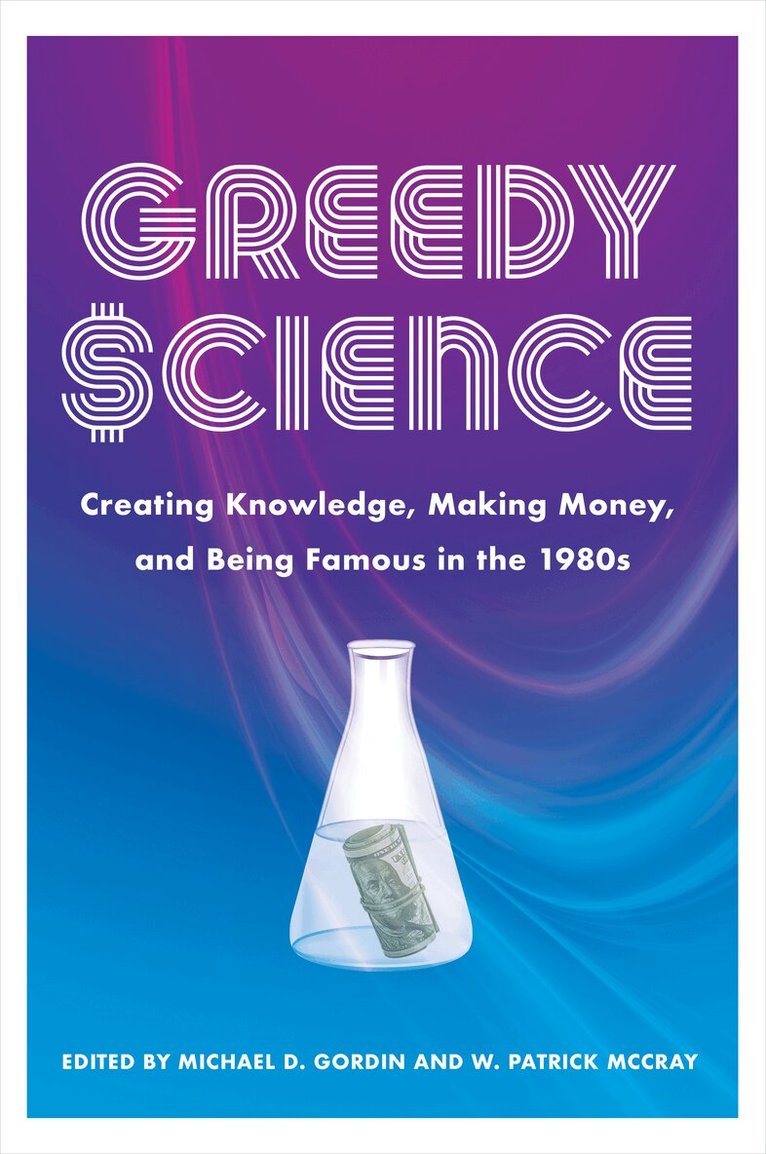
Greedy Science
Creating Knowledge, Making Money, and Being Famous in the 1980s
Inbunden, Engelska, 2025
1 166 kr
Skickas inom 7-10 vardagar
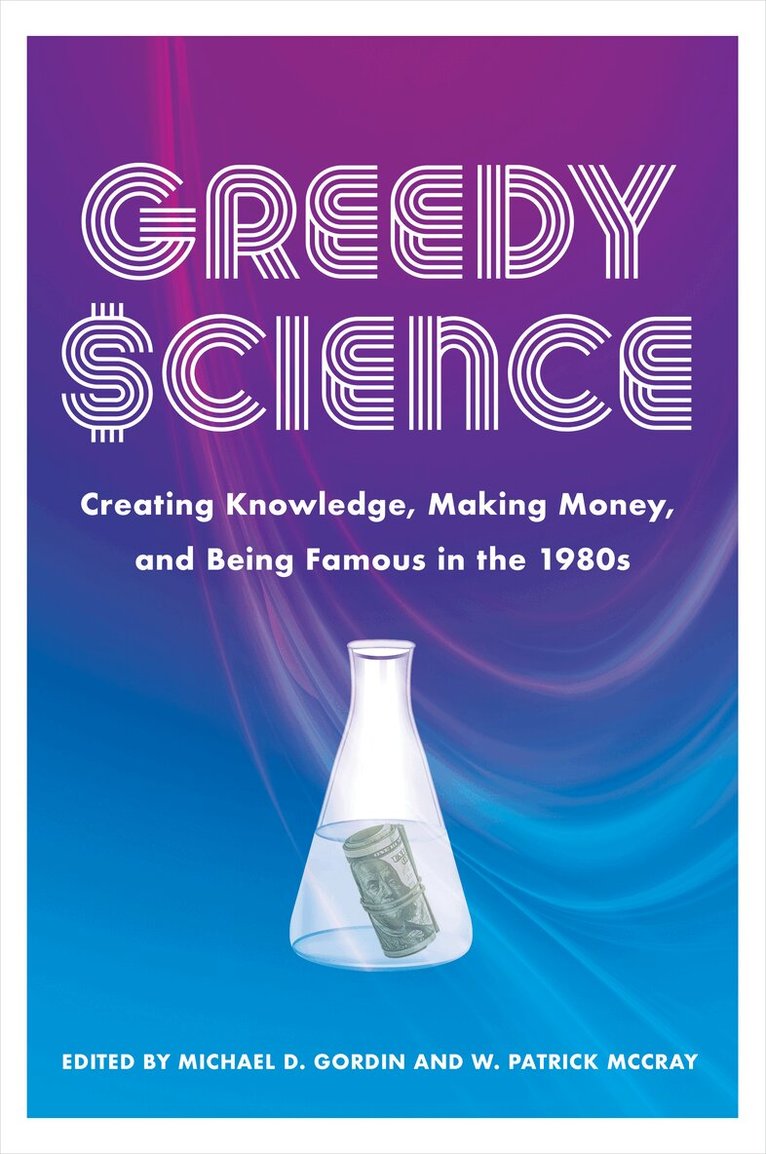
On the transformative role of greed in global science and technology during the 1980s.In the 1980s, a transformative era emerged where profit-driven motives and an entrepreneurial spirit dominated scientific research and technological innovation. This collection of essays, edited by Michael D. Gordin and W. Patrick McCray, examines how greed reshaped the global scientific community through the relentless pursuit of money, fame, and celebrity. Profiting off science and technology was not a new phenomenon, nor were the soaring ambitions of some of its most fervent advocates. However, the global currents of knowledge production in the 1980s saw major cultural and scientific shifts: the increasing frequency of university patenting, the rise of academic entrepreneurship, and collaborations between industries and academia, for example. Greedy Science seeks to survey and understand the full range of these changes. Through insightful essays, contributors examine case studies ranging from the biotech boom—driven by early oil-firm investments—to the speculative market strategies in personal computing and alternative energy. This period saw the rise of the celebrity status of scientists and raised questions about the moral complexities of scientific greed. The authors argue that greed was an ever-present and expansive trait of science during this time, encompassing a host of behaviors such as covetousness, acquisitiveness, rapaciousness, and conspicuous consumption. Greedy Science provides a nuanced analysis of how market dynamics and the quest for personal gain profoundly influenced scientific advancements and public perception during a pivotal decade in science and technology.
533 kr
Skickas inom 7-10 vardagar
On the transformative role of greed in global science and technology during the 1980s.In the 1980s, a transformative era emerged where profit-driven motives and an entrepreneurial spirit dominated scientific research and technological innovation. This collection of essays, edited by Michael D. Gordin and W. Patrick McCray, examines how greed reshaped the global scientific community through the relentless pursuit of money, fame, and celebrity. Profiting off science and technology was not a new phenomenon, nor were the soaring ambitions of some of its most fervent advocates. However, the global currents of knowledge production in the 1980s saw major cultural and scientific shifts: the increasing frequency of university patenting, the rise of academic entrepreneurship, and collaborations between industries and academia, for example. Greedy Science seeks to survey and understand the full range of these changes. Through insightful essays, contributors examine case studies ranging from the biotech boom—driven by early oil-firm investments—to the speculative market strategies in personal computing and alternative energy. This period saw the rise of the celebrity status of scientists and raised questions about the moral complexities of scientific greed. The authors argue that greed was an ever-present and expansive trait of science during this time, encompassing a host of behaviors such as covetousness, acquisitiveness, rapaciousness, and conspicuous consumption. Greedy Science provides a nuanced analysis of how market dynamics and the quest for personal gain profoundly influenced scientific advancements and public perception during a pivotal decade in science and technology.