Diana Kormos Buchwald – författare
Visar alla böcker från författaren Diana Kormos Buchwald. Handla med fri frakt och snabb leverans.
20 produkter
20 produkter
Inbunden, Engelska, 2025
160 kr
Skickas
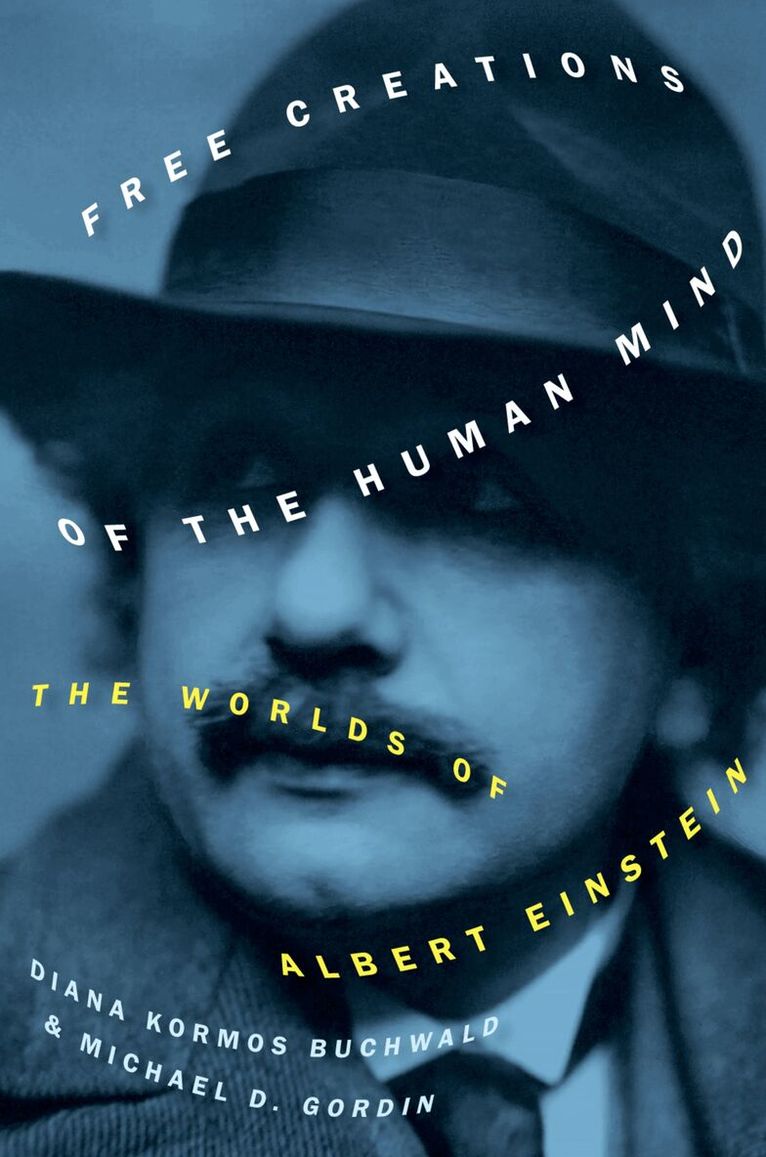
A nuanced portrait of Albert Einstein, a world citizen pivotally engaged in politics, humanitarianism, and science.Albert Einstein (1879-1955) was the most influential scientist of the twentieth century, and his influence shows little sign of abating. His work comprises of much of today's understanding of the structure of the microphysical and cosmic universes. Einstein was a man of the modern world, faced with intellectual and existential challenges of extraordinary magnitude, a working scientist immersed in epochal theories of special relativity, the quantum theory, but also in organizational activities and teaching at Princeton's Institute for Advanced Study. More than any other past scientist, Einstein still pervades popular iconography and has come to symbolize genius, creativity, and innovation infused with humanism, wisdom, and humor. His life is interconnected with so many of the important political and intellectual movements of his era - Zionism, pacifism, Nazism, nuclear weapons, philosophy, civil rights, McCarthyism, the League of Nations, and more- that his views shaped the world he lived in while his persona acquired a formidable patina deposited by generations of apocryphal mythmaking, both during and after his lifetime. Free Creations of the Human Mind: The Worlds of Albert Einstein presents a concise and nuanced account of Einstein's life and work embedded in his intellectual and social contexts, based on the substantial discoveries made through the study of his tremendous personal archive and several generations of assiduous scholarship. By disentangling the public persona from the private man, the rhetorical statement from the heartfelt conviction, this book shows Einstein as a man of the modern world, faced with intellectual and existential challenges of extraordinary magnitude, whose life was framed by turbulent, violent historical events.
Inbunden, Tyska, 2002
2 317 kr
Skickas inom 11-20 vardagar
In the spring of 1919, two British solar eclipse expeditions confirmed the correctness of general relativity theory and propelled Albert Einstein to instant celebrity. Before this major turning point, the majority of Einstein's writings published in this volume dealt with the clarification of general relativistic problems, such as the status of the metric field, the character of gravitational waves, the problem of energy-momentum conservation, and questions of cosmology, such as the nature and size of the universe and the distribution of matter within it. After his rise to international fame, Einstein's publications changed markedly. He faced an increasing demand for popular articles and lectures on relativity, its development and meaning. He also felt compelled to respond to a host of commentators, ranging from skeptical physicists to philosophers trying to reconcile his revolutionary theory with their views. For the first time, he also responded in print to outspoken anti-relativists, some of them fueled by cultural conservatism and, frequently, anti-Semitism.Einstein used his newly won fame to lend prestige to political causes, especially to the reconciliation among European nations and to Zionism. In the early years of Weimar Germany, Einstein spoke out vigorously for the young republic, emphasizing the rights of the individual. He agonized over the misery of the Central Europeans in the grip of starvation and economic collapse, praised the support of individuals and groups such as the Quakers, and championed the cause of Eastern European Jews. His rejection of assimilation, combined with a fierce defense of the right of Jews to higher education, led Einstein to campaign for the establishment of a university in Palestine, the land which he conceived of as a cultural center for all Jews.
Inbunden, Tyska, 2004
2 317 kr
Skickas inom 11-20 vardagar
The present volume, set in the turbulent post-World War I period, finds Einstein awaiting news of the 1919 British eclipse expedition to test the general relativistic prediction of the deflection of starlight by the sun. With the expedition's success, he becomes the first science celebrity of our age. Deeply interested in the other, stellar redshift test of his theory, Einstein supports astronomers engaged in experimental work on the issue. Piqued by early suggestions of a unified field theory, he ponders how to unify gravitation and electromagnetic field theory and also works to resolve contradictions between the new quantum physics and relativity. His open-minded exchanges with colleagues may challenge his later image as the stubborn critic of quantum mechanics. We see Einstein deeply engaged in discussing social and political issues, participating in humanitarian efforts, and intervening on behalf of intellectuals condemned to death after the fall of the Bavarian Soviet republic. He faced anti-Semitic outbursts, reflected increasingly on his own identity as a Jew and assisted in efforts toward the establishment of the Hebrew University.As an internationalist opponent of war, and a German-speaking Swiss citizen whose renown was sealed by the Englishman Eddington's confirmation of relativity, Einstein mitigated postwar hostility toward German scholars. Correspondence with family and friends documents his divorce, remarriage to his cousin, and his closeness to his two sons. Notwithstanding evidence in newly uncovered material concerning efforts to lure Einstein back to Switzerland, and also to the Netherlands, Einstein, entertaining high hopes for the young Weimar Republic, remained in Berlin. This volume reveals new facets of Einstein as he constructively participated in German and European scientific, academic, and cultural life.
Häftad, Engelska, 2006
652 kr
Skickas inom 5-8 vardagar
Since this supplementary paperback includes only select portions of Volume 10, it is not recommended for purchase without the main volume http://www.pupress.princeton.edu/titles/8331.html. The first half of this volume presents a substantial amount of heretofore unavailable correspondence. From among family letters closed for twenty years after the death of Margot Einstein, who donated them to the Albert Einstein Archives in Jerusalem, the volume presents, for the first time, letters written by Einstein's sons, the adolescent Hans Albert and little Eduard, and numerous letters written by Einstein to his cousin and future second wife Elsa Einstein. Combined with newly available correspondence with his close friend Heinrich Zangger, this supplementary correspondence provides vivid and intimate details of Einstein's private life.It documents the emotional bonds to his family and friends; the severe deprivations caused by the war to family members in Berlin and Zurich; the fragile health of Mileva Einstein-Maric during these years of separation and divorce; the worries and joys of caring for the sons; and Einstein's views on German and international politics during this turbulent period. The second half finds Einstein full of optimism about Germany's new democracy. He vigorously promotes general relativity and the endeavors of other scientists toward its further confirmation. He responds to the rising interest in his work among philosophers, as attested by correspondence with M. Schlick, H. Reichenbach, R. Carnap, E. Cassirer, and H. Vaihinger. And yet he is embroiled in vociferous, politically tinged, public attacks on his theory of relativity. He considers leaving Berlin, which would have deprived the Weimar Republic of its most famous scientist. In many letters, colleagues, friends, and unknown admirers offer support. Einstein travels to Leyden, where he is appointed a visiting professor and where, in the circle of friends such as P. Ehrenfest, H. A. Lorentz, and H.Kamerlingh Onnes, he is involved in lively debates on issues related to quantum physics. He visits Oslo and Copenhagen, where he meets with N. Bohr, and receives invitations to the United States, anticipating his first visit to the New World in 1921.
Inbunden, Engelska, 2025
307 kr
Skickas inom 5-8 vardagar
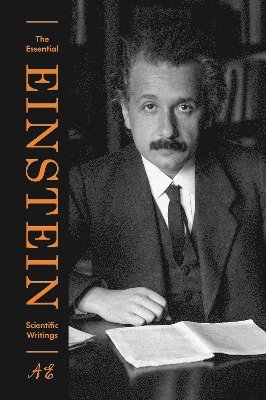
The ultimate collection of Einstein’s scientific writings on everything from statistical mechanics to general relativityThe Essential Einstein: Scientific Writings presents Einstein’s most important physics papers, spanning his groundbreaking contributions to statistical mechanics, quantum theory, and relativity as well as his ambitious yet ultimately unrealized attempts at a general unified field theory. This incisive collection contains works that profoundly influenced the trajectory of modern science. Each piece serves not only as a reflection of his intellectual rigor and creativity but also as a cornerstone of contemporary scientific thought.The Essential Einstein is a two-volume compendium offering general readers and specialists alike a comprehensive resource on the pivotal writings of Albert Einstein. Organized chronologically by leading authorities on Einstein and his work, this collection illuminates the evolution of Einstein’s scientific and humanistic ideas throughout his life. Each selection is accompanied by explanatory notes that detail the work’s background and significance.Together with The Essential Einstein: Public Writings, this authoritative collection invites a deeper engagement with the intellectual legacy and enduring influence of Albert Einstein.
Inbunden, Engelska, 2025
307 kr
Skickas inom 5-8 vardagar
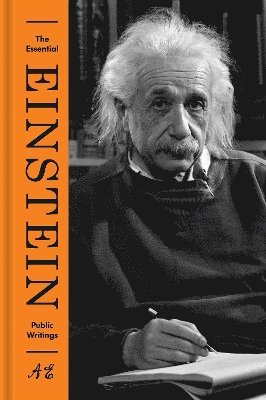
The ultimate collection of Einstein’s public writings on everything from religion and art to pacifism and the atomic bombThe Essential Einstein: Public Writings presents a rich selection of Einstein’s humanistic writings drawn from a diverse array of materials he sanctioned for publication during his lifetime. Distinct from previous collections, this incisive book presents previously excerpted works in their entirety, including key articles, lectures, and speeches. These writings delve into significant topics such as philosophy, religion, and art, but also specific important and often contentious issues in education, politics, disarmament, pacifism, international cooperation, the atomic bomb, and Zionism. Among these works, readers will find the brilliant “Notes for an Autobiography” alongside selected popular science articles, which offer a profound understanding of Einstein’s ethical and political worldview.The Essential Einstein is a two-volume compendium offering general readers and specialists alike a comprehensive resource on the pivotal writings of Albert Einstein. Organized chronologically by leading authorities on Einstein and his work, this collection illuminates the evolution of Einstein’s scientific and humanistic ideas throughout his life. Each selection is accompanied by explanatory notes that detail the work’s background and significance.Together with The Essential Einstein: Scientific Writings, this authoritative collection invites a deeper engagement with the intellectual legacy and enduring influence of Albert Einstein.
Inbunden, Engelska, 2009
1 642 kr
Skickas inom 5-8 vardagar
This index volume provides quick access to the most authoritative compilation of documents and information concerning Einstein's work and correspondence for the first half of his life. It offers readers a Cumulative Index to the first ten volumes of the collected papers, the first complete bibliography of Einstein's scientific and nonscientific writings until 1921, and a succinct biographical time line. This volume is an invaluable research tool for delving into Einstein's written legacy; his interactions with colleagues, institutions, friends, and family; and his scientific, political, educational, and social activities. Volume 11 presents three important and unique bibliographies: the List of Writings, 1891-1921; the Einstein Bibliography, 1901-1921; and a Cumulative Bibliography and Index of Citations for Volumes 1-10. The List of Writings includes all of Einstein's manuscripts that remained unpublished by 1921, while the Einstein Bibliography includes documents that were republished during this period. The Cumulative Bibliography and Index of Citations lists all literature written by authors cited in at least one of the first ten volumes of the series.This volume also contains two complete lists of Einstein's correspondence up through 1920, and a Chronology of Einstein's life for the years 1879-1921. The first list presents the correspondence in chronological order, while the second list presents the correspondence in alphabetical order by correspondent. The indexes and bibliographies implicitly correct inconsistencies and errata across the different volumes. Other corrections are explicitly collected in a List of Errata for the first ten volumes of the series.
Inbunden, Tyska, 2009
1 611 kr
Skickas inom 5-8 vardagar
In this latest volume, Einstein's visible public persona is amply documented in his correspondence, honors and prizes, lectures and travels, articles, and the many solicitations asking him to join public initiatives. Einstein joins a Zionist fundraising mission led by Ch. Weizmann, and he visits the United States for the first time. Einstein travels to major cities, including New York, Boston, and Chicago, and he delivers his now famous Princeton Lectures. Scientific issues remain at the core of Einstein's preoccupations. Correspondence with N. Bohr, W. Bothe, P. Ehrenfest, H. Geiger, H. A. Lorentz, L. Meitner, and A. Sommerfeld records Einstein's interest in and contributions to the emerging modern quantum theory. He addresses conceptual problems, such as the fundamental nature of light and its emission mechanism, in a proposed experiment with canal rays. Einstein continues to engage in original research, other expert opinions, and patent applications. Throughout the year, Einstein navigates complex territory in his professional and personal life. He travels with his older son to Bologna, yet turns down repeated invitations to Munich. He mends his friendship with M.Born, but receives stinging criticism from F. Haber for traveling to the United States. He supports the nomination of Masaryk for a Nobel Peace Prize, travels to Amsterdam in order to intervene on behalf of Germany at the Paris reparations conference, and assists Russian physicists in their efforts to rebuild and develop Russian science. Einstein's letters reveal his Social Democratic political positions.
Häftad, Engelska, 2009
665 kr
Skickas inom 5-8 vardagar
Every document in The Collected Papers of Albert Einstein appears in the language in which it was written, and this supplementary paperback volume presents the English translations of all non-English materials. This translation does not include notes or annotation of the documentary volume and is not intended for use without the original language documentary edition which provides the extensive editorial commentary necessary for a full historical and scientific understanding of the documents.
Inbunden, Tyska, 2012
1 611 kr
Skickas inom 5-8 vardagar
In April 1922, we find Einstein lecturing in Paris, engaged in reestablishing ties among scientists in former enemy nations. Meanwhile, back in Berlin, political tensions are rising. In June, the brutal murder of his friend, Germany's foreign minister, Walther Rathenau, heavily affects Einstein who, for a while, fears for his own safety and briefly contemplates leaving Berlin and abandoning academic life altogether. When only a few months later it is announced that he will be awarded the Nobel Prize, after more than a decade of nominations, Einstein is on a steamer heading from Europe to Japan. As we learn in this volume, although he knew in advance of the coming prize, he nevertheless embarked on his longest voyage yet. His travel diary, published here for the first time, recounts in poetic prose the hectic schedule on land, the contemplative rest at sea, and his musings on science, philosophy, and art during his first encounter with the Far East, Palestine, and Spain. Einstein's work and intense scientific exchanges--with N. Bohr, P. Ehrenfest, A. Sommerfeld, M. Born, and others--during these fifteen months result in remarkable publications and intellectual developments.A paper written with Ehrenfest shows with uncompromising clarity that the outcome of the recent Stern-Gerlach experiment could not be explained by either classical or quantum theory. In a similar vein, he analyzes the phenomenon of superconductivity. Clearly among the leading quantum theorists, he focuses on its conceptual bases, tirelessly proposing crucial experiments that could decide between classical and quantum physics. We also see foundational interests develop in his concerns with a unified field theory of electromagnetism and gravitation. A translation of selected non-English texts included in Volume 13 is available in paperback at http://press.princeton.edu/titles/9874.html
Häftad, Engelska, 2012
652 kr
Skickas inom 5-8 vardagar
A translation of selected non-English texts included in Volume 13 is available in paperback. Since this supplementary paperback includes only select portions of Volume 13, it is not recommended for purchase without the main volume. Every document in The Collected Papers of Albert Einstein appears in the language in which it was written, and this supplementary paperback volume presents the English translations of select portions of non-English materials in Volume 13. This translation does not include notes or annotation of the documentary volume and is not intended for use without the original language documentary edition which provides the extensive editorial commentary necessary for a full historical and scientific understanding of the documents.
Inbunden, Engelska, 2015
1 611 kr
Skickas inom 5-8 vardagar
The more than one thousand letters and several dozen writings included in this volume cover the years immediately before the final formulation of new quantum mechanics. The discovery of the Compton effect in 1923 vindicates Einstein's light quantum hypothesis. Niels Bohr still criticizes Einstein's conception of light quanta and advances an alternative theory, but Walther Bothe and Hans Geiger perform a difficult experiment that decides in favor of Einstein's theory. At the same time, Satyendranath Bose sends a new quantum theoretical derivation of Planck's law to Einstein and he discovers what is now known as Bose-Einstein condensation. Einstein attempts to reformulate a unified theory of the gravitational and electromagnetic fields. In early November 1923, Einstein flees overnight to the Netherlands in the wake of threats on his life and anti-Semitic rioting in Berlin. He rejoins the International Committee on Intellectual Cooperation in June 1924, and supports the idea of a European union. He joins the board of governors of Hebrew University, which opens in April 1925, and celebrates the event in Buenos Aires while on a seven-week lecture tour of Argentina, Uruguay, and Brazil.During this period, he delivers lectures, meets with heads of state, visits major institutions, and attends receptions hosted by the local Jewish and German communities. He has a serious, but short-lived, falling out with his son Hans Albert and his first wife Mileva Maric-Einstein over how to invest part of the Nobel Prize money and he rescues his sister Maja and her husband from debt on their house. Einstein has a fourteen-month romantic relationship with his secretary, Betty Neumann, which he ends in October 1924.
Inbunden, Engelska, 2018
2 015 kr
Skickas inom 11-20 vardagar
This volume covers one of the most thrilling two-year periods in twentieth-century physics, as matrix mechanics—developed chiefly by W. Heisenberg, M. Born, and P. Jordan—and wave mechanics—developed by E. Schrödinger—supplanted the earlier quantum theory. The almost one hundred writings by Einstein, of which a third have never been published, and the more than thirteen hundred letters show Einstein’s immense productivity and hectic pace of life.Einstein quickly grasps the conceptual peculiarities involved in the new quantum mechanics, such as the difference between Schrödinger’s wave function and a field defined in spacetime, or the emerging statistical interpretation of both matrix and wave mechanics. Inspired by correspondence with G. Y. Rainich, he investigates with Jakob Grommer the problem of motion in general relativity, hoping for a hint at a new avenue to unified field theory.Einstein falls victim to scientific fraud when, in a collaboration with E. Rupp, he becomes convinced that the latter’s experiments, aimed at deciding whether excited atoms emit light instantaneously (in quanta) or in a finite time (in waves), confirm a wave-theoretic explanation.While it was known that the teenage Einstein had been romantically involved with Marie Winteler in 1895, newly discovered documents reveal that his love for Marie was rekindled in 1909–10 while he was still married to Mileva Marić.The 1925 Locarno Treaties renew Einstein’s optimism in European reconciliation. He backs the “International manifesto against compulsory military service” and continues his participation in the League of Nations’ International Committee on Intellectual Cooperation. He remains intensely committed to the shaping of the Hebrew University in Jerusalem, although his enthusiasm for this cause is sorely tested.
Häftad, Engelska, 2018
652 kr
Skickas inom 5-8 vardagar
A translation of selected non-English texts included in Volume 15 is available in paperback. Since this supplementary paperback includes only select portions of Volume 15, it is not recommended for purchase without the main volume.Every document in The Collected Papers of Albert Einstein appears in the language in which it was written, and this supplementary paperback volume presents the English translations of select portions of non-English materials in Volume 15. This translation does not include notes or annotation of the documentary volume and is not intended for use without the original language documentary edition which provides the extensive editorial commentary necessary for a full historical and scientific understanding of the documents.
Inbunden, Engelska, 2021
1 611 kr
Skickas inom 5-8 vardagar
A definitive scholarly edition of the correspondence and papers of Albert EinsteinDuring the period covered by this volume, Einstein aims to discover whether one can derive the electron’s equations of motion directly from the field equations of general relativity, and he embarks on a new approach to unified field theory founded on teleparallel geometry. On these topics, he engages in exchanges with J. Grommer, C. Lanczos, and particularly with C. H. Müntz, and corresponds with mathematicians like R. Weitzenböck and É. Cartan.Einstein attends what will be considered a historic 1927 Solvay Conference where the new quantum mechanics is discussed, but in fact he makes very few remarks.In an important prelude to his eventual emigration to the United States, he is invited in September 1927 to accept a research professorship at Princeton University.Despite the sudden onset of a severe heart ailment in 1928, followed by an almost year-long period of convalescence, Einstein maintains a sustained engagement with scientific work, correspondence, and social and political issues. He publishes many articles and interviews designed for a popular audience and continues various technical preoccupations, including publishing a patent for a novel “people’s” refrigerator and being intimately involved in the design of his famous sailboat.Einstein advocates for domestic legislative reform, gay and minority rights, European rapprochement, and conscientious objection to military service. He resigns from his positions at the Hebrew University. He also tries to avoid the fanfare marking his fiftieth birthday in March 1929 yet is “buried under a paper avalanche” from the tributes.His hiring of Helen Dukas as his assistant, who accompanies Einstein to the end of his life, is of great significance for the ultimate preservation of his written legacy.
Häftad, Engelska, 2021
652 kr
Skickas inom 5-8 vardagar
A translation of selected non-English texts included in Volume 16 is available in paperback. Since this supplementary paperback includes only select portions of Volume 16, it is not recommended for purchase without the main volume.Every document in The Collected Papers of Albert Einstein appears in the language in which it was written, and this supplementary paperback volume presents the English translations of select portions of non-English materials in Volume 16. This translation does not include notes or annotations of the documentary volume and is not intended for use without the original language documentary edition, which provides the extensive editorial commentary necessary for a full historical and scientific understanding of the documents.
Häftad, Engelska, 2024
410 kr
Skickas inom 5-8 vardagar
An English-language edition of selected correspondence and papers of Albert EinsteinA translation of selected non-English texts included in Volume 17 is available in paperback. Since this supplementary paperback includes only select portions of Volume 17, it is not recommended for purchase without the main volume.Every document in The Collected Papers of Albert Einstein appears in the language in which it was written, and this supplementary paperback volume presents the English translations of select portions of non-English materials in Volume 17. This translation does not include notes or annotations of the documentary volume and is not intended for use without the original language documentary edition, which provides the extensive editorial commentary necessary for a full historical and scientific understanding of the documents.
Inbunden, Engelska, 2024
1 619 kr
Skickas inom 5-8 vardagar
A definitive scholarly edition of the correspondence and papers of Albert EinsteinThis volume finds Einstein recovered and traveling again after a prolonged illness, to Paris, London, and Zurich to receive three honorary doctorates; to the Sixth Solvay Congress in Brussels and to Leyden; and to attend the Constituent Meeting of the Jewish Agency Council in Zurich and the twelfth session of the ICIC in Geneva. By the end of the volume, Einstein embarks on a transatlantic voyage for the first time in five years to spend an academic term at the California Institute of Technology in Pasadena.Einstein’s work focuses on the teleparallel approach to unified field theory, on which he engages in intensive correspondence with Élie Cartan and begins his collaboration with Walther Mayer. He also presents popular accounts of his work, surveying the historical progression from classical to twentieth-century physics leading up to the latest developments in unified field theory. He also engages in lively exchanges on both technical and foundational issues in quantum mechanics with W. Pauli, M. Born, M. Schlick, and others.His personal correspondence reflects eventful changes: the Einsteins realize their dream of owning a summer house outside Berlin, Einstein becomes a grandfather, his younger son Eduard commences his university studies and has his first serious mental health crisis, and his younger stepdaughter Margot gets married.Einstein’s ties to the Zionist movement are seriously tested in the wake of the violence that erupts in British Mandate Palestine in 1929, to which he reacts with forceful calls for a genuine symbiosis between Jews and Arabs, proposing the establishment of joint administrative, economic, and social organizations. He warns that without finding “the path to honest cooperation and honest negotiations with the Arabs,” “we [Jews] have learned nothing from our two-thousand-year ordeal and deserve the fate that will befall us.”In Germany, too, Einstein champions democracy in the face of rising support for the Nazi Party, is active on behalf of Jewish refugees, opposes the death penalty, and supports abortion rights and the decriminalization of homosexuality.Einstein promotes pacifism more vigorously. His efforts to promote peace follow three distinct transnational avenues: disarmament, conscientious objection, and apolitical pacifism, aimed “to find practical mechanisms to restrict the nation state.”
Inbunden, Tyska, 2006
1 536 kr
Tillfälligt slut
The first half of this volume presents a substantial amount of heretofore unavailable correspondence. From among family letters closed for twenty years after the death of Margot Einstein, who donated them to the Albert Einstein Archives in Jerusalem, the volume presents, for the first time, letters written by Einstein's sons, the adolescent Hans Albert and little Eduard, and numerous letters written by Einstein to his cousin and future second wife Elsa Einstein. Combined with newly available correspondence with his close friend Heinrich Zangger, this supplementary correspondence provides vivid and intimate details of Einstein's private life. It documents the emotional bonds to his family and friends; the severe deprivations caused by the war to family members in Berlin and Zurich; the fragile health of Mileva Einstein-Maric during these years of separation and divorce; the worries and joys of caring for the sons; and Einstein's views on German and international politics during this turbulent period. The second half finds Einstein full of optimism about Germany's new democracy.He vigorously promotes general relativity and the endeavors of other scientists toward its further confirmation. He responds to the rising interest in his work among philosophers, as attested by correspondence with M. Schlick, H. Reichenbach, R. Carnap, E. Cassirer, and H. Vaihinger. And yet he is embroiled in vociferous, politically tinged, public attacks on his theory of relativity. He considers leaving Berlin, which would have deprived the Weimar Republic of its most famous scientist. In many letters, colleagues, friends, and unknown admirers offer support. Einstein travels to Leyden, where he is appointed a visiting professor and where, in the circle of friends such as P. Ehrenfest, H. A. Lorentz, and H. Kamerlingh Onnes, he is involved in lively debates on issues related to quantum physics. He visits Oslo and Copenhagen, where he meets with N. Bohr, and receives invitations to the United States, anticipating his first visit to the New World in 1921. ENGLISH TRANSLATION: A translation of selected non-English texts included in Volume 10 is available in paperback, http://www.pupress.princeton.edu/titles/8332.html.Since this supplementary paperback includes only select portions of Volume 10, it is not recommended for purchase without the main volume.
Häftad, Engelska, 2015
451 kr
Tillfälligt slut
In the almost one hundred writings and more than one thousand letters included in this volume, Einstein is revealed yet again as the consummate puzzler of myriad scientific problems as well as the invested participant in social and political engagements. He continues to explore the light quantum, whose reality is confirmed by new experiments, and to attempt to formulate a unified theory of gravitation and electromagnetism. He travels to South America, where he lectures widely on relativity, rejoins the International Committee on Intellectual Cooperation, and supports the idea of a European union. Einstein has a fourteen-month romantic relationship with his secretary, Betty Neumann, which ends in October 1924.