W. Patrick McCray – författare
Visar alla böcker från författaren W. Patrick McCray. Handla med fri frakt och snabb leverans.
10 produkter
10 produkter
Inbunden, Engelska, 2016
804 kr
Skickas inom 5-8 vardagar
In his 1969 book The Making of a Counterculture, Theodore Roszak described the youth of the late 1960s as fleeing science “as if from a place inhabited by plague,” and even seeking “subversion of the scientific worldview” itself. Roszak’s view has come to be our own: when we think of the youth movement of the 1960s and early 1970s, we think of a movement that was explicitly anti-scientific in its embrace of alternative spiritualities and communal living. Such a view is far too simple, ignoring the diverse ways in which the era’s countercultures expressed enthusiasm for and involved themselves in science—of a certain type. Rejecting hulking, militarized technical projects like Cold War missiles and mainframes, Boomers and hippies sought a science that was both small-scale and big-picture, as exemplified by the annual workshops on quantum physics at the Esalen Institute in Big Sur, or Timothy Leary’s championing of space exploration as the ultimate “high.” Groovy Science explores the experimentation and eclecticism that marked countercultural science and technology during one of the most colorful periods of American history.
Häftad, Engelska, 2016
241 kr
Skickas inom 5-8 vardagar
In his 1969 book The Making of a Counterculture, Theodore Roszak described the youth of the late 1960s as fleeing science “as if from a place inhabited by plague,” and even seeking “subversion of the scientific worldview” itself. Roszak’s view has come to be our own: when we think of the youth movement of the 1960s and early 1970s, we think of a movement that was explicitly anti-scientific in its embrace of alternative spiritualities and communal living. Such a view is far too simple, ignoring the diverse ways in which the era’s countercultures expressed enthusiasm for and involved themselves in science—of a certain type. Rejecting hulking, militarized technical projects like Cold War missiles and mainframes, Boomers and hippies sought a science that was both small-scale and big-picture, as exemplified by the annual workshops on quantum physics at the Esalen Institute in Big Sur, or Timothy Leary’s championing of space exploration as the ultimate “high.” Groovy Science explores the experimentation and eclecticism that marked countercultural science and technology during one of the most colorful periods of American history.
Häftad, Engelska, 2025
404 kr
Skickas
Häftad, Engelska, 2006
312 kr
Skickas inom 10-15 vardagar
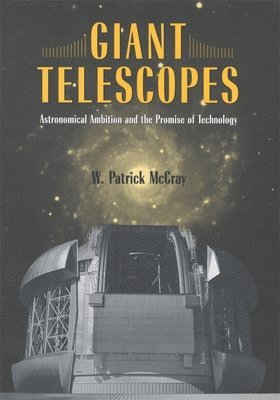
Every night, astronomers use a new generation of giant telescopes at observatories around the world to study phenomena at the forefront of science. By focusing on the history of the Gemini Observatory—twin 8-meter telescopes located on mountain peaks in Hawaii and Chile—Giant Telescopes tells the story behind the planning and construction of modern scientific tools, offering a detailed view of the technological and political transformation of astronomy in the postwar era.Drawing on interviews with participants and archival documents, W. Patrick McCray describes the ambitions and machinations of prominent astronomers, engineers, funding patrons, and politicians in their effort to construct a modern facility for cutting-edge science—and to establish a model for international cooperation in the coming era of “megascience.” His account details the technological, institutional, cultural, and financial challenges that scientists faced while planning and building a new generation of giant telescopes. Besides exploring how and why scientists embraced the promise and potential of new technologies, he considers how these new tools affected what it means to be an astronomer. McCray’s book should interest anyone who desires a deeper understanding of the science, technology, and politics behind finding our place in the universe.
Inbunden, Engelska, 2008
434 kr
Skickas inom 5-8 vardagar
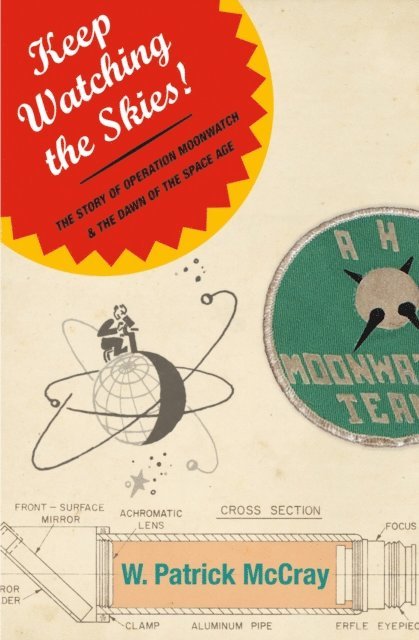
When the Soviets launched Sputnik in 1957, thousands of ordinary people across the globe seized the opportunity to participate in the start of the Space Age. Known as the "Moonwatchers," these largely forgotten citizen-scientists helped professional astronomers by providing critical and otherwise unavailable information about the first satellites. In Keep Watching the Skies!, Patrick McCray tells the story of this network of pioneers who, fueled by civic pride and exhilarated by space exploration, took part in the twentieth century's biggest scientific endeavor. Around the world, thousands of teenagers, homemakers, teachers, amateur astronomers, and other citizens joined Moonwatch teams. Despite their diverse backgrounds and nationalities, they shared a remarkable faith in the transformative power of science--a faith inspired by the Cold War culture in which they lived. Against the backdrop of the space race and technological advancement, ordinary people developed an unprecedented desire to contribute to scientific knowledge and to investigate their place in the cosmos.Using homemade telescopes and other gadgets, Moonwatchers witnessed firsthand the astonishing beginning of the Space Age. In the process, these amateur scientists organized themselves into a worldwide network of satellite spotters that still exists today. Drawing on previously unexamined letters, photos, scrapbooks, and interviews, Keep Watching the Skies! recreates a pivotal event from a perspective never before examined--that of ordinary people who leaped at a chance to take part in the excitement of space exploration.
Inbunden, Engelska, 2012
248 kr
Skickas inom 5-8 vardagar
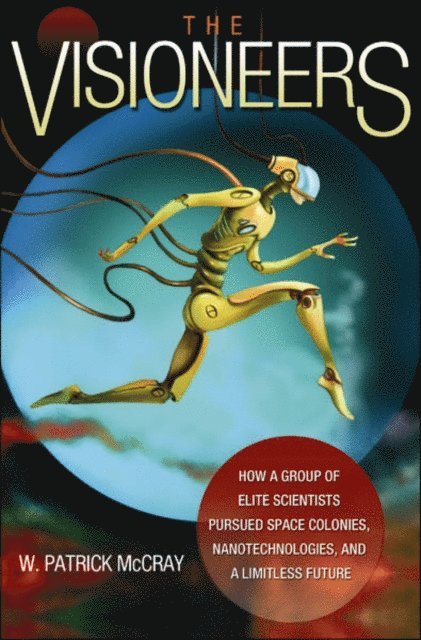
In 1969, Princeton physicist Gerard O'Neill began looking outward to space colonies as the new frontier for humanity's expansion. A decade later, Eric Drexler, an MIT-trained engineer, turned his attention to the molecular world as the place where society's future needs could be met using self-replicating nanoscale machines. These modern utopians predicted that their technologies could transform society as humans mastered the ability to create new worlds, undertook atomic-scale engineering, and, if truly successful, overcame their own biological limits. The Visioneers tells the story of how these scientists and the communities they fostered imagined, designed, and popularized speculative technologies such as space colonies and nanotechnologies. Patrick McCray traces how these visioneers blended countercultural ideals with hard science, entrepreneurship, libertarianism, and unbridled optimism about the future. He shows how they built networks that communicated their ideas to writers, politicians, and corporate leaders. But the visioneers were not immune to failure--or to the lures of profit, celebrity, and hype.O'Neill and Drexler faced difficulty funding their work and overcoming colleagues' skepticism, and saw their ideas co-opted and transformed by Timothy Leary, the scriptwriters of Star Trek, and many others. Ultimately, both men struggled to overcome stigma and ostracism as they tried to unshackle their visioneering from pejorative labels like "fringe" and "pseudoscience." The Visioneers provides a balanced look at the successes and pitfalls they encountered. The book exposes the dangers of promotion--oversimplification, misuse, and misunderstanding--that can plague exploratory science. But above all, it highlights the importance of radical new ideas that inspire us to support cutting-edge research into tomorrow's technologies.
Häftad, Engelska, 2017
257 kr
Skickas inom 5-8 vardagar
In 1969, Princeton physicist Gerard O'Neill began looking outward to space colonies as the new frontier for humanity's expansion. A decade later, Eric Drexler, an MIT-trained engineer, turned his attention to the molecular world as the place where society's future needs could be met using self-replicating nanoscale machines. These modern utopians predicted that their technologies could transform society as humans mastered the ability to create new worlds, undertook atomic-scale engineering, and, if truly successful, overcame their own biological limits. The Visioneers tells the story of how these scientists and the communities they fostered imagined, designed, and popularized speculative technologies such as space colonies and nanotechnologies. Patrick McCray traces how these visioneers blended countercultural ideals with hard science, entrepreneurship, libertarianism, and unbridled optimism about the future. He shows how they built networks that communicated their ideas to writers, politicians, and corporate leaders. But the visioneers were not immune to failure--or to the lures of profit, celebrity, and hype.O'Neill and Drexler faced difficulty funding their work and overcoming colleagues' skepticism, and saw their ideas co-opted and transformed by Timothy Leary, the scriptwriters of Star Trek, and many others. Ultimately, both men struggled to overcome stigma and ostracism as they tried to unshackle their visioneering from pejorative labels like "fringe" and "pseudoscience." The Visioneers provides a balanced look at the successes and pitfalls they encountered. The book exposes the dangers of promotion--oversimplification, misuse, and misunderstanding--that can plague exploratory science. But above all, it highlights the importance of radical new ideas that inspire us to support cutting-edge research into tomorrow's technologies.
Inbunden, Engelska, 1999
2 202 kr
Skickas inom 10-15 vardagar
The transformation of the Venetian glass industry during the Renaissance was not only a technical phenomenon, but also a social one. In this volume, Patrick McCray examines the demand, production and distribution of glass and glassmaking technology during this period and evaluates several key topics, including the nature of Renaissance demand for certain luxury goods, the interaction between industry and government in the Renaissance, and technological change as a social process. McCray places in its broader economic and cultural context a craft and industry that has been traditionally viewed primarily through the surviving artefacts held in museum collections. McCray explores the social and economic context of glassmaking in Venice, from the guild and state level down to the workings of the individual glass house. He tracks the dissemination of Venetian-style glassmaking throughout Europe during the sixteenth and seventeenth centuries and its effects on Venice’s glass industry. Integrating evidence from a wide variety of sources - written documents such as shop records and recipe books, pictorial representations of glass and glassmaking, and the careful physical and chemical analysis of glass pieces that have survived to the present - he examines the relation between consumer demand and technological change. In the process, he traces the organizational changes that signified a transition from an older and more traditional manner of ’artisan’ manufacture to a modern, ’factory-style’ manner of production.
Inbunden, Engelska, 2025
1 136 kr
Skickas inom 11-20 vardagar
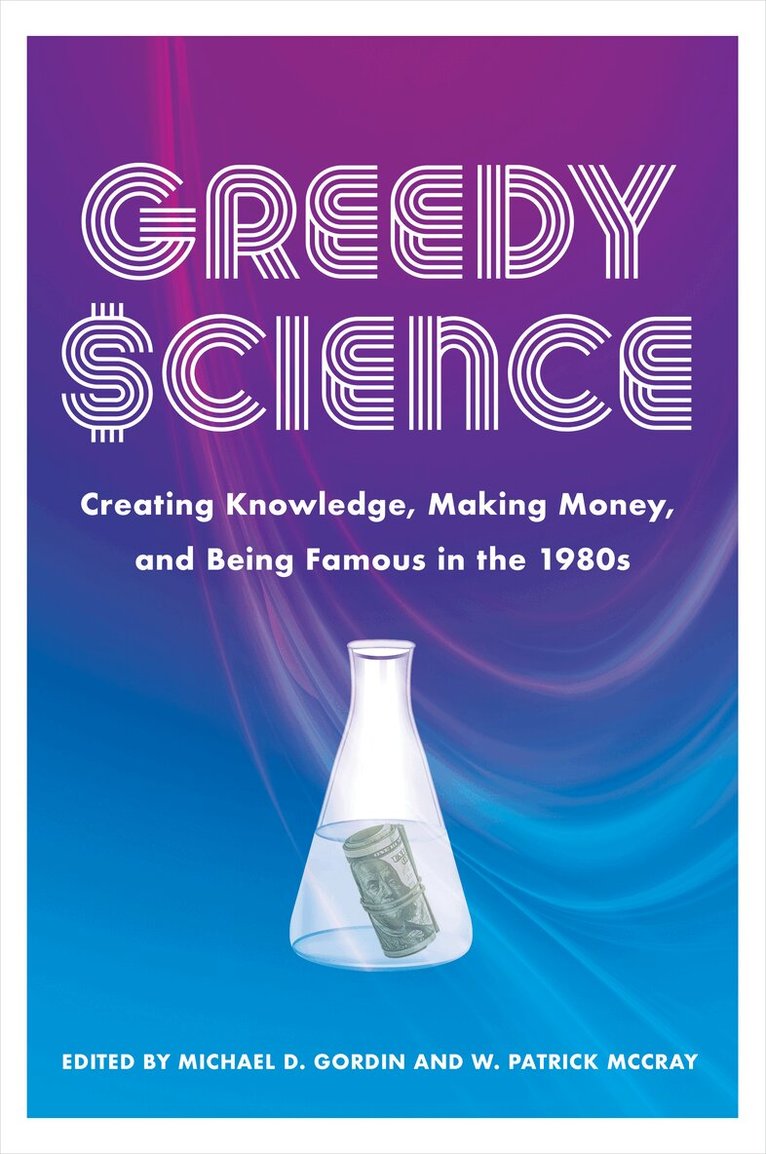
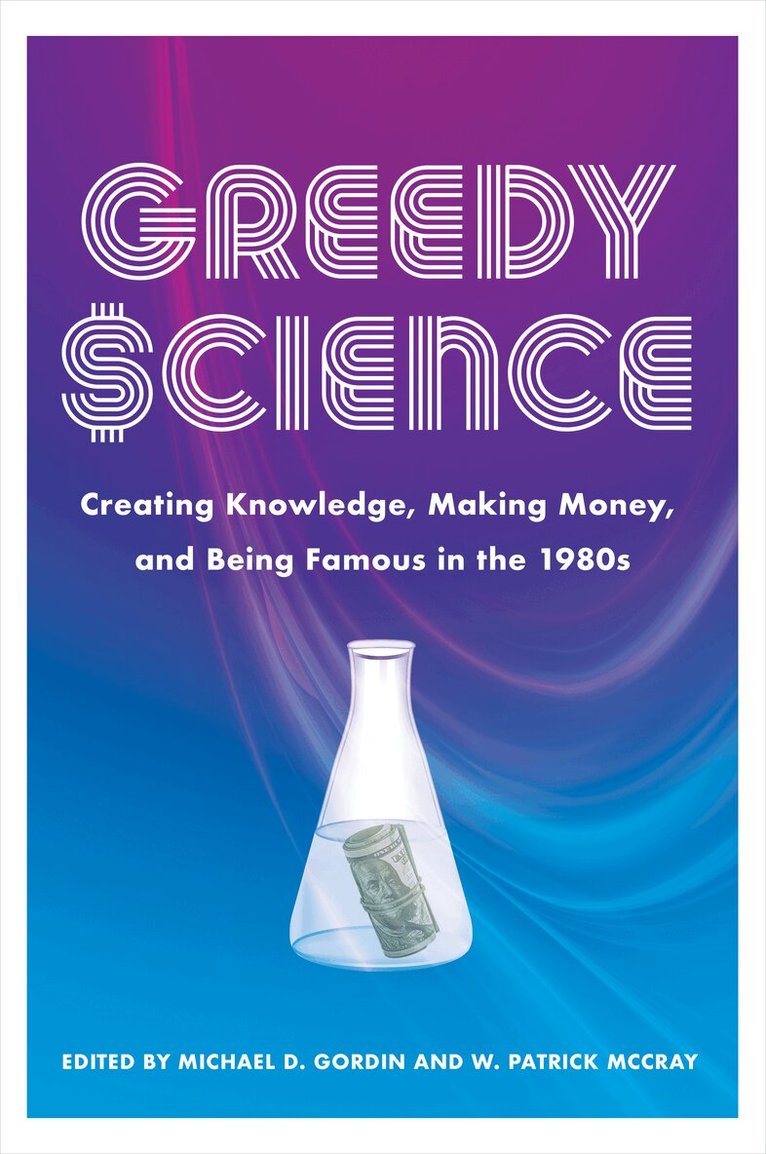
On the transformative role of greed in global science and technology during the 1980s.In the 1980s, a transformative era emerged where profit-driven motives and an entrepreneurial spirit dominated scientific research and technological innovation. This collection of essays, edited by Michael D. Gordin and W. Patrick McCray, examines how greed reshaped the global scientific community through the relentless pursuit of money, fame, and celebrity. Profiting off science and technology was not a new phenomenon, nor were the soaring ambitions of some of its most fervent advocates. However, the global currents of knowledge production in the 1980s saw major cultural and scientific shifts: the increasing frequency of university patenting, the rise of academic entrepreneurship, and collaborations between industries and academia, for example. Greedy Science seeks to survey and understand the full range of these changes. Through insightful essays, contributors examine case studies ranging from the biotech boom—driven by early oil-firm investments—to the speculative market strategies in personal computing and alternative energy. This period saw the rise of the celebrity status of scientists and raised questions about the moral complexities of scientific greed. The authors argue that greed was an ever-present and expansive trait of science during this time, encompassing a host of behaviors such as covetousness, acquisitiveness, rapaciousness, and conspicuous consumption. Greedy Science provides a nuanced analysis of how market dynamics and the quest for personal gain profoundly influenced scientific advancements and public perception during a pivotal decade in science and technology.
Häftad, Engelska, 2025
547 kr
Skickas inom 5-8 vardagar
On the transformative role of greed in global science and technology during the 1980s.In the 1980s, a transformative era emerged where profit-driven motives and an entrepreneurial spirit dominated scientific research and technological innovation. This collection of essays, edited by Michael D. Gordin and W. Patrick McCray, examines how greed reshaped the global scientific community through the relentless pursuit of money, fame, and celebrity. Profiting off science and technology was not a new phenomenon, nor were the soaring ambitions of some of its most fervent advocates. However, the global currents of knowledge production in the 1980s saw major cultural and scientific shifts: the increasing frequency of university patenting, the rise of academic entrepreneurship, and collaborations between industries and academia, for example. Greedy Science seeks to survey and understand the full range of these changes. Through insightful essays, contributors examine case studies ranging from the biotech boom—driven by early oil-firm investments—to the speculative market strategies in personal computing and alternative energy. This period saw the rise of the celebrity status of scientists and raised questions about the moral complexities of scientific greed. The authors argue that greed was an ever-present and expansive trait of science during this time, encompassing a host of behaviors such as covetousness, acquisitiveness, rapaciousness, and conspicuous consumption. Greedy Science provides a nuanced analysis of how market dynamics and the quest for personal gain profoundly influenced scientific advancements and public perception during a pivotal decade in science and technology.