Michael Gagarin - Böcker
Visar alla böcker från författaren Michael Gagarin. Handla med fri frakt och snabb leverans.
18 produkter
18 produkter
The Oxford Encyclopedia of Ancient Greece and Rome: The Oxford Encyclopedia of Ancient Greece and Rome
Inbunden, Engelska, 2010
12 049 kr
Skickas inom 7-10 vardagar
The Oxford Encyclopedia of Ancient Greece and Rome is an accessible guide and a comprehensive overview of the major cultures of the classical Mediterranean world--Greek,or Hellenistic, and Roman--from the Bronze Age to the fifth century CE. It also covers the legacy of the classical world and its interpretation and influence in subsequentical world centuries. Each article, written by leading scholars in the field, seeks to convey the significance of the people, places, and historical events of classical antiquity, together with its intellectual and material culture. Content includes:BL Greek and Latin LiteratureBL Authors and Their WorksBL Historical Figures and EventsBL Religion and MythologyBL Art, Artists, Artistic Themes, and MaterialsBL Archaeology, Philosophers, and Philosophical SchoolsBL Science and TechnologyBL Politics, Economics, and SocietyBL Material Culture and Everyday Life
554 kr
Skickas inom 5-8 vardagar
This volume presents the Greek text of approximately 200 stone inscriptions, which detail the laws of ancient Crete in the archaic and classical periods, c.650-400 BCE. The texts of the inscriptions, many of which are fragmentary and relatively unknown, are accompanied by an English translation and also two commentaries; one focused on epigraphical and linguistic issues, and the other, requiring no knowledge of Greek, focused on legal and historical issues.The texts are preceded by a substantial introduction, which surveys the geography, history, writing habits, social and political structure, economy, religion, and law of Crete in this period.
3 596 kr
Skickas inom 7-10 vardagar
This volume presents the Greek text of approximately 200 stone inscriptions, which detail the laws of ancient Crete in the archaic and classical periods, c.650-400 BCE. The texts of the inscriptions, many of which are fragmentary and relatively unknown, are accompanied by an English translation and also two commentaries; one focused on epigraphical and linguistic issues, and the other, requiring no knowledge of Greek, focused on legal and historical issues.The texts are preceded by a substantial introduction, which surveys the geography, history, writing habits, social and political structure, economy, religion, and law of Crete in this period.
299 kr
Skickas inom 10-15 vardagar
Winner, Friends of the Dallas Public Library Award from the Texas Institute of Letters, 2003Antiphon was a fifth-century Athenian intellectual (ca. 480-411 BCE) who created the profession of speechwriting while serving as an influential and highly sought-out adviser to litigants in the Athenian courts. Three of his speeches are preserved, together with three sets of Tetralogies (four hypothetical paired speeches), whose authenticity is sometimes doubted. Fragments also survive of intellectual treatises on subjects including justice, law, and nature (physis), which are often attributed to a separate Antiphon the Sophist. Were these two Antiphons really one and the same individual, endowed with a wide-ranging mind ready to tackle most of the diverse intellectual interests of his day?Through an analysis of all these writings, this book convincingly argues that they were composed by a single individual, Antiphon the Athenian. Michael Gagarin sets close readings of individual works within a wider discussion of the fifth-century Athenian intellectual climate and the philosophical ferment known as the sophistic movement. This enables him to demonstrate the overall coherence of Antiphon's interests and writings and to show how he was a pivotal figure between the sophists and the Attic orators of the fourth century. In addition, Gagarin's argument allows us to reassess the work of the sophists as a whole, so that they can now be seen as primarily interested in logos (speech, argument) and as precursors of fourth-century rhetoric, rather than in their usual role as foils for Plato.
362 kr
Skickas inom 7-10 vardagar
This is the sixteenth volume in the Oratory of Classical Greece. This series presents all of the surviving speeches from the late fifth and fourth centuries BC in new translations prepared by classical scholars who are at the forefront of the discipline. These translations are especially designed for the needs and interests of today's undergraduates, Greekless scholars in other disciplines, and the general public. Classical oratory is an invaluable resource for the study of ancient Greek life and culture. The speeches offer evidence on Greek moral views, social and economic conditions, political and social ideology, law and legal procedure, and other aspects of Athenian culture that have recently been attracting particular interest: women and family life, slavery, and religion, to name just a few. This volume assembles twenty-two speeches previously published in the Oratory series. The speeches are taken from a wide range of different kinds of cases-homicide, assault, commercial law, civic status, sexual offenses, and others-and include many of the best-known speeches in these areas. They are Antiphon, Speeches 1, 2, 5, and 6; Lysias 1, 3, 23, 24, and 32; Isocrates 17, 20; Isaeus 1, 7, 8; Hyperides 3; Demosthenes 27, 35, 54, 55, 57, and 59; and Aeschines 1. The volume is intended primarily for use in teaching courses in Greek law or related areas such as Greek history. It also provides the introductions and notes that originally accompanied the individual speeches, revised slightly to shift the focus onto law.
477 kr
Skickas inom 3-6 vardagar
Drawing on the evidence of anthropology as well as ancient literature and inscriptions, Gagarin examines the emergence of law in Greece from the 8th through the 6th centuries B.C., that is, from the oral culture of Homer and Hesiod to the written enactment of codes of law in most major cities.
577 kr
Skickas inom 7-10 vardagar
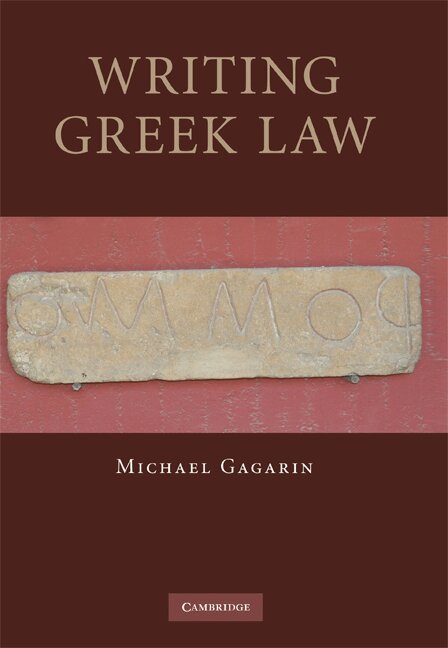
The use of writing in the development of Greek law was unique. In this comparative study Professor Gagarin shows the reader how Greek law developed and explains why it became so different from the legal systems with which most legal historians are familiar. While other early communities wrote codes of law for academic or propaganda purposes, the Greeks used writing extensively to make their laws available to a relatively large segment of the community. On the other hand, the Greeks made little use of writing in litigation whereas other cultures used it extensively in this area, often putting written documents at the heart of the judicial process. Greek law thereby avoided becoming excessively technical and never saw the development of a specialised legal profession. This book will be of interest to those with an interest in the history of law, as well as ancient historians.
1 246 kr
Skickas inom 7-10 vardagar
This volume provides a commentary on the six surviving speeches of the fifth-century BC Athenian orator Antiphon, all of which concern homicide, together with a fragment of Antiphon's final speech at his own trial for treason in 411 BC. The commentary discusses grammatical, stylistic, textual, legal, rhetorical, historical and other matters and focuses especially on Antiphon's argumentation and forensic strategy: why he presents these arguments in this particular way. The work includes a new Greek text which restores some of the special qualities of Antiphon's style that twentieth-century editors have edited out and a substantial introduction to the life and work of Antiphon, the nature of Athenian law and legal oratory and the style and textual tradition of Antiphon.
441 kr
Skickas inom 7-10 vardagar
This volume provides a commentary on the six surviving speeches of the fifth-century BC Athenian orator Antiphon, all of which concern homicide, together with a fragment of Antiphon's final speech at his own trial for treason in 411 BC. The commentary discusses grammatical, stylistic, textual, legal, rhetorical, historical and other matters and focuses especially on Antiphon's argumentation and forensic strategy: why he presents these arguments in this particular way. The work includes a new Greek text which restores some of the special qualities of Antiphon's style that twentieth-century editors have edited out and a substantial introduction to the life and work of Antiphon, the nature of Athenian law and legal oratory and the style and textual tradition of Antiphon.
1 356 kr
Skickas inom 7-10 vardagar
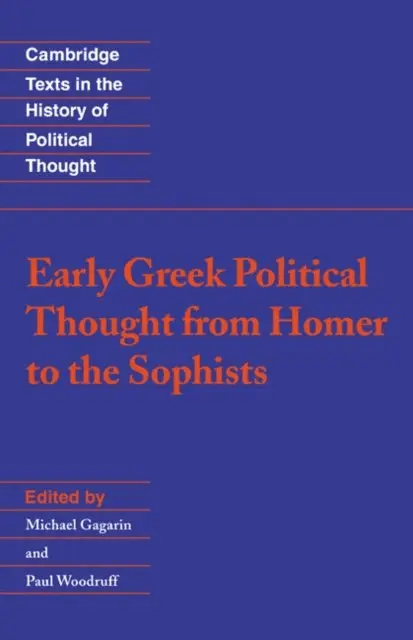
This edition of early Greek writings on social and political issues includes works by more than thirty authors. There is a particular emphasis on the sophists, with the inclusion of all of their significant surviving texts, and the works of Alcidamas, Antisthenes and the 'Old Oligarch' are also represented. In addition there are excerpts from early poets such as Homer, Hesiod and Solon, the three great tragedians Aeschylus, Sophocles and Euripides, the historians Herodotus and Thucydides, medical writers and presocratic philosophers. Besides political theory, areas represented include early anthropology, sociology, ethics and rhetoric, and the wide range of issues discussed includes human nature, the origin of human society, the origin of law, the nature of justice, the forms of good government, the distribution of wealth, and the distribution of power among genders and social classes.
526 kr
Skickas inom 7-10 vardagar
This edition of early Greek writings on social and political issues includes works by more than thirty authors. There is a particular emphasis on the sophists, with the inclusion of all of their significant surviving texts, and the works of Alcidamas, Antisthenes and the 'Old Oligarch' are also represented. In addition there are excerpts from early poets such as Homer, Hesiod and Solon, the three great tragedians Aeschylus, Sophocles and Euripides, the historians Herodotus and Thucydides, medical writers and presocratic philosophers. Besides political theory, areas represented include early anthropology, sociology, ethics and rhetoric, and the wide range of issues discussed includes human nature, the origin of human society, the origin of law, the nature of justice, the forms of good government, the distribution of wealth, and the distribution of power among genders and social classes.
503 kr
Skickas inom 7-10 vardagar
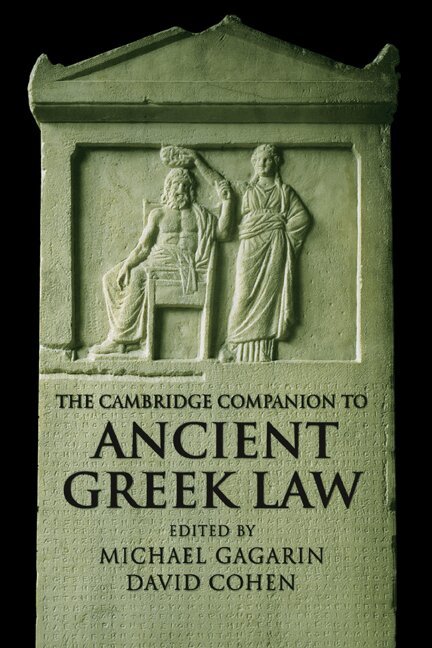
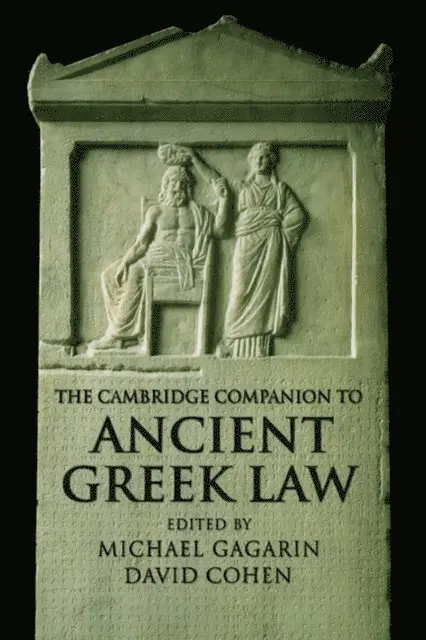
This Companion volume provides a comprehensive overview of the major themes and topics pertinent to ancient Greek law. A substantial introduction establishes the recent historiography on this topic and its development over the last 30 years. Many of the 22 essays, written by an international team of experts, deal with procedural and substantive law in classical Athens, but significant attention is also paid to legal practice in the archaic and Hellenistic eras; areas that offer substantial evidence for legal practice, such as Crete and Egypt; the intersection of law with religion, philosophy, political theory, rhetoric, and drama, as well as the unity of Greek law and the role of writing in law. The volume is intended to introduce non-specialists to the field as well as to stimulate new thinking among specialists.
1 292 kr
Skickas inom 7-10 vardagar
This Companion volume provides a comprehensive overview of the major themes and topics pertinent to ancient Greek law. A substantial introduction establishes the recent historiography on this topic and its development over the last 30 years. Many of the 22 essays, written by an international team of experts, deal with procedural and substantive law in classical Athens, but significant attention is also paid to legal practice in the archaic and Hellenistic eras; areas that offer substantial evidence for legal practice, such as Crete and Egypt; the intersection of law with religion, philosophy, political theory, rhetoric, and drama, as well as the unity of Greek law and the role of writing in law. The volume is intended to introduce non-specialists to the field as well as to stimulate new thinking among specialists.
1 282 kr
Skickas inom 7-10 vardagar
The use of writing in the development of Greek law was unique. In this comparative study Professor Gagarin shows the reader how Greek law developed and explains why it became so different from the legal systems with which most legal historians are familiar. While other early communities wrote codes of law for academic or propaganda purposes, the Greeks used writing extensively to make their laws available to a relatively large segment of the community. On the other hand, the Greeks made little use of writing in litigation whereas other cultures used it extensively in this area, often putting written documents at the heart of the judicial process. Greek law thereby avoided becoming excessively technical and never saw the development of a specialised legal profession. This book will be of interest to those with an interest in the history of law, as well as ancient historians.
2 408 kr
Skickas inom 5-8 vardagar
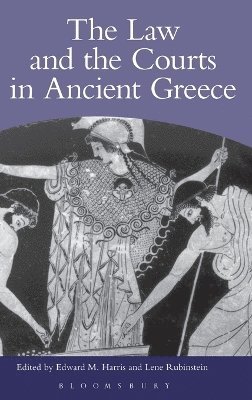
How successful were the Athenians and other Greeks in bringing about the rule of law? What did the Greeks recognise as 'law' both in the 'polis' and internationally? How did the courts attempt to implement this ideal, and how successful were they? This collection of essays sets out to answer these questions, concentrating on the following themes: law, religion and the sources of legitimacy; substance and procedure; legal arguments in court; documents and witnesses; and law in an international context. There is much here to interest not only specialists in Greek law, but also those concerned more generally with both Greek history and the history of law.
1 071 kr
Skickas inom 7-10 vardagar
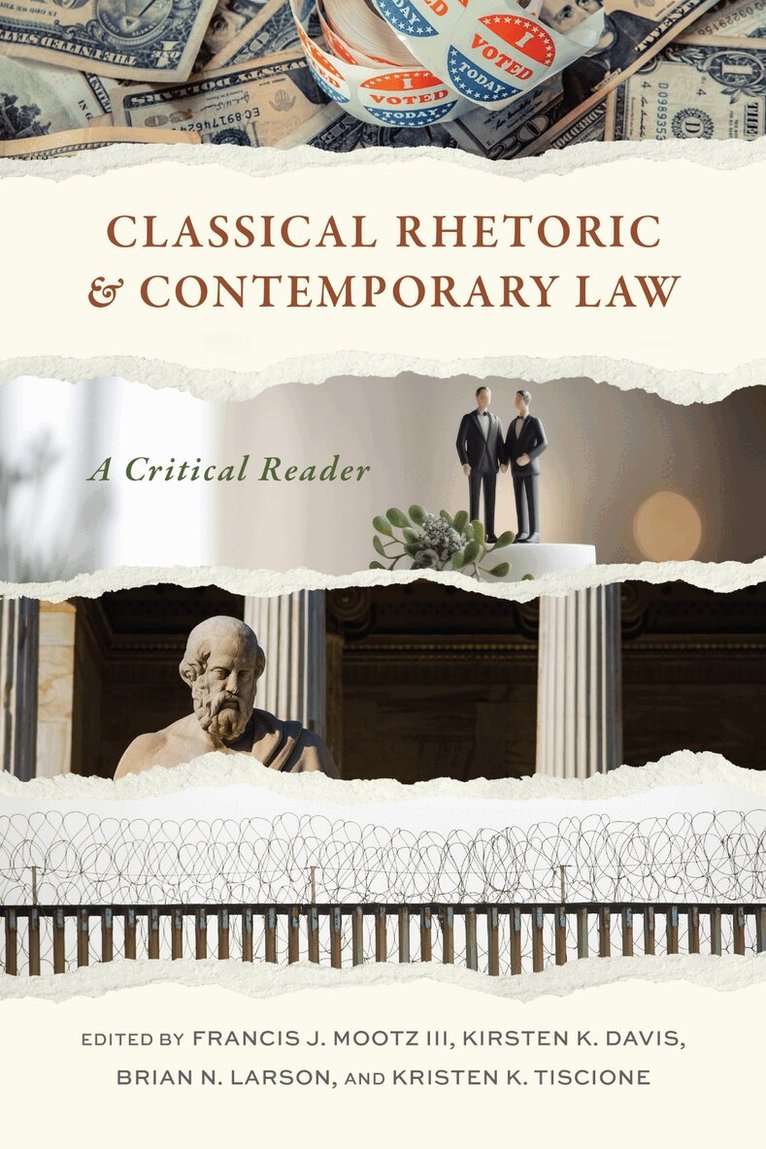
Pairs passages from works of classical rhetoric with contemporary legal rulings to highlight and analyze their deep and abiding connections in matters of persuasionClassical Rhetoric and Contemporary Law: A Critical Reader is a rich work that analyzes the interplay between ancient rhetorical traditions and modern legal practice, reestablishing the lost connections between law and classical rhetoric. From Isocrates’s Panegyricus in 380 BCE to the landmark US Supreme Court case Trump v. Hawaii in 2018, and from Antiphon’s fifth century BCE First Tetralogy to 1995’s O. J. Simpson trial, the volume draws on an array of sources to illuminate how ancient rhetorical insights may even today challenge and enrich our grasp of contemporary legal principles. The collection opens with a brisk review of the historical development of rhetoric. The second part examines a pair of rhetorical theorists whose works frame the period across which classical rhetoric declined as a mode of thought. A contemporary appellate case contrasts with the work of Giambattista Vico, an eighteenth-century professor of rhetoric who warned of the separation of law from rhetoric. The analysis of the work of twentieth-century scholars ChaÏm Perelman and Lucie Olbrects-Tyteca shows that where Cartesian rationality fails, the humanistic tradition of rhetoric allows the law to respond to the needs of justice. In the third part, ten case studies bring together a classical rhetorical theorist with a contemporary court case, demonstrating the abiding relevance of the classical tradition to contemporary jurisprudence.With its cross-disciplinary appeal, Classical Rhetoric and Contemporary Law encompasses the work of legal, rhetorical, English, and communication scholars alike, catalyzing interactive exploration into the profound ways ancient rhetorical insights continue to shape our comprehension of today’s legal landscape.CONTRIBUTORSVasileios Adamidis / Elizabeth C. Britt / Kirsten K. Davis / David A. Frank / Michael Gagarin / Eugene Garver / Mark A. Hannah / Catherine L. Langford / Brian N. Larson / Craig A. Meyer / Francis J. Mootz III / Susan E. Provenzano / Nick J. Sciullo / Kristen K. Tiscione / Laura A. Webb
382 kr
Skickas inom 7-10 vardagar
Pairs passages from works of classical rhetoric with contemporary legal rulings to highlight and analyze their deep and abiding connections in matters of persuasionClassical Rhetoric and Contemporary Law: A Critical Reader is a rich work that analyzes the interplay between ancient rhetorical traditions and modern legal practice, reestablishing the lost connections between law and classical rhetoric. From Isocrates’s Panegyricus in 380 BCE to the landmark US Supreme Court case Trump v. Hawaii in 2018, and from Antiphon’s fifth century BCE First Tetralogy to 1995’s O. J. Simpson trial, the volume draws on an array of sources to illuminate how ancient rhetorical insights may even today challenge and enrich our grasp of contemporary legal principles. The collection opens with a brisk review of the historical development of rhetoric. The second part examines a pair of rhetorical theorists whose works frame the period across which classical rhetoric declined as a mode of thought. A contemporary appellate case contrasts with the work of Giambattista Vico, an eighteenth-century professor of rhetoric who warned of the separation of law from rhetoric. The analysis of the work of twentieth-century scholars ChaÏm Perelman and Lucie Olbrects-Tyteca shows that where Cartesian rationality fails, the humanistic tradition of rhetoric allows the law to respond to the needs of justice. In the third part, ten case studies bring together a classical rhetorical theorist with a contemporary court case, demonstrating the abiding relevance of the classical tradition to contemporary jurisprudence.With its cross-disciplinary appeal, Classical Rhetoric and Contemporary Law encompasses the work of legal, rhetorical, English, and communication scholars alike, catalyzing interactive exploration into the profound ways ancient rhetorical insights continue to shape our comprehension of today’s legal landscape.CONTRIBUTORSVasileios Adamidis / Elizabeth C. Britt / Kirsten K. Davis / David A. Frank / Michael Gagarin / Eugene Garver / Mark A. Hannah / Catherine L. Langford / Brian N. Larson / Craig A. Meyer / Francis J. Mootz III / Susan E. Provenzano / Nick J. Sciullo / Kristen K. Tiscione / Laura A. Webb
442 kr
Skickas inom 7-10 vardagar
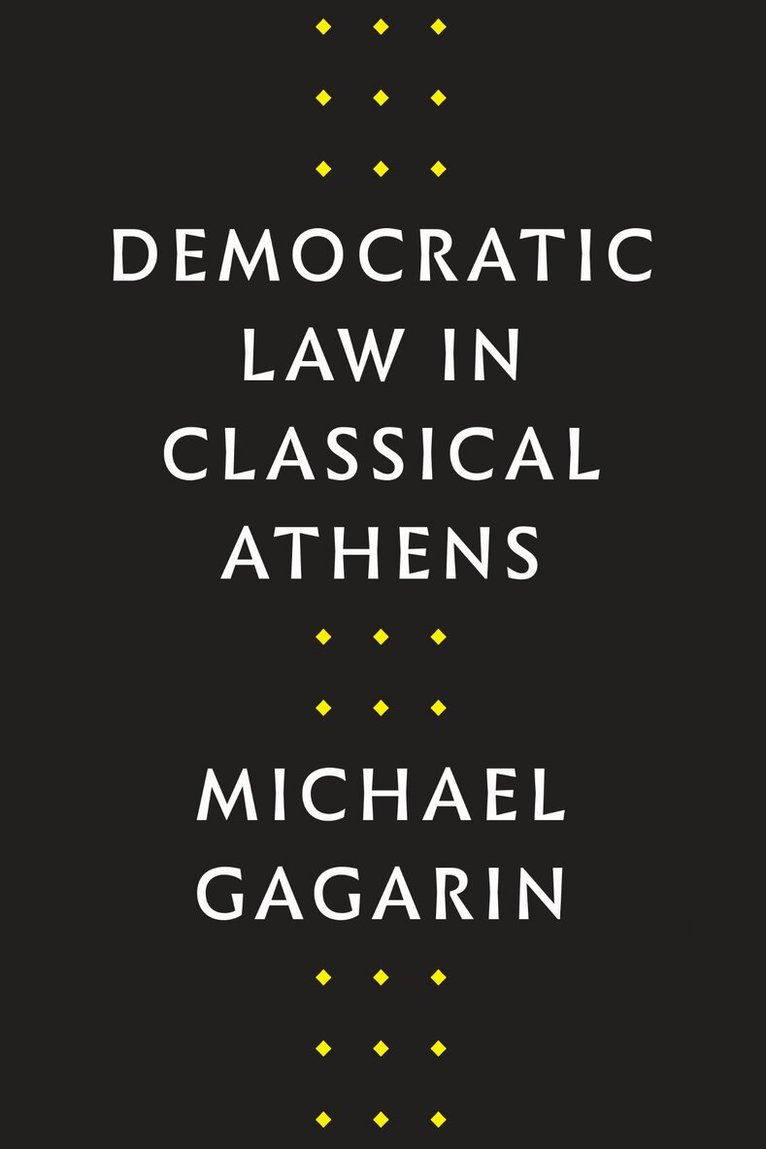
The democratic legal system created by the Athenians was completely controlled by ordinary citizens, with no judges, lawyers, or jurists involved. It placed great importance on the litigants’ rhetorical performances. Did this make it nothing more than a rhetorical contest judged by largely uneducated citizens that had nothing to do with law, a criticism that some, including Plato, have made?Michael Gagarin argues to the contrary, contending that the Athenians both controlled litigants’ performances and incorporated many other unusual features into their legal system, including rules for interrogating slaves and swearing an oath. The Athenians, Gagarin shows, adhered to the law as they understood it, which was a set of principles more flexible than our current understanding allows. The Athenians also insisted that their legal system serve the ends of justice and benefit the city and its people. In this way, the law ultimately satisfied most Athenians and probably produced just results as often as modern legal systems do. Comprehensive and wide-ranging, Democratic Law in Classical Athens offers a new perspective for viewing a legal system that was democratic in a way only the Athenians could achieve.