Michael Tomz - Böcker
Visar alla böcker från författaren Michael Tomz. Handla med fri frakt och snabb leverans.
2 produkter
2 produkter
363 kr
Skickas inom 7-10 vardagar
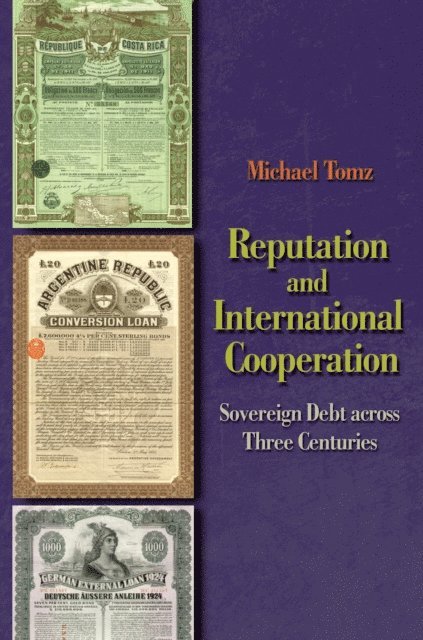
How does cooperation emerge in a condition of international anarchy? Michael Tomz sheds new light on this fundamental question through a study of international debt across three centuries. Tomz develops a reputational theory of cooperation between sovereign governments and foreign investors. He explains how governments acquire reputations in the eyes of investors, and argues that concerns about reputation sustain international lending and repayment. Tomz's theory generates novel predictions about the dynamics of cooperation: how investors treat first-time borrowers, how access to credit evolves as debtors become more seasoned, and how countries ascend and descend the reputational ladder by acting contrary to investors' expectations. Tomz systematically tests his theory and the leading alternatives across three centuries of financial history. His remarkable data, gathered from archives in nine countries, cover all sovereign borrowers. He deftly combines statistical methods, case studies, and content analysis to scrutinize theories from as many angles as possible. Tomz finds strong support for his reputational theory while challenging prevailing views about sovereign debt.His pathbreaking study shows that, across the centuries, reputations have guided lending and repayment in consistent ways. Moreover, Tomz uncovers surprisingly little evidence of punitive enforcement strategies. Creditors have not compelled borrowers to repay by threatening military retaliation, imposing trade sanctions, or colluding to deprive defaulters of future loans. He concludes by highlighting the implications of his reputational logic for areas beyond sovereign debt, further advancing our understanding of the puzzle of cooperation under anarchy.
777 kr
Skickas inom 10-15 vardagar
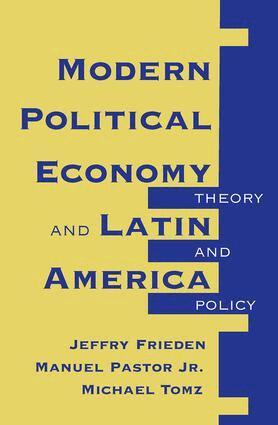
Modern Political Economy and Latin America consists of 35 carefully selected readings about the relationship between politics and economics in Latin American. Jeffry Frieden, Manuel Pastor, Jr., and Michael Tomz have edited the readings, organized them thematically, and included a series of introductions to guide readers through the material. The editors identify the theoretical underpinnings of each article and highlight its contribution to ongoing debates. Latin American economies are undergoing profound transformations. In the wake of a decade-long debt crisis, countries through the region are embracing the free market and rebuilding democratic institutions. Nonetheless, significant obstacles to the consolidation of economic and political reform lie ahead. Modern political economy, informed by recent advances in economics and political science, provides powerful tools for analyzing the challenges and opportunities facing Latin America. This book offers an innovative and accessible guide to these new analytical tools.