Mikael Fauvelle - Böcker
Visar alla böcker från författaren Mikael Fauvelle. Handla med fri frakt och snabb leverans.
6 produkter
6 produkter
Archaeology of Abundance
Re-evaluating the Marginality of California""s Islands
Inbunden, Engelska, 2019
1 108 kr
Skickas inom 10-15 vardagar
The Alta and Baja California islands changed dramatically in the centuries after Spanish colonists arrived. Native populations were decimated, and their lives were altered through forced assimilation and the cessation of burning and traditional foraging practices. Overgrazing, overfishing, and the introduction of nonnative species depleted natural resources severely. Modern scientists have assumed the islands were similarly sparse before European contact, but An Archaeology of Abundance reassesses this long-held belief, analyzing new lines of evidence showing that the California Islands were rich in resources important to human populations. Contributors examine data from Paleocoastal to historic times that suggest the islands were optimal habitats that provided food, fresh water, minerals, and fuel for the people living there. Botanical remains from these sites, together with the modern resurgence of plant communities after the removal of livestock, challenge theories formed during the historical ranching era. Geoarchaeological surveys contradict claims that the islands had few high-quality materials for making stone tools. Trade exchange routes, underwater forests of edible seaweeds, and reconstructions of population densities also support the case for abundance on the islands. Reinforcing the argument that these islands were not marginal environments in the early human history of the region, the discoveries presented in this volume hold significant implications for reassessing the ancient history of islands around the world that have undergone similar ecological transformations. A volume in the series Society and Ecology in Island and Coastal Archaeology, edited by Victor D. Thompson.
998 kr
Skickas inom 10-15 vardagar
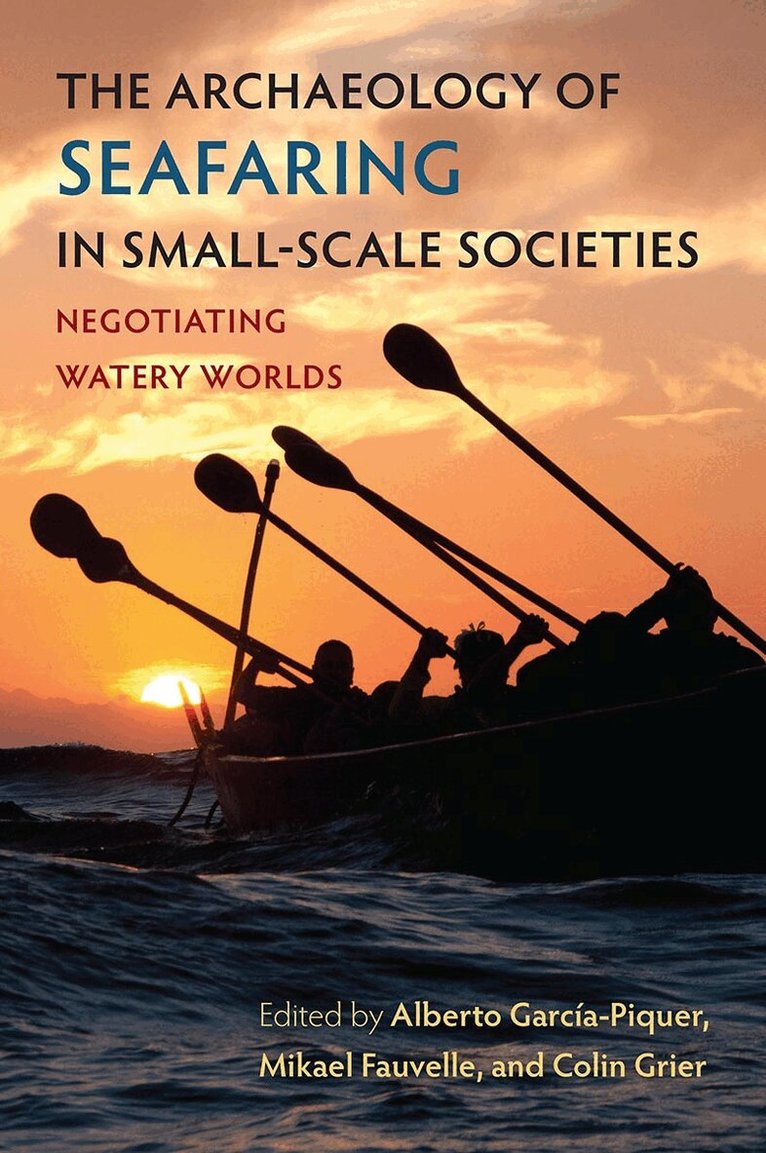
This book will be available in an open access edition thanks to the generous support by the Lund University Library and the Joint Faculties of Humanities and Theology at Lund University.Exploring how ancient peoples developed seafaring technology and used watercraft to support and transform their societiesThe development of seafaring technology throughout history expanded geographical and social horizons—powering human mobility and interaction, structuring social contexts, shaping worldviews, and effecting political centralization. This volume examines how watercraft have served as groundbreaking innovations throughout human history, focusing on small-scale societies in saltwater environments.Using archaeological, historical, and ethnographic evidence, contributors examine settlement patterns in western Patagonia, whale hunting by Megalithic societies in Brittany, maritime mobility in Baja California, Coast Salish trip lengths, and Inuit connections to boats and the sea in the Eastern Arctic. Themes explored include the technological capacities of watercraft and the humans who propelled them, the role of watercraft in production and consumption of resources, the impacts of widespread travel on social networks, and the phenomenological experience of seafaring. The Archaeology of Seafaring in Small-Scale Societies illuminates the complex interplays that sustained past watery worlds and highlights the necessity of studying the subject with a holistic and globally comparative approach.Contributors: Bettina Schulz Paulsson Peter Jordan Jordi A. Rivera Prince Matthew Des Lauriers Colin Grier Greer Jarrett Mikael Fauvelle Nelson Aguilera Peter Whitridge Claudia García-Des Lauriers Alberto García-Piquer Raquel Piqué Adam Rorabaugh Erin Smith Victor D. Thompson
379 kr
Skickas inom 10-15 vardagar
This book is available in an open access edition thanks to the generous support by the Lund University Library and the Joint Faculties of Humanities and Theology at Lund University.Exploring how ancient peoples developed seafaring technology and used watercraft to support and transform their societiesThe development of seafaring technology throughout history expanded geographical and social horizons—powering human mobility and interaction, structuring social contexts, shaping worldviews, and effecting political centralization. This volume examines how watercraft have served as groundbreaking innovations throughout human history, focusing on small-scale societies in saltwater environments.Using archaeological, historical, and ethnographic evidence, contributors examine settlement patterns in western Patagonia, whale hunting by Megalithic societies in Brittany, maritime mobility in Baja California, Coast Salish trip lengths, and Inuit connections to boats and the sea in the Eastern Arctic. Themes explored include the technological capacities of watercraft and the humans who propelled them, the role of watercraft in production and consumption of resources, the impacts of widespread travel on social networks, and the phenomenological experience of seafaring. The Archaeology of Seafaring in Small-Scale Societies illuminates the complex interplays that sustained past watery worlds and highlights the necessity of studying the subject with a holistic and globally comparative approach.
241 kr
Skickas inom 7-10 vardagar
Where, when, and under what circumstances did money first emerge? This Element examines this question through a comparative study of the use of shells to facilitate trade and exchange in ancient societies around the world. It argues that shell money was a form of social technology that expanded political-economic capacities by enabling long-distance trade across boundaries and between strangers. The Element examines several cases in which shells and shell beads permeated throughout daily life and became central to the economic functioning of the societies that used them. In several of these cases, it argues that shells were used in ways that meet all the standard definitions of modern money. By examining the wide range of uses of shell money in ancient economic systems around the world, this Element explores the diversity of forms that money has taken throughout human history. This title is also available as Open Access on Cambridge Core.
775 kr
Skickas inom 7-10 vardagar
Where, when, and under what circumstances did money first emerge? This Element examines this question through a comparative study of the use of shells to facilitate trade and exchange in ancient societies around the world. It argues that shell money was a form of social technology that expanded political-economic capacities by enabling long-distance trade across boundaries and between strangers. The Element examines several cases in which shells and shell beads permeated throughout daily life and became central to the economic functioning of the societies that used them. In several of these cases, it argues that shells were used in ways that meet all the standard definitions of modern money. By examining the wide range of uses of shell money in ancient economic systems around the world, this Element explores the diversity of forms that money has taken throughout human history. This title is also available as Open Access on Cambridge Core.
Presenting Counterpoints to the Dominant Terrestrial Narrative of European Prehistory
Inbunden, Engelska, 2025
753 kr
Skickas
This book is the first in the multi-author series Maritime Encounters, outputs of the major six-year (2022–2028) international research initiative, funded by Sweden’s central bank. Our programme is based on a maritime perspective, a counterpoint to prevailing land-based vantages on Europe’s prehistory. In the Maritime Encounters project a highly international cross-disciplinary team has embarked on a diverse range of research goals to provide a more detailed and nuanced story of how prehistoric societies realised major and minor sea crossings, organised long-distance exchange, and adapted to ways of life by the sea in prehistory.Recent advances with ancient DNA have brought migration back into archaeological explanation, but little attention has been paid to maritime aspects of these movements or the maritime legacies inherited from indigenous cultures. The formation of the populations, cultures, and languages of Europe are now seen largely as consequences of three great prehistoric migrations: hunter-gatherers repopulating the post-glacial landscape, followed by farmers spreading from Anatolia, and then Indo-European-speaking pastoralists from the steppe.There is a significant gap in this current model that we sense most acutely in Scandinavia and the British Isles. Unanswered questions include: How these groups reached the islands and peninsulas of Atlantic Europe? What types of boats were used? How many people and animals could they carry? To what extent did indigenous coastal peoples contribute traditions and knowledge of boats, boat building, seaways, navigation, and subsistence in coastal environments? How was the long-distance trade in metals organised during the European Bronze Age? And what was the impact of this seacrossing network on the cultures, languages, and populations of the producers and consumers of bronze?