Miroslaw Truszczynski – författare
Visar alla böcker från författaren Miroslaw Truszczynski. Handla med fri frakt och snabb leverans.
9 produkter
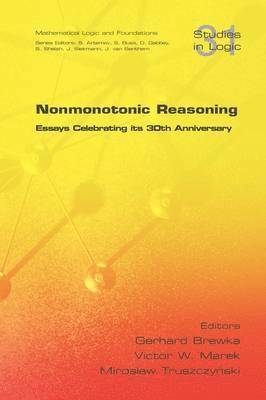
Nonmonotonic Reasoning. Essays Celebrating Its 30th Anniversary
Av Gerhard Brewka, Victor W. Marek m. fl.
Häftad, 2011
264 kr
Lägg i varukorg
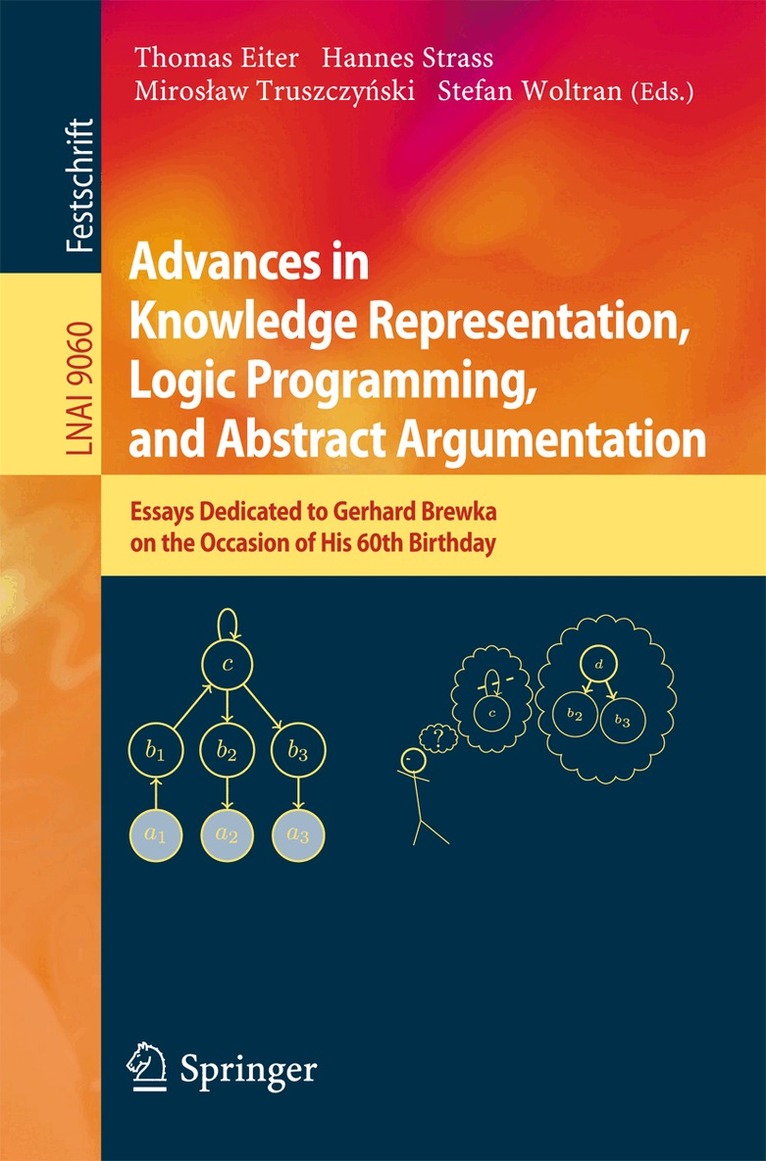
Advances in Knowledge Representation, Logic Programming, and Abstract Argumentation
Essays Dedicated to Gerhard Brewka on the Occasion of His 60th Birthday
Av Thomas Eiter, Hannes Strass m. fl.
Häftad, 2015
568 kr
Lägg i varukorg
This Festschrift is published in honor of Gerhard Brewka on the occasion of his 60th birthday and contains articles from fields reflecting the breadth of Gerd's work. The 24 scientific papers included in the book are written by close friends and colleagues and cover topics such as Actions and …
Advances in Knowledge Representation, Logic Programming, and Abstract Argumentation
Essays Dedicated to Gerhard Brewka on the Occasion of His 60th Birthday
Av Stefan Woltran, Miroslaw Truszczynski m. fl.
E-bok, 2015
755 kr
Lägg i varukorg
This Festschrift is published in honor of Gerhard Brewka on the occasion of his 60th birthday and contains articles from fields reflecting the breadth of Gerd''s work. The 24 scientific papers included in the book are written by close friends and colleagues and cover topics such as Actions and …
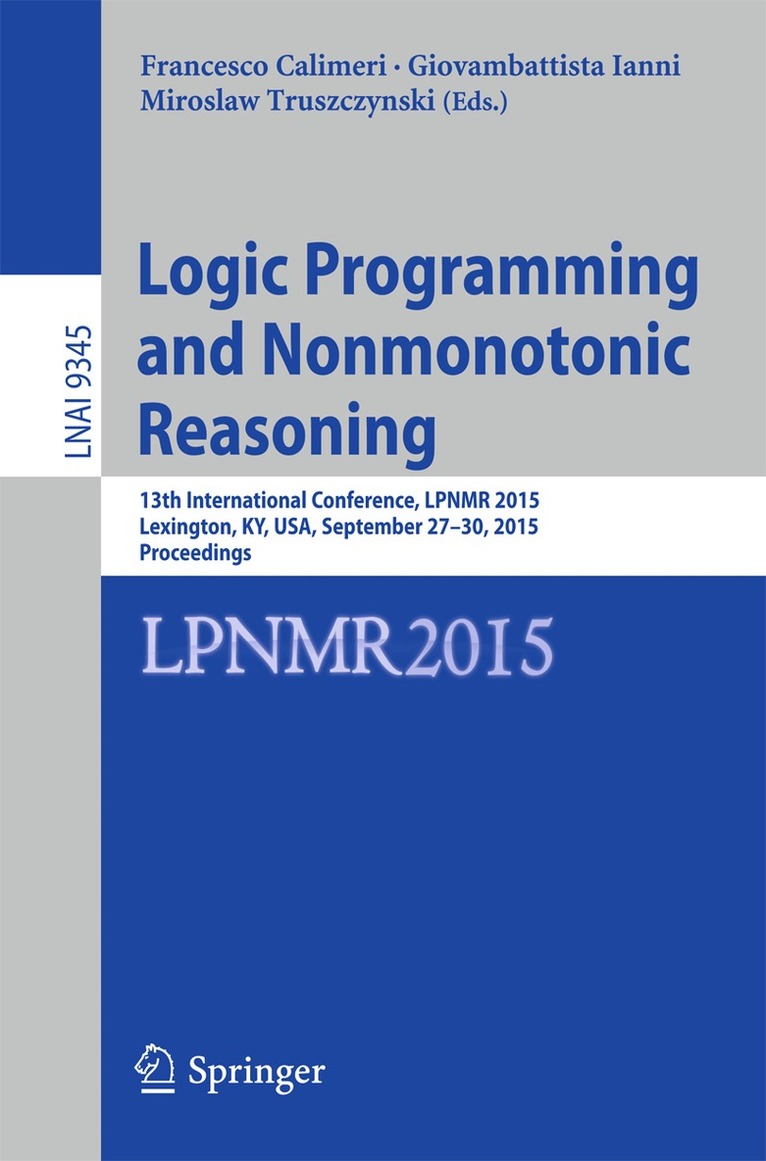
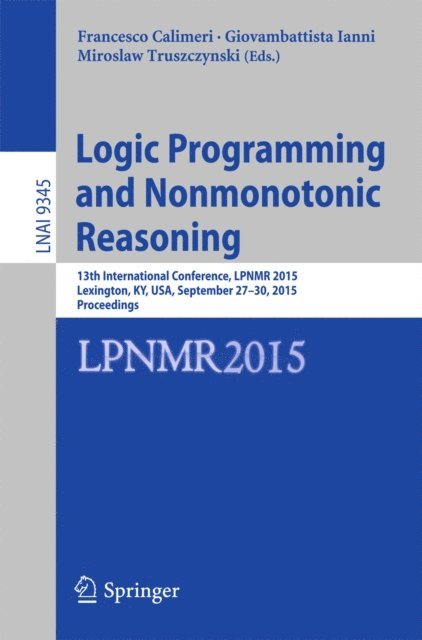
Logic Programming and Nonmonotonic Reasoning
13th International Conference, LPNMR 2015, Lexington, KY, USA, September 27-30, 2015. Proceedings
Av Francesco Calimeri, Giovambattista Ianni m. fl.
Häftad, 2015
568 kr
Lägg i varukorg
This volume contains the refereed proceedings of the 13th International Conference on Logic Programming and Nonmonotonic Reasoning, LPNMR 2015, held in September 2015 in Lexington, KY, USA. The 290long and 11 short papers presented together with 3 invited talks, the paper reporting on the Answer …
Logic Programming and Nonmonotonic Reasoning
13th International Conference, LPNMR 2015, Lexington, KY, USA, September 27-30, 2015. Proceedings
Av Miroslaw Truszczynski, Giovambattista Ianni m. fl.
E-bok, 2015
718 kr
Lägg i varukorg
This volume contains the refereed proceedings of the 13th International Conference on Logic Programming and Nonmonotonic Reasoning, LPNMR 2015, held in September 2015 in Lexington, KY, USA. The 290long and 11 short papers presented together with 3 invited talks, the paper reporting on the Answer …
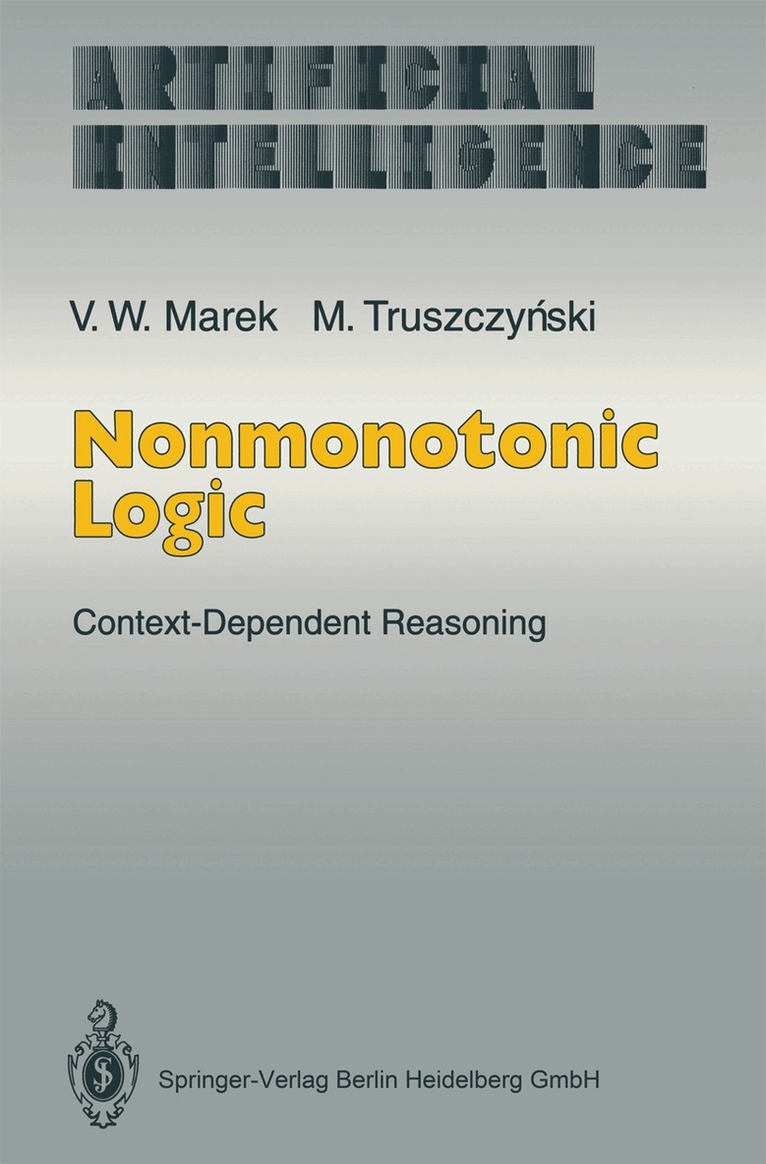
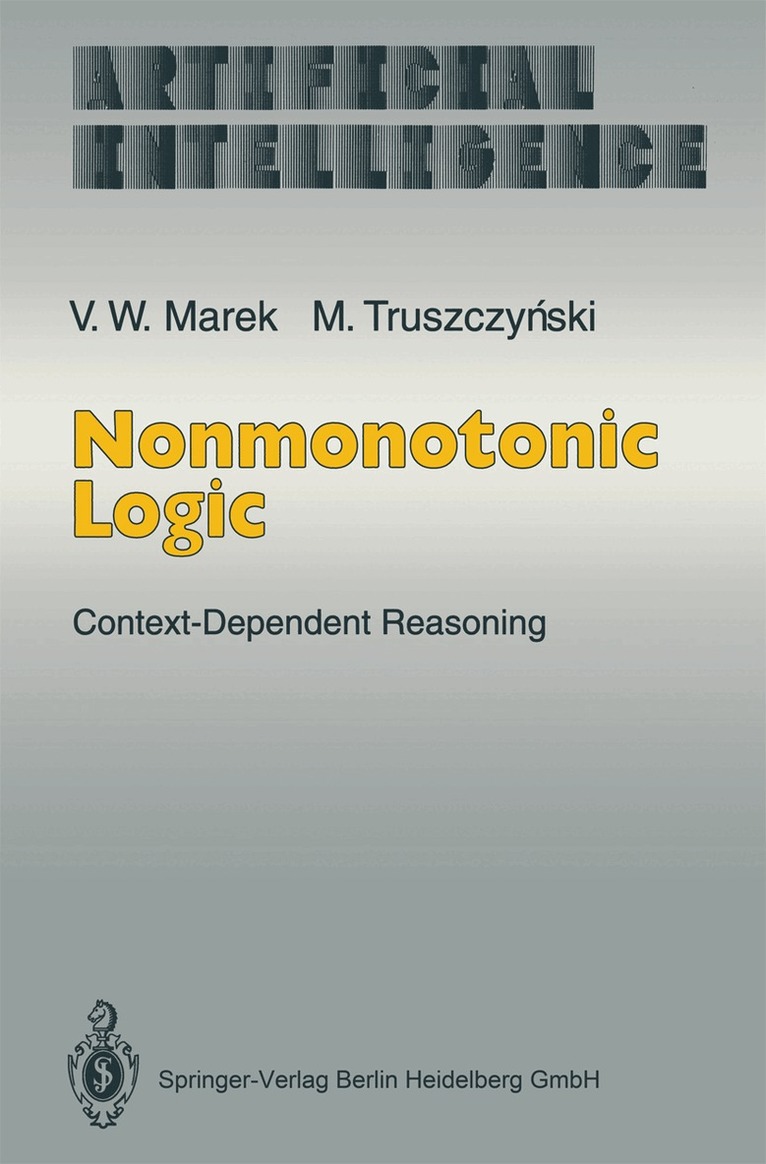
Nonmonotonic Logic
Context-Dependent Reasoning
Av V. Wiktor Marek, Miroslaw Truszczynski
Inbunden, 1993
1639 kr
Lägg i varukorg
When I first participated in exploring theories of nonmonotonic reasoning in the late 1970s, I had no idea of the wealth of conceptual and mathematical results that would emerge from those halting first steps. This book by Wiktor Marek and Miroslaw Truszczynski is an elegant treatment of a large …
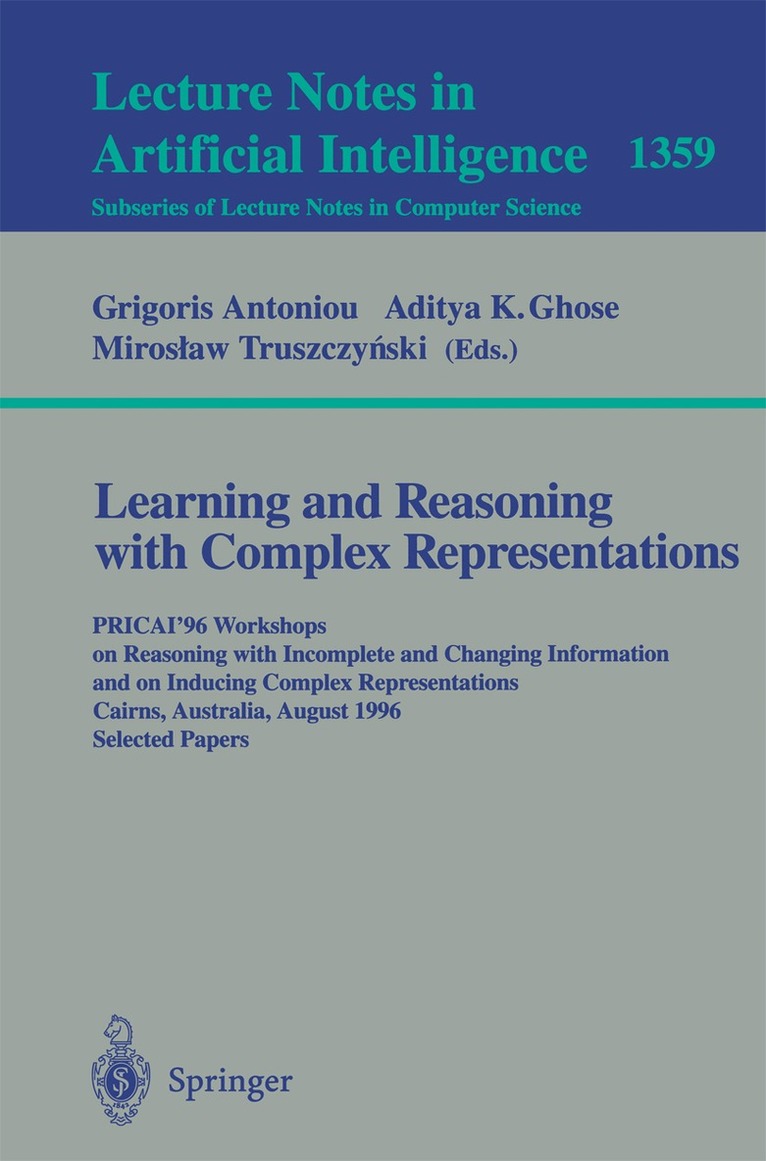
Learning and Reasoning with Complex Representations
PRICAI'96 Workshops on Reasoning with Incomplete and Changing Information and on Inducing Complex Representations Cairns, Australia, August 26-30, 1996, Selected Papers
Av Grigoris Antoniou, Aditya K. Ghose m. fl.
Häftad, 1998
568 kr
Lägg i varukorg
This book constitutes the thoroughly revised and refereed post-workshop documentation of two international workshops held in conjunction with the Pacific Rim International Conference on Artificial Intelligence, PRICAI'96, in Cairns, Australia, in August 1996.The volume presents 14 revised full …
Nonmonotonic Logic
Context-Dependent Reasoning
Av Miroslaw Truszczynski, V. Wiktor Marek
E-bok, 2013
2065 kr
Lägg i varukorg
When I first participated in exploring theories of nonmonotonic reasoning in the late 1970s, I had no idea of the wealth of conceptual and mathematical results that would emerge from those halting first steps. This book by Wiktor Marek and Miroslaw Truszczynski is an elegant treatment of a large …
Nonmonotonic Logic
Context-Dependent Reasoning
Av V. Wiktor Marek, Miroslaw Truszczynski
Häftad, 2012
1748 kr
Lägg i varukorg
When I first participated in exploring theories of nonmonotonic reasoning in the late 1970s, I had no idea of the wealth of conceptual and mathematical results that would emerge from those halting first steps. This book by Wiktor Marek and Miroslaw Truszczynski is an elegant treatment of a large …