Monica J. Casper - Böcker
Visar alla böcker från författaren Monica J. Casper. Handla med fri frakt och snabb leverans.
7 produkter
7 produkter
534 kr
Skickas inom 10-15 vardagar
Corpus begins with the argument that traditional disciplines are unable to fully apprehend the body and embodiment and that critical study of these topics urgently demands interdisciplinary approaches.
2 167 kr
Skickas inom 10-15 vardagar
This timely collection of original essays traces the migration of synthetic chemicals from the laboratory to the factory and then into the environment, bodies and communities. Turning our attention to the impact these chemicals have on our ecosystems, human health, social organization and political processes, the contributors break new ground by focusing on the production and distribution of these potentially hazardous agents themselves rather than just detailing their effects.
331 kr
Skickas inom 10-15 vardagar
This timely collection of original essays traces the migration of synthetic chemicals from the laboratory to the factory and then into the environment, bodies and communities. Turning our attention to the impact these chemicals have on our ecosystems, human health, social organization and political processes, the contributors break new ground by focusing on the production and distribution of these potentially hazardous agents themselves rather than just detailing their effects.
374 kr
Skickas inom 5-8 vardagar
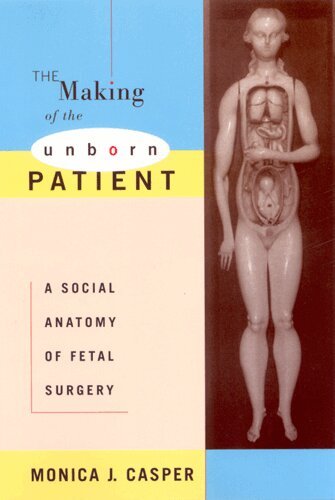
Winner of the 1998 C. Wright Mills Award from the Society for the Study of Social ProblemsIt is now possible for physicians to recognize that a pregnant woman's fetus is facing life-threatening problems, perform surgery on the fetus, and if it survives, return it to the woman's uterus to finish gestation. Although fetal surgery has existed in various forms for three decades, it is only just beginning to capture the public's imagination. These still largely experimental procedures raise all types of medical, political and ethical questions. Who is the patient? What are the technical difficulties involved in fetal surgery? How do reproductive politics seep into the operating room, and how do medical definitions and meanings flow out of medicine and into other social spheres? How are ethical issues defined in this practice and who defines them? Is fetal surgery the kind of medicine we want? What is involved in reframing fetal surgery as a women's health issue, rather than simply a pediatric concern? In this ethnographic study of the social, cultural and historical aspects of fetal surgery, Monica Casper addresses these questions. The Making of the Unborn Patient examines two important and connected events of the second half of the 20th century: the emergence of fetal surgery as a new medical specialty and the debut of the unborn patient.
300 kr
Skickas inom 7-10 vardagar
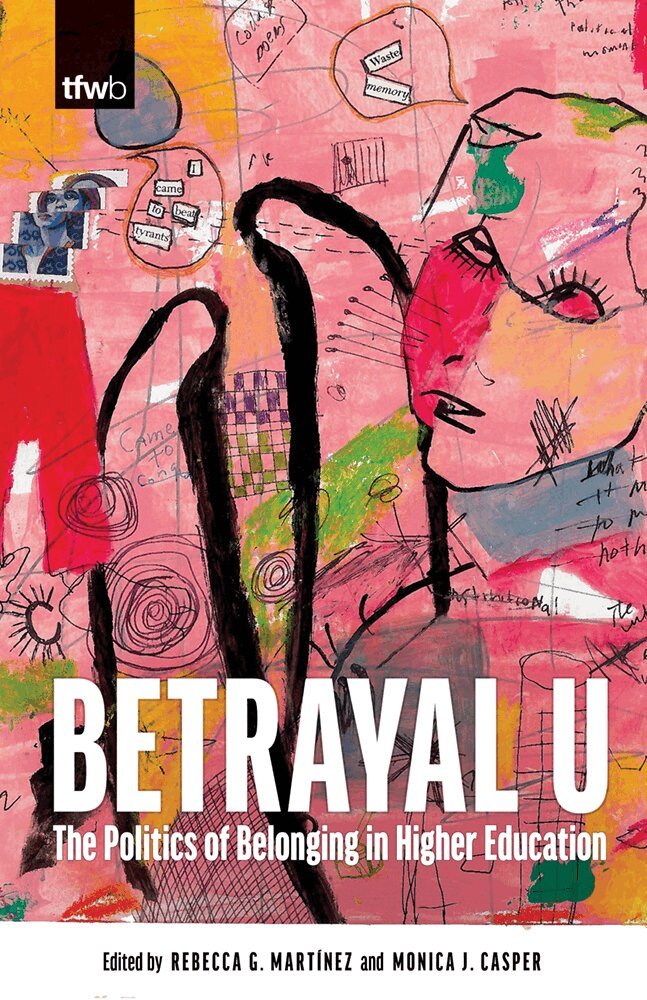
Higher education is in trouble, and not only due to a decline of public trust. As a microcosm of our broader culture, universities are inequitable and often harmful, especially for marginalized people. This is despite the democratic promise of higher education as a path for learning and social mobility. Women, people of color, First Gen, disabled, LGBTQ+, and other minoritized groups are disproportionately harmed in educational institutions that are hierarchical and reproduce inequality. Efforts to foster belonging for faculty, staff, and students may be highly effective but are under attack. Betrayal U intervenes in this context with a diverse, rich collection of essays, art, poetry, and research that explores these inequities through the lens of institutional betrayal, theorized by psychologist Jennifer Freyd. Edited by Rebecca G. MartÍnez and Monica J. Casper, this collection brings together thirty-six contributors who share personal experiences covering a range of topics in higher education. The work spans five thematic sections that examine the complexities of belonging and exclusion in academic settings. The contributors share their lived experiences of academic life from diverse vantage points, showing the ways minoritized groups are made to feel unwelcome, further marginalized, and often positioned as the problem. Exhibiting courage, compassion, and a commitment to better futures, the voices in this collection offer both a searing indictment of higher education and pathways to alternative practices and structures. They shine a spotlight on academia today, including the promise of inclusion and the perils of exclusion.ContributorsCeleste AtkinsJasmine BanksKrista L. BensonJessica Bishop-RoyseSamit Dipon BordoloiMonica J. CasperAparajita DeKathy DiehlTaylor Marie DohertyReshmi Dutt-BallerstadtAlma FloresAlanna GillisC. GoldbergJennifer M. GómezKristina GuptaJasmine L. HarrisSusan HillockDoreen HsuJennifer LaiAmy Andrea MartinezRebecca G. MartÍnezShantel MartinezSara A. MataRachael McCollumWang PingEmily RosserAngÉlica RuvalcabaBrandy L. SimulaRashna Batliwala SinghCierra Raine SorinConnor SpencerChantelle Spicer
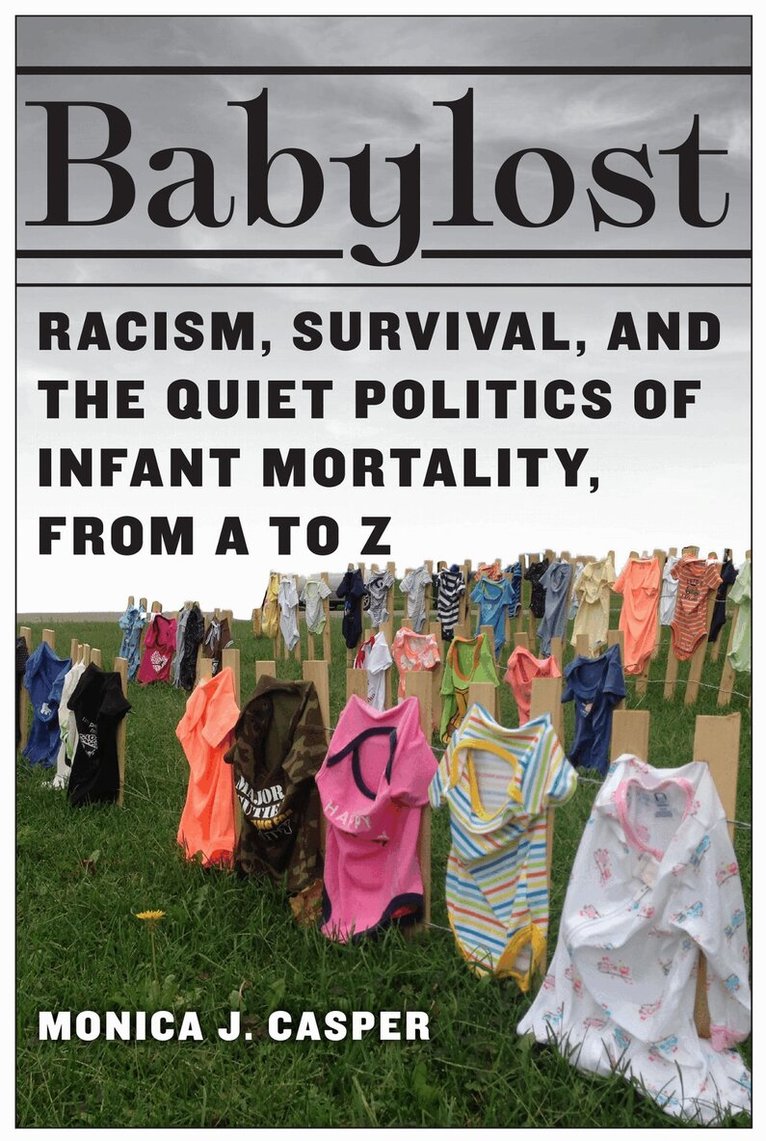
Babylost
Racism, Survival, and the Quiet Politics of Infant Mortality, from a to Z
Häftad, Engelska, 2022
331 kr
Skickas inom 7-10 vardagar
The U.S. infant mortality rate is among the highest in the industrialized world, and Black babies are far more likely than white babies to die in their first year of life. Maternal mortality rates are also very high. Though the infant mortality rate overall has improved over the past century with public health interventions, racial disparities have not. Racism, poverty, lack of access to health care, and other causes of death have been identified, but not yet adequately addressed. The tragedy is twofold: it is undoubtedly tragic that babies die in their first year of life, and it is both tragic and unacceptable that most of these deaths are preventable. Despite the urgency of the problem, there has been little public discussion of infant loss. The question this book takes up is not why babies die; we already have many answers to this question. It is, rather, who cares that babies, mostly but not only Black and Native American babies, are dying before their first birthdays? More importantly, what are we willing to do about it? This book tracks social and cultural dimensions of infant death through 58 alphabetical entries, from Absence to ZIP Code. It centers women's loss and grief, while also drawing attention to dimensions of infant death not often examined. It is simultaneously a sociological study of infant death, an archive of loss and grief, and a clarion call for social change.
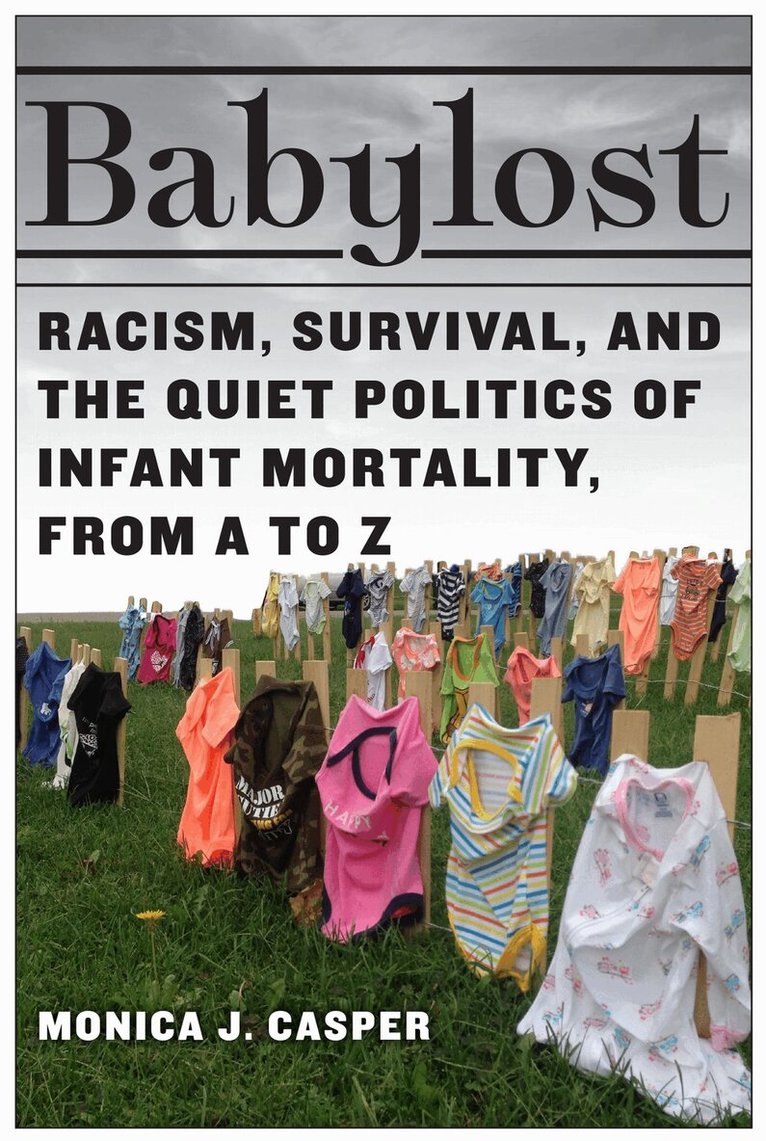
Babylost
Racism, Survival, and the Quiet Politics of Infant Mortality, from a to Z
Inbunden, Engelska, 2022
1 579 kr
Skickas inom 7-10 vardagar
The U.S. infant mortality rate is among the highest in the industrialized world, and Black babies are far more likely than white babies to die in their first year of life. Maternal mortality rates are also very high. Though the infant mortality rate overall has improved over the past century with public health interventions, racial disparities have not. Racism, poverty, lack of access to health care, and other causes of death have been identified, but not yet adequately addressed. The tragedy is twofold: it is undoubtedly tragic that babies die in their first year of life, and it is both tragic and unacceptable that most of these deaths are preventable. Despite the urgency of the problem, there has been little public discussion of infant loss. The question this book takes up is not why babies die; we already have many answers to this question. It is, rather, who cares that babies, mostly but not only Black and Native American babies, are dying before their first birthdays? More importantly, what are we willing to do about it? This book tracks social and cultural dimensions of infant death through 58 alphabetical entries, from Absence to ZIP Code. It centers women's loss and grief, while also drawing attention to dimensions of infant death not often examined. It is simultaneously a sociological study of infant death, an archive of loss and grief, and a clarion call for social change.