Natalia Aleksiun - Böcker
Visar alla böcker från författaren Natalia Aleksiun. Handla med fri frakt och snabb leverans.
9 produkter
9 produkter
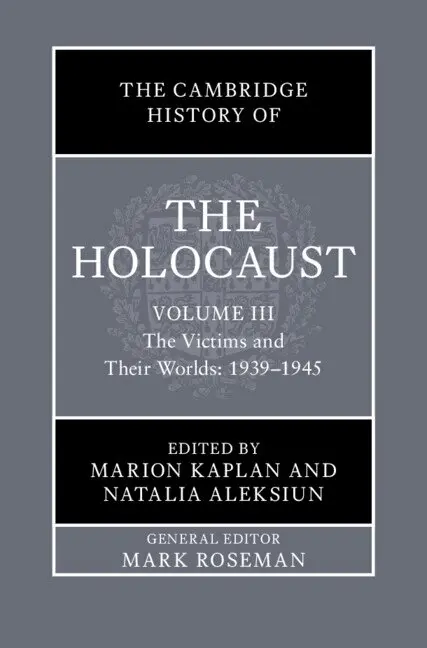
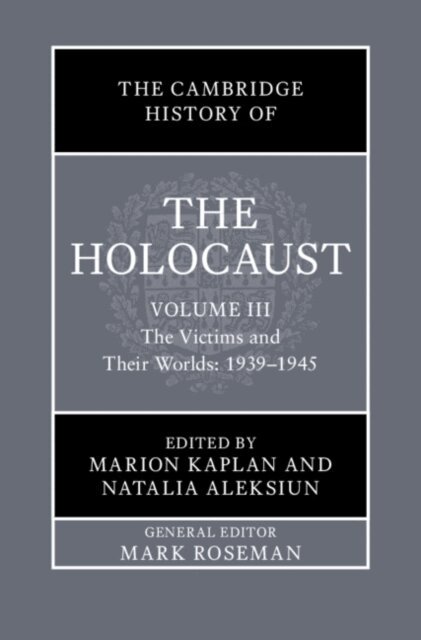
The Cambridge History of the Holocaust: Volume 3, The Victims and Their Worlds: 1939-1945
Inbunden, Engelska, 2025
1 682 kr
Skickas inom 7-10 vardagar
Ordinary victims' voices from the Holocaust are still far less recognized than those of the perpetrators, Volume III of The Cambridge History of the Holocaust centers upon victims' perspectives, examining their experiences, responses, and fates. Chapters encompass the ordeals of a range of persecuted groups: Jews, Roma and Sinti, and homosexuals, as well as those with physical and mental challenges, Slavs, and Soviet prisoners of war. Covering a wide geographical scope, contributors underscore the differences between victim experiences in eastern and western Europe while highlighting national and regional complexities. Through a breadth of primary sources including diaries, letters, memoirs and interviews, readers gain insight into the diverse reactions and behaviors of victims as well as those who helped or hurt them. This volume offers an overview of Holocaust scholarship through victims' voices, while highlighting areas for further research.
1 053 kr
Skickas inom 10-15 vardagar
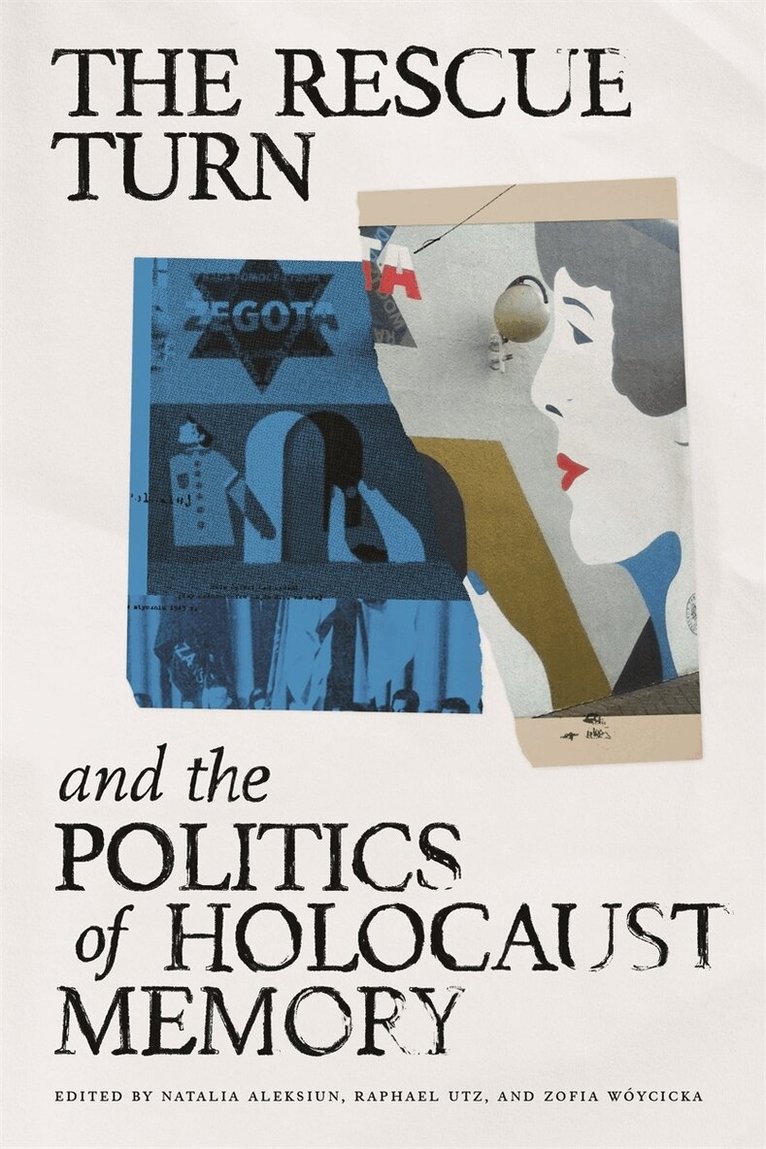
This volume considers the uses and misuses of the memory of assistance given to Jews during the Holocaust, deliberated in local, national, and transnational contexts. History of this aid has drawn the attention of scholars and the general public alike. Stories of heroic citizens who hid and rescued Jewish men, women, and children have been adapted into books, films, plays, public commemorations, and museum exhibitions. Yet, emphasis on the uplifting narratives often obscures the history of violence and complicity with Nazi policies of persecution and mass murder. Each of the ten essays in this interdisciplinary collection is dedicated to a different country: Belarus, Denmark, France, Germany, Greece, North Macedonia, the Netherlands, Poland, Slovakia, and Ukraine. The case studies provide new insights into what has emerged as one of the most prominent and visible trends in recent Holocaust memory and memory politics. While many of the essays focus on recent developments, they also shed light on the evolution of this phenomenon since 1945.
387 kr
Skickas inom 7-10 vardagar
This volume considers the uses and misuses of the memory of assistance given to Jews during the Holocaust, deliberated in local, national, and transnational contexts. History of this aid has drawn the attention of scholars and the general public alike. Stories of heroic citizens who hid and rescued Jewish men, women, and children have been adapted into books, films, plays, public commemorations, and museum exhibitions. Yet, emphasis on the uplifting narratives often obscures the history of violence and complicity with Nazi policies of persecution and mass murder. Each of the ten essays in this interdisciplinary collection is dedicated to a different country: Belarus, Denmark, France, Germany, Greece, North Macedonia, the Netherlands, Poland, Slovakia, and Ukraine. The case studies provide new insights into what has emerged as one of the most prominent and visible trends in recent Holocaust memory and memory politics. While many of the essays focus on recent developments, they also shed light on the evolution of this phenomenon since 1945.
Del 36 - Polin: Studies in Polish Jewry
Polin: Studies in Polish Jewry Volume 36
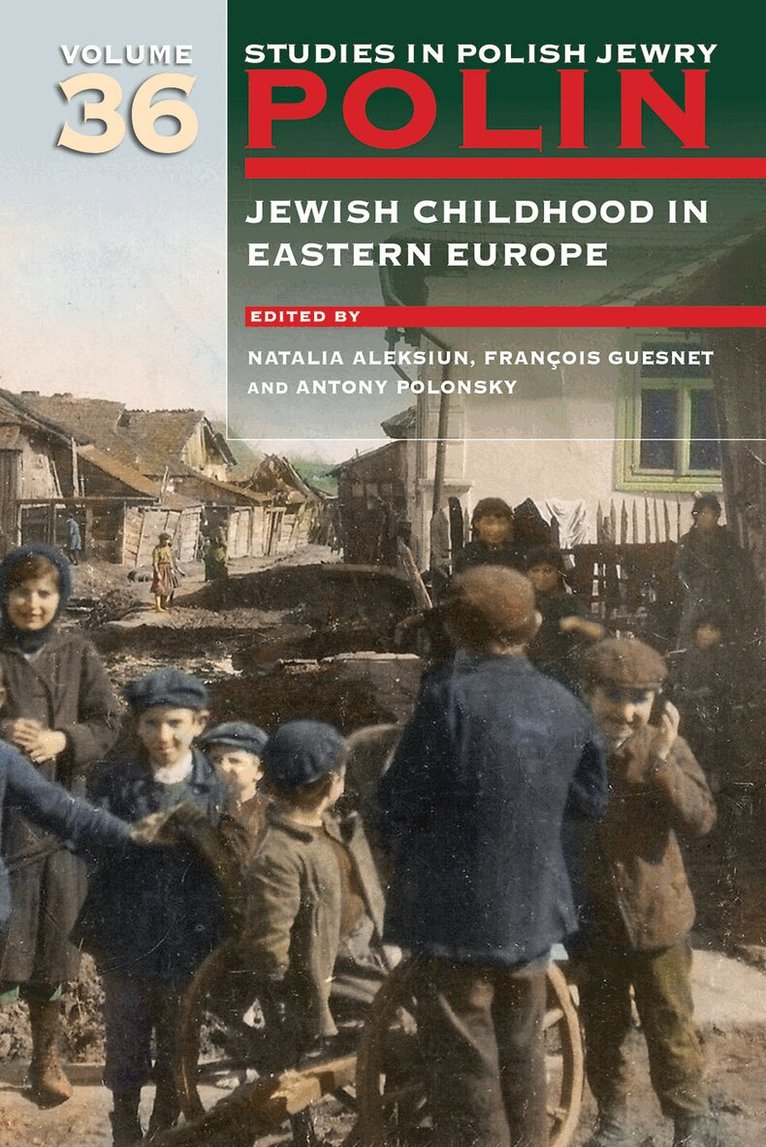
Jewish Childhood in Eastern Europe
Inbunden, Engelska, 2024
1 304 kr
Skickas inom 7-10 vardagar
Changes in childhood and children’s roles in society, and in how children participate in determining their own lives, have long been of interest to historians. Recent years have seen the emergence of new perspectives on the study of childhood, both in historical scholarship and in literary and cultural studies. Children’s experiences are now scrutinized not only as a means of examining the lives and self-representation of young individuals and their families, but also to investigate how the early experiences of individuals can shed light on larger historical questions. This volume applies both approaches in the context of Jewish eastern Europe. Historian Gershon Hundert has argued that studying the experience of children and attitudes towards coming of age offers an important corrective to the way we think of the Jewish past. This volume proves the potential of this approach in exploring many areas of historical interest. Among the topics investigated here are changes in perceptions of childhood and family, progress in the medical treatment of children, and developments in education. The work of charitable institutions is also considered, along with studies of emotion, gender history, and Polish–Jewish relations. From the First World War until after the Holocaust and the Second World War, countless children experienced traumatizing events. A special section is dedicated to their fate.
Del 36 - Polin: Studies in Polish Jewry
Polin: Studies in Polish Jewry Volume 36
Jewish Childhood in Eastern Europe
Häftad, Engelska, 2024
574 kr
Skickas inom 7-10 vardagar
Changes in childhood and children’s roles in society, and in how children participate in determining their own lives, have long been of interest to historians. Recent years have seen the emergence of new perspectives on the study of childhood, both in historical scholarship and in literary and cultural studies. Children’s experiences are now scrutinized not only as a means of examining the lives and self-representation of young individuals and their families, but also to investigate how the early experiences of individuals can shed light on larger historical questions. This volume applies both approaches in the context of Jewish eastern Europe. Historian Gershon Hundert has argued that studying the experience of children and attitudes towards coming of age offers an important corrective to the way we think of the Jewish past. This volume proves the potential of this approach in exploring many areas of historical interest. Among the topics investigated here are changes in perceptions of childhood and family, progress in the medical treatment of children, and developments in education. The work of charitable institutions is also considered, along with studies of emotion, gender history, and Polish–Jewish relations. From the First World War until after the Holocaust and the Second World War, countless children experienced traumatizing events. A special section is dedicated to their fate.
503 kr
Skickas inom 7-10 vardagar
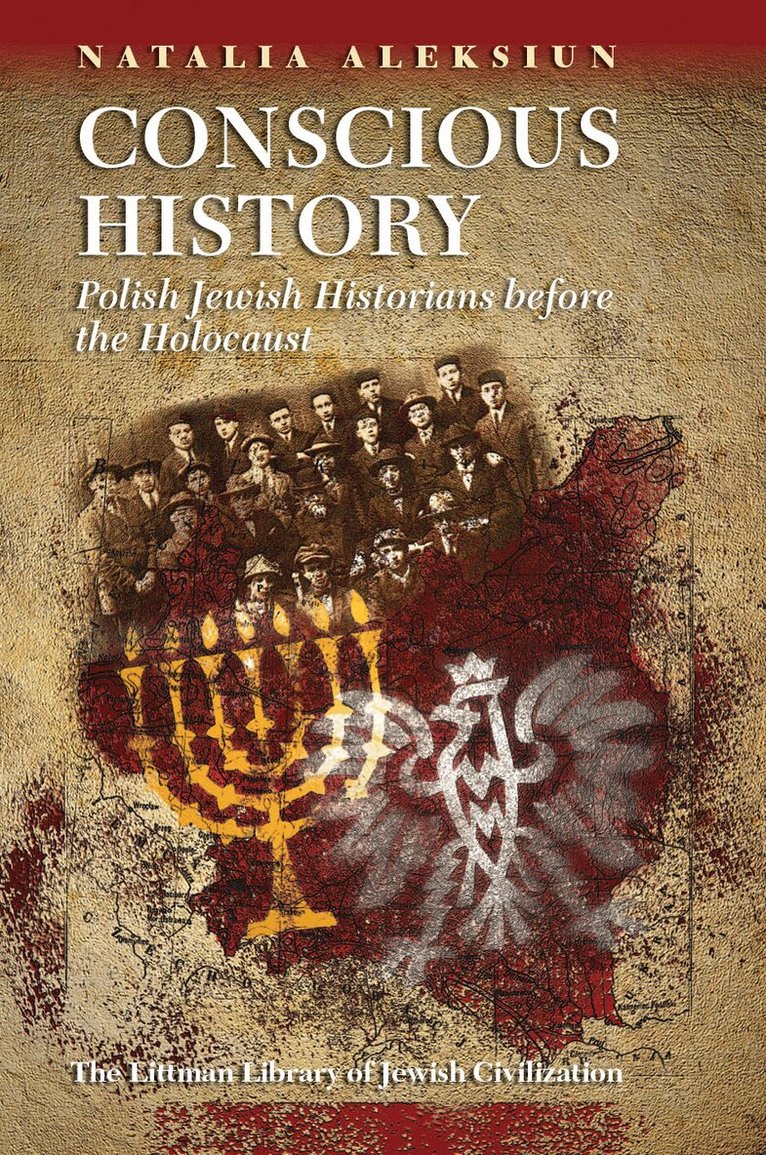
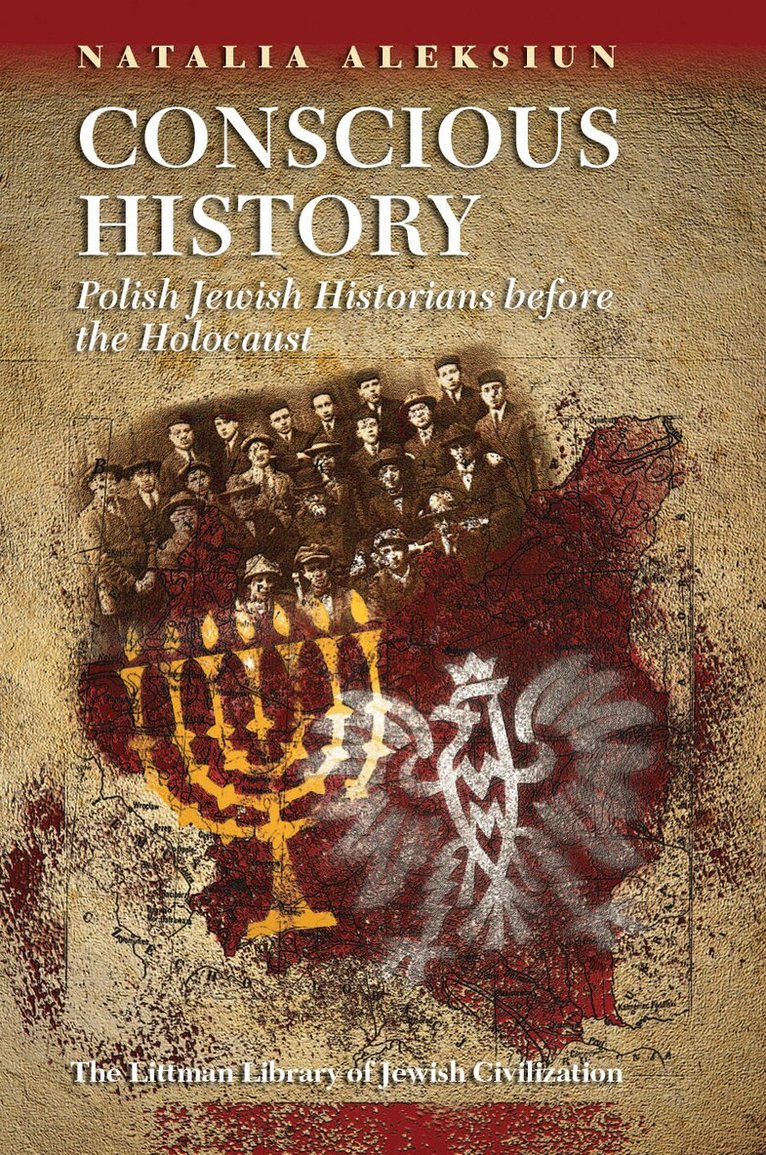
Thoroughly researched, this study highlights thehistorical scholarship that is one of the lasting legacies of interwar PolishJewry and analyses its political and social context. As Jewish citizensstruggled to assert their place in a newly independent Poland, a dedicated groupof Jewish scholars fascinated by history devoted themselves to creating a senseof Polish Jewish belonging while also fighting for their rights as an ethnicminority. The political climate made it hard for these men and women to pursuean academic career; instead they had to continue their efforts to create anddisseminate Polish Jewish history by teaching outside the university and publishingin scholarly and popular journals. By introducing the Jewish public to apantheon of historical heroes to celebrate and anniversaries to commemorate,they sought to forge a community aware of its past, its cultural heritage, andits achievements---though no less important were their efforts to counter theincreased hostility towards Jews in the public discourse of the day. Inhighlighting the role of public intellectuals and the social role of scholarsand historical scholarship, this study adds a new dimension to theunderstanding of the Polish Jewish world in the interwar period.
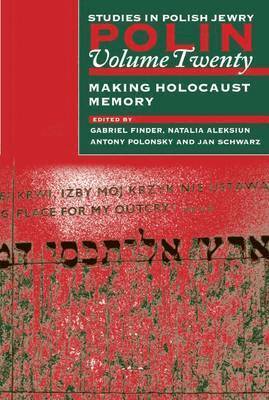
Del 20 - Polin: Studies in Polish Jewry
Polin: Studies in Polish Jewry Volume 20
Making Holocaust Memory
Häftad, Engelska, 2007
513 kr
Skickas inom 7-10 vardagar
Although the reconciliation of Jewish and Polish memories of the Holocaust is the central issue in contemporary Polish–Jewish relations, this is the first attempt to examine these divisive memories in a comprehensive way. Until 1989, Polish consciousness of the Second World War subsumed the destruction of Polish Jewry within a communist narrative of Polish martyrdom and heroism. Post-war Jewish memory, by contrast, has been concerned mostly with Jewish martyrdom and heroism (and barely acknowledged the plight of Poles under German occupation). Since the 1980s, however, a significant number of Jews and Poles have sought to identify a common ground and have met with partial but increasing success, notwithstanding the new debates that have emerged in recent years concerning Polish behaviour during the Nazi genocide of the Jews that Poles had ignored for half a century. This volume considers these contentious issues from different angles.Among the topics covered are Jewish memorial projects, both in Poland and beyond its borders, the Polish approach to Holocaust memory under communist rule, and post-communist efforts both to retrieve the Jewish dimension to Polish wartime memory and to reckon with the dark side of the Polish national past. An interview with acclaimed author Henryk Grynberg touches on many of these issues from the personal perspective of one who as a child survived the Holocaust hidden in the Polish countryside, as do the three poems by Grynberg reproduced here.The ‘New Views’ section features innovative research in other areas of Polish–Jewish studies. A special section is devoted to research concerning the New Synagogue in Poznan, built in 1907, which is still standing only because the Nazis turned it into a swimming-pool.CONTRIBUTORS: Natalia Aleksiun, Assistant Professor in Eastern European Jewish History, Touo College, New York; Jolanta Ambrosewicz-Jacobs, Head, Section for Holocaust Studies, Centre for European Studies, Jagiellonian University, Kraków; curator, International Centre for Education about Auschwitz and the Holocaust, Auschwitz-Birkenau State Museum; Boaz Cohen, teacher in Jewish and Holocaust Studies, Shaanan and Western Galilee Colleges, northern Israel; Judith R. Cohen, Director of the Photographic Reference Collection, United States Holocaust Memorial Museum, Washington DC; Gabriel N. Finder, Associate Professor, Department of Germanic Languages and Literatures, University of Virginia; Rebecca Golbert, researcher; Regina Grol, Professor of Comparative Literature, Empire State College, State University of New York; Jonathan Huener, Associate Professor of History, University of Vermont; Carol Herselle Krinsky, Professor of Fine Arts, New York University; Marta Kurkowska, Lecturer, Institute of History, Jagiellonian, University, Kraków; Joanna B. Michlic, Assistant Professor, Holocaust and Genocide Program, Richard Stockton College, Pomona, New Jersey; Eva Plach, Assistant Professor of History, Wilfrid Laurier University, Waterloo, Canada; Antony Polonsky, Albert Abramson Professor of Holocaust Studies, Brandeis University and the United States Holocaust Memorial Museum, Washington DC; Alexander V. Prusin, Associate Professor of History, New Mexico Institute of Mining and Technology, Socorro; Jan Schwarz, Senior Lecturer, Department of Germanic Studies, University of Chicago; Maxim D. Shrayer, Professor of Russian and English, Chair of the Department of Slavic and Eastern Languages, Co-Director, Jewish Studies Program, Boston College; Michael C. Steinlauf, Professor of Jewish History and Culture, Gratz College, Pennsylvania; Robert Szuchta, History teacher, Stanislaw I. Witkiewicz High School, Warsaw; Joanna Tokarska-Bakir, Lecturer in Cultural Anthroplogy, Warsaw University; Chair, Department of Cultural Anthropology, Collegium Civitas, Poland; Scott Ury, Post-Doctoral Fellow, Department of Jewish History, Tel Aviv University; Bret Werb, United States Holocaust Memorial Museum, Washington DC; Seth L. Wolitz, Gale Chair of Jewish Studies and Professor of Comparative Literature, University of Texas at Austin.
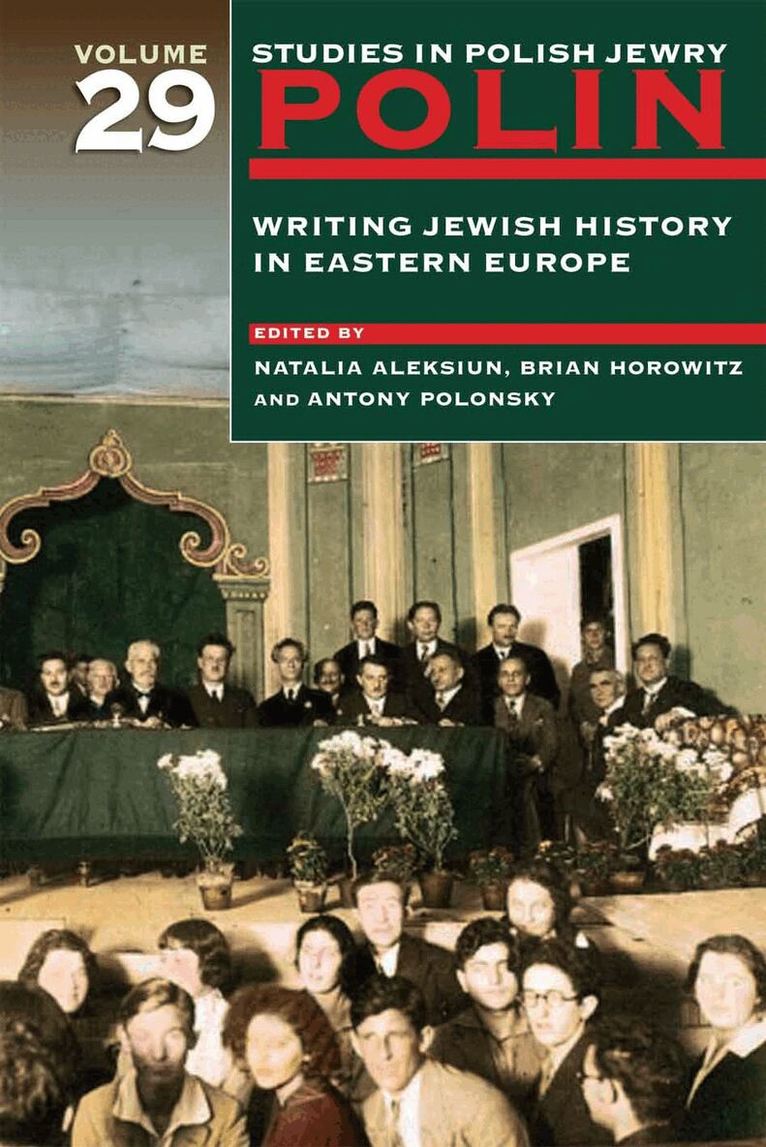
Del 29 - Polin: Studies in Polish Jewry
Polin: Studies in Polish Jewry Volume 29
Writing Jewish History in Eastern Europe
Häftad, Engelska, 2016
513 kr
Skickas inom 7-10 vardagar
Historiography formed an unusually important component of the popular culture and heritage of east European Jewry in the late nineteenth and early twentieth centuries. This was a period of social, economic, and political upheaval, and for the emerging class of educated Jews the writing and reading of Jewish history provided not only intellectual but also emotional and moral sustenance. Facing an insecure future became easier with an understanding of the past, and of the Jewish place in that past.This volume is devoted to the development of Jewish historiography in the three east European centres—Congress Poland, the Russian empire, and Galicia—that together contained the majority of world Jewry at that time. Drawing widely on the multilingual body of scholarly and popular literature that emerged in that turbulent environment, the contributors to this volume attempt to go beyond the established paradigms in the study of Jewish historiography, and specifically to examine the relationship between the writing of Jewish history and of non-Jewish history in eastern Europe. In doing so they expose the tension between the study of the Jewish past in a communal setting and in a wider, regional, setting that located Jews firmly in the non-Jewish political, economic, and cultural environment. They also explore the relationship between ‘history’—seen as the popular understanding of the past—and ‘scholarly history’—interpretation of the past through the academic study of the sources, which lays claim to objectivity and authority. The development of Jewish historical scholarship grew out of the new intellectual climate of the Haskalah, which encouraged novel modes of thinking about self and others and promoted critical enquiry and new approaches to traditional sources. At the same time, however, in response to what the traditionalists perceived as secular research, an Orthodox historiography also emerged, driven not only by scholarly curiosity but also by the need to provide a powerful counterweight in the struggle against modernity. In fact, east European Jewish historiography has undergone many methodological, thematic, and ideological transformations over the last two centuries. Even today, east European Jewish historiography revisits many of the questions of importance to scholars and audiences since its emergence: how Jews lived, both within the narrow Jewish world and in contact with the wider society; the limits of Jewish insularity and integration; expressions of persecution and anti-Jewish violence; and also Jewish contributions to the societies and states of eastern Europe. Many challenges still remain: questions of the purpose of the research, its ideological colouring, and its relevance for contemporary Jewish communities.The fruit of research in many disciplines and from different methodological points of view, this volume has much to offer scholars of modern Jewry trying to understand how east European Jews saw themselves as they struggled with the concepts of modernity and national identity and how their history continues to be studied and discussed by an international community of scholars.
792 kr
Skickas inom 7-10 vardagar
Thoroughly researched, this study highlights thehistorical scholarship that is one of the lasting legacies of interwar PolishJewry and analyses its political and social context. As Jewish citizensstruggled to assert their place in a newly independent Poland, a dedicated groupof Jewish scholars fascinated by history devoted themselves to creating a senseof Polish Jewish belonging while also fighting for their rights as an ethnicminority. The political climate made it hard for these men and women to pursuean academic career; instead they had to continue their efforts to create anddisseminate Polish Jewish history by teaching outside the university and publishingin scholarly and popular journals. By introducing the Jewish public to apantheon of historical heroes to celebrate and anniversaries to commemorate,they sought to forge a community aware of its past, its cultural heritage, andits achievements---though no less important were their efforts to counter theincreased hostility towards Jews in the public discourse of the day. Inhighlighting the role of public intellectuals and the social role of scholarsand historical scholarship, this study adds a new dimension to theunderstanding of the Polish Jewish world in the interwar period.