Natalie Naimark-Goldberg - Böcker
Visar alla böcker från författaren Natalie Naimark-Goldberg. Handla med fri frakt och snabb leverans.
3 produkter
3 produkter
277 kr
Skickas inom 7-10 vardagar
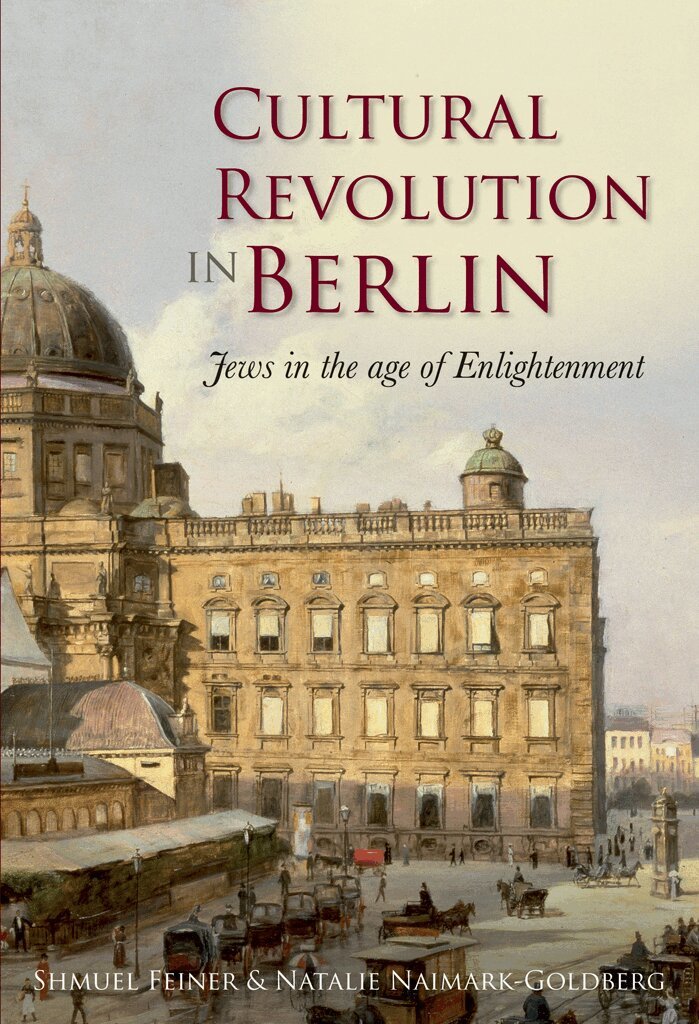
The process of secularization, which is one of the sources of present-day democracy, has its radical origins in eighteenth-century Europe. Criticism of religious norms and discipline, institutions and ideology led to the movement known as the Enlightenment. Its Jewish protagonists (the maskilim), a young intellectual elite, undertook the role of culturally revolutionizing eighteenth-century Jewish society. They aimed at overturning the monopolistic control of rabbinic scholars over education, publications, and social behaviour in favour of secular intellectual values. They sought to promote political rights and religious tolerance, embraced humanism, rationalism, and freedom of opinion. In turn, the end of Jewish isolation brought about a significant contribution to philosophy, science, and art, and participation in the culture of modern European society. This introduction to the emergence of Jewish Enlightenment (Haskalah) in Germany pays special attention to its most famous figure, Moses Mendelssohn, who was active at the centre of the Enlightenment in Berlin. The volume is richly illustrated with images of eighteenth-century manuscripts, books, and pamphlets, some of which are published here for the first time, and which derive from a collection assembled by the famous nineteenth-century scholar Leopold Zunz. This is an attractive book providing an excellent guide to the major cultural metamorphosis represented by Jewish Enlightenment.
1 005 kr
Skickas inom 7-10 vardagar
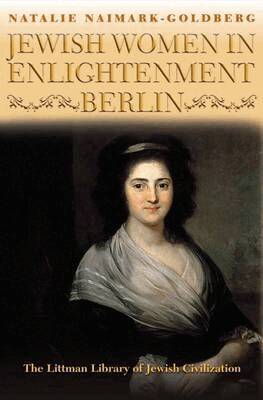
National Jewish Book Awards Finalist for the Barbara Dobkin Award for Women’s Studies, 2013.The encounter of Jews with the Enlightenment has so far been considered almost entirely from a masculine perspective. In shifting the focus to a group of educated Jewish women in Berlin, this engaging study makes an important contribution to German Jewish history as well as to gender studies.Natalie Naimark-Goldberg's study of these women's letters, literary activities, and social life reveals them as cultivated members of the European public. Their correspondence allowed them not only to demonstrate their intellectual talents but also to widen their horizons and acquire knowledge—a key concern of women seeking empowerment. Her descriptions of their involvement in the public sphere, a key feature of Enlightenment culture, offer important new insights: social gatherings in their homes served the purpose of intellectual advancement, while the newly fashionable spas gave them the opportunity to expand their contacts with men as well as with other women, and with non-Jews as well as Jews, right across Europe.As avid readers and critical writers, these women reflected the secular world-view that was then beginning to spread among Jews. Imbued with enlightened ideas and values and a new feminine awareness, they began to seek independence and freedom, to the extent of challenging the institution of marriage and traditional family frameworks.A final chapter discusses the relationship of the women to Judaism and to religion in general, including their attitude to conversion to Christianity—the route that so many ultimately took.
334 kr
Skickas inom 5-8 vardagar
National Jewish Book Awards Finalist for the Barbara Dobkin Award for Women’s Studies, 2013.The encounter of Jews with the Enlightenment has so far been considered almost entirely from a masculine perspective. In shifting the focus to a group of educated Jewish women in Berlin, this engaging study makes an important contribution to German Jewish history as well as to gender studies.Natalie Naimark-Goldberg's study of these women's letters, literary activities, and social life reveals them as cultivated members of the European public. Their correspondence allowed them not only to demonstrate their intellectual talents but also to widen their horizons and acquire knowledge—a key concern of women seeking empowerment. Her descriptions of their involvement in the public sphere, a key feature of Enlightenment culture, offer important new insights: social gatherings in their homes served the purpose of intellectual advancement, while the newly fashionable spas gave them the opportunity to expand their contacts with men as well as with other women, and with non-Jews as well as Jews, right across Europe.As avid readers and critical writers, these women reflected the secular world-view that was then beginning to spread among Jews. Imbued with enlightened ideas and values and a new feminine awareness, they began to seek independence and freedom, to the extent of challenging the institution of marriage and traditional family frameworks.A final chapter discusses the relationship of the women to Judaism and to religion in general, including their attitude to conversion to Christianity—the route that so many ultimately took.