Shmuel Feiner - Böcker
Visar alla böcker från författaren Shmuel Feiner. Handla med fri frakt och snabb leverans.
11 produkter
11 produkter
1 008 kr
Skickas inom 7-10 vardagar
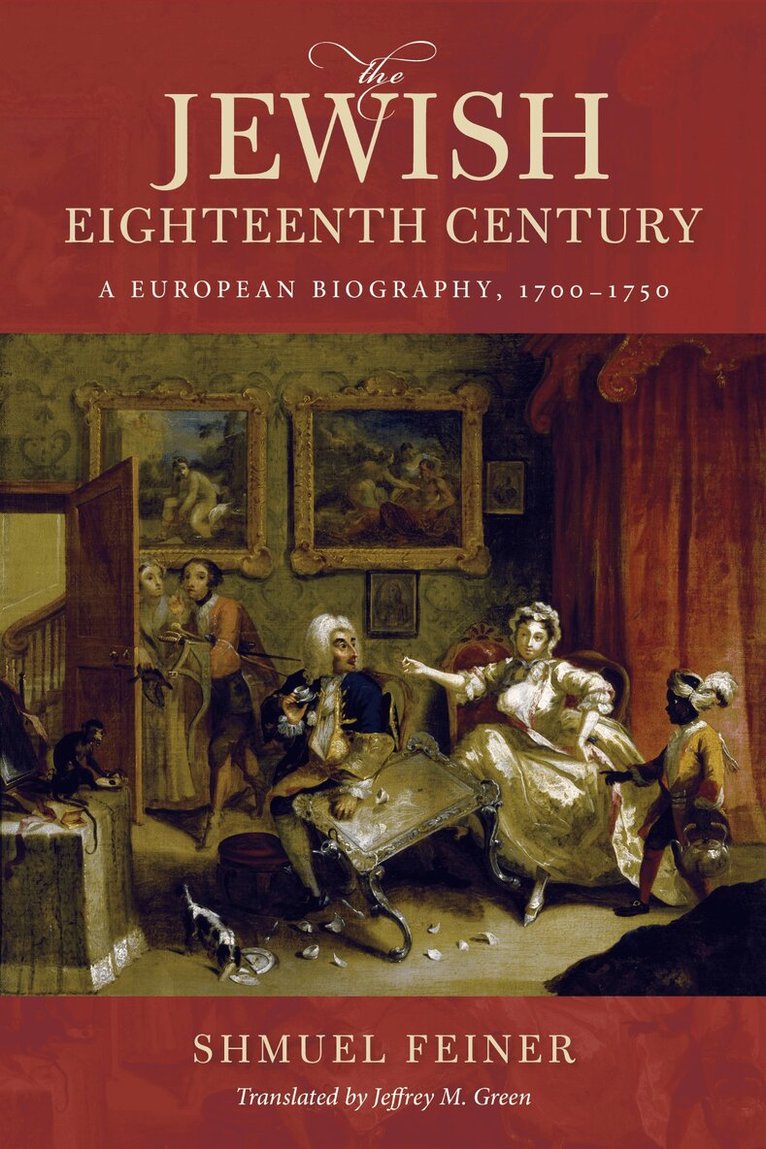
The eighteenth century was the Jews' first modern century. The deep changes that took place during its course shaped the following generations, and its most prominent voices still reverberate today. In this first volume of his magisterial work, Shmuel Feiner charts the twisting and fascinating world of the first half of the 18th century from the viewpoint of the Jews of Europe. Paying careful attention to life stories, to bright and dark experiences, to voices of protest, to aspirations of reform, and to strivings for personal and general happiness, Feiner identifies the tectonic changes that were taking place in Europe and their unprecedented effects on and among Jews. From the religious and cultural revolution of the Haskalah (Jewish Enlightenment) to the question of whether Jews could be citizens of any nation, Feiner presents a broad view of how this century of upheaval altered the map of Europe and the Jews who called it home.
415 kr
Skickas inom 7-10 vardagar
The eighteenth century was the Jews' first modern century. The deep changes that took place during its course shaped the following generations, and its most prominent voices still reverberate today. In this first volume of his magisterial work, Shmuel Feiner charts the twisting and fascinating world of the first half of the 18th century from the viewpoint of the Jews of Europe. Paying careful attention to life stories, to bright and dark experiences, to voices of protest, to aspirations of reform, and to strivings for personal and general happiness, Feiner identifies the tectonic changes that were taking place in Europe and their unprecedented effects on and among Jews. From the religious and cultural revolution of the Haskalah (Jewish Enlightenment) to the question of whether Jews could be citizens of any nation, Feiner presents a broad view of how this century of upheaval altered the map of Europe and the Jews who called it home.
969 kr
Skickas inom 10-15 vardagar
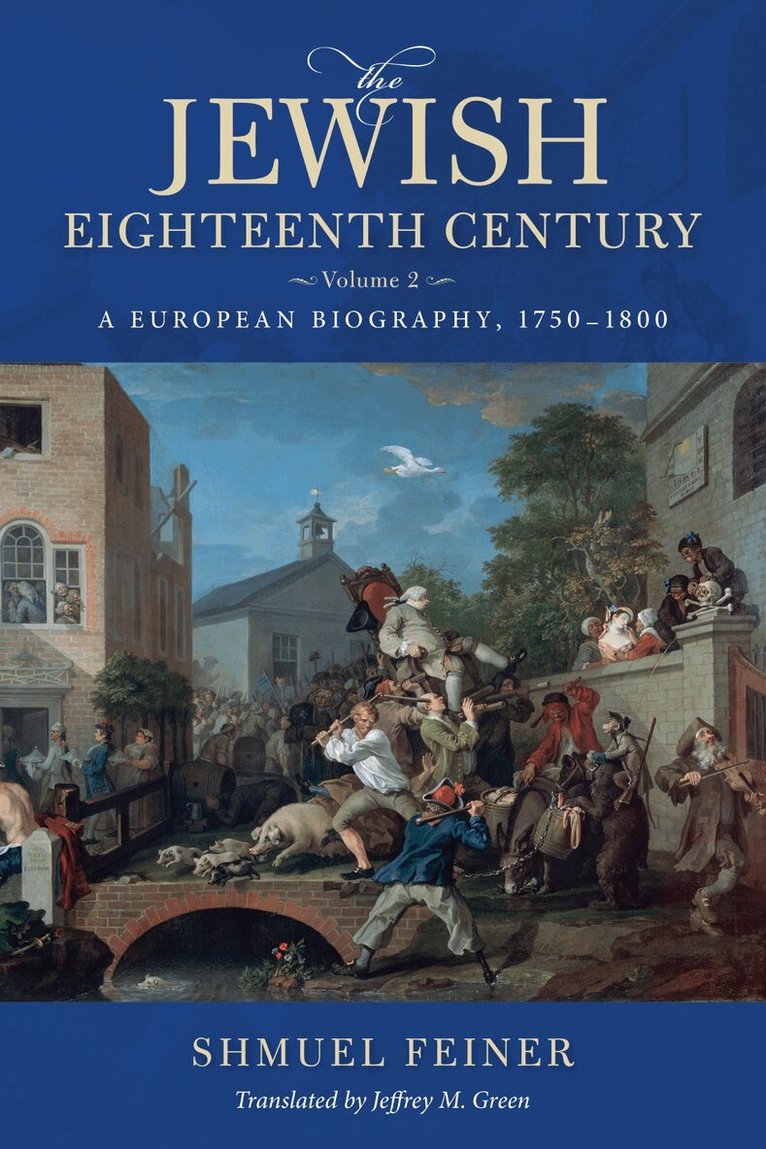
The second volume of Shmuel Feiner's The Jewish Eighteenth Century covers the period from 1750 to 1800, a time of even greater upheavals, tensions, and challenges. The changes that began to emerge at the beginning of the eighteenth century matured in the second half.Feiner explores how political considerations of the Jewish minority throughout Europe began to expand. From the "Jew Bill" of 1753 in Britain, to the surprising series of decrees issued by Joseph II of Austria that expanded tolerance in Austria, to the debate over emancipation in revolutionary France, the lives of the Jews of Europe became ever more intertwined with the political, social, economic, and cultural fabric of the continent.The Jewish Eighteenth Century, Volume 2: A European Biography, 1750–1800 concludes Feiner's landmark study of the history of Jewish populations in the period. By combining an examination of the broad and profound processes that changed the familiar world from the ground up with personal experiences of those who lived through them, it allows for a unique explanation of these momentous events.
421 kr
Skickas inom 10-15 vardagar
The second volume of Shmuel Feiner's The Jewish Eighteenth Century covers the period from 1750 to 1800, a time of even greater upheavals, tensions, and challenges. The changes that began to emerge at the beginning of the eighteenth century matured in the second half.Feiner explores how political considerations of the Jewish minority throughout Europe began to expand. From the "Jew Bill" of 1753 in Britain, to the surprising series of decrees issued by Joseph II of Austria that expanded tolerance in Austria, to the debate over emancipation in revolutionary France, the lives of the Jews of Europe became ever more intertwined with the political, social, economic, and cultural fabric of the continent.The Jewish Eighteenth Century, Volume 2: A European Biography, 1750–1800 concludes Feiner's landmark study of the history of Jewish populations in the period. By combining an examination of the broad and profound processes that changed the familiar world from the ground up with personal experiences of those who lived through them, it allows for a unique explanation of these momentous events.
281 kr
Tillfälligt slut
421 kr
Skickas inom 10-15 vardagar
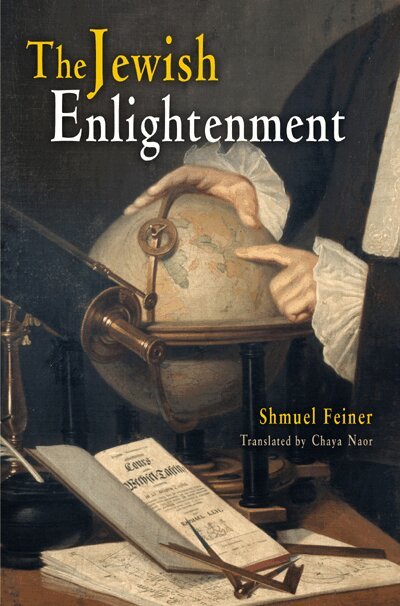
At the beginning of the eighteenth century most European Jews lived in restricted settlements and urban ghettos, isolated from the surrounding dominant Christian cultures not only by law but also by language, custom, and dress. By the end of the century urban, upwardly mobile Jews had shaved their beards and abandoned Yiddish in favor of the languages of the countries in which they lived. They began to participate in secular culture and they embraced rationalism and non-Jewish education as supplements to traditional Talmudic studies. The full participation of Jews in modern Europe and America would be unthinkable without the intellectual and social revolution that was the Haskalah, or Jewish Enlightenment.Unparalleled in scale and comprehensiveness, The Jewish Enlightenment reconstructs the intellectual and social revolution of the Haskalah as it gradually gathered momentum throughout the eighteenth century. Relying on a huge range of previously unexplored sources, Shmuel Feiner fully views the Haskalah as the Jewish version of the European Enlightenment and, as such, a movement that cannot be isolated from broader eighteenth-century European traditions. Critically, he views the Haskalah as a truly European phenomenon and not one simply centered in Germany. He also shows how the republic of letters in European Jewry provided an avenue of secularization for Jewish society and culture, sowing the seeds of Jewish liberalism and modern ideology and sparking the Orthodox counterreaction that culminated in a clash of cultures within the Jewish community. The Haskalah's confrontations with its opponents within Jewry constitute one of the most fascinating chapters in the history of the dramatic and traumatic encounter between the Jews and modernity.The Haskalah is one of the central topics in modern Jewish historiography. With its scope, erudition, and new analysis, The Jewish Enlightenment now provides the most comprehensive treatment of this major cultural movement.
862 kr
Skickas inom 10-15 vardagar
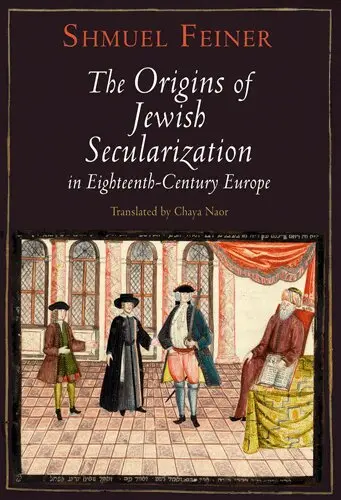
Throughout the eighteenth century, an ever-sharper distinction emerged between Jews of the old order and those who were self-consciously of a new world. As aspirations for liberation clashed with adherence to tradition, as national, ethnic, cultural, and other alternatives emerged and a long, circuitous search for identity began, it was no longer evident that the definition of Jewishness would be based on the beliefs and practices surrounding the study of the Torah.In The Origins of Jewish Secularization in Eighteenth-Century Europe Shmuel Feiner reconstructs this evolution by listening to the voices of those who participated in the process and by deciphering its cultural codes and meanings. On the one hand, a great majority of observant Jews still accepted the authority of the Talmud and the leadership of the rabbis; on the other, there was a gradually more conspicuous minority of "Epicureans" and "freethinkers." As the ground shifted, each individual was marked according to his or her place on the path between faith and heresy, between devoutness and permissiveness or indifference.Building on his award-winning Jewish Enlightenment, Feiner unfolds the story of critics of religion, mostly Ashkenazic Jews, who did not take active part in the secular intellectual revival known as the Haskalah. In open or concealed rebellion, Feiner's subjects lived primarily in the cities of western and central Europe-Altona-Hamburg, Amsterdam, London, Berlin, Breslau, and Prague. They participated as "fashionable" Jews adopting the habits and clothing of the surrounding Gentile society. Several also adopted the deist worldview of Enlightenment Europe, rejecting faith in revelation, the authority of Scripture, and the obligation to observe the commandments.Peering into the synagogue, observing individuals in the coffeehouse or strolling the boulevards, and peeking into the bedroom, Feiner recovers forgotten critics of religion from both the margins and the center of Jewish discourse. His is a pioneering work on the origins of one of the most significant transformations of modern Jewish history.
1 394 kr
Skickas inom 7-10 vardagar
This book gives voice to the experiences of secularization based on much new and illuminating research, making it possible to observe the current, vociferous discourse in the context of the deep and long-term historical processes. The book is laid out in four “Acts” that open windows through which one may view the various experiences of secularization. One hears many contradictory voices of hope and despair, enthusiasm and frustration, anger, rebellion, alienation, apprehension, and pain.In the various acts between the sixteenth and the early twentieth centuries, secularization as a historical process was expressed in many modes, on the spectrum between soft and radical, some of them very intimate, which were bound up with experiences of pain, panic, alienation, and betrayal. Secularization is a powerful force that gave rise to unprecedented global change in private lives, in society, in the nation, and in the state in the modern age. It also shaped Jewish religion as it is known today and gave rise to defensive and militant orthodoxy, to political and religious frameworks, to humanistic and liberal Judaism, and to other ways of creating a secular Jewish culture as an alternative to religion. In the various acts between the sixteenth and the early twentieth centuries, secularization as a historical process was expressed in many modes, on the spectrum between soft and radical, some of them very intimate, which were bound up with experiences of pain, panic, alienation, and betrayal.
278 kr
Skickas inom 7-10 vardagar
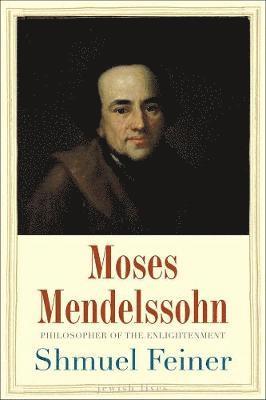
The process of secularization, which is one of the sources of present-day democracy, has its radical origins in eighteenth-century Europe. Criticism of religious norms and discipline, institutions and ideology led to the movement known as the Enlightenment. Its Jewish protagonists (the maskilim), a young intellectual elite, undertook the role of culturally revolutionizing eighteenth-century Jewish society. They aimed at overturning the monopolistic control of rabbinic scholars over education, publications, and social behaviour in favour of secular intellectual values. They sought to promote political rights and religious tolerance, embraced humanism, rationalism, and freedom of opinion. In turn, the end of Jewish isolation brought about a significant contribution to philosophy, science, and art, and participation in the culture of modern European society. This introduction to the emergence of Jewish Enlightenment (Haskalah) in Germany pays special attention to its most famous figure, Moses Mendelssohn, who was active at the centre of the Enlightenment in Berlin. The volume is richly illustrated with images of eighteenth-century manuscripts, books, and pamphlets, some of which are published here for the first time, and which derive from a collection assembled by the famous nineteenth-century scholar Leopold Zunz. This is an attractive book providing an excellent guide to the major cultural metamorphosis represented by Jewish Enlightenment.
334 kr
Skickas inom 5-8 vardagar
Shmuel Feiner'sinnovative book recreates the historical consciousness that fired theHaskalah—the Jewish Enlightenment movement. The proponents of this movementadvocated that Jews should capture the spirit of the future and take theirplace in wider society, but as Jews—without denying their collective identityand without denying their past. Claiming historical legitimacy for theirideology and their vision of the future, they formulated an ethos of modernitythat they projected on to the universal and the Jewish past alike.What was the image ofthe past that the maskilim shaped? What tactics underpinned their use ofhistory? How did their historical awareness change and develop—from theinception of the Haskalah in Germany at the time of Mendelssohn and Wessely,through the centres of Haskalah in Austria, Galicia, and Russia, to theemergence of modern nationalism in the maskilic circles in eastern Europe inthe last third of the nineteenth century? These are some of the questionsraised in this fascinating exploration of an ideological approach to historywhich throws a searching new light on the Jewish Enlightenment movement and theemergence of Jewish historical consciousness more generally.
277 kr
Skickas inom 5-8 vardagar
Thisvolume, written by a range of scholars in history and literature, offers anew understanding of one of the central cultural and ideological movementsamong Jews in modern times. Disengaging the Haskalah from the questions ofmodernization or emancipation that have hitherto dominated the scholarship,the contributors put the Haskalah under a microscope in order to restoredetail and texture to the individuals, ideas, and activities that were itsmakers in the eighteenth and nineteenth centuries. In particular, theyreplace simple dichotomies with nuanced distinctions, presenting therelationship between ‘tradition’ and Haskalah as a spectrum of closely linkedcultural options rather than a fateful choice between old and new or good andevil. The essays address major and minor figures; ask whether there was such anentity as an ‘early Haskalah’, or a Haskalah movement in England, look at keyissues such as the relationship of the Haskalah to Orthodoxy and hasidism,and also treat such neglected subjects as the position of women. New Perspectives on the Haskalahwill interest all students of modern Jewish history, literature, and culture. CONTRIBUTORS: Harris Bor, Edward Breuer, Tova Cohen, Immanuel Etkes, ShmuelFeiner, Yehuda Friedlander, David B. Ruderman, Joseph Salmon, Nancy Sinkoff,David Sorkin, Shmuel Werses.