• Fri frakt över 249 kr
  • •
  • Snabba leveranser
  • •
  • Billiga böcker
Kundservice

Du är på sajten för privatpersoner.

Företag, bibliotek eller offentlig verksamhet?

Du handlar på classic.bokus.com, där alla dina funktioner finns intakta.
Till classic.bokus.com
Bokus logotyp. Gå till startsidan.
  • Erbjudanden
  • Nyheter
  • Student
  • Topplistor
  • Barn & ungdom
  • Bokus Play
  • E-böcker
  • Pocketböcker
  • Spel & pussel

10% studentrabatt med kod TERM26

Sidfot

Mina sidor

    Hjälp

    • Kundservice
    • Vanliga frågor och svar
    • Frakt och leverans
    • Retur vid ångerrätt
    • Reklamera vara
    • Betalning
    • Köpvillkor
    • Allmänna villkor
    • Information om webbplatsens tillgänglighet

    Om Bokus

    • Om oss
    • Pressrum
    • För studenter
    • För företag
    • För bibliotek och offentlig verksamhet
    • För leverantörer
    • Hållbarhet

    Populärt

    • Aktuella erbjudanden
    • Presentkort
    • Studentlitteratur
    • Nya böcker
    • Topplistor
    • Signerade böcker
    • Engelska böcker

    Inspiration

    • Boktips
    • BookTok
    • Populära bokserier
    • Barnbokskaraktärer
    • Populära författare
    Logotyp för Bokus
    Följ oss på Facebook (extern länk)Följ oss på Instagram (extern länk)Följ oss på YouTube (extern länk)Följ oss på TikTok (extern länk)
    bokus @ CookiesAnpassa cookiesIntegritetspolicyKöpvillkor
    Till Citymail hemsida (extern länk)Till Budbee hemsida (extern länk)Till Postnord hemsida (extern länk)Till Schenker hemsida (extern länk)Till Early Bird hemsida (extern länk)Till Walleys hemsida (extern länk)
    1. Historia och arkeologi
    2. Historia
    3. Europas historia

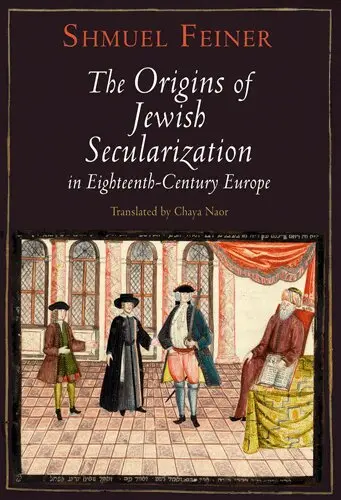
    Origins of Jewish Secularization in Eighteenth-Century Europe

    AvShmuel Feiner

    Inbunden, Engelska, 2010

    Del i serien Jewish Culture and Contexts

    896 kr

    Beställningsvara. Skickas inom 10-15 vardagar. Fri frakt över 249 kr.

    Fler format och utgåvor

    E-bok

    1 262 kr

    Beskrivning

    Throughout the eighteenth century, an ever-sharper distinction emerged between Jews of the old order and those who were self-consciously of a new world. As aspirations for liberation clashed with adherence to tradition, as national, ethnic, cultural, and other alternatives emerged and a long, circuitous search for identity began, it was no longer evident that the definition of Jewishness would be based on the beliefs and practices surrounding the study of the Torah.In The Origins of Jewish Secularization in Eighteenth-Century Europe Shmuel Feiner reconstructs this evolution by listening to the voices of those who participated in the process and by deciphering its cultural codes and meanings. On the one hand, a great majority of observant Jews still accepted the authority of the Talmud and the leadership of the rabbis; on the other, there was a gradually more conspicuous minority of "Epicureans" and "freethinkers." As the ground shifted, each individual was marked according to his or her place on the path between faith and heresy, between devoutness and permissiveness or indifference.Building on his award-winning Jewish Enlightenment, Feiner unfolds the story of critics of religion, mostly Ashkenazic Jews, who did not take active part in the secular intellectual revival known as the Haskalah. In open or concealed rebellion, Feiner's subjects lived primarily in the cities of western and central Europe-Altona-Hamburg, Amsterdam, London, Berlin, Breslau, and Prague. They participated as "fashionable" Jews adopting the habits and clothing of the surrounding Gentile society. Several also adopted the deist worldview of Enlightenment Europe, rejecting faith in revelation, the authority of Scripture, and the obligation to observe the commandments.Peering into the synagogue, observing individuals in the coffeehouse or strolling the boulevards, and peeking into the bedroom, Feiner recovers forgotten critics of religion from both the margins and the center of Jewish discourse. His is a pioneering work on the origins of one of the most significant transformations of modern Jewish history.

    Produktinformation

    • Utgivningsdatum:2010-10-22
    • Mått:155 x 235 x 32 mm
    • Vikt:691 g
    • Format:Inbunden
    • Språk:Engelska
    • Serie:Jewish Culture and Contexts
    • Antal sidor:352
    • Förlag:University of Pennsylvania Press
    • ISBN:9780812242737
    • Översättare:Chaya Naor
    • Utmärkelser:Winner of Winner of the 2010 Shazar Prize for the best book in Jewish history 2021

    Utforska kategorier

    • Europas historia inom Historia och arkeologi
    • Religion: allmänt inom Filosofi och religion
    • Judendom inom Filosofi och religion

    Mer om författaren

    Shmuel Feiner is Professor of Modern Jewish History at Bar-Ilan University and Chairman of the Jerusalem Leo Baeck Institute. Among his many books is The Jewish Enlightenment, winner of the Koret Jewish Book Award in History and also published by the University of Pennsylvania Press.

    Recensioner i media

    "A superb study. . . . Feiner lays out a more nuanced and persuasive case for locating the beginning of Jewish secularization in the second half of the 18th century, if not earlier." (Jewish Review of Books) "Feiner's contribution to the debate about the origins of Jewish modernity is profound. It is, in my view, the most significant contribution in recent decades to the literature on the decline of tradition prior to the age of political emancipation. Its great achievement is that it enlarges the stage of Jewish history, populating it with a wider cast of characters than has been the rule. It should be obligatory reading for all who wish to understand the forces that transformed European Jewish societies in the eighteenth and nineteenth centuries." (Shofar)

    Innehållsförteckning

    • PrefaceIntroduction: Sins and Doubts-Suspicions Arise-Religion under Attack-Early Jewish Skepticism-Acculturation and Rebellion-Secularization TerminologyPART I. LIBERTY AND HERESY, 1700-17601 Pleasures and Liberation from Religious Supervision-Insulting the Angels of God-Physical Gratifications2 Temptations of Fashion and Passion-Life À la Mode: Temptations of the City-Temptations of Eros-Hedonism and Abandoning God3 The Mystical Sect: Subversive Sabbateans-A New Torah to Permit the Forbidden: From Hayon to EybeschÜtz-"I Will Trample on All the Laws": Antinomianism and Libertinism4 The Rationalist Sect: Neo-Karaites and Deists-Freethinkers and the Threat of Reason-The Fool Says in His Heart That There Is No God: Skepticism and Jewish IdentityPART II. A NEW WORLD, 1760-805 Providence Is Tested: Secularization on the Rise in the 1760s-Warning Bells Toll in Europe-To Remove the Shackles of the Commandments: Indifference and Laxity-Counterreaction: The Early Maskilim6 The Supremacy of Nature: Deists on the Margins-A Generation without Religion: The 1770s-From the Second Spinoza to the Biological Epicurean-Religious Skeptics: The "Primitive Ebrew" and the Blasphemer7 The Emergence of the New WorldFor We Are All Made of Flesh: Fashionable Jews in Amsterdam and Hamburg-The Autonomous Individual: Fanny's and Henriette's HairstylesPART III. THE OVERTURNED WORLD, 1780-908 Scandals and Rebellions-Religious Tolerance and Skepticism in Europe-The Sect of the Wicked Reveals Its Face-Trash Heap of the Ceremonial Laws: The Heterodox in Breslau and Berlin9 Replacing Mosaic Laws with Laws of Freedom-The Sect of Germans Grows Stronger in Prussia-A Peek into Jewish Life in London-How to Reply to an Epicurean: Fears of Conservatives from Virginia to LithuaniaPART IV. ANXIETIES AND CONFRONTATIONS, 1790-180010 On the Decline of Judaism: The Last Decade-Between Linitz and London: Irreligion and the Mysteries of Religion-Between Observance and Laxity: Rifts and Tensions-Epicureans on the Offensive: Provocations and Conflicts11 Soon Our Faith Will Be Lost: Deists and Believers-Falsifications of the Rabbis: Deistic Texts-Transgressions Have Become Permissible: The Counter-War of the Congregation of BelieversSummary: Free Jews and the Origins of SecularizationNotesBibliographyIndexAcknowledgments