Nathan Waddell – författare
Visar alla böcker från författaren Nathan Waddell. Handla med fri frakt och snabb leverans.
25 produkter
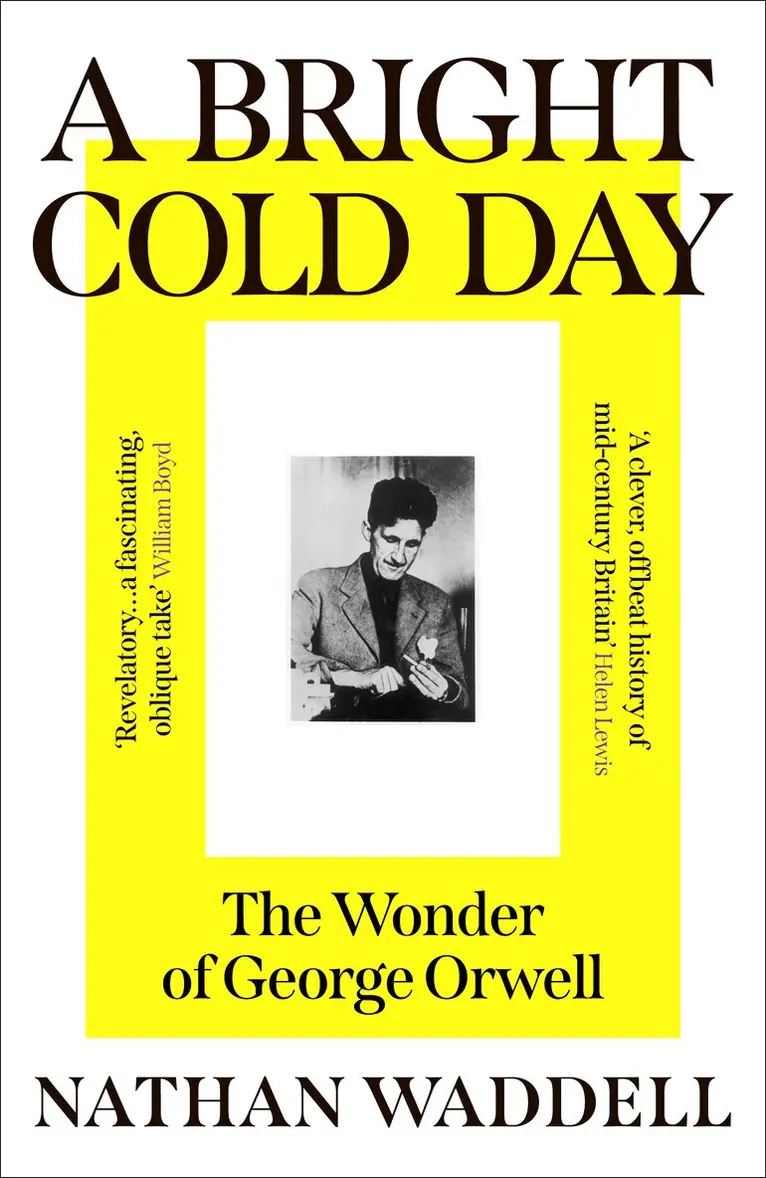
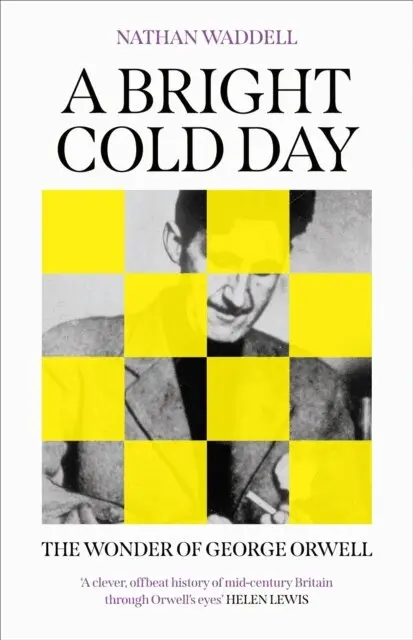
Bright Cold Day
The Wonder of George Orwell
Häftad, 2026
151 kr
Lägg i varukorg
A pioneering biography of George Orwell told through moments of everyday life'A fascinating, oblique take... Revelatory and very insightful.' William Boyd, author of The PredicamentWhen we think about Orwell, we imagine an angular, moustachioed sceptic crouched over a typewriter, who – between …
A Clergyman's Daughter
Av George Orwell, Nathan Waddell
Häftad, 2021
130 kr
Lägg i varukorg
'The face was quite unfamiliar to her, and yet not strange. She had not known till this moment what face to expect'.A Clergyman's Daughter is George Orwell's least well-known, most unappreciated novel. Drawing on his experiences as a hop-picker, teacher, and urban vagrant, it tells the peculiar …
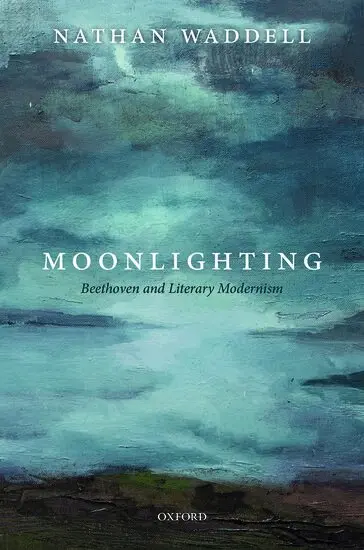
Moonlighting
Beethoven and Literary Modernism
E-bok, 2019
1328 kr
Lägg i varukorg
How and why did the life and music of Ludwig van Beethoven (1770-1827) matter to experimental writers in the early twentieth century? Previous answers to this question have tended to focus on structural analogies between musical works and literary texts, charting the many different ways in which …
Moonlighting
Beethoven and Literary Modernism
E-bok, 2019
1328 kr
Lägg i varukorg
How and why did the life and music of Ludwig van Beethoven (1770-1827) matter to experimental writers in the early twentieth century? Previous answers to this question have tended to focus on structural analogies between musical works and literary texts, charting the many different ways in which …
Moonlighting
Beethoven and Literary Modernism
Inbunden, 2019
1582 kr
Lägg i varukorg
How and why did the life and music of Ludwig van Beethoven (1770-1827) matter to experimental writers in the early twentieth century? Previous answers to this question have tended to focus on structural analogies between musical works and literary texts, charting the many different ways in which …
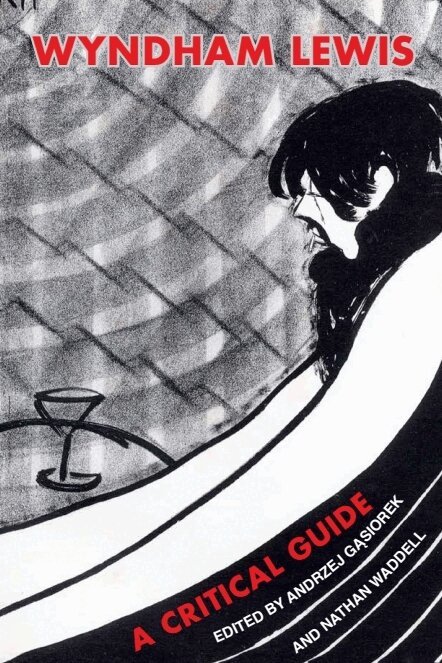
Wyndham Lewis
A Critical Guide
Av Andrzej Gąsiorek, Nathan Waddell
Häftad, 2015
470 kr
Lägg i varukorg
The first guide to the work of Wyndham Lewis as writer, novelist, and criticWyndham Lewis (1882-1957) was one of the most innovative writers and painters of his time. An indefatigable critic of ideology, politics, and culture, Lewis was also one of modernism’s key creative artists and a unique …
Bright Cold Day
The Wonder of George Orwell
Inbunden, 2025
254 kr
Lägg i varukorg
A pioneering biography of George Orwell told through moments of everyday life'A fascinating, oblique take... Revelatory and very insightful.' William Boyd, author of The PredicamentWhen we think about Orwell, we imagine an angular, moustachioed sceptic crouched over a typewriter, who – between …
Bright Cold Day
The Wonder of George Orwell
E-bok, 2025
173 kr
Lägg i varukorg
A pioneering biography of George Orwell told through moments of everyday life ''A clever, offbeat history of mid-century Britain through George Orwell’s eyes.'' Helen Lewis When we think about Orwell, we imagine an angular, moustachioed sceptic crouched over a typewriter, who – between puffs on his …
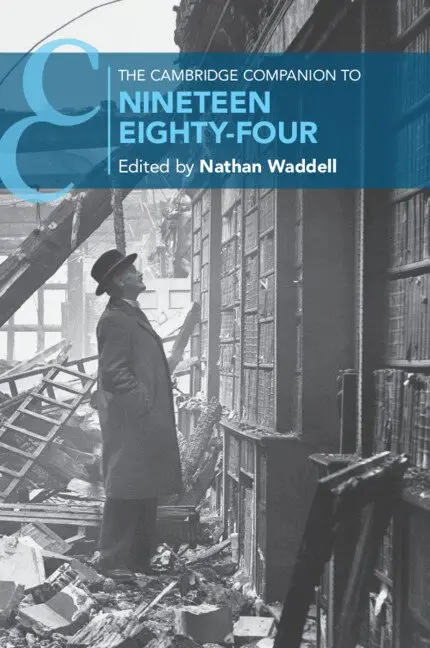
The Cambridge Companion to Nineteen Eighty-Four
Häftad, 2020
504 kr
Lägg i varukorg
George Orwell's Nineteen Eighty-Four (1949) remains a book of the moment. This Companion builds on successive waves of generational inheritance and debate in the novel's reception by asking new questions about how and why Nineteen Eighty-Four was written, what it means, and why it matters. Chapters …
The Cambridge Companion to Nineteen Eighty-Four
Inbunden, 2020
1704 kr
Lägg i varukorg
George Orwell's Nineteen Eighty-Four (1949) remains a book of the moment. This Companion builds on successive waves of generational inheritance and debate in the novel's reception by asking new questions about how and why Nineteen Eighty-Four was written, what it means, and why it matters. Chapters …
Cambridge Companion to Nineteen Eighty-Four
E-bok, 2020
488 kr
Lägg i varukorg
George Orwell''s Nineteen Eighty-Four (1949) remains a book of the moment. This Companion builds on successive waves of generational inheritance and debate in the novel''s reception by asking new questions about how and why Nineteen Eighty-Four was written, what it means, and why it matters. …
Cambridge Companion to Nineteen Eighty-Four
E-bok, 2020
488 kr
Lägg i varukorg
George Orwell''s Nineteen Eighty-Four (1949) remains a book of the moment. This Companion builds on successive waves of generational inheritance and debate in the novel''s reception by asking new questions about how and why Nineteen Eighty-Four was written, what it means, and why it matters. …
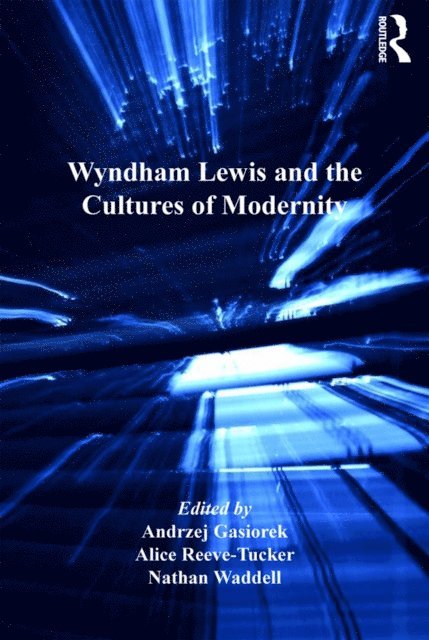
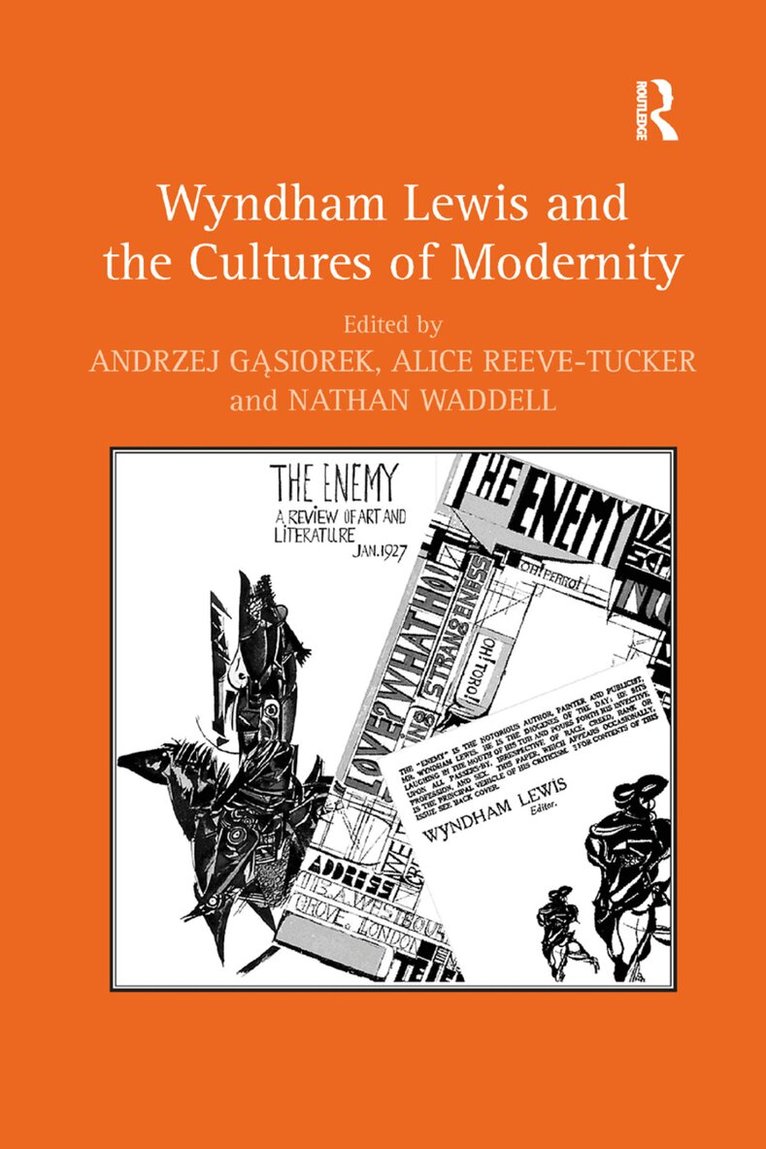
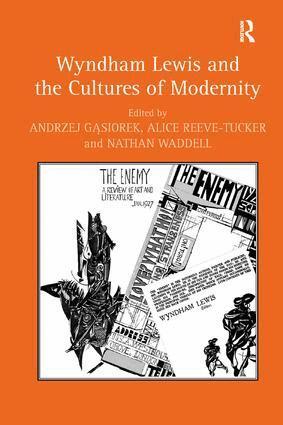
Wyndham Lewis and the Cultures of Modernity
Av Nathan Waddell, Alice Reeve-Tucker m. fl.
E-bok, 2016
1091 kr
Lägg i varukorg
Making a strong case for a revaluation of Wyndham Lewis (1882-1957), this collection argues that significant aspects of Lewis''s writing, painting, and thinking have not yet received the attention they deserve. The contributors explore Lewis''s contributions to the production and circulation of …
Wyndham Lewis and the Cultures of Modernity
Av Nathan Waddell, Alice Reeve-Tucker m. fl.
E-bok, 2016
1083 kr
Lägg i varukorg
Making a strong case for a revaluation of Wyndham Lewis (1882-1957), this collection argues that significant aspects of Lewis''s writing, painting, and thinking have not yet received the attention they deserve. The contributors explore Lewis''s contributions to the production and circulation of …
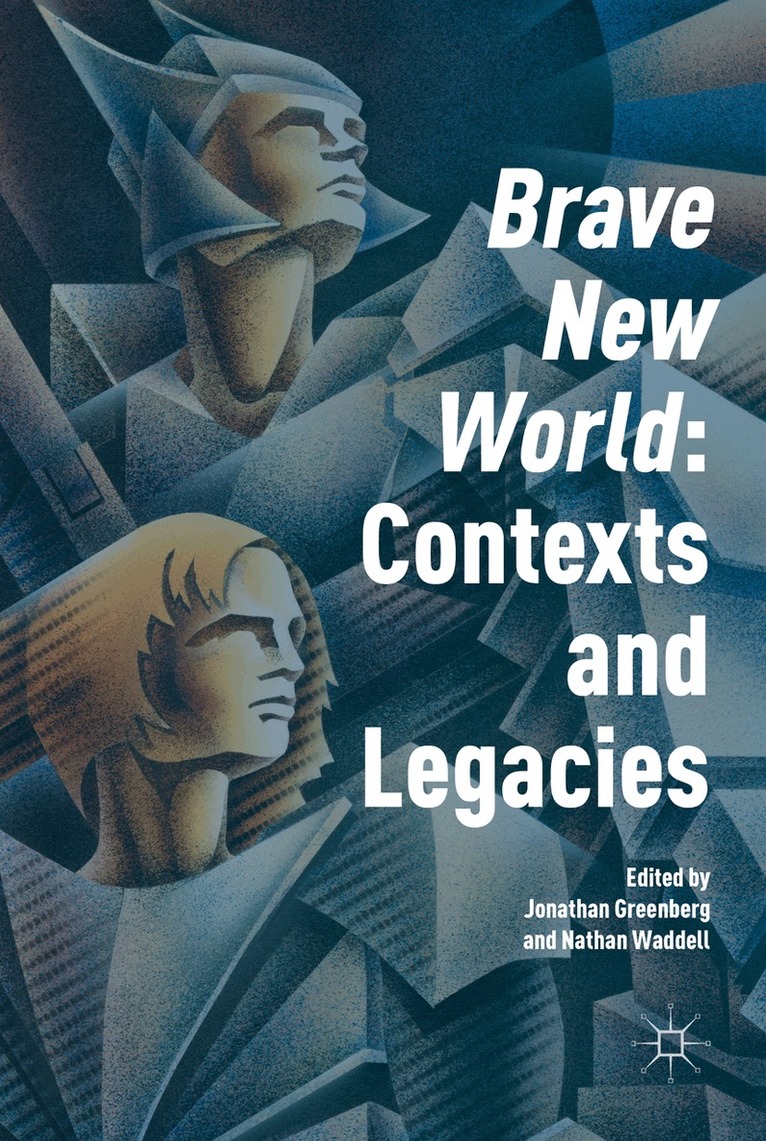
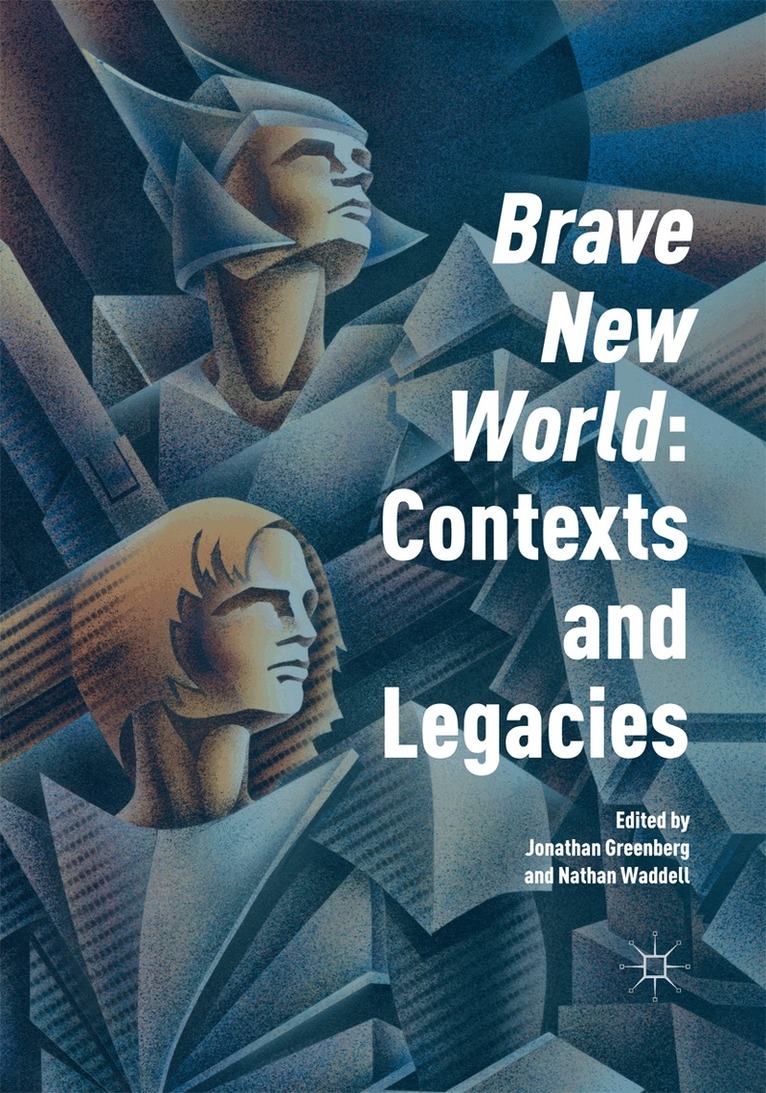
'Brave New World': Contexts and Legacies
Av Jonathan Greenberg, Nathan Waddell
Inbunden, 2016
1636 kr
Lägg i varukorg
This collection of essays provides new readings of Huxley’s classic dystopian satire, Brave New World (1932). Leading international scholars consider from new angles the historical contexts in which the book was written and the cultural legacies in which it looms large. The volume affirms Huxley’s …
'Brave New World': Contexts and Legacies
Av Nathan Waddell, Jonathan Greenberg
E-bok, 2016
2181 kr
Lägg i varukorg
This collection of essays provides new readings of Huxley’s classic dystopian satire, Brave New World (1932). Leading international scholars consider from new angles the historical contexts in which the book was written and the cultural legacies in which it looms large. The volume affirms Huxley’s …
Wyndham Lewis and the Cultures of Modernity
Av Andrzej Gasiorek, Alice Reeve-Tucker m. fl.
Häftad, 2019
947 kr
Lägg i varukorg
Making a strong case for a revaluation of Wyndham Lewis (1882-1957), this collection argues that significant aspects of Lewis's writing, painting, and thinking have not yet received the attention they deserve. The contributors explore Lewis's contributions to the production and circulation of …
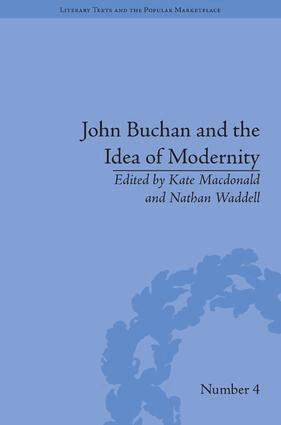
John Buchan and the Idea of Modernity
Av Kate Macdonald, Nathan Waddell
Häftad, 2016
947 kr
Lägg i varukorg
Considered a quintessentially 'popular' author, John Buchan was a writer of fiction, journalism, philosophy and Scottish history. By examining his engagement with empire, psychoanalysis and propaganda, the contributors to this volume place Buchan at the centre of the debate between popular culture …
John Buchan and the Idea of Modernity
Av Kate Macdonald, Nathan Waddell
E-bok, 2015
1091 kr
Lägg i varukorg
Considered a quintessentially 'popular' author, John Buchan was a writer of fiction, journalism, philosophy and Scottish history. By examining his engagement with empire, psychoanalysis and propaganda, the contributors to this volume place Buchan at the centre of the debate between popular culture …
John Buchan and the Idea of Modernity
Av Kate Macdonald, Nathan Waddell
E-bok, 2015
1115 kr
Lägg i varukorg
Considered a quintessentially 'popular' author, John Buchan was a writer of fiction, journalism, philosophy and Scottish history. By examining his engagement with empire, psychoanalysis and propaganda, the contributors to this volume place Buchan at the centre of the debate between popular culture …
'Brave New World': Contexts and Legacies
Av Jonathan Greenberg, Nathan Waddell
Häftad, 2020
1632 kr
Lägg i varukorg
This collection of essays provides new readings of Huxley’s classic dystopian satire, Brave New World (1932). Leading international scholars consider from new angles the historical contexts in which the book was written and the cultural legacies in which it looms large. The volume affirms Huxley’s …
Wyndham Lewis and the Cultures of Modernity
Av Andrzej Gasiorek, Alice Reeve-Tucker m. fl.
Inbunden, 2011
2893 kr
Lägg i varukorg
Making a strong case for a revaluation of Wyndham Lewis (1882-1957), this collection argues that significant aspects of Lewis's writing, painting, and thinking have not yet received the attention they deserve. The contributors explore Lewis's contributions to the production and circulation of …
John Buchan and the Idea of Modernity
Av Kate Macdonald, Nathan Waddell
Inbunden, 2013
2893 kr
Lägg i varukorg
Considered a quintessentially 'popular' author, John Buchan was a writer of fiction, journalism, philosophy and Scottish history. By examining his engagement with empire, psychoanalysis and propaganda, the contributors to this volume place Buchan at the centre of the debate between popular culture …
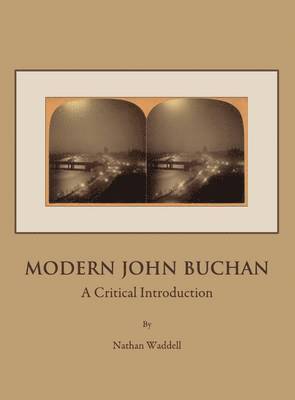
Modern John Buchan
A Critical Introduction<p>
Inbunden, 2009
1132 kr
Tillfälligt slut
This book offers an introduction to the breadth and diversity of the literary and non-literary work of John Buchan (1875–1940). It stakes a claim for him as an engaged interpreter of twentieth-century modernity, and provides evaluative readings of his output. In addition to demonstrating how …