Neill J. Wallis - Böcker
Visar alla böcker från författaren Neill J. Wallis. Handla med fri frakt och snabb leverans.
5 produkter
5 produkter
884 kr
Skickas inom 10-15 vardagar
Given its pivotal location be¬tween the Atlantic Ocean and the Gulf of Mexico, its numerous islands, its abundant flora and fauna, and its subtropical climate, Florida has long been ideal for human habitation. Yet Florida traditionally has been considered peripheral in the study of ancient cultures in North America, despite what it can reveal about social and climate change. The essays in this book resoundingly argue that Florida is in fact a crucial hub of archaeological inquiry.New Histories of Pre-Columbian Florida represents the next wave of south-eastern archaeology. Contributors use new data to challenge well-worn models of environmental determinism and localised social contact. Indeed, this volume makes a case for considerable interaction and exchange among Native Floridians and the greater south-eastern United States as seen by the variety of objects of dis¬tant origin and mound-building traditions that incorporated extra regional concepts. Themes of monumentality, human alterations of landscapes, the natural environment, ritual and mortuary practices, and coastal adaptations demonstrate the diversity, empirical rich¬ness, and broader anthropological significance of Florida’s aboriginal past.
295 kr
Skickas inom 10-15 vardagar
Given its pivotal location between the Atlantic Ocean and the Gulf of Mexico, its numerous islands, its abundant flora and fauna, and its subtropical climate, Florida has long been ideal for human habitation. Representing the next wave of southeastern archaeology, the essays in this book resoundingly argue that Florida is a crucial hub of archaeological inquiry.Contributors use new data to challenge well-worn models of environmental determinism and localized social contact. Themes of monumentality, human alterations of landscapes, the natural environment, ritual and mortuary practices, and coastal adaptations demonstrate the diversity, empirical richness, and broader anthropological significance of Florida’s aboriginal past.
Archaeology of Arcuate Communities
Spatial Patterning and Settlement in the Eastern Woodlands
Inbunden, Engelska, 2024
1 196 kr
Skickas inom 7-10 vardagar
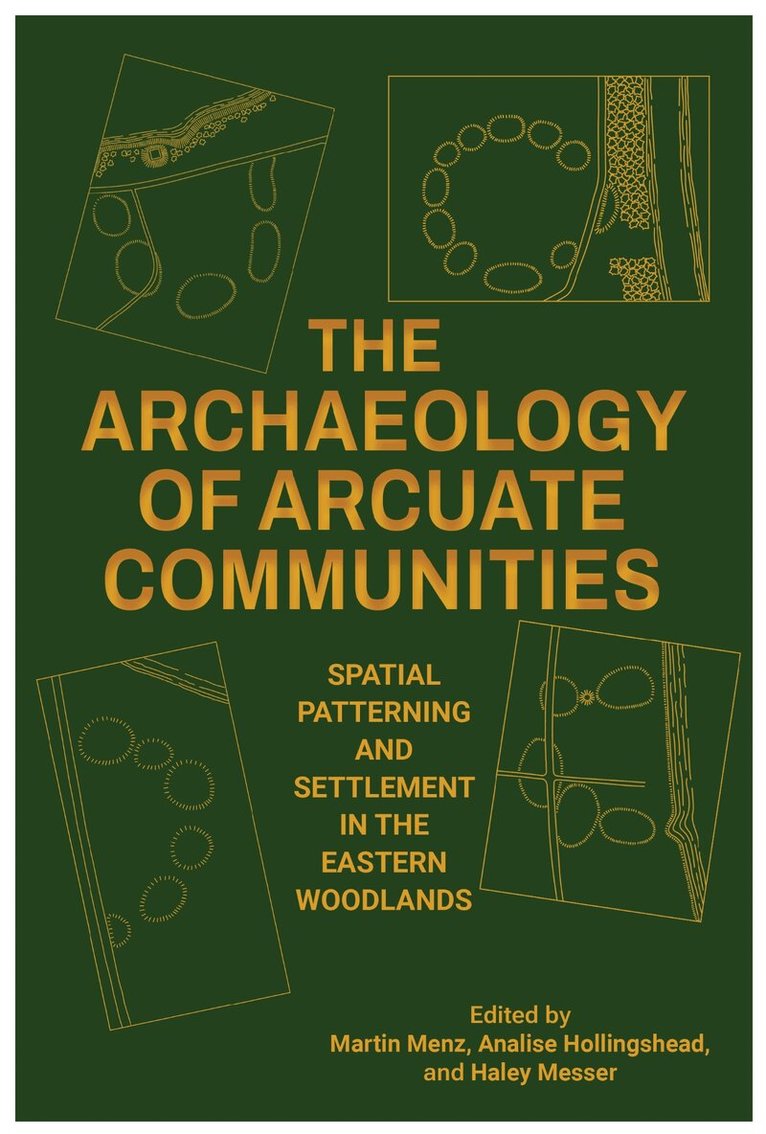
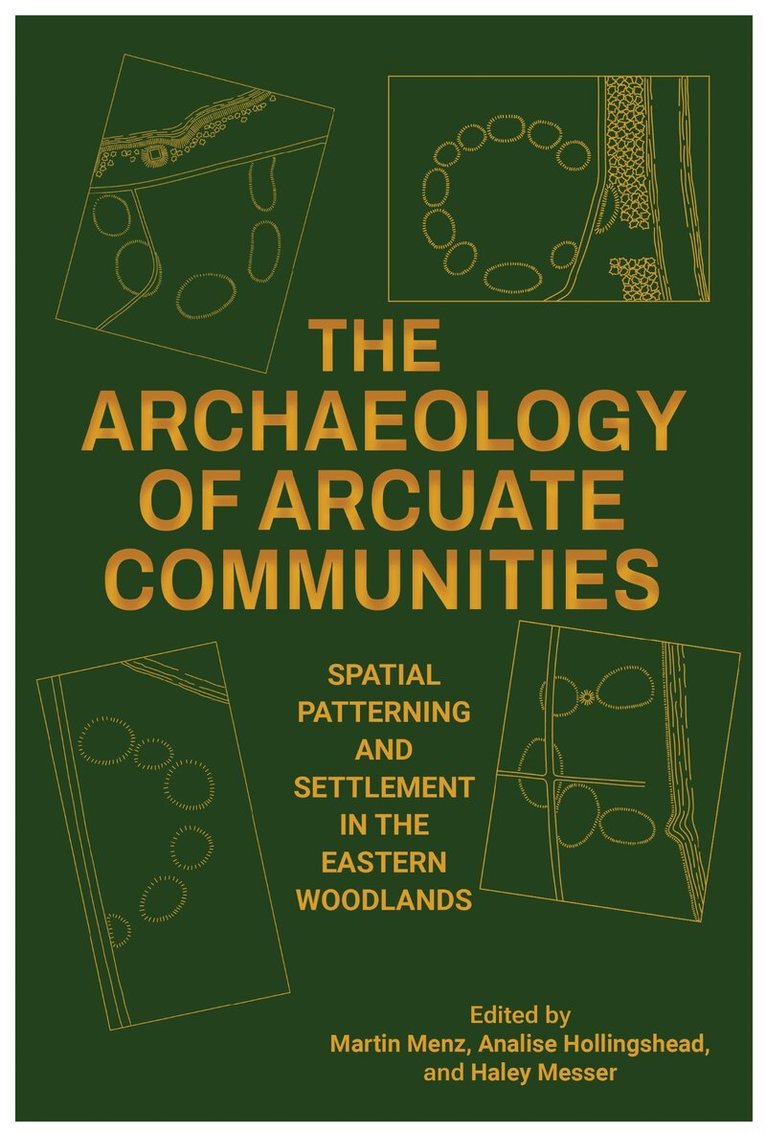
The Archaeology of Arcuate Communities is an edited collection of ten essays that illuminate how Indigenous communities of the Eastern Woodlands, from 10,000 BC to the 1550s, are analyzed and interpreted by archaeologists today. Volume editors Martin Menz, Analise Hollingshead, and Haley Messer define the persistent circular or “arcuate” pattern of Native settlements in this region as a spatial manifestation of community activities that reinforced group identity alongside plazas, mounds, and other architectural features.The varied case studies in this volume focus on specific communities, how they evolved, and the types of archaeological data that have been used to assess them. Part I, “Defining the Domestic Unit in Arcuate Communities,” reveals social distinctions between households and household clusters in arcuate communities, how they differ in terms of stylistic patterns and exchange, and how they combined to form distinct social groups at different scales within a broader community. Part II, “Organizing Principles of Arcuate Communities,” broadens the scope to identify the organizing principles of entire arcuate communities, such as the central role of plazas in structuring their development, how the distribution of households and central features within communities was contested and reorganized, and the importance of mounds in both delineating arcuate communities and marking their position on the landscape. Part III, “Comparison and Change in Arcuate Communities,” comprises case studies that examine changes in the organization of arcuate communities over time. Rounding out the volume is a concluding chapter that assesses how and why communities around the world formed in circular patterns.A valuable resource for archaeologists, this collection will also be of interest to those seeking to learn about Native North American settlement, ceremony, and community organization.
Archaeology of Arcuate Communities
Spatial Patterning and Settlement in the Eastern Woodlands
Häftad, Engelska, 2024
426 kr
Skickas inom 7-10 vardagar
The Archaeology of Arcuate Communities is an edited collection of ten essays that illuminate how Indigenous communities of the Eastern Woodlands, from 10,000 BC to the 1550s, are analyzed and interpreted by archaeologists today. Volume editors Martin Menz, Analise Hollingshead, and Haley Messer define the persistent circular or “arcuate” pattern of Native settlements in this region as a spatial manifestation of community activities that reinforced group identity alongside plazas, mounds, and other architectural features.The varied case studies in this volume focus on specific communities, how they evolved, and the types of archaeological data that have been used to assess them. Part I, “Defining the Domestic Unit in Arcuate Communities,” reveals social distinctions between households and household clusters in arcuate communities, how they differ in terms of stylistic patterns and exchange, and how they combined to form distinct social groups at different scales within a broader community. Part II, “Organizing Principles of Arcuate Communities,” broadens the scope to identify the organizing principles of entire arcuate communities, such as the central role of plazas in structuring their development, how the distribution of households and central features within communities was contested and reorganized, and the importance of mounds in both delineating arcuate communities and marking their position on the landscape. Part III, “Comparison and Change in Arcuate Communities,” comprises case studies that examine changes in the organization of arcuate communities over time. Rounding out the volume is a concluding chapter that assesses how and why communities around the world formed in circular patterns.A valuable resource for archaeologists, this collection will also be of interest to those seeking to learn about Native North American settlement, ceremony, and community organization.
1 012 kr
Kommande
Exploring how humans and animals in the US Southeast interacted to shape social, ritual, and cosmological worlds across thousands of yearsArchaeologists often approach the study of animals mainly as evidence of human diet or ecology, but this volume highlights the broader significance of animals across what is now the US Southeast from the Woodland period through the post-contact era. Drawing on archaeological, ethnohistorical, and ethnographic sources, contributors examine how animals shaped human identities, rituals, and social structures as seen in art, oral traditions, daily practices, and ceremonial roles.In this volume, case studies reveal diverse expressions of human–animal relationships—in Mississippian ceramics, shell reef symbolism, deer antlers used in Powhatan rituals, the protective burial of chickens by enslaved communities, and more. These examples challenge rigid boundaries between human and nonhuman and move beyond traditional Western binaries that position animals as less than humans. This volume engages with non-Western and Indigenous-informed perspectives that recognize animals as cosmologically, politically, and socially significant beings. It explores animality as a dynamic, relational category and contributes to wider debates on materiality, agency, and ontology in archaeology.