Nicholas Hoover Wilson – författare
Visar alla böcker från författaren Nicholas Hoover Wilson. Handla med fri frakt och snabb leverans.
5 produkter
5 produkter
1 147 kr
Skickas inom 7-10 vardagar
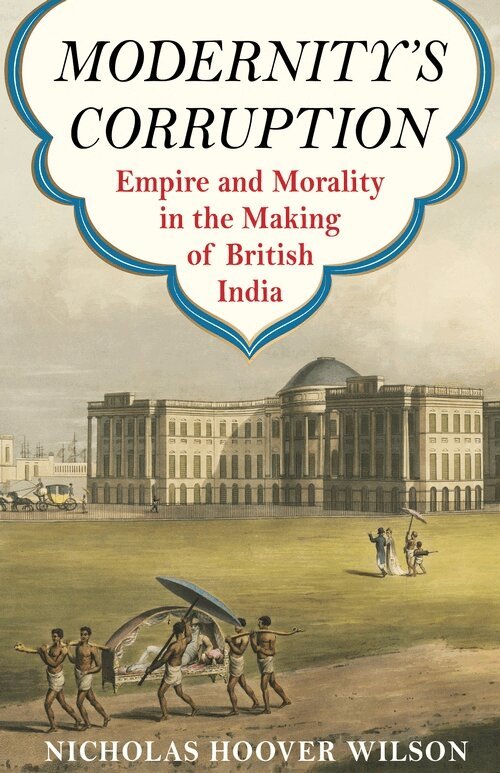
Honorable Mention, 2024 Outstanding Published Book Award, Altruism, Morality, and Social Solidarity Section, American Sociological AssociationHonorable Mention, 2024 Allan Sharlin Memorial Book Award, Social Science History AssociationToday, “corruption” generally refers to pursuing personal interests at the expense of one’s responsibilities, the law, or the common good. It calls to mind some official violating their public duty for private gain, suggesting seamy bureaucracies taking payoffs, kickbacks, and bribes. Yet at other times, notions of corruption were rooted in a more expansive view of the causes of people’s behavior and the appropriate ways to regulate conduct. In this understanding, to be “corrupt” meant losing a delicate balance among competing appetites under specific circumstances and in the eyes of peers. Why did a narrower definition of corruption become dominant?Nicholas Hoover Wilson develops a new account of the changing category of corruption by examining the English East India Company and its transformation from a largely commercial enterprise to a militarized offshoot of British empire in the eighteenth and nineteenth centuries. He argues that the modern idea of corruption arose as an unintended consequence of conflicts among company officials and the changing audiences to which they justified themselves in Britain. This new understanding unified an imperial elite at risk of fragmenting into irreconcilable moral worlds and, in the process, helped redefine the boundaries of state, society, and economy. Modernity’s Corruption is at once a novel historical sociology of imperial administration and its contradictions, a fresh argument about the nature of corruption and its political and organizational effects, and a reinvigoration of classic arguments about the nature and consequences of global modernity.
292 kr
Skickas inom 7-10 vardagar
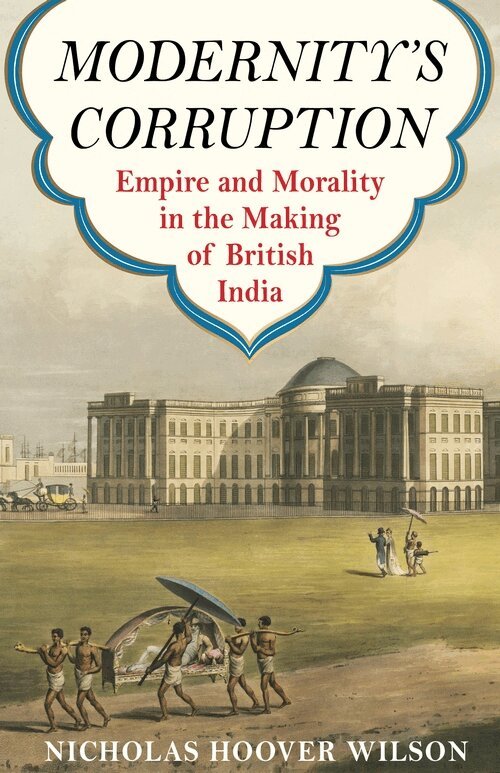
Honorable Mention, 2024 Outstanding Published Book Award, Altruism, Morality, and Social Solidarity Section, American Sociological AssociationHonorable Mention, 2024 Allan Sharlin Memorial Book Award, Social Science History AssociationToday, “corruption” generally refers to pursuing personal interests at the expense of one’s responsibilities, the law, or the common good. It calls to mind some official violating their public duty for private gain, suggesting seamy bureaucracies taking payoffs, kickbacks, and bribes. Yet at other times, notions of corruption were rooted in a more expansive view of the causes of people’s behavior and the appropriate ways to regulate conduct. In this understanding, to be “corrupt” meant losing a delicate balance among competing appetites under specific circumstances and in the eyes of peers. Why did a narrower definition of corruption become dominant?Nicholas Hoover Wilson develops a new account of the changing category of corruption by examining the English East India Company and its transformation from a largely commercial enterprise to a militarized offshoot of British empire in the eighteenth and nineteenth centuries. He argues that the modern idea of corruption arose as an unintended consequence of conflicts among company officials and the changing audiences to which they justified themselves in Britain. This new understanding unified an imperial elite at risk of fragmenting into irreconcilable moral worlds and, in the process, helped redefine the boundaries of state, society, and economy. Modernity’s Corruption is at once a novel historical sociology of imperial administration and its contradictions, a fresh argument about the nature of corruption and its political and organizational effects, and a reinvigoration of classic arguments about the nature and consequences of global modernity.
1 193 kr
Skickas inom 7-10 vardagar
What is the value of comparison for research in historical sociology? Today, social scientists regularly express doubt about the positivist premises that have long justified comparison’s use: that cases can be unproblematically compared as though they are independent of one another, that comparison can reliably yield valid causal inference, and that comparative methods can grapple with questions of meaning, sequence, and process that are central to historical explanation. Yet they remain reluctant to abandon comparison altogether, not least because comparisons are still manifestly useful in the research process.After Positivism presents a bold new set of warrants and methodologies for comparison that takes these criticisms fully into account. The contributors to this book marshal a wide array of postpositivist approaches to knowledge to reconstruct the analytic potential of comparison for a new generation of social scientists. In addition to providing fresh answers to classic questions about case selection and causal inference, authors ponder the role comparison plays in a world where social phenomena are demonstrably time-, space-, and concept-dependent; where causation is typically conjunctural; where social structures and groups emerge and die; and where important objects of inquiry can be understood only in terms of relationships, emergent properties, or contingent and irregular effects. Engaging and timely, this book will be of interest to all those who seek to improve our explanations of historical change in social-scientific research.
308 kr
Skickas inom 7-10 vardagar
What is the value of comparison for research in historical sociology? Today, social scientists regularly express doubt about the positivist premises that have long justified comparison’s use: that cases can be unproblematically compared as though they are independent of one another, that comparison can reliably yield valid causal inference, and that comparative methods can grapple with questions of meaning, sequence, and process that are central to historical explanation. Yet they remain reluctant to abandon comparison altogether, not least because comparisons are still manifestly useful in the research process.After Positivism presents a bold new set of warrants and methodologies for comparison that takes these criticisms fully into account. The contributors to this book marshal a wide array of postpositivist approaches to knowledge to reconstruct the analytic potential of comparison for a new generation of social scientists. In addition to providing fresh answers to classic questions about case selection and causal inference, authors ponder the role comparison plays in a world where social phenomena are demonstrably time-, space-, and concept-dependent; where causation is typically conjunctural; where social structures and groups emerge and die; and where important objects of inquiry can be understood only in terms of relationships, emergent properties, or contingent and irregular effects. Engaging and timely, this book will be of interest to all those who seek to improve our explanations of historical change in social-scientific research.
1 258 kr
Skickas inom 7-10 vardagar
This volume renews the study of corruption as 'embedded' in ongoing social relations. Instead of treating corruption as a universal phenomenon, A Comparative Historical Sociology of Corruption shows how corruption is often morally ambiguous and deeply intertwined with the social, political and economic struggles of particular groups in specific times and places. Ranging from Early Modernity to the present day, and spanning across the globe, the book focuses on three recurring aspects of corruption: emergence or the origins and struggles over whether something is corrupt; institutionalization or how different definitions of corruption predominate; and mobilization or the sociopolitical functions that different definitions of corruption serve in times of social change. The volume includes a wide variety of historical and contemporary studies to show that corruption is embedded in its context, providing a novel framework for readers to understand how and why corruption persists across time and place.