Nicholas L. Paul - Böcker
Visar alla böcker från författaren Nicholas L. Paul. Handla med fri frakt och snabb leverans.
6 produkter
6 produkter
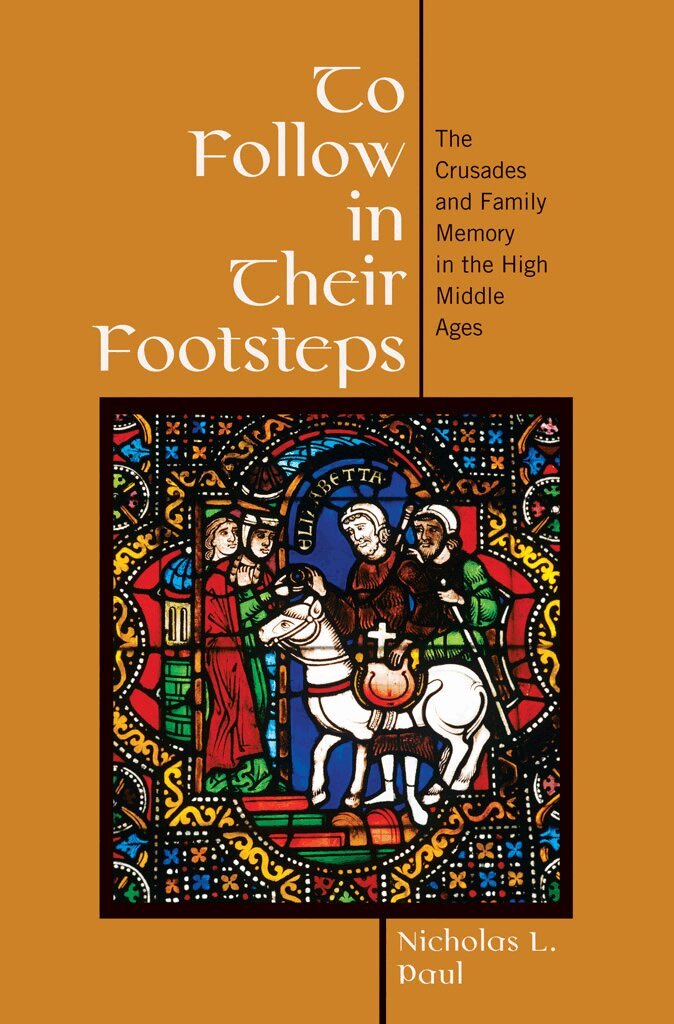
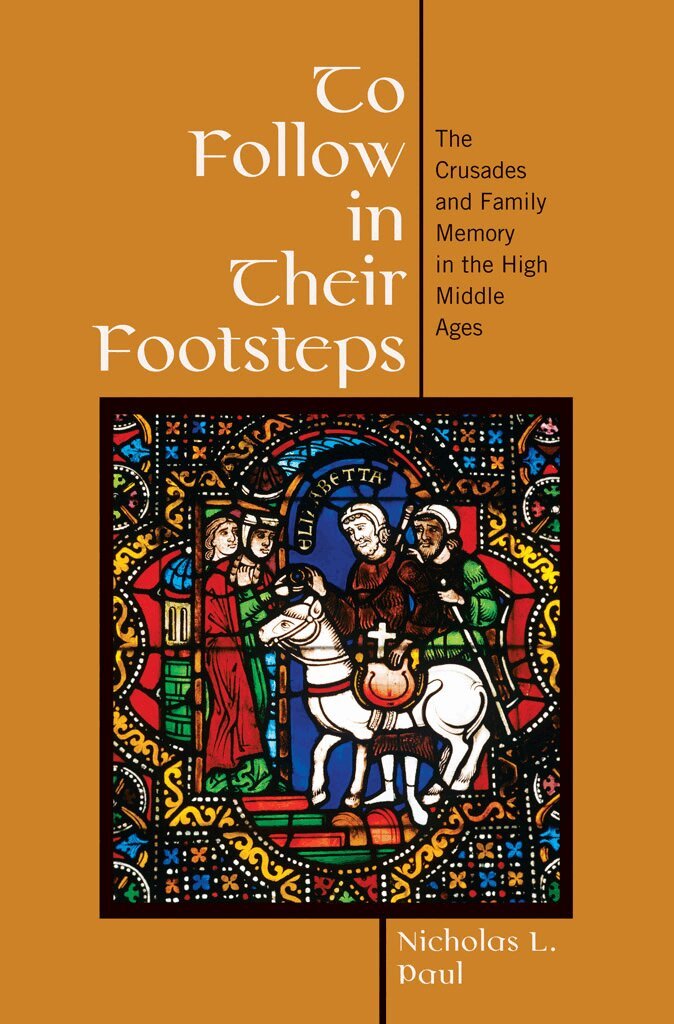
To Follow in Their Footsteps
The Crusades and Family Memory in the High Middle Ages
Inbunden, Engelska, 2012
790 kr
Skickas inom 10-15 vardagar
When the First Crusade ended with the conquest of Jerusalem in 1099, jubilant crusaders returned home to Europe bringing with them stories, sacred relics, and other memorabilia, including banners, jewelry, and weapons. In the ensuing decades, the memory of the crusaders' bravery and pious sacrifice was invoked widely among the noble families of western Christendom. Popes preaching future crusades would count on these very same families for financing, leadership, and for the willing warriors who would lay down their lives on the battlefield. Despite the great risks and financial hardships associated with crusading, descendants of those who suffered and died on crusade would continue to take the cross, in some cases over several generations. Indeed, as Nicholas L. Paul reveals in To Follow in Their Footsteps, crusading was very much a family affair. Scholars of the crusades have long pointed to the importance of dynastic tradition and ties of kinship in the crusading movement but have failed to address more fundamental questions about the operation of these social processes. What is a "family tradition"? How are such traditions constructed and maintained, and by whom? How did crusading families confront the loss of their kin in distant lands? Making creative use of Latin dynastic narratives as well as vernacular literature, personal possessions and art objects, and architecture from across western Europe, Paul shows how traditions of crusading were established and reinforced in the collective memories of noble families throughout the twelfth and thirteenth centuries. Even rulers who never fulfilled crusading vows found their political lives dominated and, in some ways, directed by the memory of their crusading ancestors. Filled with unique insights and careful analysis, To Follow in Their Footsteps reveals the lasting impact of the crusades, beyond the expeditions themselves, on the formation of dynastic identity and the culture of the medieval European nobility.
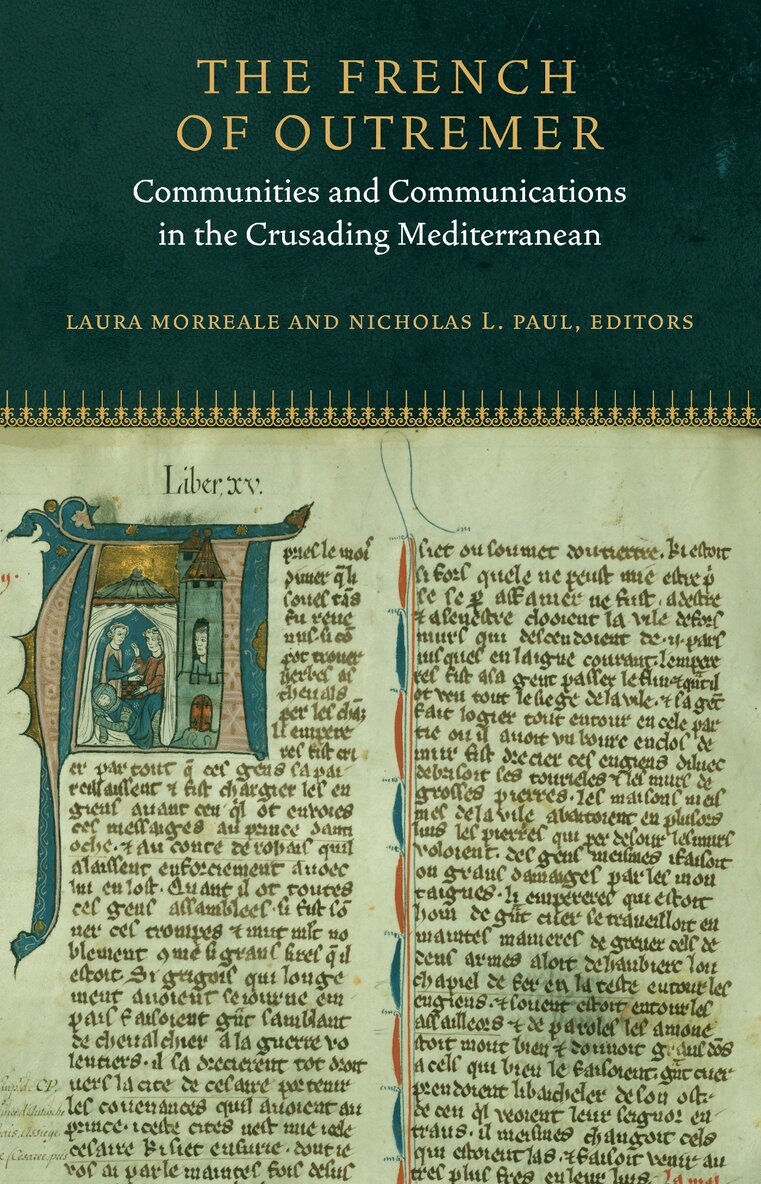
French of Outremer
Communities and Communications in the Crusading Mediterranean
Inbunden, Engelska, 2018
809 kr
Skickas inom 7-10 vardagar
The establishment of feudal principalities in the Levant in the wake of the First Crusade (1095-1099) saw the beginning of a centuries-long process of conquest and colonization of lands in the eastern Mediterranean by French-speaking Europeans. This book examines different aspects of the life and literary culture associated with this French-speaking society. It is the first study of the crusades to bring questions of language and culture so intimately into conversation. Taking an interdisciplinary approach to the study of the crusader settlements in the Levant, this book emphasizes hybridity and innovation, the movement of words and people across boundaries, seas and continents, and the negotiation of identity in a world tied partly to Europe but thoroughly embedded in the Mediterranean and Levantine context.
241 kr
Skickas inom 10-15 vardagar
Whose Middle Ages? is an interdisciplinary collection of short, accessible essays intended for the nonspecialist reader and ideal for teaching at an undergraduate level. Each of twenty-two essays takes up an area where digging for meaning in the medieval past has brought something distorted back into the present: in our popular entertainment; in our news, our politics, and our propaganda; and in subtler ways that inform how we think about our histories, our countries, and ourselves. Each author looks to a history that has refused to remain past and uses the tools of the academy to read and re-read familiar stories, objects, symbols, and myths.Whose Middle Ages? gives nonspecialists access to the richness of our historical knowledge while debunking damaging misconceptions about the medieval past. Myths about the medieval period are especially beloved among the globally resurgent far right, from crusading emblems on the shields borne by alt-right demonstrators to the on-screen image of a purely white European populace defended from actors of color by Internet trolls. This collection attacks these myths directly by insisting that readers encounter the relics of the Middle Ages on their own terms.Each essay uses its author's academic research as a point of entry and takes care to explain how the author knows what she or he knows and what kinds of tools, bodies of evidence, and theoretical lenses allow scholars to write with certainty about elements of the past to a level of detail that might seem unattainable. By demystifying the methods of scholarly inquiry, Whose Middle Ages? serves as an antidote not only to the far right's errors of fact and interpretation but also to its assault on scholarship and expertise as valid means for the acquisition of knowledge.
859 kr
Skickas inom 10-15 vardagar
Whose Middle Ages? is an interdisciplinary collection of short, accessible essays intended for the nonspecialist reader and ideal for teaching at an undergraduate level. Each of twenty-two essays takes up an area where digging for meaning in the medieval past has brought something distorted back into the present: in our popular entertainment; in our news, our politics, and our propaganda; and in subtler ways that inform how we think about our histories, our countries, and ourselves. Each author looks to a history that has refused to remain past and uses the tools of the academy to read and re-read familiar stories, objects, symbols, and myths.Whose Middle Ages? gives nonspecialists access to the richness of our historical knowledge while debunking damaging misconceptions about the medieval past. Myths about the medieval period are especially beloved among the globally resurgent far right, from crusading emblems on the shields borne by alt-right demonstrators to the on-screen image of a purely white European populace defended from actors of color by Internet trolls. This collection attacks these myths directly by insisting that readers encounter the relics of the Middle Ages on their own terms.Each essay uses its author's academic research as a point of entry and takes care to explain how the author knows what she or he knows and what kinds of tools, bodies of evidence, and theoretical lenses allow scholars to write with certainty about elements of the past to a level of detail that might seem unattainable. By demystifying the methods of scholarly inquiry, Whose Middle Ages? serves as an antidote not only to the far right's errors of fact and interpretation but also to its assault on scholarship and expertise as valid means for the acquisition of knowledge.
To Follow in Their Footsteps
The Crusades and Family Memory in the High Middle Ages
Häftad, Engelska, 2017
323 kr
Skickas inom 10-15 vardagar
When the First Crusade ended with the conquest of Jerusalem in 1099, jubilant crusaders returned home to Europe bringing with them stories, sacred relics, and other memorabilia, including banners, jewelry, and weapons. In the ensuing decades, the memory of the crusaders' bravery and pious sacrifice was invoked widely among the noble families of western Christendom. Popes preaching future crusades would count on these very same families for financing, leadership, and for the willing warriors who would lay down their lives on the battlefield. Despite the great risks and financial hardships associated with crusading, descendants of those who suffered and died on crusade would continue to take the cross, in some cases over several generations. Indeed, as Nicholas L. Paul reveals in To Follow in Their Footsteps, crusading was very much a family affair. Scholars of the crusades have long pointed to the importance of dynastic tradition and ties of kinship in the crusading movement but have failed to address more fundamental questions about the operation of these social processes. What is a "family tradition"? How are such traditions constructed and maintained, and by whom? How did crusading families confront the loss of their kin in distant lands? Making creative use of Latin dynastic narratives as well as vernacular literature, personal possessions and art objects, and architecture from across western Europe, Paul shows how traditions of crusading were established and reinforced in the collective memories of noble families throughout the twelfth and thirteenth centuries. Even rulers who never fulfilled crusading vows found their political lives dominated and, in some ways, directed by the memory of their crusading ancestors. Filled with unique insights and careful analysis, To Follow in Their Footsteps reveals the lasting impact of the crusades, beyond the expeditions themselves, on the formation of dynastic identity and the culture of the medieval European nobility.
Del 8 - Crusading in Context
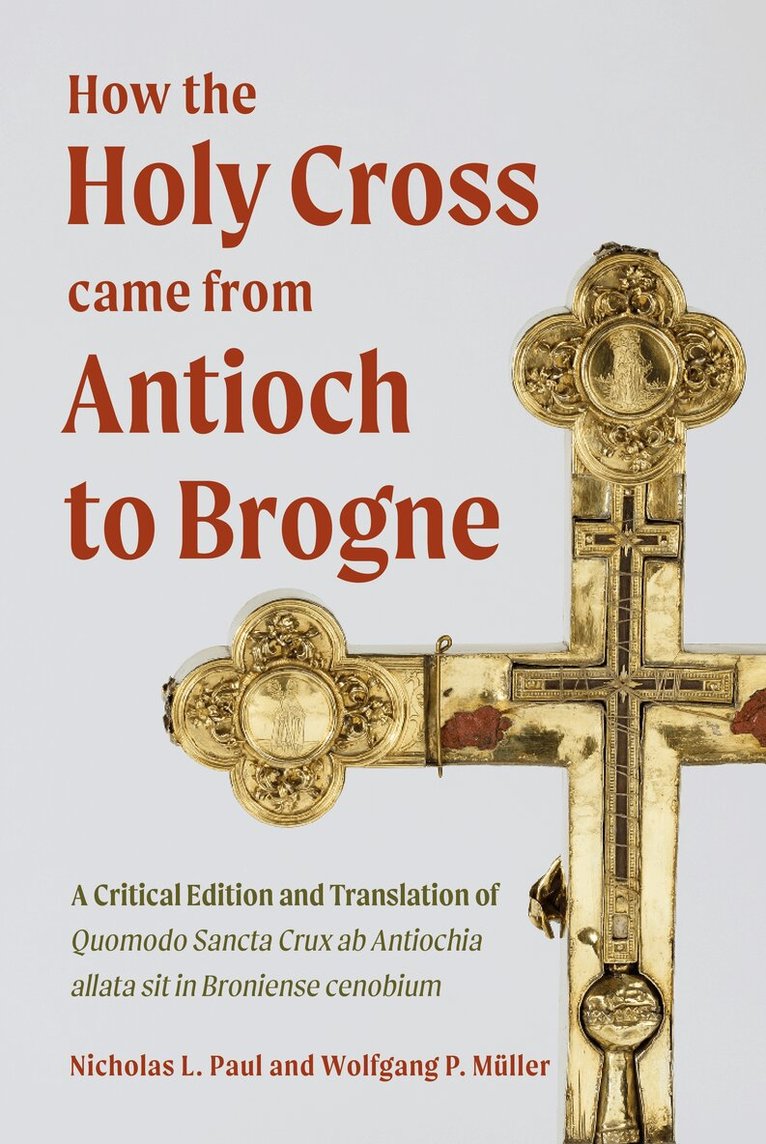
How the Holy Cross came from Antioch to Brogne
A Critical Edition and Translation of Quomodo Sancta Crux ab Antiochia allata sit in Broniense cenobium
Inbunden, Engelska, 2025
1 039 kr
Skickas inom 7-10 vardagar
The first critical edition, with facing-page English translation, of a thirteenth-century source, offering insights into crusading, material culture, and aristocratic-monastic relations.In 1152, a knight from the southern Low Countries named Manasses of Hierges returned home after eleven years spent crusading in the Holy Land. He carried with him a precious relic, said to be a fragment of the True Cross that had belonged to the princes of Antioch. Nearly sixty years later, a writer associated with a nearby monastery composed a new Latin narrative, hagiographical, and liturgical textual programme known as Quomodo Sancta Crux ab Antiochia allata sit in Broniense cenobium (How the Holy Cross Came from Antioch to the Monastery of Brogne). It tells the story of Manasses, his career in Europe and the Near East, and of the conflict that broke out over possession of the relic after his death.This volume provides the first critical edition and English translation of a source that contributes greatly to our knowledge of the medieval world, from crusading to material religion to relations between the lay aristocracy and religious communities. The work of a learned author with ambitions to a high literary and homiletic style, it offers a fresh perspective on the question of what motivated crusaders and on the history of the Holy Land under crusader occupation, providing critical new details to the story of the civil war between Queen Melisende of Jerusalem and her son, King Baldwin III. The sustained account of the conflict over a relic provides a window into the importance of sacred objects, and competing notions of sacrality, legal possession, and value. Previously unknown to historians, this work provides a rich illustration of the place of crusading in the memory of a local community. A detailed critical apparatus establishes what can be known about the work's composition and the author's reliance on Classical, Patristic, and Scriptural authorities, while an introduction gives an account of the work's political, cultural, and intellectual context.