Nicolas Argenti - Böcker
Visar alla böcker från författaren Nicolas Argenti. Handla med fri frakt och snabb leverans.
8 produkter
8 produkter
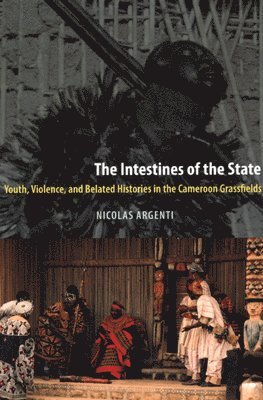
Intestines of the State
Youth, Violence, and Belated Histories in the Cameroon Grassfields
Häftad, Engelska, 2007
323 kr
Skickas inom 7-10 vardagar
The young people of the Cameroon Grassfields have been subject to a long history of violence and political marginalization. For centuries, the main victims of the slave trade, they became prime targets for forced labor campaigns under a series of colonial rulers. Today's youth remain at the bottom of the fiercely hierarchical and polarized societies of the Grassfields, and it is their response to centuries of exploitation that Nicolas Pandely Argenti takes up in this absorbing and original book. Beginning his study with a political analysis of youth in the Grassfields from the eighteenth century to the present, Argenti pays special attention to the repeated violent revolts staged by young victims of political oppression. He then combines this history with extensive ethnographic fieldwork in the Oku chiefdom, discovering that the specter of past violence lives on in the masked dance performances that have earned intense devotion from today's youth. Argenti contends that by evoking the imagery of past cataclysmic events, these masquerades allow young Oku men and women to address the inequities they face in their relations with elders and state authorities today.
835 kr
Skickas inom 10-15 vardagar
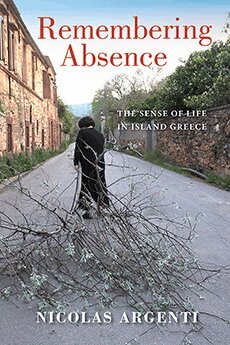
Drawing on research conducted on Chios during the sovereign debt crisis that struck Greece in 2010, Nicolas Argenti follows the lives of individuals who symbolize the transformations affecting this Aegean island. As witnesses to the crisis speak of their lives, however, their current anxieties and frustrations are expressed in terms of past crises that have shaped the dramatic history of Chios, including the German occupation in World War II and the ensuing famine, the exchange of populations between Greece and Turkey of 1922–23, and the Massacres of 1822 that decimated the island at the outset of the Greek War of Independence. The complex temporality that emerges in these accounts is ensconced in a cultural context of commemorative ritual, ecstatic visions, an annual rocket war, and other embodied practices that contribute to forms of memory production that question the assumptions of the trauma discourse, revealing the islanders of Chios to be active in forging their place in time in a manner that blurs the boundaries between historiography, memory, religion, and myth. A member of the Chiot diaspora, Argenti makes use of unpublished correspondence from survivors of the Massacres of 1822 and their descendants and reflects on oral family histories and silences in which the island represents an enigmatic but palpable absence. As he explores the ways in which a body of memory and a cultural experience of temporality came to be dislocated and shared between two populations, his return to Chios marks an encounter in which the traditional roles of ethnographer and participant come to be dispersed and intertwined.
375 kr
Skickas inom 7-10 vardagar
Drawing on research conducted on Chios during the sovereign debt crisis that struck Greece in 2010, Nicolas Argenti follows the lives of individuals who symbolize the transformations affecting this Aegean island. As witnesses to the crisis speak of their lives, however, their current anxieties and frustrations are expressed in terms of past crises that have shaped the dramatic history of Chios, including the German occupation in World War II and the ensuing famine, the exchange of populations between Greece and Turkey of 1922–23, and the Massacres of 1822 that decimated the island at the outset of the Greek War of Independence. The complex temporality that emerges in these accounts is ensconced in a cultural context of commemorative ritual, ecstatic visions, an annual rocket war, and other embodied practices that contribute to forms of memory production that question the assumptions of the trauma discourse, revealing the islanders of Chios to be active in forging their place in time in a manner that blurs the boundaries between historiography, memory, religion, and myth. A member of the Chiot diaspora, Argenti makes use of unpublished correspondence from survivors of the Massacres of 1822 and their descendants and reflects on oral family histories and silences in which the island represents an enigmatic but palpable absence. As he explores the ways in which a body of memory and a cultural experience of temporality came to be dislocated and shared between two populations, his return to Chios marks an encounter in which the traditional roles of ethnographer and participant come to be dispersed and intertwined.
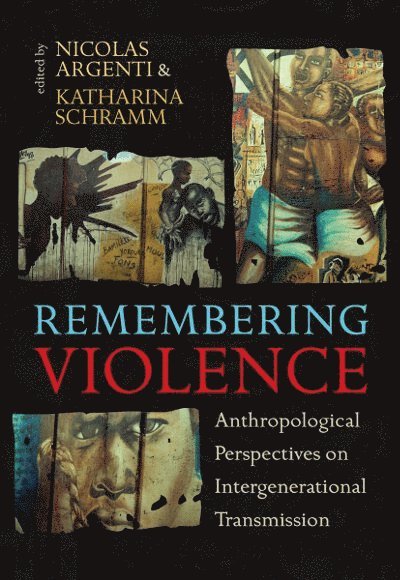
Remembering Violence
Anthropological Perspectives on Intergenerational Transmission
Häftad, Engelska, 2012
566 kr
Skickas inom 3-6 vardagar
This collection of consistently interesting articles contributes to the very boom in studies of memory towards which the editors ambiguously claim some skepticism. JRAI [This volume] is an important anthropological contribution to this expanding field [of memories of past violence]...The ethnographic diversity of the chapters allows for cross-cultural comparison and, as the editors themselves underscore, for different methodological and analytical approaches. Social Anthropology/Anthropologie sociale This collection of essays marks out fertile ground for anthropological investigations of memories of violence and trauma...the fine-grained analyses [ the wide ranging case studies contain] give the lie to any simplistic, ethnocentric and yet unversalising, explanations...it throws a stunning critical spotlight upon many contemporary 'Western' therapeutic approaches that insist upon the 'talking cure'...It makes a valuable contribution to the anthropology of time, memory and violence and is suitable for advanced undergraduate and postgraduate courses. Anthroplogical Notebooks This is a rich and stimulating collection...Taken together [these chapters] provide an excellent antidote to simplistic medical or psychological approaches to the long-term effects of violence on victims and their families.Paul Antze, York University, Toronto [A] timely and important collection that brings together a number of current literatures in anthropology and memory studies...The volume enriches and complicates the study of memory, while making at the same time a strong case for the distinctiveness of anthropology's potential to contribute to such an enterprise. Stuart McLean, University of Minnesota Psychologists have done a great deal of research on the effects of trauma on the individual, revealing the paradox that violent experiences are often secreted away beyond easy accessibility, becoming impossible to verbalize explicitly. However, comparatively little research has been done on the transgenerational effects of trauma and the means by which experiences are transmitted from person to person across time to become intrinsic parts of the social fabric. With eight contributions covering Africa, Central and South America, China, Europe, and the Middle East, this volume sheds new light on the role of memory in constructing popular histories - or historiographies - of violence in the absence of, or in contradistinction to, authoritative written histories.It brings new ethnographic data to light and presents a truly cross-cultural range of case studies that will greatly enhance the discussion of memory and violence across disciplines. Nicolas Argenti is a senior lecturer in social anthropology at Brunel University. He has conducted research in North West Cameroon and Southern Sri Lanka on youth, political violence, and embodied memory. His monograph, The Intestines of the State: Youth, Violence and Belated Histories in the Cameroon Grassfields, was published in 2007. Katharina Schramm is a senior lecturer in social anthropology at the Martin-Luther-University of Halle-Wittenberg. She has previously worked on the commemoration of the slave trade and cultural politics in Ghana. Her published works include African Homecoming: Panafricanism and the Politics of Heritage (2010) and Identity Politics and the New Genetics: Re/creating Categories of Difference and Belonging (2012).
267 kr
Skickas inom 7-10 vardagar
Del 8 - Studies in Social Analysis
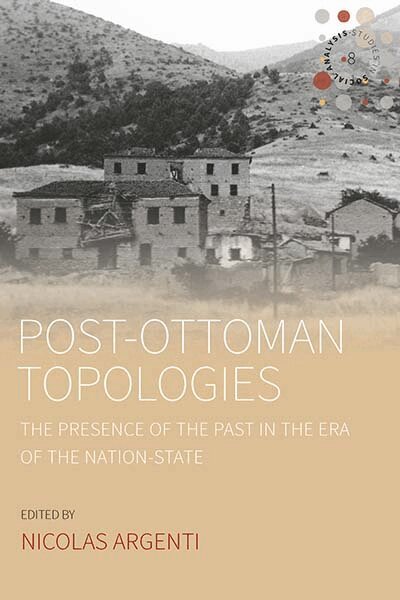
Post-Ottoman Topologies
The Presence of the Past in the Era of the Nation State
Inbunden, Engelska, 2019
1 747 kr
Skickas inom 3-6 vardagar
How does an ethnically and culturally plural empire, where Christians, Jews, and Muslims could ascend to the highest levels of political authority and influence, devolve into a disarray of nation-states defined by nationalist ideologies? With contributions from several of the Balkan countries that once were united under the aegis of the Ottoman Empire, this latest volume proposes new theoretical approaches to the experience and transmission of the past through time. Each contributor explores themes regarding the transmission of collective memories of post-Ottoman state formation and the malaise associated with a contemporary epoch that, echoing late modernity, we might term `late nationalism'.
Post-Ottoman Topologies
The Presence of the Past in the Era of the Nation-State
Häftad, Engelska, 2019
496 kr
Skickas inom 3-6 vardagar
How are historians and social scientists to understand the emergence, the multiplicity, and the mutability of collective memories of the Ottoman Empire in the political formations that succeeded it? With contributions focussing on several of the nation-states whose peoples once were united under the aegis of Ottoman suzerainty, this volume proposes new theoretical approaches to the experience and transmission of the past through time. Developing the concept of topology, contributors explore collective memories of Ottoman identity and post-Ottoman state formation in a contemporary epoch that, echoing late modernity, we might term “late nationalism”.
Remembering Violence
Anthropological Perspectives on Intergenerational Transmission
Inbunden, Engelska, 2009
1 860 kr
Skickas inom 3-6 vardagar
Psychologists have done a great deal of research on the effects of trauma on the individual, revealing the paradox that violent experiences are often secreted away beyond easy accessibility, becoming impossible to verbalize explicitly. However, comparatively little research has been done on the transgenerational effects of trauma and the means by which experiences are transmitted from person to person across time to become intrinsic parts of the social fabric. With eight contributions covering Africa, Central and South America, China, Europe, and the Middle East, this volume sheds new light on the role of memory in constructing popular histories – or historiographies – of violence in the absence of, or in contradistinction to, authoritative written histories. It brings new ethnographic data to light and presents a truly cross-cultural range of case studies that will greatly enhance the discussion of memory and violence across disciplines.