Nicolas Schillinger – författare
Visar alla böcker från författaren Nicolas Schillinger. Handla med fri frakt och snabb leverans.
2 produkter
2 produkter
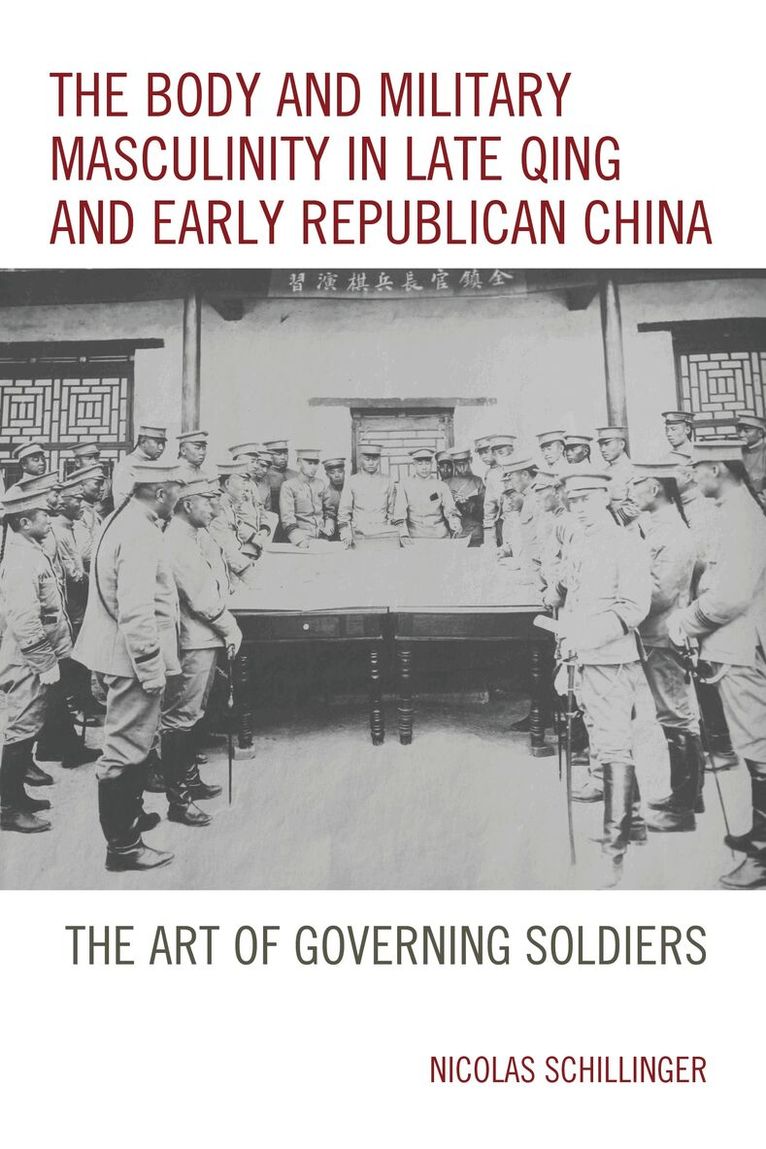
Body and Military Masculinity in Late Qing and Early Republican China
The Art of Governing Soldiers
Inbunden, Engelska, 2016
1 520 kr
Skickas inom 10-15 vardagar
In 1894–1895, after suffering defeat against Japan in a war primarily fought over the control of Korea, the Qing government initiated fundamental military reforms and established “New Armies“ modeled after the German and Japanese military. Besides reorganizing the structure of the army and improving military training, the goal was to overcome the alleged physical weakness and lack of martial spirit attributed to Chinese soldiers in particular and to Chinese men in general. Intellectuals, government officials, and military circles criticized the pacifist and civil orientation of Chinese culture, which had resulted in a negative attitude towards its armed forces and martial values throughout society and a lack of interest in martial deeds, glory on the battlefield, and military achievements among men. The book examines the cultivation of new soldiers, officers, and civilians through new techniques intended to discipline their bodies and reconfigure their identities as military men and citizens. The book shows how the establishment of German-style “New Armies” in China between 1895 and 1916 led to the re-creation of a militarized version of masculinity that stressed physical strength, discipline, professionalism, martial spirit, and “Western” military appearance and conduct. Although the military reforms did not prevent the downfall of the Qing Dynasty or provide stable military clout to subsequent regimes, they left a lasting legacy by reconfiguring Chinese military culture and re-creating military masculinity and the image of men in China.
‘Ordering the World’ in Asia and Europe
Exchanging Ideas of Governance and Administration since the 16th Century
Inbunden, Engelska, 2026
2 100 kr
Kommande
‘Ordering the World’ – a slogan originally employed by Chinese government reformers in the eighteenth century – addresses ideas and practices within the administrative field in Asia and Europe. The volume focusses on the transcultural transfer of notions of order, bureaucratic efficiency and bureaucratic ethos as well as their implementation by the adoption of foreign institutions from the sixteenth to the early twentieth century. The sixteen case studies thereby open up the historical dimension of European and Asian bureaucracies and explore the often asymmetrical transfer of administrative notions, ideas and practices as well as their transformation in different cultures. The authors from both Asia and Europe thereby make decisive forays into a global intellectual history of public administration – an issue, which has hardly been touched upon before in academia.