Nigel J. H. Smith - Böcker
Visar alla böcker från författaren Nigel J. H. Smith. Handla med fri frakt och snabb leverans.
6 produkter
6 produkter
869 kr
Skickas inom 5-8 vardagar
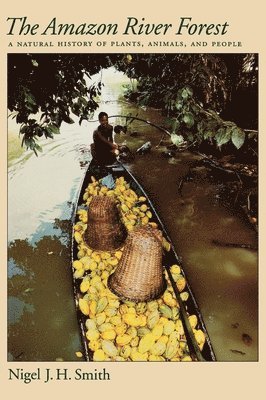
The floodplain forest of the Amazon is the last major agricultural frontier of the Americas. This unique habitat, inundated in some places to a depth of thirty feet a year, contains a marvellous variety of plant and animal resources that inhabitants have long reaped--fruit, nuts, building materials, fuelwood, and medicinal plants. While the floodplain has great potential for food production, its natural resource base is becoming increasingly threatened by ranching and agricultural expansion and impaired by inappropriate land-use practices. This important book, based both on field observations carried out over the past quarter century and historical material, demonstrates that knowledge possessed by area dwellers offers vital insights for promoting the sound economic development of the floodplain. Nigel Smith argues for the importance of balance between land-use systems, and suggests that research and development should be realigned to incorporate both modern science and traditional systems. Beautifully illustrated with the author's own photographs, this authoritative volume explores a broad range of ecological, historical, cultural, and socioeconomic issues, and offers practical suggestions for developing the floodplain that enhance, rather than destroy, biodiversity.
503 kr
Skickas inom 5-8 vardagar
The floodplain forest of the Amazon is the last major agricultural frontier of the Americas. This unique habitat, inundated in some places to a depth of thirty feet a year, contains a marvellous variety of plant and animal resources that inhabitants have long reaped--fruit, nuts, building materials, fuelwood, and medicinal plants. While the floodplain has great potential for food production, its natural resource base is becoming increasingly threatened by ranching and agricultural expansion and impaired by inappropriate land-use practices. This important book, based both on field observations carried out over the past quarter century and historical material, demonstrates that knowledge possessed by area dwellers offers vital insights for promoting the sound economic development of the floodplain. Nigel Smith argues for the importance of balance between land-use systems, and suggests that research and development should be realigned to incorporate both modern science and traditional systems. Beautifully illustrated with the author's own photographs, this authoritative volume explores a broad range of ecological, historical, cultural, and socioeconomic issues, and offers practical suggestions for developing the floodplain that enhance, rather than destroy, biodiversity.
665 kr
Skickas inom 3-6 vardagar
Rainforest Corridors: The Transamazon Colonization Scheme offers a sweeping examination of one of the most ambitious—and controversial—development projects in the history of the tropics. Beginning in 1970, the Brazilian government set out to integrate the vast Amazonian interior with the rest of the nation by carving the 3,300-kilometer Transamazon Highway through dense rainforest and settling hundreds of thousands of families along its route. This bold plan promised modernization and economic growth but quickly raised global concerns about ecological destruction, threats to Indigenous communities, and the viability of agriculture in fragile upland soils. Drawing on a decade of fieldwork, this book traces both the achievements and failures of the colonization scheme, placing it within the broader political and economic forces that drove Amazonian development.Combining ecological, agricultural, medical, and ethnographic perspectives, the study documents how settlers struggled against infertile soils, pests, and climatic challenges while also contending with limited credit, poor farm management, and debilitating diseases such as malaria and gastrointestinal infections. Chapters explore the role of public health services, local healing practices, and the settlers’ adaptive use of medicinal plants, alongside analyses of agroecosystem productivity and crop choices imposed by government policy. With vivid accounts of pioneer communities and careful attention to cultural diversity, the book situates the Transamazon within the global debate over tropical deforestation and sustainable development. At once a critical assessment and a constructive proposal, it offers enduring lessons on the limits of large-scale colonization and the need for more modest, ecologically attuned models of settlement in the world’s largest rainforest.This title is part of UC Press's Voices Revived program, which commemorates University of California Press’s mission to seek out and cultivate the brightest minds and give them voice, reach, and impact. Drawing on a backlist dating to 1893, Voices Revived makes high-quality, peer-reviewed scholarship accessible once again using print-on-demand technology. This title was originally published in 1982.
1 469 kr
Skickas inom 3-6 vardagar
Rainforest Corridors: The Transamazon Colonization Scheme offers a sweeping examination of one of the most ambitious—and controversial—development projects in the history of the tropics. Beginning in 1970, the Brazilian government set out to integrate the vast Amazonian interior with the rest of the nation by carving the 3,300-kilometer Transamazon Highway through dense rainforest and settling hundreds of thousands of families along its route. This bold plan promised modernization and economic growth but quickly raised global concerns about ecological destruction, threats to Indigenous communities, and the viability of agriculture in fragile upland soils. Drawing on a decade of fieldwork, this book traces both the achievements and failures of the colonization scheme, placing it within the broader political and economic forces that drove Amazonian development.Combining ecological, agricultural, medical, and ethnographic perspectives, the study documents how settlers struggled against infertile soils, pests, and climatic challenges while also contending with limited credit, poor farm management, and debilitating diseases such as malaria and gastrointestinal infections. Chapters explore the role of public health services, local healing practices, and the settlers’ adaptive use of medicinal plants, alongside analyses of agroecosystem productivity and crop choices imposed by government policy. With vivid accounts of pioneer communities and careful attention to cultural diversity, the book situates the Transamazon within the global debate over tropical deforestation and sustainable development. At once a critical assessment and a constructive proposal, it offers enduring lessons on the limits of large-scale colonization and the need for more modest, ecologically attuned models of settlement in the world’s largest rainforest.This title is part of UC Press's Voices Revived program, which commemorates University of California Press’s mission to seek out and cultivate the brightest minds and give them voice, reach, and impact. Drawing on a backlist dating to 1893, Voices Revived makes high-quality, peer-reviewed scholarship accessible once again using print-on-demand technology. This title was originally published in 1982.
1 558 kr
Skickas inom 10-15 vardagar
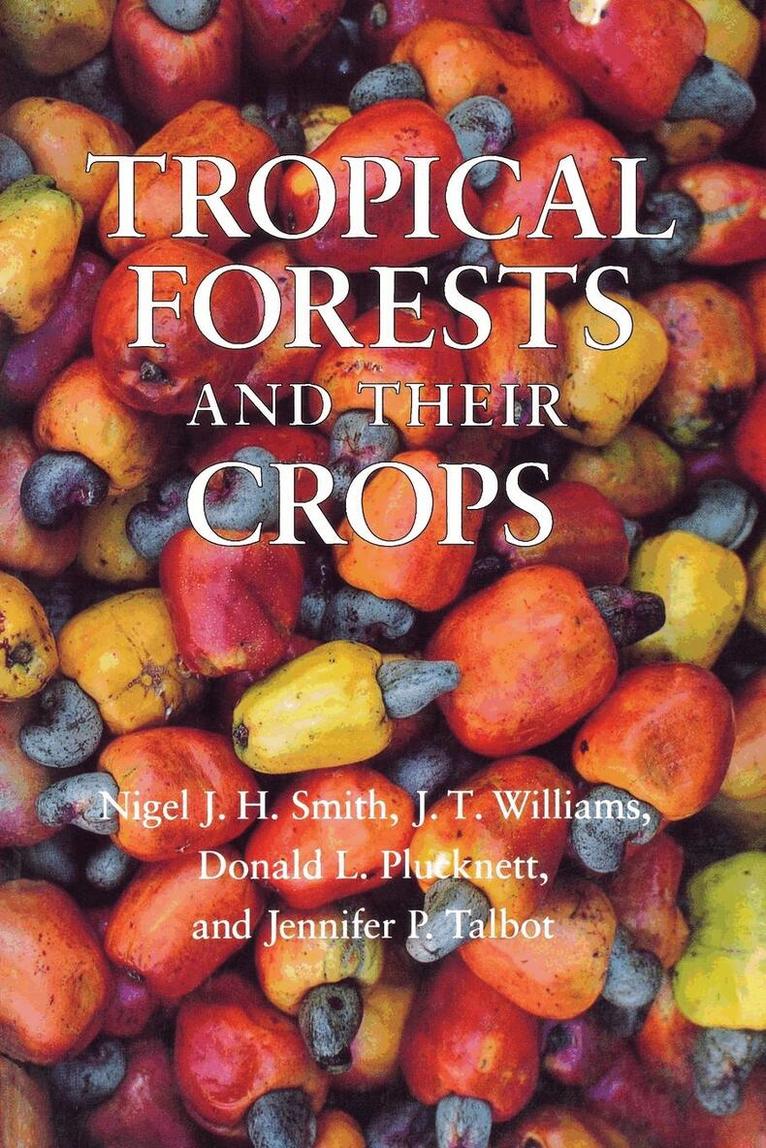
The tropics are the source of many of our familiar fruits, vegetables, oils, and spice, as well as such commodities as rubber and wood. Moreover, other tropical fruits and vegetables are being introduced into our markets to offer variety to our diet. Now, as tropical forests are increasingly threatened, we face a double-fold crisis: not only the loss of the plants but also rich pools of potentially useful genes. Wild populations of crop plants harbor genes that can improve the productivity and disease resistance of cultivated crops, many of which are vital to developing economies and to global commerce. Eight chapters of this book are devoted to a variety of tropical crops—beverages, fruit, starch, oil, resins, fuelwood, fodder, spices, timber, and nuts—the history of their domestication, their uses today, and the known extent of their gene pools, both domesticated and wild. Drawing on broad research, the authors also consider conservation strategies such as parks and reserves, corporate holdings, gene banks and tissue culture collections, and debt-for-nature swaps. They stress the need for a sensitive balance between conservation and the economic well-being of local populations. If economic growth is part of the conservation effort, local populations and governments will be more strongly motivated to save their natural resources. Distinctly practical and soundly informative, this book provides insight into the overwhelming abundance of tropical forests, an unsettling sense of what we may lose if they are destroyed, and a deep appreciation for the delicate relationships between tropical forest plants and people around the world.
622 kr
Skickas inom 10-15 vardagar
The tropics are the source of many of our familiar fruits, vegetables, oils, and spice, as well as such commodities as rubber and wood. Moreover, other tropical fruits and vegetables are being introduced into our markets to offer variety to our diet. Now, as tropical forests are increasingly threatened, we face a double-fold crisis: not only the loss of the plants but also rich pools of potentially useful genes. Wild populations of crop plants harbor genes that can improve the productivity and disease resistance of cultivated crops, many of which are vital to developing economies and to global commerce. Eight chapters of this book are devoted to a variety of tropical crops—beverages, fruit, starch, oil, resins, fuelwood, fodder, spices, timber, and nuts—the history of their domestication, their uses today, and the known extent of their gene pools, both domesticated and wild. Drawing on broad research, the authors also consider conservation strategies such as parks and reserves, corporate holdings, gene banks and tissue culture collections, and debt-for-nature swaps. They stress the need for a sensitive balance between conservation and the economic well-being of local populations. If economic growth is part of the conservation effort, local populations and governments will be more strongly motivated to save their natural resources. Distinctly practical and soundly informative, this book provides insight into the overwhelming abundance of tropical forests, an unsettling sense of what we may lose if they are destroyed, and a deep appreciation for the delicate relationships between tropical forest plants and people around the world.