Øystein Linnebo - Böcker
Visar alla böcker från författaren Øystein Linnebo. Handla med fri frakt och snabb leverans.
6 produkter
6 produkter
1 240 kr
Skickas inom 5-8 vardagar
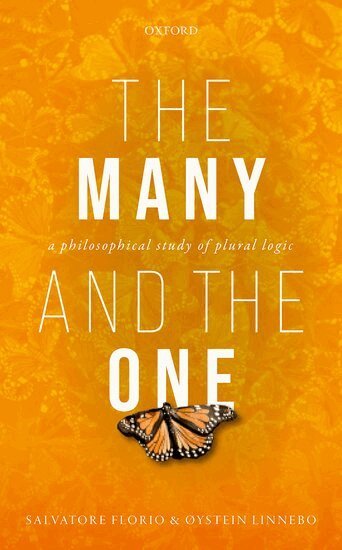
Plural expressions found in natural languages allow us to talk about many objects simultaneously. Plural logic -- a logical system that takes plurals at face value -- has seen a surge of interest in recent years. This book explores its broader significance for philosophy, logic, and linguistics. What can plural logic do for us? Are the bold claims made on its behalf correct? After introducing plural logic and its main applications, the book provides a systematic analysis of the relation between this logic and other theoretical frameworks such as set theory, mereology, higher-order logic, and modal logic. The applications of plural logic rely on two assumptions, namely that this logic is ontologically innocent and has great expressive power. These assumptions are shown to be problematic. The result is a more nuanced picture of plural logic's applications than has been given thus far. Questions about the correct logic of plurals play a central role in the final chapters, where traditional plural logic is rejected in favor of a “critical” alternative. The most striking feature of this alternative is that there is no universal plurality. This leads to a novel approach to the relation between the many and the one. In particular, critical plural logic paves the way for an account of sets capable of solving the set-theoretic paradoxes.
991 kr
Skickas inom 5-8 vardagar
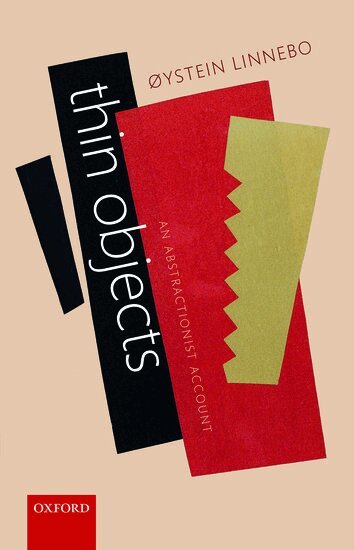
Are there objects that are "thin" in the sense that not very much is required for their existence? Frege famously thought so. He claimed that the equinumerosity of the knives and the forks suffices for there to be objects such as the number of knives and the number of forks, and for these objects to be identical. The idea of thin objects holds great philosophical promise but has proved hard to explicate. Øystein Linnebo aims to do so by drawing on some Fregean ideas. First, to be an object is to be a possible referent of a singular term. Second, singular reference can be achieved by providing a criterion of identity for the would-be referent. The second idea enables a form of easy reference and thus, via the first idea, also a form of easy being. Paradox is avoided by imposing a predicativity restriction on the criteria of identity. But the abstraction based on a criterion of identity may result in an expanded domain. By iterating such expansions, a powerful account of dynamic abstraction is developed. The result is a distinctive approach to ontology. Abstract objects such as numbers and sets are demystified and allowed to exist alongside more familiar physical objects. And Linnebo also offers a novel approach to set theory which takes seriously the idea that sets are "formed" successively.
298 kr
Skickas inom 7-10 vardagar
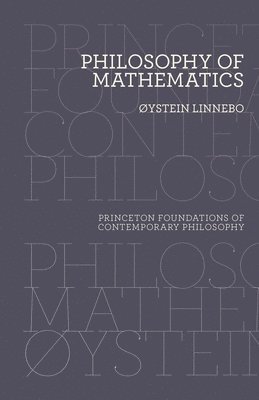
A sophisticated, original introduction to the philosophy of mathematics from one of its leading contemporary scholars Mathematics is one of humanity's most successful yet puzzling endeavors. It is a model of precision and objectivity, but appears distinct from the empirical sciences because it seems to deliver nonexperiential knowledge of a nonphysical reality of numbers, sets, and functions. How can these two aspects of mathematics be reconciled? This concise book provides a systematic yet accessible introduction to the field that is trying to answer that question: the philosophy of mathematics. Written by Oystein Linnebo, one of the world's leading scholars on the subject, the book introduces all of the classical approaches to the field, including logicism, formalism, intuitionism, empiricism, and structuralism. It also contains accessible introductions to some more specialized issues, such as mathematical intuition, potential infinity, the iterative conception of sets, and the search for new mathematical axioms. The groundbreaking work of German mathematician and philosopher Gottlob Frege, one of the founders of analytic philosophy, figures prominently throughout the book.Other important thinkers whose work is introduced and discussed include Immanuel Kant, John Stuart Mill, David Hilbert, Kurt Godel, W. V. Quine, Paul Benacerraf, and Hartry H. Field. Sophisticated but clear and approachable, this is an essential introduction for all students and teachers of philosophy, as well as mathematicians and others who want to understand the foundations of mathematics.
312 kr
Skickas inom 7-10 vardagar
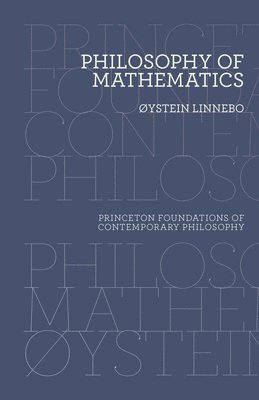
A sophisticated, original introduction to the philosophy of mathematics from one of its leading thinkersMathematics is a model of precision and objectivity, but it appears distinct from the empirical sciences because it seems to deliver nonexperiential knowledge of a nonphysical reality of numbers, sets, and functions. How can these two aspects of mathematics be reconciled? This concise book provides a systematic, accessible introduction to the field that is trying to answer that question: the philosophy of mathematics. Øystein Linnebo, one of the world's leading scholars on the subject, introduces all of the classical approaches to the field as well as more specialized issues, including mathematical intuition, potential infinity, and the search for new mathematical axioms. Sophisticated but clear and approachable, this is an essential book for all students and teachers of philosophy and of mathematics.
2 088 kr
Skickas inom 10-15 vardagar
This book examines positions that challenge the Fregean logic-first view. It raises criticalquestions about logic by examining various ways in which logic may be entangled with mathematics and metaphysics.Is logic topic-neutral and general? Can we take the application of logic for granted? This book suggests that we should not be dogmatic about logic but ask similar critical questions about logic as those Kant raised about metaphysics and mathematics. It challenges the Fregean logic-first view according to which logic is fundamental and hence independent of any extra-logical considerations. Whereas Quine assimilated logic and mathematics to the theoretical parts of empirical science, the present volume explores views that stop short of his thoroughgoing holism but instead take logic to be answerable to or entangled with some particular disciplines. The contributions provide views that assign primacy to mathematical reasons, Kantian metaphysical grounds, Husserlian transcendental phenomenological reflection, or normative considerations about how terms ought to be defined in various fields of empirical science or mathematics. Space is thereby carved out between a Fregean position on the one hand and Quinean holism on the other.Critical Views of Logic will be a key resource for academics, researchers, and advanced students of philosophy, linguistics, mathematics, and computer science, as well as those engaged in various fields of empirical science. The chapters in this book, except for chapter 4, were originally published in the journal Inquiry.
576 kr
Skickas inom 10-15 vardagar
This book examines positions that challenge the Fregean logic-first view. It raises criticalquestions about logic by examining various ways in which logic may be entangled with mathematics and metaphysics.Is logic topic-neutral and general? Can we take the application of logic for granted? This book suggests that we should not be dogmatic about logic but ask similar critical questions about logic as those Kant raised about metaphysics and mathematics. It challenges the Fregean logic-first view according to which logic is fundamental and hence independent of any extra-logical considerations. Whereas Quine assimilated logic and mathematics to the theoretical parts of empirical science, the present volume explores views that stop short of his thoroughgoing holism but instead take logic to be answerable to or entangled with some particular disciplines. The contributions provide views that assign primacy to mathematical reasons, Kantian metaphysical grounds, Husserlian transcendental phenomenological reflection, or normative considerations about how terms ought to be defined in various fields of empirical science or mathematics. Space is thereby carved out between a Fregean position on the one hand and Quinean holism on the other.Critical Views of Logic will be a key resource for academics, researchers, and advanced students of philosophy, linguistics, mathematics, and computer science, as well as those engaged in various fields of empirical science. The chapters in this book, except for chapter 4, were originally published in the journal Inquiry.