Palmira Brummett - Böcker
Visar alla böcker från författaren Palmira Brummett. Handla med fri frakt och snabb leverans.
6 produkter
6 produkter
611 kr
Skickas inom 3-6 vardagar
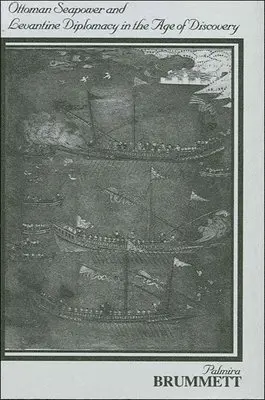
This work reframes sixteenth-century history, incorporating the Ottoman empire more thoroughly into European, Asian and world history. It analyzes the Ottoman Empire's expansion eastward in the contexts of claims to universal sovereignty, Levantine power politics, and the struggle for control of the oriental trade. Challenging the notion that the sixteenth-century Ottoman Empire was merely a reactive economic entity driven by the impulse to territorial conquest, Brummett portrays it as inheritor of Euro-Asian trading networks and participant in the contest for commercial hegemony from Genoa and Venice to the Indian Ocean. Brummett shows that the development of seapower was crucial to this endeavor, enabling the Ottomans to subordinate both Venice and the Mamluk kingdom to dependency relationships and providing the Ottoman ruling class access to commercial investment and wealth.
1 088 kr
Tillfälligt slut
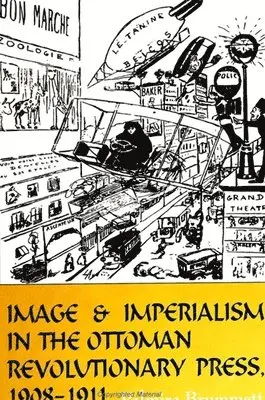
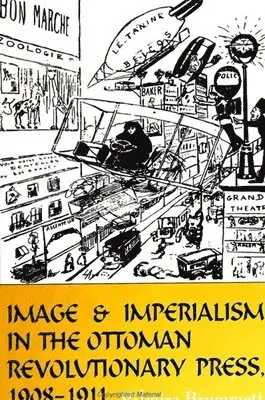
An illustrated work focusing on the ways in which satirical publications revealed evolution in Ottoman society.Palmira Brummett provides a new vision, through the prism of 100 cartoons, of the confrontation between tradition and modernity, "Orient" and "Occident," and rhetoric and reality. Taking a unique period in modern Middle Eastern history, the Ottoman Constitutional Revolution of 1908, Brummett examines the Istanbul satirical press and artfully weaves the narrative and images of political, economic, and cultural transformation to create a new vision of the Middle East at the end of the empire.This pioneering work of cultural history is drawn against the backgrounds of Ottoman-European relations and press history. It shows how Ottoman cartoonists merged the literary and artistic cultures of East and West through comparisons to the press production and art of Europe, India, Latin America, and the Middle East. In doing so, it intersects with the broader set of studies in European history, the implications of modernity, and the rhetorical uses of images.
626 kr
Skickas inom 3-6 vardagar
An illustrated work focusing on the ways in which satirical publications revealed evolution in Ottoman society.Palmira Brummett provides a new vision, through the prism of 100 cartoons, of the confrontation between tradition and modernity, "Orient" and "Occident," and rhetoric and reality. Taking a unique period in modern Middle Eastern history, the Ottoman Constitutional Revolution of 1908, Brummett examines the Istanbul satirical press and artfully weaves the narrative and images of political, economic, and cultural transformation to create a new vision of the Middle East at the end of the empire.This pioneering work of cultural history is drawn against the backgrounds of Ottoman-European relations and press history. It shows how Ottoman cartoonists merged the literary and artistic cultures of East and West through comparisons to the press production and art of Europe, India, Latin America, and the Middle East. In doing so, it intersects with the broader set of studies in European history, the implications of modernity, and the rhetorical uses of images.
Mapping the Ottomans
Sovereignty, Territory, and Identity in the Early Modern Mediterranean
Inbunden, Engelska, 2015
590 kr
Skickas inom 7-10 vardagar
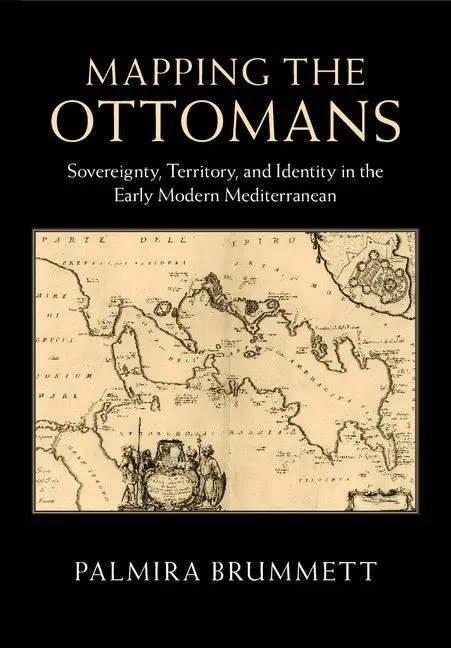
Simple paradigms of Muslim-Christian confrontation and the rise of Europe in the seventeenth century do not suffice to explain the ways in which European mapping envisioned the 'Turks' in image and narrative. Rather, maps, travel accounts, compendia of knowledge, and other texts created a picture of the Ottoman Empire through a complex layering of history, ethnography, and eyewitness testimony, which juxtaposed current events to classical and biblical history; counted space in terms of peoples, routes, and fortresses; and used the land and seascapes of the map to assert ownership, declare victory, and embody imperial power's reach. Enriched throughout by examples of Ottoman self-mapping, this book examines how Ottomans and their empire were mapped in the narrative and visual imagination of early modern Europe's Christian kingdoms. The maps serve as centerpieces for discussions of early modern space, time, borders, stages of travel, information flows, invocations of authority, and cross-cultural relations.
Mapping the Ottomans
Sovereignty, Territory, and Identity in the Early Modern Mediterranean
Häftad, Engelska, 2020
523 kr
Skickas inom 7-10 vardagar
Simple paradigms of Muslim-Christian confrontation and the rise of Europe in the seventeenth century do not suffice to explain the ways in which European mapping envisioned the 'Turks' in image and narrative. Rather, maps, travel accounts, compendia of knowledge, and other texts created a picture of the Ottoman Empire through a complex layering of history, ethnography, and eyewitness testimony, which juxtaposed current events to classical and biblical history; counted space in terms of peoples, routes, and fortresses; and used the land and seascapes of the map to assert ownership, declare victory, and embody imperial power's reach. Enriched throughout by examples of Ottoman self-mapping, this book examines how Ottomans and their empire were mapped in the narrative and visual imagination of early modern Europe's Christian kingdoms. The maps serve as centerpieces for discussions of early modern space, time, borders, stages of travel, information flows, invocations of authority, and cross-cultural relations.
Del 140 - Studies in Medieval and Reformation Traditions
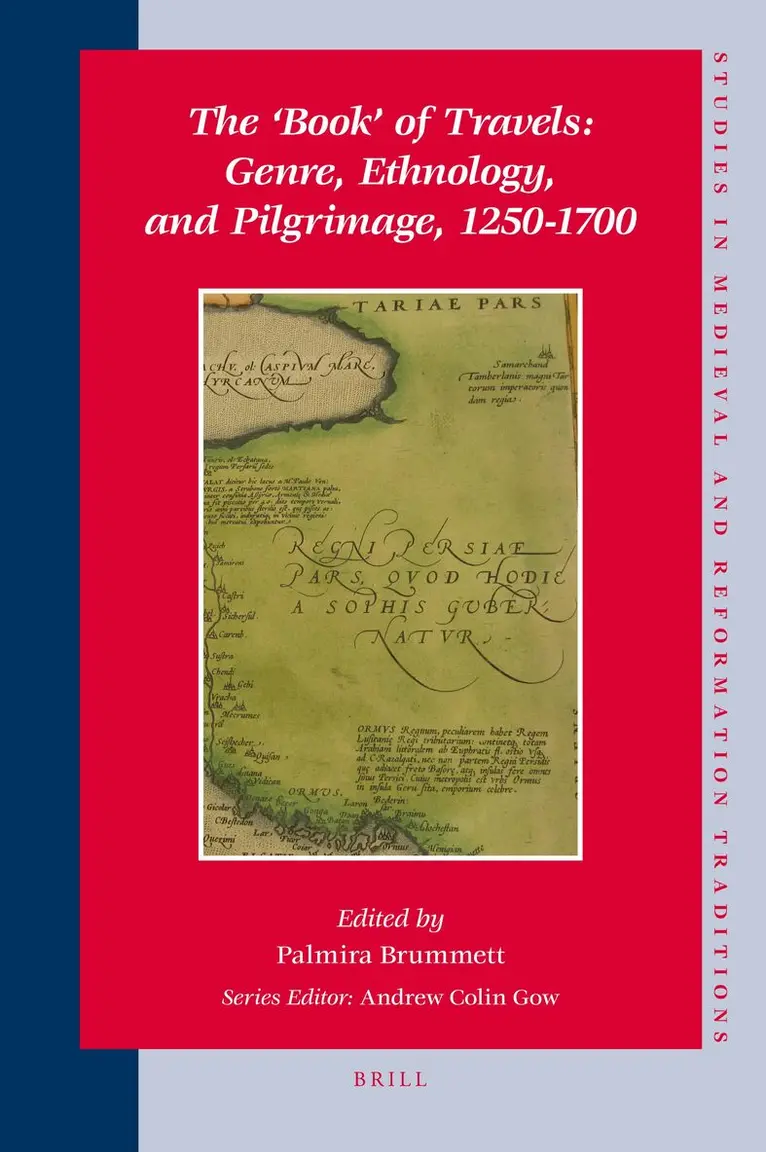
‘Book’ of Travels: Genre, Ethnology, and Pilgrimage, 1250-1700
Inbunden, Engelska, 2009
2 568 kr
Skickas inom 5-8 vardagar
The early modern era is often envisioned as one in which European genres, both narrative and visual, diverged indelibly from those of medieval times. This collection examines a disparate set of travel texts, dating from the thirteenth to the seventeenth centuries, to question that divergence and to assess the modes, themes, and ethnologies of travel writing. It demonstrates the enduring nature of the itinerary, the variant forms of witnessing (including imaginary maps), the crafting of sacred space as a cautionary tale, and the use of the travel narrative to represent the transformation of the authorial self. Focusing on European travelers to the expansive East, from the soft architecture of Timur's tent palaces in Samarqand to the ambiguities of sexual identity at the Mughul court, these essays reveal the possibilities for cultural translation as travelers of varying experience and attitude confront remote and foreign (or not so foreign) space.