Paloma Fresno-Calleja – författare
1 341 kr
Skickas inom 10-15 vardagar
812 kr
Läs direkt efter köp
This book examines the global/local intersections and tensions at play in the literary production from Aotearoa New Zealand through its engagement in the global marketplace.
Combining postcolonial and world literature methodologies contributors chart the global relocation of national culture from the nineteenth century to the present exploring what "New Zealand literature" means in different creative, teaching, and publishing contexts. They identify ongoing global entanglements with local identities and tensions between national and post-national literary discourses, considering Aotearoa New Zealand’s history as a white settler colony and its status as a bicultural nation and a key player in the Asia-Pacific region, active on the global stage. Topics and authors include: Stefanie Herades on colonial New Zealand literature and the global marketplace; Claudia Marquis on David Hare’s "Aotearoa series" as exotic reading for adolescents; Paloma Fresno-Calleja on the exoticizing landscape novels of Sarah Lark; James Wenley on Indian Ink Theatre company as hybrid export; Janet M. Wilson on the globalization of the New Zealand short story; Chris Prentice on pedagogic articulations of New Zealand literature; Leonie John on the challenges of teaching Māori literature in Germany; Dieter Riemenschneider on New Zealand literature at the Frankfurt Book Fair; Paula Morris on Commonwealth writers and the Booker Prize; Selina Tusitala Marsh on contemporary Pasifika poetry; and Chris Miller on the afterlife of Allen Curnow.
The chapters in this book were originally published as a special issue of the Journal of Postcolonial Writing.
784 kr
Läs direkt efter köp
This book examines the global/local intersections and tensions at play in the literary production from Aotearoa New Zealand through its engagement in the global marketplace.
Combining postcolonial and world literature methodologies contributors chart the global relocation of national culture from the nineteenth century to the present exploring what "New Zealand literature" means in different creative, teaching, and publishing contexts. They identify ongoing global entanglements with local identities and tensions between national and post-national literary discourses, considering Aotearoa New Zealand’s history as a white settler colony and its status as a bicultural nation and a key player in the Asia-Pacific region, active on the global stage. Topics and authors include: Stefanie Herades on colonial New Zealand literature and the global marketplace; Claudia Marquis on David Hare’s "Aotearoa series" as exotic reading for adolescents; Paloma Fresno-Calleja on the exoticizing landscape novels of Sarah Lark; James Wenley on Indian Ink Theatre company as hybrid export; Janet M. Wilson on the globalization of the New Zealand short story; Chris Prentice on pedagogic articulations of New Zealand literature; Leonie John on the challenges of teaching Māori literature in Germany; Dieter Riemenschneider on New Zealand literature at the Frankfurt Book Fair; Paula Morris on Commonwealth writers and the Booker Prize; Selina Tusitala Marsh on contemporary Pasifika poetry; and Chris Miller on the afterlife of Allen Curnow.
The chapters in this book were originally published as a special issue of the Journal of Postcolonial Writing.
2 512 kr
Skickas inom 10-15 vardagar
686 kr
Skickas inom 10-15 vardagar
2 350 kr
Skickas inom 10-15 vardagar
751 kr
Skickas inom 10-15 vardagar
2 786 kr
Skickas inom 10-15 vardagar
958 kr
Skickas inom 5-8 vardagar
890 kr
Läs direkt efter köp
890 kr
Läs direkt efter köp
832 kr
Läs direkt efter köp
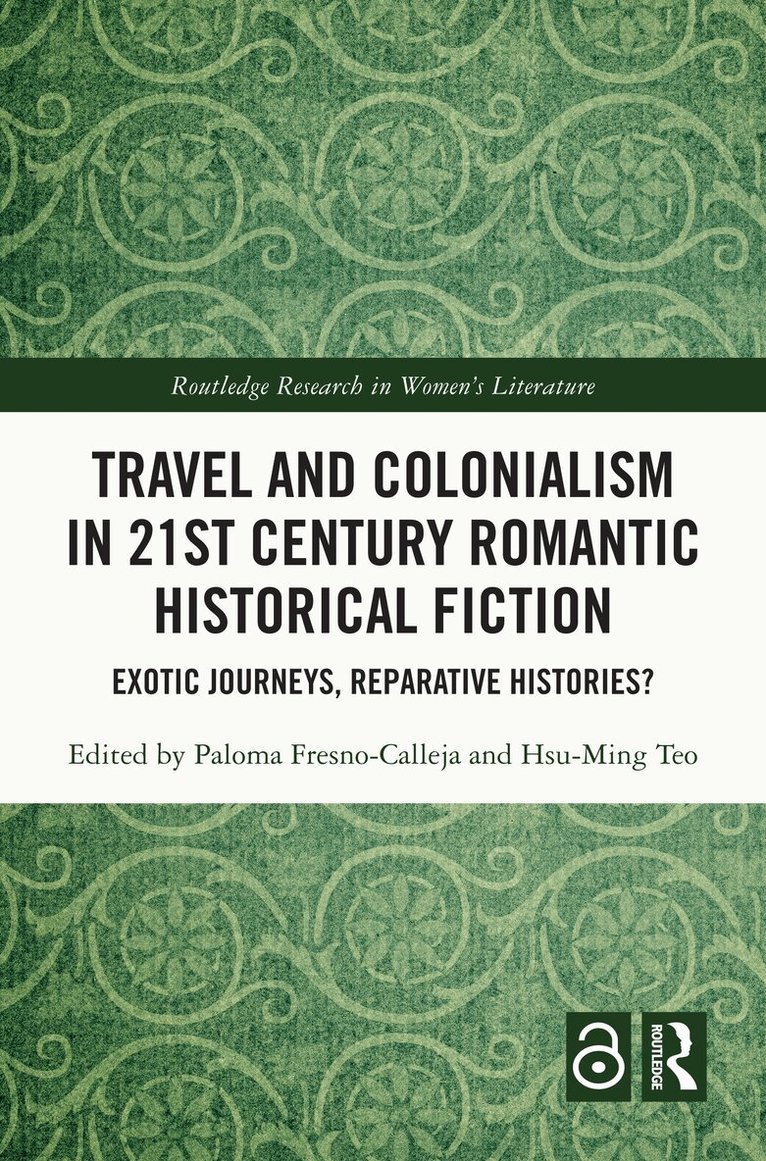
Romantic fiction has often involved stories of travel. In narratives of the journey towards love, "romance" often involves encounters with "exotic" places and peoples. When history is invoked in such stories, the past itself is exoticised and treated as "other" to the present to serve the purposes of romanticisation: a narrative strategy by which all manner of things – settings, characters, costumes, customs, consumables – are made to perform a luxuriant otherness that amplifies the experience of love. This volume questions the reparative function of Anglophone romantic historical fiction to ask: can plots of travel and discourses of tourism empower women while narrating stories of healing for the wounds of the past? This is the first volume to consider how romanticised and exoticised women’s historical fiction not only serves the purposes of armchair travel but may also replicate colonial discourse, unintentionally positioning readers as neocolonial, neo-Orientalist cultural voyeurs as well as voyagers.
Chapter 1 of this book is freely available as a downloadable Open Access PDF at http://www.taylorfrancis.com under a Creative Commons [Attribution-Non Commercial-No Derivatives (CC-BY-NC-ND)] 4.0 license
832 kr
Läs direkt efter köp
Romantic fiction has often involved stories of travel. In narratives of the journey towards love, "romance" often involves encounters with "exotic" places and peoples. When history is invoked in such stories, the past itself is exoticised and treated as "other" to the present to serve the purposes of romanticisation: a narrative strategy by which all manner of things – settings, characters, costumes, customs, consumables – are made to perform a luxuriant otherness that amplifies the experience of love. This volume questions the reparative function of Anglophone romantic historical fiction to ask: can plots of travel and discourses of tourism empower women while narrating stories of healing for the wounds of the past? This is the first volume to consider how romanticised and exoticised women’s historical fiction not only serves the purposes of armchair travel but may also replicate colonial discourse, unintentionally positioning readers as neocolonial, neo-Orientalist cultural voyeurs as well as voyagers.
Chapter 1 of this book is freely available as a downloadable Open Access PDF at http://www.taylorfrancis.com under a Creative Commons [Attribution-Non Commercial-No Derivatives (CC-BY-NC-ND)] 4.0 license