Patricia Watson - Böcker
Visar alla böcker från författaren Patricia Watson. Handla med fri frakt och snabb leverans.
8 produkter
8 produkter
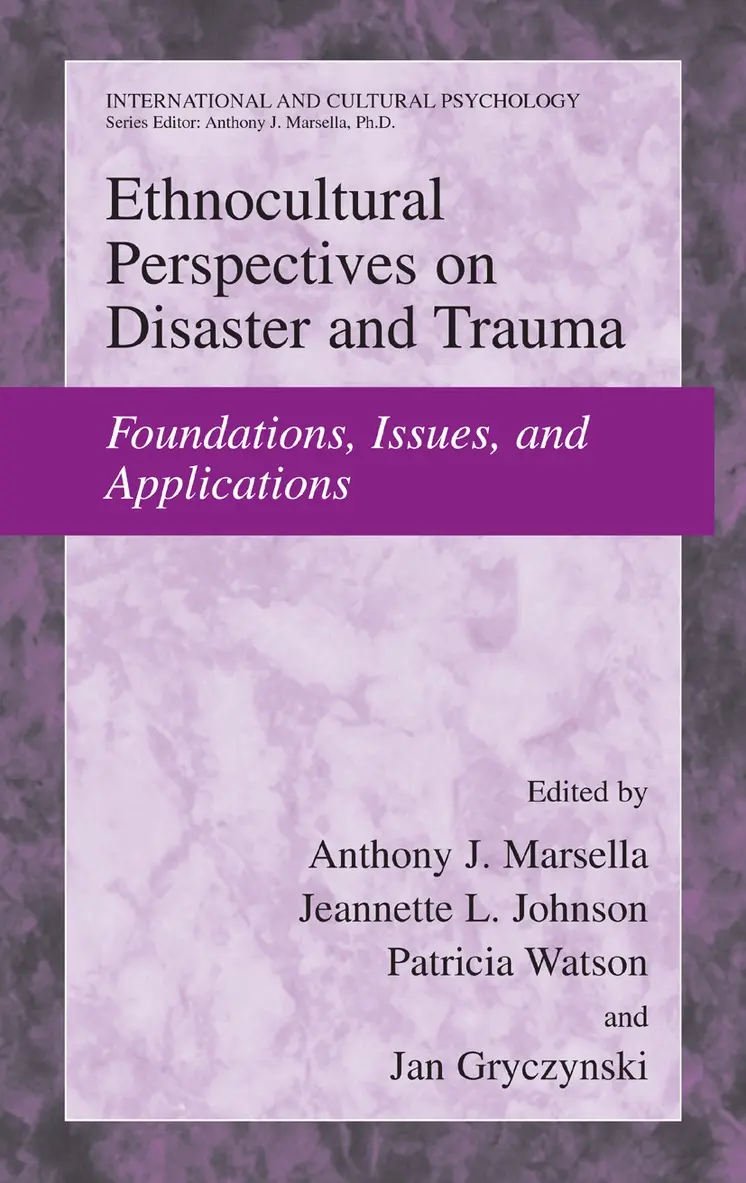
Ethnocultural Perspectives on Disaster and Trauma
Foundations, Issues, and Applications
Inbunden, Engelska, 2007
1 642 kr
Skickas inom 10-15 vardagar
Crises do not occur in cultural vacuums, but help often does. Good intentions are not enough. Lack of cultural understanding, sensitivity, and competencies can hamper and even harm the professional response to disasters. To help and heal, one must know and understand the cultural background of disaster victims. Ethnocultural Perspectives on Disaster and Trauma offers readers substantive knowledge in these three vital areas of disaster response. In this pioneering volume, experts on individual and collective trauma experience, posttraumatic stress and related syndromes, and emergency and crisis intervention -- share knowledge and insights on the cultural context of working with ethnic and racial minority communities during disasters. In each chapter, emotional, psychological, and social needs as well as communal strengths and coping skills that arise in disasters are documented for major minority groups in the United States including specific chapters on African Americans, Native Americans, Arab Americans, Asian Indians, Chinese Americans, Caribbean Americans, Latin Americans, Native Hawaiians, and Vietnamese Americans.Each chapter features information on: Demographics, major historical events, and core values of each population; Important cultural insights, including communication styles, culture-specific disorders, and valid assessment instruments; Therapeutic and healing traditions versus conventional medicine and therapy; Perspectives specific to the population's experience with disaster and trauma; Authors' recommendations for improving services to the population; Practical appendices for readers new to the field.This unique volume is a cultural competency compendium that will increase to the effectiveness of all who respond to disasters. It will also be of interest and value to scholars, policy makers, and health professionals working in the areas of disaster management, crisis intervention, and trauma. Ethnocultural Perspectives on Disaster and Trauma points readers to what the editors call the path "beyond simple assistance to healing and the restoration of hope and meaning."
441 kr
Skickas inom 7-10 vardagar
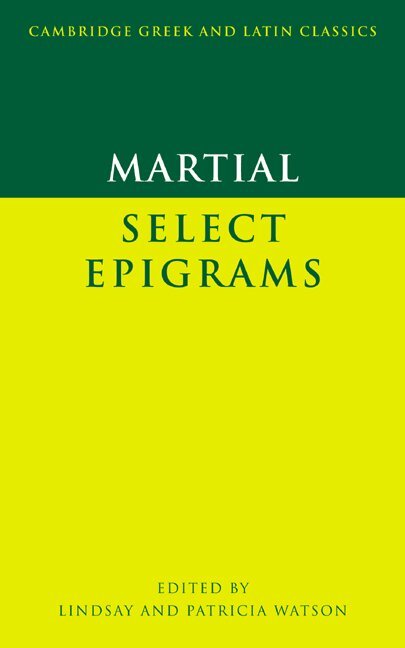
Despite his enduring popularity, Martial has recently suffered from serious critical neglect. The present work is the first edition of selections from Martial to be published for decades, and includes a fully representative selection of the oeuvre of the poet, who has often been criticised, unfairly, the authors argue, for obscenity and flattery of the Emperor Domitian. The epigrams included in the selection are organised under various heads, e.g. Martial and poetry, sexual mores, satirical pieces. A very full introduction deals with such topics as the prejudices and predilections of his audience which conditioned Martial's choice of subject matter, Martial's language, the structure and style of the epigrams, the epigrammatic tradition and Martial's creative engagement with it. The detailed commentary is suitable for use with undergraduates and is distinguished by its focus on social history as well as literary interpretation.
411 kr
Skickas inom 7-10 vardagar
Juvenal's sixth Satire is a masterpiece of comic hyperbole, an outrageous rant against women and marriage which, in its breadth and density, represents the high point of the misogynistic literature of classical antiquity. The Introduction situates Juvenal within the wider tradition of Roman satire, interrogates afresh the poem's architecture and recurrent themes, shows how Juvenal systematically attributes to his monstrous women the inverse of the Roman wife's canonical virtues, traces the various literary currents which infuse the Satire, and lastly addresses the much-discussed issue of the poetic voice or persona from a sociohistorical as well as a theoretical perspective. Above all, the commentary strives to locate Juvenal in his historical, literary and cultural context, while simultaneously affording assistance with the nuts and bolts of the Latin, and always keeping in view two key questions: what was Juvenal's purpose in writing the Satire? How seriously was it meant to be taken?
1 037 kr
Skickas inom 7-10 vardagar
Juvenal's sixth Satire is a masterpiece of comic hyperbole, an outrageous rant against women and marriage which, in its breadth and density, represents the high point of the misogynistic literature of classical antiquity. The Introduction situates Juvenal within the wider tradition of Roman satire, interrogates afresh the poem's architecture and recurrent themes, shows how Juvenal systematically attributes to his monstrous women the inverse of the Roman wife's canonical virtues, traces the various literary currents which infuse the Satire, and lastly addresses the much-discussed issue of the poetic voice or persona from a sociohistorical as well as a theoretical perspective. Above all, the commentary strives to locate Juvenal in his historical, literary and cultural context, while simultaneously affording assistance with the nuts and bolts of the Latin, and always keeping in view two key questions: what was Juvenal's purpose in writing the Satire? How seriously was it meant to be taken?
Ethnocultural Perspectives on Disaster and Trauma
Foundations, Issues, and Applications
Häftad, Engelska, 2010
1 193 kr
Skickas inom 10-15 vardagar
Crises do not occur in cultural vacuums, but help often does. Good intentions are not enough. Lack of cultural understanding, sensitivity, and competencies can hamper and even harm the professional response to disasters. To help and heal, one must know and understand the cultural background of disaster victims. Ethnocultural Perspectives on Disaster and Trauma offers readers substantive knowledge in these three vital areas of disaster response.In this pioneering volume, experts on individual and collective trauma experience, posttraumatic stress and related syndromes, and emergency and crisis intervention – share knowledge and insights on the cultural context of working with ethnic and racial minority communities during disasters. In each chapter, emotional, psychological, and social needs as well as communal strengths and coping skills that arise in disasters are documented for major minority groups in the United States including specific chapters on African Americans, Native Americans, Arab Americans, Asian Indians, Chinese Americans, Caribbean Americans, Latin Americans, Native Hawaiians, and Vietnamese Americans. Each chapter features information on: Demographics, major historical events, and core values of each population; Important cultural insights, including communication styles, culture-specific disorders, and valid assessment instruments; Therapeutic and healing traditions versus conventional medicine and therapy; Perspectives specific to the population’s experience with disaster and trauma; Authors’ recommendations for improving services to the population; Practical appendices for readers new to the field.This unique volume is a cultural competency compendium that will increase to the effectiveness of all who respond to disasters. It will also be of interest and value to scholars, policy makers, and health professionals working in the areas of disaster management, crisis intervention, and trauma. Ethnocultural Perspectives onDisaster and Trauma points readers to what the editors call the path “beyond simple assistance to healing and the restoration of hope and meaning.”
248 kr
Tillfälligt slut
What makes a society innovative? Tracing the story of five great civilizations, fromancient Egypt, Greece and Rome, to the Middle East, Europe, the United Statesand China, this book will tell you. History offers us a model and lessons forwhat can be done right, and it shows how once mighty and innovative societiescan fall. The story here departs from pundits who believe that the Western orAmerican-style political and legal system is universally best for economicsuccess. At various times China, the Middle East and elsewhere were the greatengines of innovation; later leadership passed to Europe and the United States.As some places rose to the top of science and technology, others fell away. Andsome, like China, rose again. The lessons of history are clear. Centers of innovationlearn from and borrow ideas, practices and technologies from elsewhere. Theyadapt ideas and practices to add new value. They activate strengths of theirpopulation through education, cultural openness, and access to financialresources. They build strong institutions that pursue new knowledge and rejectorthodoxy. At a time when the world seems to be closing doors to the talentedand pulling back from global engagement, when suspicion of the foreign isrunning high, we may be losing the essential traits that make for innovation,the most important of all assets for the future of the human race.
1 160 kr
Skickas inom 10-15 vardagar
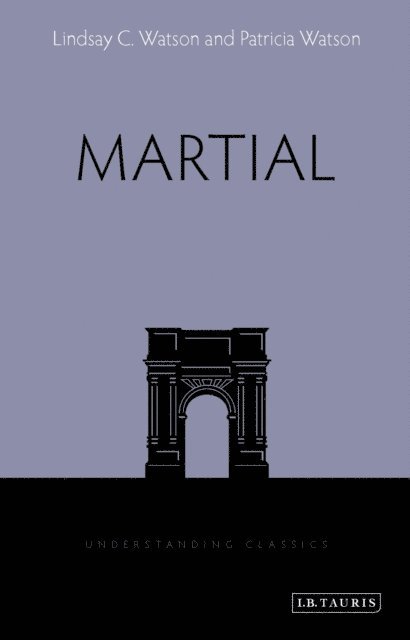
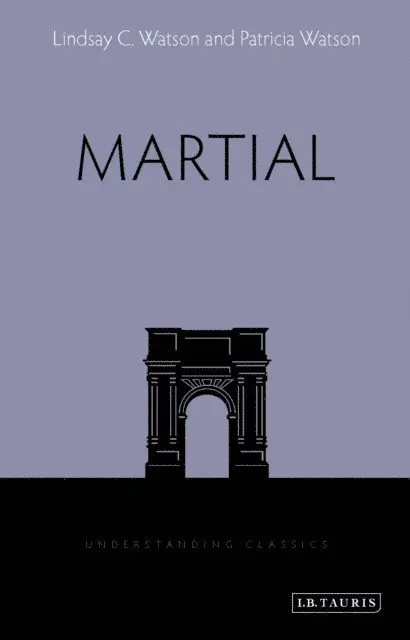
Marcus Valerius Martialis, or Martial (born between 38 and 41 CE, died between 102 and 104 CE) is celebrated for his droll, frequently salacious, portrayal of Roman high and low society during the first century rule of the emperors Domitian, Nerva and Trajan. Considered the 'inventor' of the modern epigram, Martial was a native of Hispania, who came to Rome in the hope of securing both patronage and advancement. From the bath-houses, taverns and gymnasia to the sculleries and slave-markets of the capital, Martial in his famous Epigrams sheds merciless light on the hypocrisies and sexual mores or rich and poor alike. Lindsay C and Patricia Watson provide an attractive overview - for students of classics and ancient history, as well as comparative literature - of the chief themes of his sardonic writings. They show that Martial is of continuing and special interest because of his rediscovery in the Renaissance, when writers viewed him as an incisive commentator on failings similar to those of their own day. The later reception of "Martial", by Juvenal and others, forms a major part of this informative survey.
377 kr
Skickas inom 10-15 vardagar
Marcus Valerius Martialis, or Martial (born between 38 and 41 CE, died between 102 and 104 CE) is celebrated for his droll, frequently salacious, portrayal of Roman high and low society during the first century rule of the emperors Domitian, Nerva and Trajan. Considered the 'inventor' of the modern epigram, Martial was a native of Hispania, who came to Rome in the hope of securing both patronage and advancement. From the bath-houses, taverns and gymnasia to the sculleries and slave-markets of the capital, Martial in his famous Epigrams sheds merciless light on the hypocrisies and sexual mores or rich and poor alike. Lindsay C and Patricia Watson provide an attractive overview - for students of classics and ancient history, as well as comparative literature - of the chief themes of his sardonic writings. They show that Martial is of continuing and special interest because of his rediscovery in the Renaissance, when writers viewed him as an incisive commentator on failings similar to those of their own day. The later reception of "Martial", by Juvenal and others, forms a major part of this informative survey.