Patrick Chabal – författare
Visar alla böcker från författaren Patrick Chabal. Handla med fri frakt och snabb leverans.
17 produkter
History of Postcolonial Lusophone Africa
Av Patrick Chabal, David Birmingham m. fl.
Häftad, 2002
297 kr
Lägg i varukorg
" . . . useful, timely, and important . . . a good and informative book on the Lusophone countries, Portuguese colonialism, and postcolonial influences." —Phyllis Martin, Indiana University"This book, produced by the obvious—and distinguished—corps of country specialists . . . fills a real gap in …
Power in Africa
An Essay in Political Interpretation
Häftad, 1993
568 kr
Lägg i varukorg
'This book will rightfully head many a reading list...'C.Allen, British Book News Power in Africa casts a fresh look at contemporary Black African politics. It reviews the merits and failings of existing interpretations of Africa's post-colonial society and offers a new approach to its …
Political Domination in Africa
Av Patrick Chabal, Patrick Chabal m. fl.
Häftad, 1986
586 kr
Lägg i varukorg
This collection of essays brings together historians and political scientists from Britain, France and the United States, who, from widely differing perspectives and traditions, have been involved in the process of rethinking African politics. They present here the outline of a new approach, …
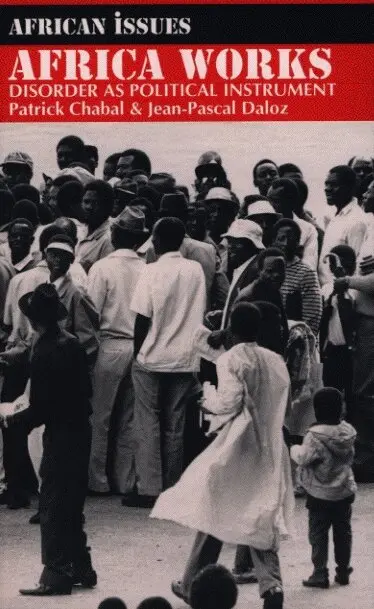
Africa Works
Disorder as Political Instrument
Av Patrick Chabal, Jean-Pascal Daloz
Häftad, 1999
299 kr
Lägg i varukorg
An examination of the political instrumentalization of disorder.Are there social, political and cultural factors in Africa which aspire to the continuation of patrimony and conspire against economic development?In association with the International African InstituteNorth America: Indiana U Press
Power in Africa
An Essay in Political Interpretation
E-bok, 2016
779 kr
Lägg i varukorg
''This book will rightfully head many a reading list...''C.Allen, British Book News Power in Africa casts a fresh look at contemporary Black African politics. It reviews the merits and failings of existing interpretations of Africa''s post-colonial society and offers a new approach to its …
Power in Africa
An Essay in Political Interpretation
Häftad, 1992
568 kr
Lägg i varukorg
'This book will rightfully head many a reading list...'C.Allen, British Book News Power in Africa casts a fresh look at contemporary Black African politics. It reviews the merits and failings of existing interpretations of Africa's post-colonial society and offers a new approach to its …
End of Conceit
Western Rationality After Postcolonialism
E-bok, 2012
390 kr
Lägg i varukorg
In this radical new book, Patrick Chabal reveals how the future of the West is now inextricably linked to that of the non-West. The rise of the economic power of China and other Asian countries as well as urgent environmental issues now force the West to think in new ways about how to best face the …
End of Conceit
Western Rationality After Postcolonialism
E-bok, 2012
381 kr
Lägg i varukorg
In this radical new book, Patrick Chabal reveals how the future of the West is now inextricably linked to that of the non-West. The rise of the economic power of China and other Asian countries as well as urgent environmental issues now force the West to think in new ways about how to best face the …
Africa
The Politics of Suffering and Smiling
Inbunden, 2009
1276 kr
Lägg i varukorg
The question usually asked about Africa is: 'why is it going wrong?' Is the continent still suffering from the ravages of colonialism? Or is it the victim of postcolonial economic exploitation, poor governance and lack of aid? Whatever the answer, increasingly the result is poverty and violence.In …
Africa
The Politics of Suffering and Smiling
Häftad, 2009
345 kr
Lägg i varukorg
The question usually asked about Africa is: 'why is it going wrong?' Is the continent still suffering from the ravages of colonialism? Or is it the victim of postcolonial economic exploitation, poor governance and lack of aid? Whatever the answer, increasingly the result is poverty and violence.In …
Africa
The Politics of Suffering and Smiling
E-bok, 2009
374 kr
Lägg i varukorg
The question usually asked about Africa is: 'why is it going wrong?' Is the continent still suffering from the ravages of colonialism? Or is it the victim of postcolonial economic exploitation, poor governance and lack of aid? Whatever the answer, increasingly the result is poverty and violence.In …
End of Conceit
Western Rationality after Postcolonialism
Häftad, 2012
361 kr
Lägg i varukorg
In this radical new book, Patrick Chabal reveals how the future of the West is now inextricably linked to that of the non-West. The rise of the economic power of China and other Asian countries as well as urgent environmental issues now force the West to think in new ways about how to best face the …
End of Conceit
Western Rationality after Postcolonialism
Inbunden, 2012
1280 kr
Lägg i varukorg
In this radical new book, Patrick Chabal reveals how the future of the West is now inextricably linked to that of the non-West. The rise of the economic power of China and other Asian countries as well as urgent environmental issues now force the West to think in new ways about how to best face the …
Africa
The Politics of Suffering and Smiling
E-bok, 2013
374 kr
Lägg i varukorg
The question usually asked about Africa is: 'why is it going wrong?' Is the continent still suffering from the ravages of colonialism? Or is it the victim of postcolonial economic exploitation, poor governance and lack of aid? Whatever the answer, increasingly the result is poverty and violence.In …
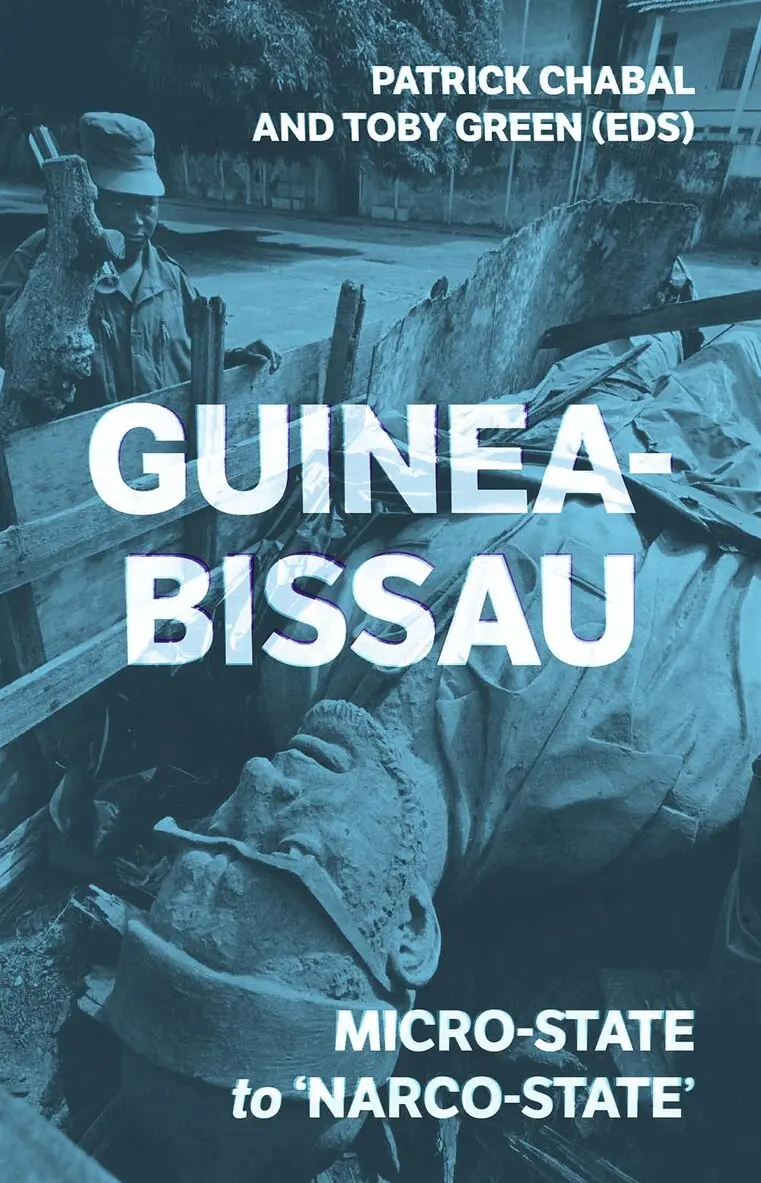
Guinea-Bissau
Micro-State to 'Narco-State'
Häftad, 2016
383 kr
Tillfälligt slut
Since 1998 Guinea-Bissau has suffered a series of coups which outside analysts have linked to its emergence as West Africa's first 'narco-state'. Yet what does this mean for the country and the nature of the state in postcolonial Africa? What links Guinea-Bissau's instability with questions of …
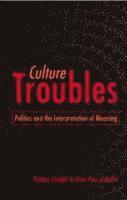
Culture Troubles
Politics and the Interpretation of Meaning
Av Patrick Chabal, Jean-Pascal Daloz
Häftad, 2005
243 kr
Tillfälligt slut
Chabal and Daloz's argument is one based on an analysis of culture understood as a system of meanings rather than as values. Hence, the authors offer a methodology that grounds political analysis in the interpretation of what 'makes sense' to the people concerned. Their approach, which resists the …