• Fri frakt över 249 kr
  • •
  • Snabba leveranser
  • •
  • Billiga böcker
Kundservice

Du är på sajten för privatpersoner.

Företag, bibliotek eller offentlig verksamhet?

Du handlar på classic.bokus.com, där alla dina funktioner finns intakta.
Till classic.bokus.com
Bokus logotyp. Gå till startsidan.
  • Erbjudanden
  • Nyheter
  • Student
  • Topplistor
  • Barn & ungdom
  • Bokus Play
  • E-böcker
  • Pocketböcker
  • Spel & pussel

10% rabatt på allt med kod: NYSTART10 →

Sidfot

Mina sidor

    Hjälp

    • Kundservice
    • Vanliga frågor och svar
    • Frakt och leverans
    • Retur vid ångerrätt
    • Reklamera vara
    • Betalning
    • Köpvillkor
    • Allmänna villkor
    • Information om webbplatsens tillgänglighet

    Om Bokus

    • Om oss
    • Pressrum
    • För studenter
    • För företag
    • För bibliotek och offentlig verksamhet
    • För leverantörer
    • Hållbarhet

    Populärt

    • Aktuella erbjudanden
    • Presentkort
    • Studentlitteratur
    • Nya böcker
    • Topplistor
    • Signerade böcker
    • Engelska böcker

    Inspiration

    • Boktips
    • BookTok
    • Populära bokserier
    • Barnbokskaraktärer
    • Populära författare
    Logotyp för Bokus
    Följ oss på Facebook (extern länk)Följ oss på Instagram (extern länk)Följ oss på YouTube (extern länk)Följ oss på TikTok (extern länk)
    bokus @ CookiesAnpassa cookiesIntegritetspolicyKöpvillkor
    Till Citymail hemsida (extern länk)Till Budbee hemsida (extern länk)Till Postnord hemsida (extern länk)Till Schenker hemsida (extern länk)Till Early Bird hemsida (extern länk)Till Walleys hemsida (extern länk)
    1. Historia och arkeologi
    2. Historia
    3. Afrikas historia

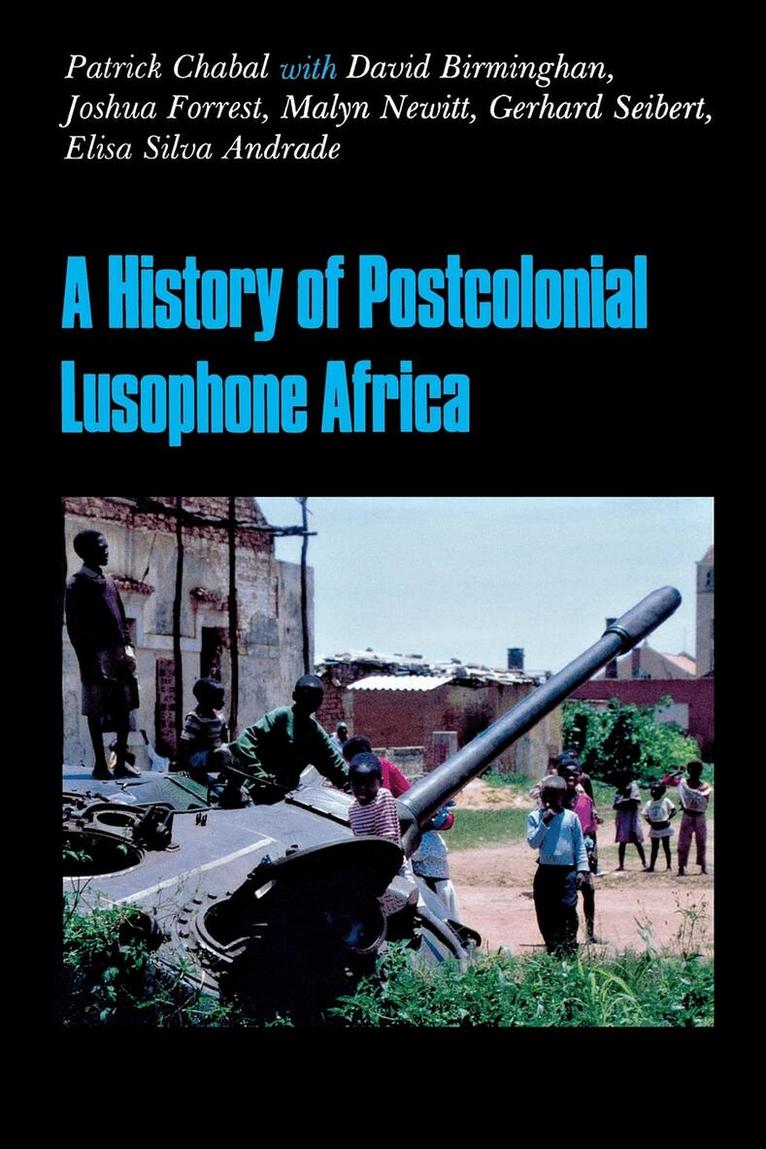
    History of Postcolonial Lusophone Africa

    AvPatrick Chabal,David Birmingham

    Häftad, Engelska, 2002

    Del i serien Indiana University Press (IPS)

    293 kr

    Beställningsvara. Skickas inom 10-15 vardagar. Fri frakt över 249 kr.

    Beskrivning

    " . . . useful, timely, and important . . . a good and informative book on the Lusophone countries, Portuguese colonialism, and postcolonial influences." —Phyllis Martin, Indiana University"This book, produced by the obvious—and distinguished—corps of country specialists . . . fills a real gap in both state-level and 'regional' (broadly defined) studies of contemporary Africa." —Norrie MacQueen, University of DundeeAlthough the five Portuguese-speaking countries in Africa that gained independence in 1974/75—Angola, Mozambique, Guinea-Bissau, Cape Verde, and São Tomé e Príncipe—differ from each other in many ways, they share a history of Portuguese rule going back to the 15th century, which has left a mark to this day. Patrick Chabal and his co-authors assess the nature of the Portuguese legacy, using a twofold approach. In Part I, three analytical, thematic chapters by Chabal examine what the five countries have in common and how they differ from the rest of Africa. In Part II, individual chapters by leading specialists, each devoted to a specific country, survey the histories of those countries since independence. The book places the postcolonial experience of the Lusophone countries within the context of their precolonial and colonial past and compares and contrasts their experience with that of non-Lusophone African states. The result is a comprehensive, readable, and up-to-date text and reference work on the evolution of postcolonial Portuguese-speaking Africa.

    Produktinformation

    • Utgivningsdatum:2002-06-13
    • Mått:140 x 215 x 30 mm
    • Vikt:420 g
    • Format:Häftad
    • Språk:Engelska
    • Serie:Indiana University Press (IPS)
    • Antal sidor:346
    • Förlag:Indiana University Press
    • ISBN:9780253215659

    Utforska kategorier

    • Afrikas historia inom Historia och arkeologi

    Mer om författaren

    Patrick Chabal is Professor of Lusophone African Studies, University of London, and Head of the Department of Portuguese and Brazilian Studies at King's College, London. He is co-author (with Jean-Pascal Daloz) of Africa Works: Disorder as Political Instrument (Indiana University Press).

    Recensioner i media

    "This volume constitutes a uniquely distinctive history of postindependence Portuguese-speaking Africa as well as of the final decades of colonial rule. What warrants immediate comment is that . . . this volume should also have special appeal for readers interested in the postcolonial literature of lusophone Africa.36.1"—Research in African Literatures"This history of five African Portuguese—speaking countries since they gained independence from Portugal in 1974—75 is a challenge for two major reasons. First, the countries defy easy comparison, being different in size, geography, and socioeconomic profile. Second, they frequently have more in common with their regional neighbors than with one another. This volume slices into the project from two angles. In part 1, Chabal (Univ. of London) writes three thematic chapters that analyze what these countries have in common and how they differ from and are similar to the rest of Africa. They cover the end of empire (wars and decolonization), the construction of the nation—state (nationalism, power relationships, socialism and international affairs), and the limits of nationhood (partisan and political rivalries). These three chapters are concise, well organized, balanced, perceptive, critical, and insightful. Part 2 provides five country chapters, each by a different scholar of the area. The chapters on Angola, Mozambique, and Guinea—Bissau are well written, especially on the wars, politics, and the economy. Less successful are the two chapters on Cape Verde and São (Sao) Tomé (Tome) e Príncipe (Principe) , which tend to lack critical analysis and be too dependent on official reports and data sources. A useful bibliography is organized by country. Upper—division undergraduates and above."—K. W. Grundy, Case Western Reserve University , 2003feb CHOICE"Bringing a sophisticated analytical perspective to his introduction, Chabal measures each postcolonial government against the now—fashionable neopatrimonial paradigm (boss—run regimes built on patronage), makes allowances for the varying political skills of nationalist leaders, considers the effects of anticolonial wars in three of the five countries, and looks at the failure of socialist experiments in each. This work fills an important gap."—Foreign Affairs

    Innehållsförteckning

    • Preliminary Table of Contents: Map of Lusophone AfricaAcknowledgmentsNotes on the Co-AuthorsList of AbbreviationsPreface by Patrick ChabalPart I. Lusophone Africa in Historical and Comparative Perspective Patrick Chabal1. The end of empire2. The construction of the nation-state3. The limits of nationhoodPart II. Country Studies4. Angola David Birmingham5. Mozambique Malyn Newitt6. Guinea-Bissau Joshua Forrest7. Cape Verde Elisa Silva Andrade8. São Tomé e Príncipe Gerhard SeibertBibliography Caroline ShawIndex