Toby Green – författare
Visar alla böcker från författaren Toby Green. Handla med fri frakt och snabb leverans.
12 produkter
12 produkter
Häftad, Engelska, 2020
181 kr
Skickas
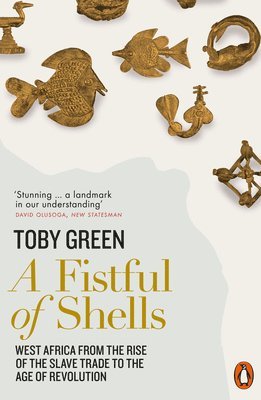
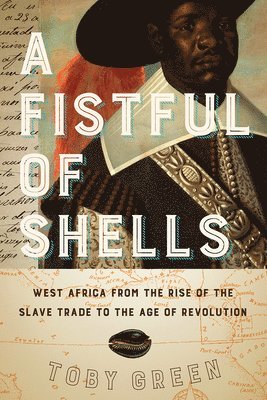
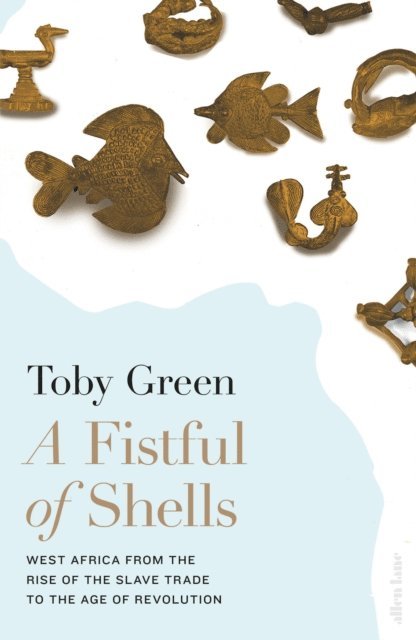
Shortlisted for the Wolfson History Prize, Cundill History Prize, Fage and Oliver Prize, the Los Angeles Times Book Prize and the Pius Adesanmi Memorial Award Winner of the Historical Writers' Association Non-Fiction Crown 2020Winner of the American Historical Association's Jerry Bentley Prize in World History 2020Winner of the Nayef Al-Rodhan Prize for Global Cultural Understanding 2019An Observer and Wall Street Journal Book of the Year 2019A groundbreaking history that will transform our view of West AfricaBy the time of the 'Scramble for Africa' in the late nineteenth century, Africa had already been globally connected for many centuries. Its gold had fuelled the economies of Europe and Islamic world since around 1000, and its sophisticated kingdoms had traded with Europeans along the coasts from Senegal down to Angola since the fifteenth century. Until at least 1650, this was a trade of equals, using a variety of currencies - most importantly shells: the cowrie shells imported from the Maldives, and the nzimbu shells imported from Brazil.Toby Green's groundbreaking new book transforms our view of West and West-Central Africa. It reconstructs the world of kingdoms whose existence (like those of Europe) revolved around warfare, taxation, trade, diplomacy, complex religious beliefs, royal display and extravagance, and the production of art.Over time, the relationship between Africa and Europe revolved ever more around the trade in slaves, damaging Africa's relative political and economic power as the terms of monetary exchange shifted drastically in Europe's favour. In spite of these growing capital imbalances, longstanding contacts ensured remarkable connections between the Age of Revolution in Europe and America and the birth of a revolutionary nineteenth century in Africa.A Fistful of Shells draws not just on written histories, but on archival research in nine countries, on art, praise-singers, oral history, archaeology, letters, and the author's personal experience to create a new perspective on the history of one of the world's most important regions.'Astonishing, staggering' Ben Okri, Daily Telegraph
Del 178 - Proceedings of the British Academy
Brokers of Change
Atlantic Commerce and Cultures in Pre-Colonial Western Africa
Inbunden, Engelska, 2012
1 529 kr
Skickas inom 5-8 vardagar
The Atlantic Ocean, transcending national boundaries as it does, has long been seen as a pivotal site for understanding the way in which local and regional economies and cultural frameworks gradually became integrated into a global system during the early modern era. A key concept that has brought new insight to the study of transnationalism is that of brokerage. Brokers are people who link up different worlds and are at ease in a variety of cultural settings; they have flexibility of outlook and cultural identification. Brokerage can explain and add nuance to the multiple cultural worlds and intense trade characteristics of regions of West Africa.The essays collected here are by leading scholars in the field of the pre-colonial history of Western Africa (the region between Senegal and Sierra Leone). They span the whole pre-colonial period between the first Portuguese voyages of discovery and the transition to legitimate commerce. The volume offers the first real synthesis of the importance of this region of Africa in the emergence of the Atlantic world between the fifteenth and nineteenth centuries. It has sections on African-European relations; the Cape Verde islands and wider Atlantic trade; trade in slaves and commodities; and the transition to 'legitimate' commerce. Thus the essays here offer scholars and general readers a real chance to engage with an important part of Africa.
Del 18 - Fontes Historiae Africanae
African Voices from the Inquisition, Vol. 1
The Trial of Crispina Peres of Cacheu, Guinea-Bissau (1646-1668)
Inbunden, Engelska, 2021
1 320 kr
Skickas inom 5-8 vardagar
This book contains some of the richest written material in existence for precolonial West Africa with unique insights into daily life in an Afro-Atlantic coastal trade settlement. Presenting the complete translated and annotated text of the Inquisition trial of Crispina Peres, an African woman born in the Guinea-Bissau region, of a Portuguese father and an African mother, it documents the Portuguese Inquisition's religious persecution of Africans on African soil. Set in a slave port in 17th century West Africa, the trial focuses on the worldview of an African woman accused of engaging in African rites and witchcraft, who is imprisoned and brought before Inquisitioners in Lisbon. It highlights her resourcefulness, resilience and spirited defence of her innocence, providing precious details on her life, household, work, health and social and commercial networks in this understudied African region.
Häftad, Engelska, 2021
304 kr
Skickas inom 3-6 vardagar
Inbunden, Engelska, 2025
381 kr
Skickas inom 3-6 vardagar
Inbunden, Engelska, 2025
262 kr
Skickas
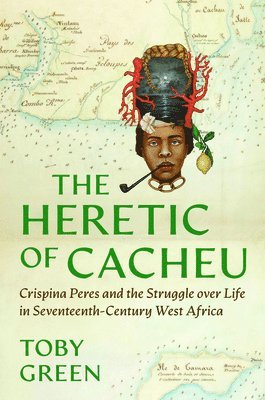
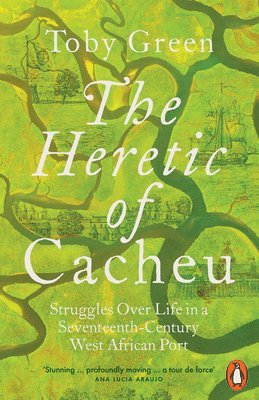
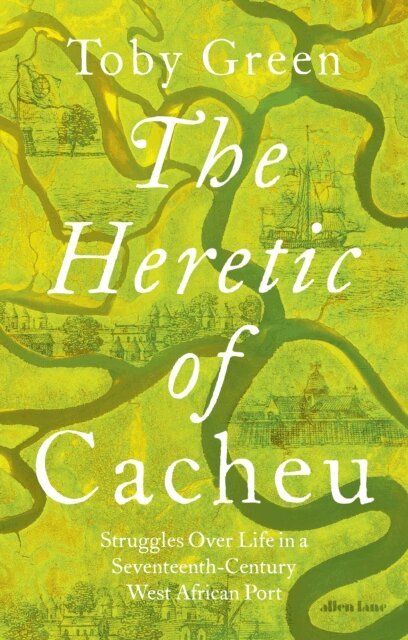
'A stunning global history of West Africa ... with this new tour de force, Green confirms himself as the most innovative historian, writer, and thinker of his generation' Ana Lucia Araujo, author of Humans in Shackles: An Atlantic History of SlaveryA unique, startling book that gives a rich and detailed sense of life in an African port some 360 years agoIn 1665 Crispina Peres, the most powerful trader in the West African slave trafficking port of Cacheu, was arrested by the Inquisition. Her enemies had conspired to denounce her for taking treatments prescribed by Senegambian healers: the djabakós. But who was Peres? And why was the Portuguese Inquisition so concerned with policing the faith of a West African woman in today’s Guinea-Bissau?In Cacheu Toby Green takes us to the heart of this conundrum, but also into the atmosphere of a very distant time and place. We learn how people in seventeenth-century Cacheu built their houses, what they wore, how they worshipped – and also the work they did, how they had fun, and how they healed themselves from illness.Through this story, the haunting realities of the growing slave trade and the rise of European empires emerge in shocking detail. By the 1650s, the relationship between Europe, West Africa, and the Americas was already an old one, with slaving entrepots, colonies, and military bases interweaving over many generations. But Cacheu also challenged the dynamic. It was globally connected to places ranging from China and India to Brazil and Colombia, and women like Crispina Peres ran the town and challenged the patriarchy of empire.For the first time, through the surviving documents recording Peres’s case, we can see what this world was really like. Cacheu is an extraordinary act of historical recovery. It is the story of a seventeenth-century West African woman, but also of the shifting, sophisticated world in which she lived – its beliefs, values and people.
Del 118 - African Studies
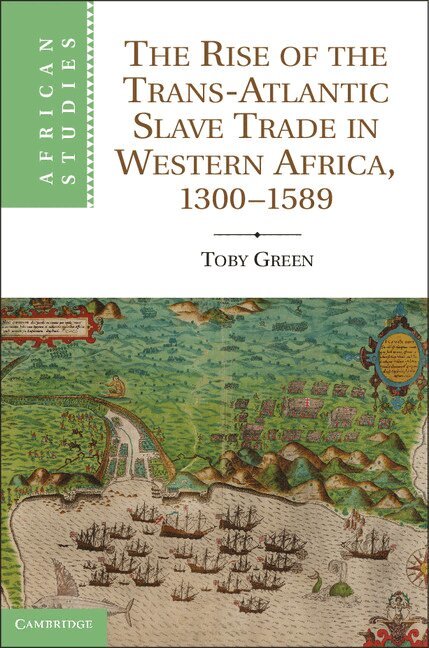
The Rise of the Trans-Atlantic Slave Trade in Western Africa, 1300-1589
Inbunden, Engelska, 2011
1 531 kr
Skickas inom 7-10 vardagar
The region between the river Senegal and Sierra Leone saw the first trans-Atlantic slave trade in the sixteenth century. Drawing on many new sources, Toby Green challenges current quantitative approaches to the history of the slave trade. New data on slave origins can show how and why Western African societies responded to Atlantic pressures. Green argues that answering these questions requires a cultural framework and uses the idea of creolization - the formation of mixed cultural communities in the era of plantation societies - to argue that preceding social patterns in both Africa and Europe were crucial. Major impacts of the sixteenth-century slave trade included political fragmentation, changes in identity and the re-organization of ritual and social patterns. The book shows which peoples were enslaved, why they were vulnerable and the consequences in Africa and beyond.
Häftad, Engelska, 2014
378 kr
Skickas inom 7-10 vardagar
The region between the river Senegal and Sierra Leone saw the first trans-Atlantic slave trade in the sixteenth century. Drawing on many new sources, Toby Green challenges current quantitative approaches to the history of the slave trade. New data on slave origins can show how and why Western African societies responded to Atlantic pressures. Green argues that answering these questions requires a cultural framework and uses the idea of creolization - the formation of mixed cultural communities in the era of plantation societies - to argue that preceding social patterns in both Africa and Europe were crucial. Major impacts of the sixteenth-century slave trade included political fragmentation, changes in identity and the re-organization of ritual and social patterns. The book shows which peoples were enslaved, why they were vulnerable and the consequences in Africa and beyond.
Inbunden, Engelska, 2026
1 386 kr
Kommande
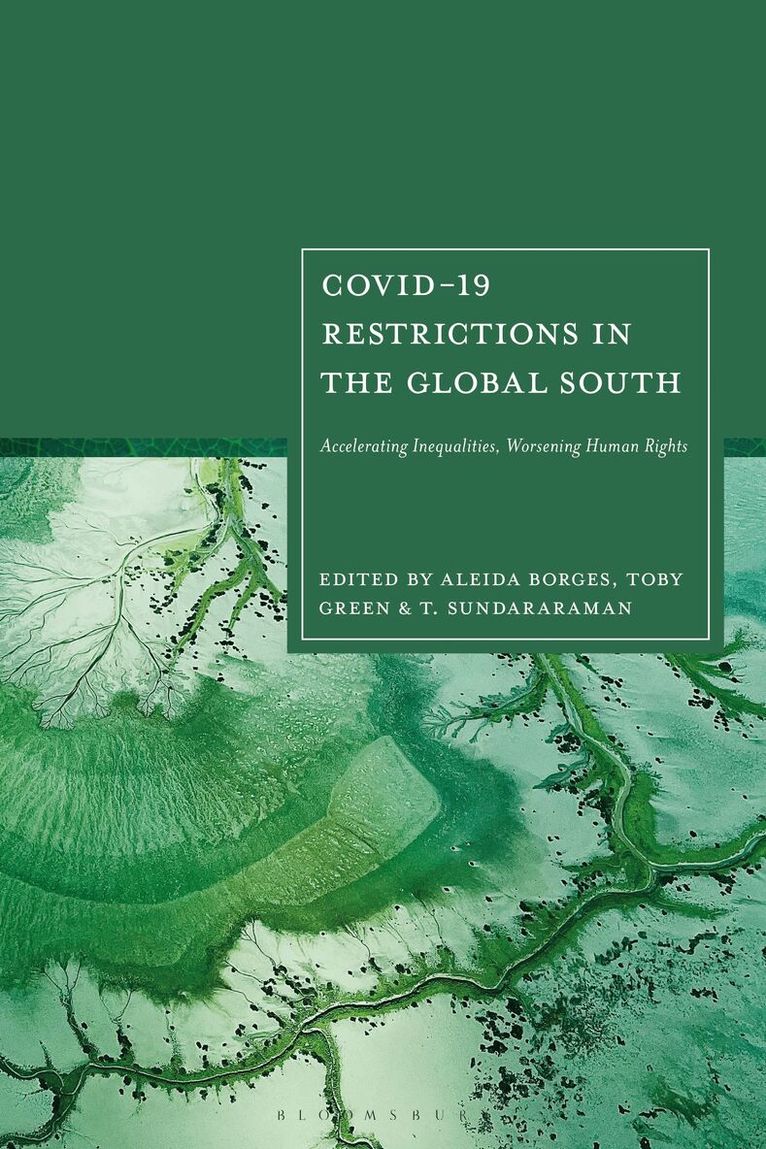
This groundbreaking, interdisciplinary collection is one of the first scholarly books in the world to address the impacts of Covid-19 restrictions on the Global South.Bringing together health and social scientists from around the world--including many leading figures from Global-South countries such as Angola, Bolivia, Colombia, India, Kenya, and Nigeria--the book shows how, in low- and middle-income countries in particular, Covid responses often exacerbate problems and inequalities around education, gender, socioeconomics, and politics and political economics. They negatively and disproportionately affect routine medical treatments; vaccination programmes; access to maternity and neo-natal care; child learning and socialization; women's caring responsibilities; gender-based socioeconomic differences; and rates of domestic violence, all while accelerating existing trends towards political authoritarianism and damaging democratic processes. In offering in-depth perspectives on all these problems, this book ultimately challenges practitioners to include Southern perspectives in future emergency response-planning, and it develops both global and multidisciplinary paradigms to guide them in their efforts.
Häftad, Engelska, 2026
117 kr
Kommande
'A stunning global history of West Africa ... with this new tour de force, Green confirms himself as the most innovative historian, writer, and thinker of his generation' Ana Lucia Araujo, author of Humans in Shackles: An Atlantic History of SlaveryA unique, startling book that gives a rich and detailed sense of life in an African port some 360 years agoIn 1665 Crispina Peres, the most powerful trader in the West African slave trafficking port of Cacheu, was arrested by the Inquisition. Her enemies had conspired to denounce her for taking treatments prescribed by Senegambian healers: the djabakós. But who was Peres? And why was the Portuguese Inquisition so concerned with policing the faith of a West African woman in today’s Guinea-Bissau?In Cacheu Toby Green takes us to the heart of this conundrum, but also into the atmosphere of a very distant time and place. We learn how people in seventeenth-century Cacheu built their houses, what they wore, how they worshipped – and also the work they did, how they had fun, and how they healed themselves from illness.Through this story, the haunting realities of the growing slave trade and the rise of European empires emerge in shocking detail. By the 1650s, the relationship between Europe, West Africa, and the Americas was already an old one, with slaving entrepots, colonies, and military bases interweaving over many generations. But Cacheu also challenged the dynamic. It was globally connected to places ranging from China and India to Brazil and Colombia, and women like Crispina Peres ran the town and challenged the patriarchy of empire.For the first time, through the surviving documents recording Peres’s case, we can see what this world was really like. Cacheu is an extraordinary act of historical recovery. It is the story of a seventeenth-century West African woman, but also of the shifting, sophisticated world in which she lived – its beliefs, values and people.
Del 6 - African History
Landscapes, Sources and Intellectual Projects of the West African Past
Essays in Honour of Paulo Fernando de Moraes Farias
Häftad, Engelska, 2018
1 449 kr
Skickas inom 5-8 vardagar
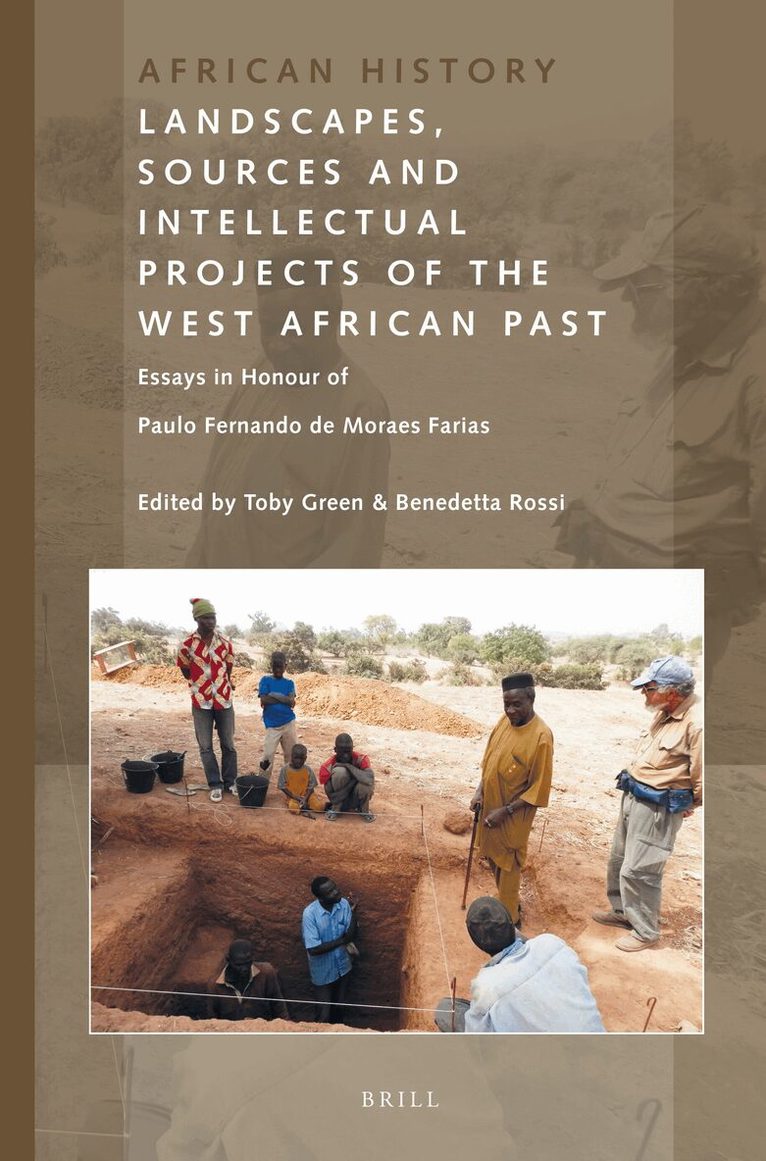
Landscapes, Sources and Intellectual Projects of the West African Past offers a comprehensive assessment of new directions in the historiography of West Africa. With twenty-four chapters by leading researchers in the study of West African history and cultures, the volume examines the main trends in multiple fields including the critical interpretation of Arabic sources; new archaeological surveys of trans-Saharan trade; the discovery of sources in Latin America relating to pan-Atlantic histories; and the continuing analysis of oral histories. The volume is dedicated to Paulo Fernando de Moraes Farias, whose work inspired the intellectual reorientations discussed in its chapters and stands as the clearest formulation of the book’s central focus on the relationship between political conjunctures and the production of sources. Contributors are: Benjamin Acloque, Karin Barber, Seydou Camara, Mamadou Diawara, Paulo Fernando de Moraes Farias, François-Xavier Fauvelle, Nikolas Gestrich, Toby Green, Bruce Hall, Jan Jansen, Shamil Jeppie, Daouda Keita, Murray Last, Robin Law, Camille Lefebvre, Paul Lovejoy, Ghislaine Lydon, Carlos Magnavita, Sonja Magnavita, Kevin MacDonald, Thomas McCaskie, Ann McDougall, Daniela Moreau, Mauro Nobili, Insa Nolte, Abel-Wedoud Ould-Cheikh, Benedetta Rossi, Charles Stewart.
Häftad, Engelska, 2016
383 kr
Tillfälligt slut
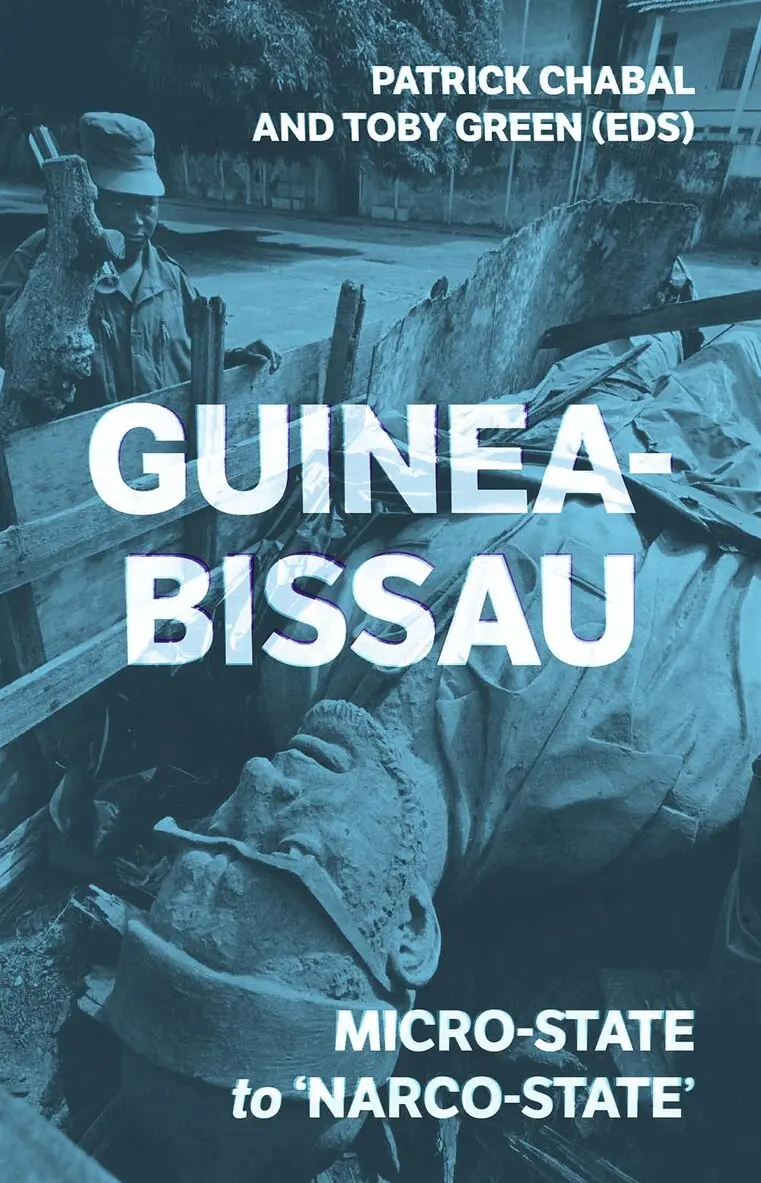
Since 1998 Guinea-Bissau has suffered a series of coups which outside analysts have linked to its emergence as West Africa's first 'narco-state'. Yet what does this mean for the country and the nature of the state in postcolonial Africa? What links Guinea-Bissau's instability with questions of wider regional and global security? What would a stable government look like in Guinea-Bissau, and what are the conditions for its achievement? The book constitutes the first synthetic attempt to grasp the consequences of the crisis in Guinea-Bissau. It fills a void in scholarship and policy analysis with a synthesis of both what has happened in the country and the wider implications for postcolonial African nation-building. With the current crisis in Mali, and rising interest among geopolitical actors in the region's stability, the contributors offer timely reflections on the causes and consequences of instability in one of Africa's most fragile states. Together they demonstrate how the undermining of the ideological construction of post-colonial African states derives from the historical fragilities and geopolitical conflicts which are acted out there. This is also the last book that Patrick Chabal, a significant scholar in contemporary political theory related to Africa, worked on.