Patrick Ottaway – författare
Visar alla böcker från författaren Patrick Ottaway. Handla med fri frakt och snabb leverans.
8 produkter
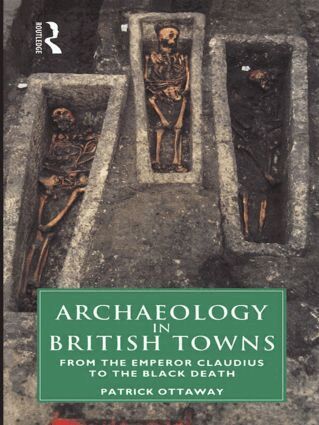
Archaeology in British Towns
From the Emperor Claudius to the Black Death
Inbunden, 1992
2510 kr
Lägg i varukorg
Over the last twenty-five years archaeology has revolutionised our knowledge of the early history of British towns. Based on his day-to-day involvement in urban archaeology, Patrick Ottaway reviews the important discoveries and research themes of this period, and considers how long-term urban …
Archaeology in British Towns
From the Emperor Claudius to the Black Death
Häftad, 1996
876 kr
Lägg i varukorg
In this authoritative volume, Patrick Ottaway draws on his extensive experience of urban archaeology to show how our conception of the early history of British towns has been radically changed over the last twenty five years.Based on his day to day involvement in the field, this study highlights …
Archaeology in British Towns
From the Emperor Claudius to the Black Death
E-bok, 2005
1034 kr
Lägg i varukorg
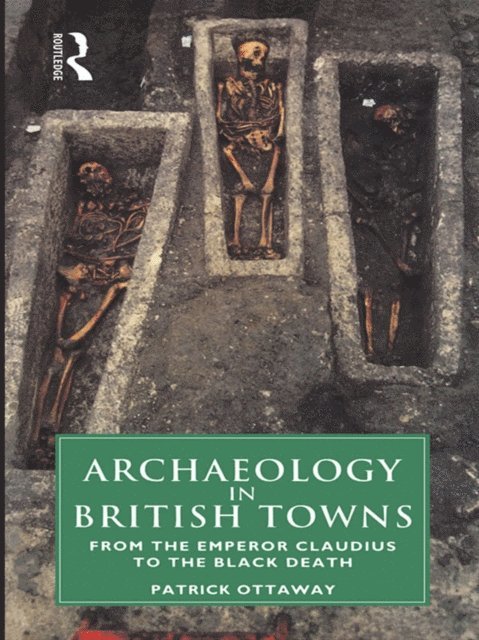
Over the last twenty-five years archaeology has revolutionised our knowledge of the early history of British towns. Based on his day-to-day involvement in urban archaeology, Patrick Ottaway reviews the important discoveries and research themes of this period, and considers how long-term urban …
Archaeology in British Towns
From the Emperor Claudius to the Black Death
E-bok, 2005
1034 kr
Lägg i varukorg
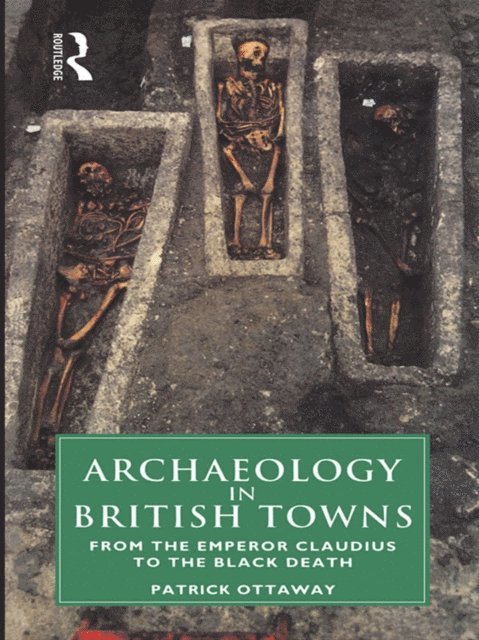
Over the last twenty-five years archaeology has revolutionised our knowledge of the early history of British towns. Based on his day-to-day involvement in urban archaeology, Patrick Ottaway reviews the important discoveries and research themes of this period, and considers how long-term urban …
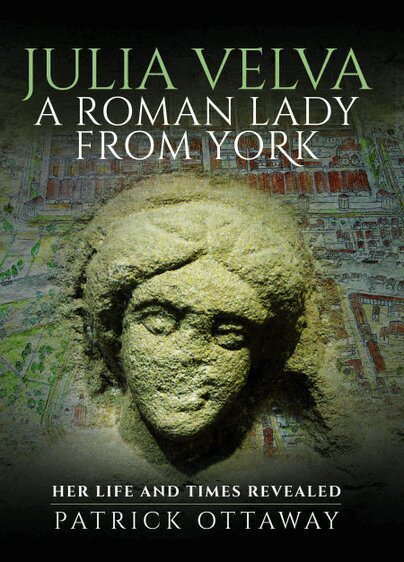
Julia Velva, A Roman Lady from York
Her Life and Times Revealed
Inbunden, 2021
334 kr
Lägg i varukorg
The tombstone of Julia Velva, one of the best-preserved examples from Roman Britain, was found close to a Roman road just outside the centre of York. Fifty years old when she died in the early third century, Julia Velva was probably from a wealthy family able to afford a fine monument. Patrick …
Julia Velva, A Roman Lady from York
Her Life and Times Revealed
E-bok, 2021
148 kr
Lägg i varukorg
An intriguing examination of what we can learn about life in Roman Britain, using one woman’s third-century tombstone as a starting point. The tombstone of Julia Velva, one of the best-preserved examples from Roman Britain, was found close to a Roman road just outside the center of York. Fifty …
Julia Velva, A Roman Lady from York
Her Life and Times Revealed
E-bok, 2021
151 kr
Lägg i varukorg
The tombstone of Julia Velva, one of the best-preserved examples from Roman Britain, was found close to a Roman road just outside the center of York. Fifty years old when she died in the early third century, Julia Velva was probably from a wealthy family able to afford a fine monument. Patrick …
Environment and Agriculture of Early Winchester
Av Martin Biddle, Jane Renfrew m. fl.
Inbunden, 2022
1187 kr
Lägg i varukorg
This wide-ranging study uses historical and archaeological evidence to consider humanity's interactions with the environment, fashioning agricultural, gardening and horticultural regimes over a millennium and a half. The discussions of archaeological finds of seeds from discarded rubbish including …