Paul P. Biemer – författare
Latent Class Analysis of Survey Error
1 362 kr
Skickas inom 5-8 vardagar
1 566 kr
Läs direkt efter köp
Drawing from his extensive experience in the field of survey methodology, the author examines early models for survey measurement error and identifies their similarities and differences as well as their strengths and weaknesses. Subsequent chapters treat topics related to modeling, estimating, and reducing errors in surveys, including:
Measurement error modeling forcategorical data The Hui-Walter model and othermethods for two indicators The EM algorithm and its role in latentclass model parameter estimation Latent class models for three ormore indicators Techniques for interpretation of modelparameter estimates Advanced topics in LCA, including sparse data, boundary values, unidentifiability, and local maxima Special considerations for analyzing datafrom clustered and unequal probability samples with nonresponse The current state of LCA and MLCA (multilevel latent class analysis), and an insightful discussion on areas for further researchThroughout the book, more than 100 real-world examples describe the presented methods in detail, and readers are guided through the use of lEM software to replicate the presented analyses. Appendices supply a primer on categorical data analysis, and a related Web site houses the lEM software.
Extensively class-tested to ensure an accessible presentation, Latent Class Analysis of Survey Error is an excellent book for courses on measurement error and survey methodology at the graduate level. The book also serves as a valuable reference for researchers and practitioners working in business, government, and the social sciences who develop, implement, or evaluate surveys.
Survey Measurement and Process Quality
2 428 kr
Skickas inom 5-8 vardagar
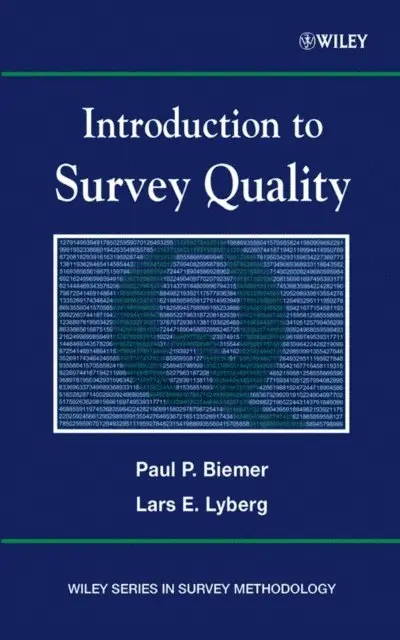
Introduction to Survey Quality
1 951 kr
Skickas inom 5-8 vardagar
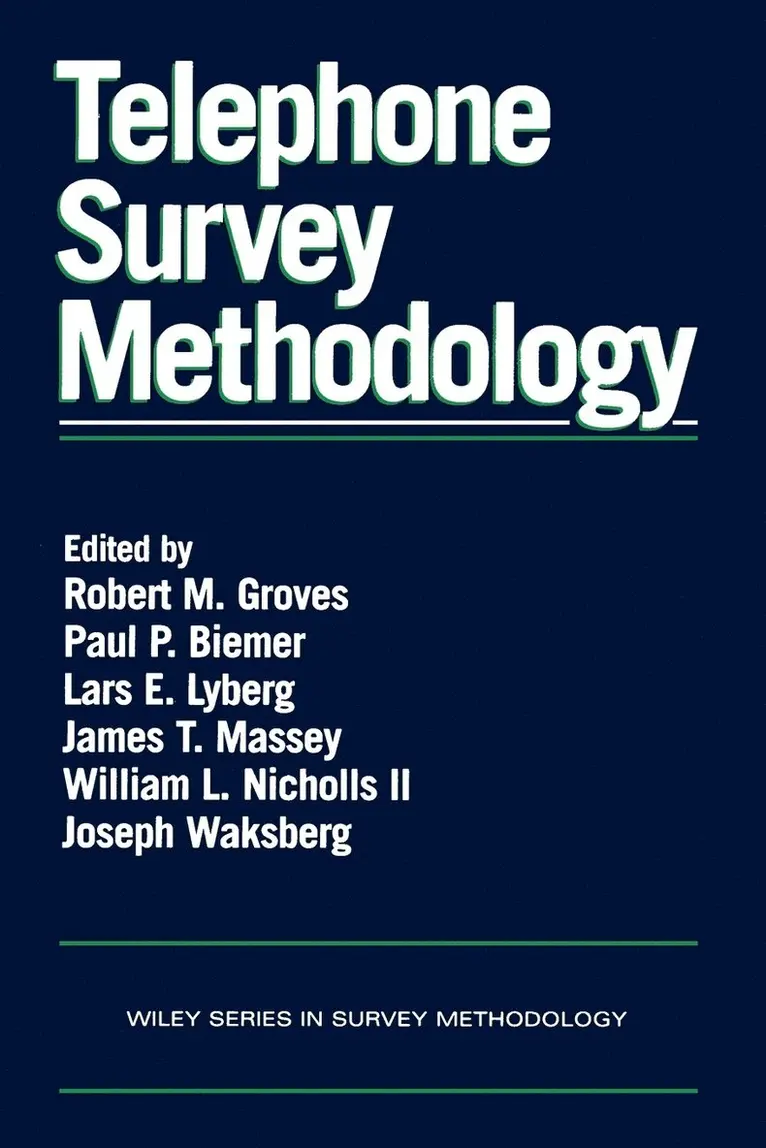
Telephone Survey Methodology
1 652 kr
Skickas inom 5-8 vardagar
2 278 kr
Läs direkt efter köp
Measurement Errors in Surveys
1 977 kr
Skickas inom 5-8 vardagar
1 566 kr
Läs direkt efter köp
Drawing from his extensive experience in the field of survey methodology, the author examines early models for survey measurement error and identifies their similarities and differences as well as their strengths and weaknesses. Subsequent chapters treat topics related to modeling, estimating, and reducing errors in surveys, including:
Measurement error modeling forcategorical data The Hui-Walter model and othermethods for two indicators The EM algorithm and its role in latentclass model parameter estimation Latent class models for three ormore indicators Techniques for interpretation of modelparameter estimates Advanced topics in LCA, including sparse data, boundary values, unidentifiability, and local maxima Special considerations for analyzing datafrom clustered and unequal probability samples with nonresponse The current state of LCA and MLCA (multilevel latent class analysis), and an insightful discussion on areas for further researchThroughout the book, more than 100 real-world examples describe the presented methods in detail, and readers are guided through the use of lEM software to replicate the presented analyses. Appendices supply a primer on categorical data analysis, and a related Web site houses the lEM software.
Extensively class-tested to ensure an accessible presentation, Latent Class Analysis of Survey Error is an excellent book for courses on measurement error and survey methodology at the graduate level. The book also serves as a valuable reference for researchers and practitioners working in business, government, and the social sciences who develop, implement, or evaluate surveys.
1 740 kr
Läs direkt efter köp
The Wiley-Interscience Paperback Series consists of selected books that have been made more accessible to consumers in an effort to increase global appeal and general circulation. With these new unabridged softcover volumes, Wiley hopes to extend the lives of these works by making them available to future generations of statisticians, mathematicians, and scientists.
"This book will be an aid to survey statisticians and to research workers who must work with survey data." –Short Book Reviews, International Statistical Institute
Measurement Errors in Surveys documents the current state of the field, reports new research findings, and promotes interdisciplinary exchanges in modeling, assessing, and reducing measurement errors in surveys. Providing a fundamental approach to measurement errors, the book features sections on the questionnaire, respondents and responses, interviewers and other means of data collection, the respondent-interviewer relationship, and the effects of measurement errors on estimation and data analysis.
2 800 kr
Läs direkt efter köp
2 800 kr
Läs direkt efter köp
1 362 kr
Skickas inom 5-8 vardagar
1 526 kr
Läs direkt efter köp
Offers a clear view of the utility and place for survey data within the broader Big Data ecosystem
This book presents a collection of snapshots from two sides of the Big Data perspective. It assembles an array of tangible tools, methods, and approaches that illustrate how Big Data sources and methods are being used in the survey and social sciences to improve official statistics and estimates for human populations. It also provides examples of how survey data are being used to evaluate and improve the quality of insights derived from Big Data.
Big Data Meets Survey Science: A Collection of Innovative Methods shows how survey data and Big Data are used together for the benefit of one or more sources of data, with numerous chapters providing consistent illustrations and examples of survey data enriching the evaluation of Big Data sources. Examples of how machine learning, data mining, and other data science techniques are inserted into virtually every stage of the survey lifecycle are presented. Topics covered include: Total Error Frameworks for Found Data; Performance and Sensitivities of Home Detection on Mobile Phone Data; Assessing Community Wellbeing Using Google Street View and Satellite Imagery; Using Surveys to Build and Assess RBS Religious Flag; and more.
Presents groundbreaking survey methods being utilized today in the field of Big Data Explores how machine learning methods can be applied to the design, collection, and analysis of social science data Filled with examples and illustrations that show how survey data benefits Big Data evaluation Covers methods and applications used in combining Big Data with survey statistics Examines regulations as well as ethical and privacy issuesBig Data Meets Survey Science: A Collection of Innovative Methods is an excellent book for both the survey and social science communities as they learn to capitalize on this new revolution. It will also appeal to the broader data and computer science communities looking for new areas of application for emerging methods and data sources.
1 566 kr
Läs direkt efter köp
Offers a clear view of the utility and place for survey data within the broader Big Data ecosystem
This book presents a collection of snapshots from two sides of the Big Data perspective. It assembles an array of tangible tools, methods, and approaches that illustrate how Big Data sources and methods are being used in the survey and social sciences to improve official statistics and estimates for human populations. It also provides examples of how survey data are being used to evaluate and improve the quality of insights derived from Big Data.
Big Data Meets Survey Science: A Collection of Innovative Methods shows how survey data and Big Data are used together for the benefit of one or more sources of data, with numerous chapters providing consistent illustrations and examples of survey data enriching the evaluation of Big Data sources. Examples of how machine learning, data mining, and other data science techniques are inserted into virtually every stage of the survey lifecycle are presented. Topics covered include: Total Error Frameworks for Found Data; Performance and Sensitivities of Home Detection on Mobile Phone Data; Assessing Community Wellbeing Using Google Street View and Satellite Imagery; Using Surveys to Build and Assess RBS Religious Flag; and more.
Presents groundbreaking survey methods being utilized today in the field of Big Data Explores how machine learning methods can be applied to the design, collection, and analysis of social science data Filled with examples and illustrations that show how survey data benefits Big Data evaluation Covers methods and applications used in combining Big Data with survey statistics Examines regulations as well as ethical and privacy issuesBig Data Meets Survey Science: A Collection of Innovative Methods is an excellent book for both the survey and social science communities as they learn to capitalize on this new revolution. It will also appeal to the broader data and computer science communities looking for new areas of application for emerging methods and data sources.
1 307 kr
Skickas inom 5-8 vardagar
1 503 kr
Läs direkt efter köp
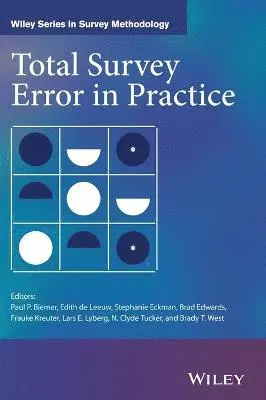
Featuring a timely presentation of total survey error (TSE), this edited volume introduces valuable tools for understanding and improving survey data quality in the context of evolving large-scale data sets
This book provides an overview of the TSE framework and current TSE research as related to survey design, data collection, estimation, and analysis. It recognizes that survey data affects many public policy and business decisions and thus focuses on the framework for understanding and improving survey data quality. The book also addresses issues with data quality in official statistics and in social, opinion, and market research as these fields continue to evolve, leading to larger and messier data sets. This perspective challenges survey organizations to find ways to collect and process data more efficiently without sacrificing quality. The volume consists of the most up-to-date research and reporting from over 70 contributors representing the best academics and researchers from a range of fields. The chapters are broken out into five main sections: The Concept of TSE and the TSE Paradigm, Implications for Survey Design, Data Collection and Data Processing Applications, Evaluation and Improvement, and Estimation and Analysis. Each chapter introduces and examines multiple error sources, such as sampling error, measurement error, and nonresponse error, which often offer the greatest risks to data quality, while also encouraging readers not to lose sight of the less commonly studied error sources, such as coverage error, processing error, and specification error. The book also notes the relationships between errors and the ways in which efforts to reduce one type can increase another, resulting in an estimate with larger total error.
This book:
• Features various error sources, and the complex relationships between them, in 25 high-quality chapters on the most up-to-date research in the field of TSE
• Provides comprehensive reviews of the literature on error sources as well as data collection approaches and estimation methods to reduce their effects
• Presents examples of recent international events that demonstrate the effects of data error, the importance of survey data quality, and the real-world issues that arise from these errors
• Spans the four pillars of the total survey error paradigm (design, data collection, evaluation and analysis) to address key data quality issues in official statistics and survey research
Total Survey Error in Practice is a reference for survey researchers and data scientists in research areas that include social science, public opinion, public policy, and business. It can also be used as a textbook or supplementary material for a graduate-level course in survey research methods.
1 450 kr
Läs direkt efter köp
Featuring a timely presentation of total survey error (TSE), this edited volume introduces valuable tools for understanding and improving survey data quality in the context of evolving large-scale data sets
This book provides an overview of the TSE framework and current TSE research as related to survey design, data collection, estimation, and analysis. It recognizes that survey data affects many public policy and business decisions and thus focuses on the framework for understanding and improving survey data quality. The book also addresses issues with data quality in official statistics and in social, opinion, and market research as these fields continue to evolve, leading to larger and messier data sets. This perspective challenges survey organizations to find ways to collect and process data more efficiently without sacrificing quality. The volume consists of the most up-to-date research and reporting from over 70 contributors representing the best academics and researchers from a range of fields. The chapters are broken out into five main sections: The Concept of TSE and the TSE Paradigm, Implications for Survey Design, Data Collection and Data Processing Applications, Evaluation and Improvement, and Estimation and Analysis. Each chapter introduces and examines multiple error sources, such as sampling error, measurement error, and nonresponse error, which often offer the greatest risks to data quality, while also encouraging readers not to lose sight of the less commonly studied error sources, such as coverage error, processing error, and specification error. The book also notes the relationships between errors and the ways in which efforts to reduce one type can increase another, resulting in an estimate with larger total error.
This book:
• Features various error sources, and the complex relationships between them, in 25 high-quality chapters on the most up-to-date research in the field of TSE
• Provides comprehensive reviews of the literature on error sources as well as data collection approaches and estimation methods to reduce their effects
• Presents examples of recent international events that demonstrate the effects of data error, the importance of survey data quality, and the real-world issues that arise from these errors
• Spans the four pillars of the total survey error paradigm (design, data collection, evaluation and analysis) to address key data quality issues in official statistics and survey research
Total Survey Error in Practice is a reference for survey researchers and data scientists in research areas that include social science, public opinion, public policy, and business. It can also be used as a textbook or supplementary material for a graduate-level course in survey research methods.