Edith D. de Leeuw - Böcker
Visar alla böcker från författaren Edith D. de Leeuw. Handla med fri frakt och snabb leverans.
6 produkter
6 produkter
Del 324 - Wiley Series in Probability and Statistics
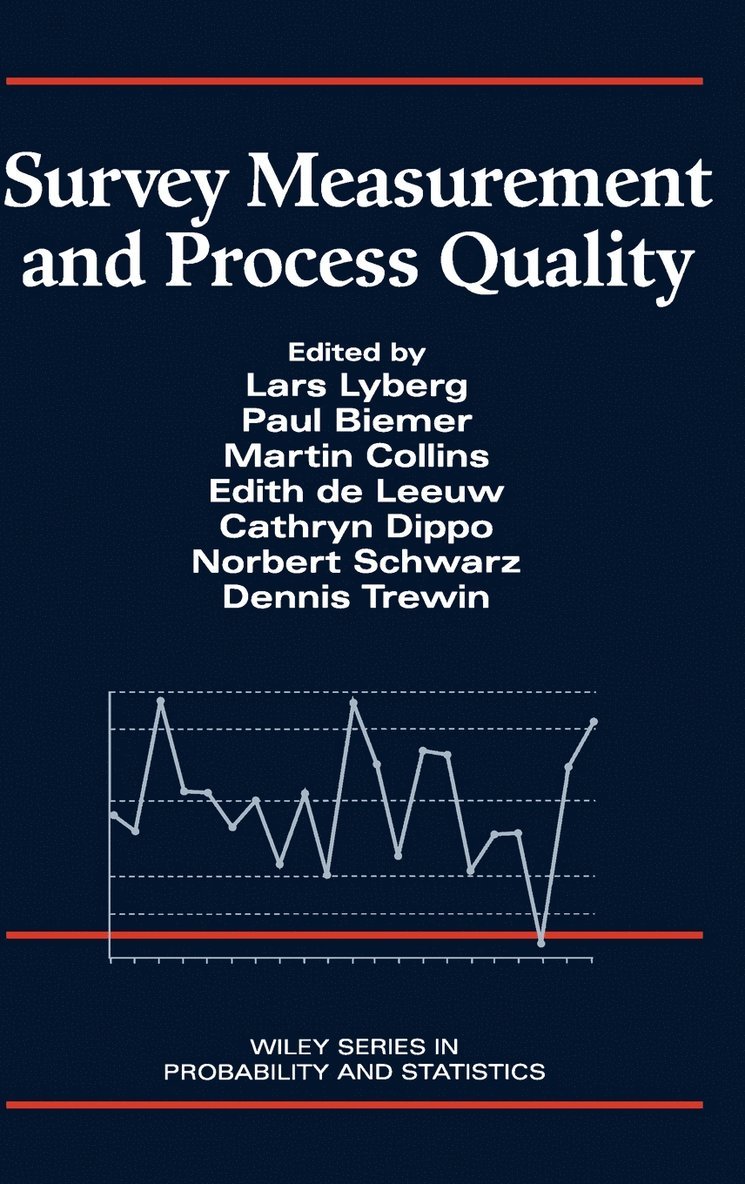
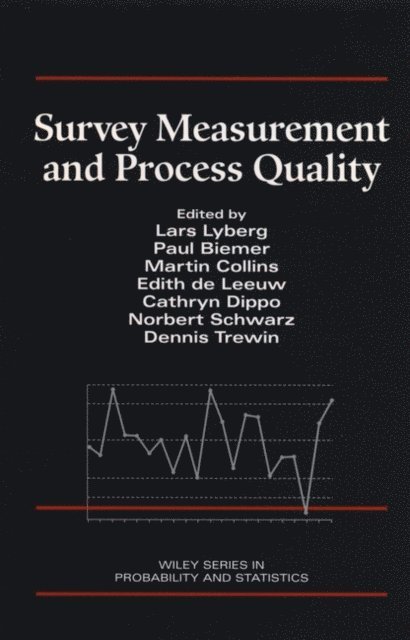
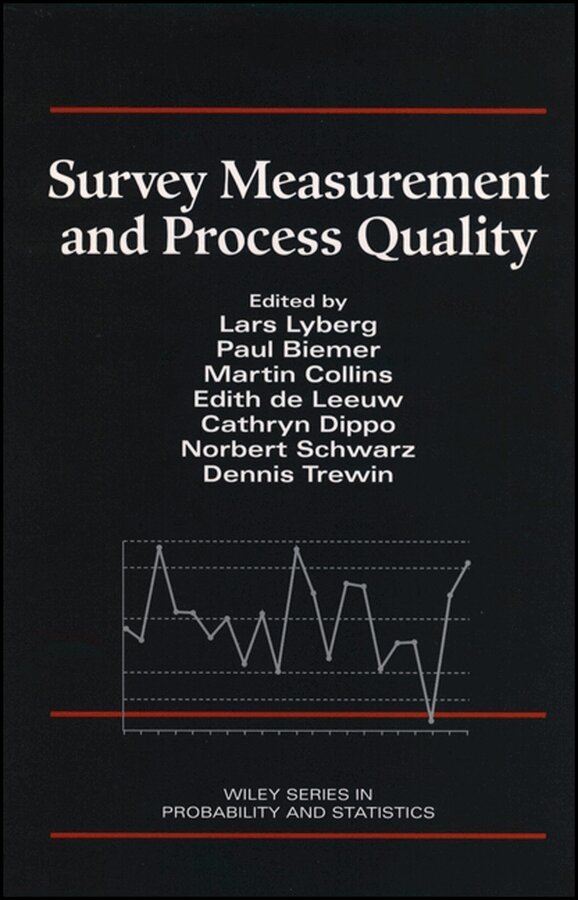
Survey Measurement and Process Quality
Inbunden, Engelska, 1997
2 232 kr
Skickas inom 7-10 vardagar
An in-depth look at current issues, new research findings, andinterdisciplinary exchange in survey methodology andprocessing Survey Measurement and Process Quality extends the marriage oftraditional survey issues and continuous quality improvementfurther than any other contemporary volume. It documents thecurrent state of the field, reports new research findings, andpromotes interdisciplinary exchange in questionnaire design, datacollection, data processing, quality assessment, and effects oferrors on estimation and analysis. The book's five sections discuss a broad range of issues and topicsin each of five major areas, including* Questionnaire design--conceptualization, design of rating scalesfor effective measurement, self-administered questionnaires, andmore* Data collection--new technology, interviewer effects, interviewmode, children as respondents* Post-survey processing and operations--modeling of classificationoperations, coding based on such systems, editing, integratingprocesses* Quality assessment and control--total quality management,developing current best methods, service quality, quality effortsacross organizations* Effects of misclassification on estimation, analysis, andinterpretation--misclassification and other measurement errors, newvariance estimators that account for measurement error, estimatorsof nonsampling error components in interview surveys Survey Measurement and Process Quality is an indispensable resourcefor survey practitioners and managers as well as an excellentsupplemental text for undergraduate and graduate courses andspecial seminars.
Del 538 - Wiley Series in Survey Methodology
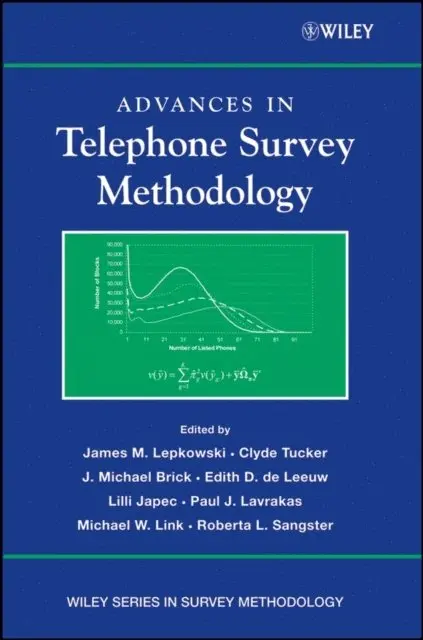
Advances in Telephone Survey Methodology
Häftad, Engelska, 2007
1 497 kr
Skickas inom 3-6 vardagar
A complete and comprehensive collaboration providing insight on future approaches to telephone survey methodology Over the past fifteen years, advances in technology have transformed the field of survey methodology, from how interviews are conducted to the management and analysis of compiled data. Advances in Telephone Survey Methodology is an all—encompassing and authoritative resource that presents a theoretical, methodological, and statistical treatment of current practices while also establishing a discussion on how state—of—the—art developments in telecommunications have and will continue to revolutionize the telephone survey process.Seventy—five prominent international researchers and practitioners from government, academic, and private sectors have collaborated on this pioneering volume to discuss basic survey techniques and introduce the future directions of the telephone survey. Concepts and findings are organized in four parts—sampling and estimation, data collection, operations, and nonresponse—equipping the reader with the needed practical applications to approach issues such as choice of target population, sample design, questionnaire construction, interviewing training, and measurement error. The book also introduces important topics that have been overlooked in previous literature, including: The impact of mobile telephones on telephone surveys and the rising presence of mobile—only households worldwide The design and construction of questionnaires using Computer Assisted Telephone Interviewing (CATI) software The emerging use of wireless communication and Voice over Internet Protocol (VoIP) versus the telephone Methods for measuring and improving interviewer performance and productivity Privacy, confidentiality, and respondent burden as main factors in telephone survey nonresponse Procedures for the adjustment of nonresponse in telephone surveys In—depth reviews of the literature presented along with a full bibliography, assembled from references throughout the world Advances in Telephone Survey Methodology is an indispensable reference for survey researchers and practitioners in almost any discipline involving research methods such as sociology, social psychology, survey methodology, and statistics. This book also serves as an excellent text for courses and seminars on survey methods at the undergraduate and graduate levels.
2 088 kr
Skickas inom 10-15 vardagar
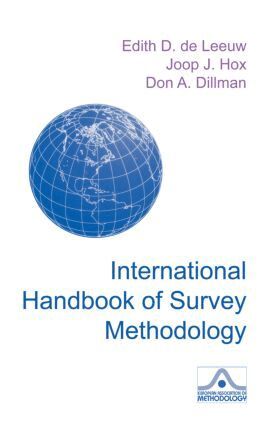
Taking into account both traditional and emerging modes, this comprehensive new Handbook covers all major methodological and statistical issues in designing and analyzing surveys. With contributions from the world's leading survey methodologists and statisticians, this invaluable new resource provides guidance on collecting survey data and creating meaningful results. Featuring examples from a variety of countries, the book reviews such things as how to deal with sample designs, write survey questions, and collect data on the Internet. A thorough review of the procedures associated with multiple modes of collecting sample survey information and applying that combination of methods that fit the situation best is included.The International Handbook of Survey Methodology opens with the foundations of survey design, ranging from sources of error, to ethical issues. This is followed by a section on design that reviews sampling challenges and tips on writing and testing questions for multiple methods. Part three focuses on data collection, from face-to-face interviews, to Internet and interactive voice response, to special challenges involved in mixing these modes within one survey. Analyzing data from both simple and complex surveys is then explored, as well as procedures for adjusting data. The book concludes with a discussion of maintaining quality. Intended for advanced students and researchers in the behavioral, social, and health sciences, this "must have" resource will appeal to those interested in conducting or using survey data from anywhere in the world, especially those interested in comparing results across countries. The book also serves as a state-of-the-art text for graduate level courses and seminars on survey methodology. A companion website contains additional readings and examples.
929 kr
Skickas inom 10-15 vardagar
Taking into account both traditional and emerging modes, this comprehensive new Handbook covers all major methodological and statistical issues in designing and analyzing surveys. With contributions from the world's leading survey methodologists and statisticians, this invaluable new resource provides guidance on collecting survey data and creating meaningful results. Featuring examples from a variety of countries, the book reviews such things as how to deal with sample designs, write survey questions, and collect data on the Internet. A thorough review of the procedures associated with multiple modes of collecting sample survey information and applying that combination of methods that fit the situation best is included.The International Handbook of Survey Methodology opens with the foundations of survey design, ranging from sources of error, to ethical issues. This is followed by a section on design that reviews sampling challenges and tips on writing and testing questions for multiple methods. Part three focuses on data collection, from face-to-face interviews, to Internet and interactive voice response, to special challenges involved in mixing these modes within one survey. Analyzing data from both simple and complex surveys is then explored, as well as procedures for adjusting data. The book concludes with a discussion of maintaining quality. Intended for advanced students and researchers in the behavioral, social, and health sciences, this "must have" resource will appeal to those interested in conducting or using survey data from anywhere in the world, especially those interested in comparing results across countries. The book also serves as a state-of-the-art text for graduate level courses and seminars on survey methodology. A companion website contains additional readings and examples.
1 213 kr
Skickas inom 7-10 vardagar
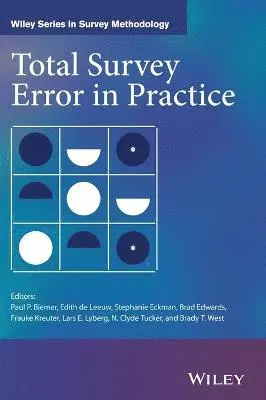
Featuring a timely presentation of total survey error (TSE), this edited volume introduces valuable tools for understanding and improving survey data quality in the context of evolving large-scale data setsThis book provides an overview of the TSE framework and current TSE research as related to survey design, data collection, estimation, and analysis. It recognizes that survey data affects many public policy and business decisions and thus focuses on the framework for understanding and improving survey data quality. The book also addresses issues with data quality in official statistics and in social, opinion, and market research as these fields continue to evolve, leading to larger and messier data sets. This perspective challenges survey organizations to find ways to collect and process data more efficiently without sacrificing quality. The volume consists of the most up-to-date research and reporting from over 70 contributors representing the best academics and researchers from a range of fields. The chapters are broken out into five main sections: The Concept of TSE and the TSE Paradigm, Implications for Survey Design, Data Collection and Data Processing Applications, Evaluation and Improvement, and Estimation and Analysis. Each chapter introduces and examines multiple error sources, such as sampling error, measurement error, and nonresponse error, which often offer the greatest risks to data quality, while also encouraging readers not to lose sight of the less commonly studied error sources, such as coverage error, processing error, and specification error. The book also notes the relationships between errors and the ways in which efforts to reduce one type can increase another, resulting in an estimate with larger total error.This book:• Features various error sources, and the complex relationships between them, in 25 high-quality chapters on the most up-to-date research in the field of TSE• Provides comprehensive reviews of the literature on error sources as well as data collection approaches and estimation methods to reduce their effects• Presents examples of recent international events that demonstrate the effects of data error, the importance of survey data quality, and the real-world issues that arise from these errors• Spans the four pillars of the total survey error paradigm (design, data collection, evaluation and analysis) to address key data quality issues in official statistics and survey researchTotal Survey Error in Practice is a reference for survey researchers and data scientists in research areas that include social science, public opinion, public policy, and business. It can also be used as a textbook or supplementary material for a graduate-level course in survey research methods.
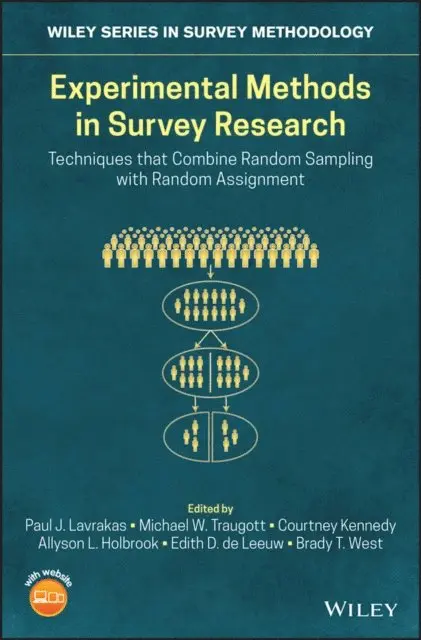
Experimental Methods in Survey Research
Techniques that Combine Random Sampling with Random Assignment
Inbunden, Engelska, 2019
1 213 kr
Skickas inom 7-10 vardagar
A thorough and comprehensive guide to the theoretical, practical, and methodological approaches used in survey experiments across disciplines such as political science, health sciences, sociology, economics, psychology, and marketingThis book explores and explains the broad range of experimental designs embedded in surveys that use both probability and non-probability samples. It approaches the usage of survey-based experiments with a Total Survey Error (TSE) perspective, which provides insight on the strengths and weaknesses of the techniques used.Experimental Methods in Survey Research: Techniques that Combine Random Sampling with Random Assignment addresses experiments on within-unit coverage, reducing nonresponse, question and questionnaire design, minimizing interview measurement bias, using adaptive design, trend data, vignettes, the analysis of data from survey experiments, and other topics, across social, behavioral, and marketing science domains.Each chapter begins with a description of the experimental method or application and its importance, followed by reference to relevant literature. At least one detailed original experimental case study then follows to illustrate the experimental method’s deployment, implementation, and analysis from a TSE perspective. The chapters conclude with theoretical and practical implications on the usage of the experimental method addressed. In summary, this book: Fills a gap in the current literature by successfully combining the subjects of survey methodology and experimental methodology in an effort to maximize both internal validity and external validityOffers a wide range of types of experimentation in survey research with in-depth attention to their various methodologies and applicationsIs edited by internationally recognized experts in the field of survey research/methodology and in the usage of survey-based experimentation —featuring contributions from across a variety of disciplines in the social and behavioral sciencesPresents advances in the field of survey experiments, as well as relevant references in each chapter for further studyIncludes more than 20 types of original experiments carried out within probability sample surveysAddresses myriad practical and operational aspects for designing, implementing, and analyzing survey-based experiments by using a Total Survey Error perspective to address the strengths and weaknesses of each experimental technique and methodExperimental Methods in Survey Research: Techniques that Combine Random Sampling with Random Assignment is an ideal reference for survey researchers and practitioners in areas such political science, health sciences, sociology, economics, psychology, public policy, data collection, data science, and marketing. It is also a very useful textbook for graduate-level courses on survey experiments and survey methodology.