Pauline Nealy – författare
15 kr
Läs direkt efter köp
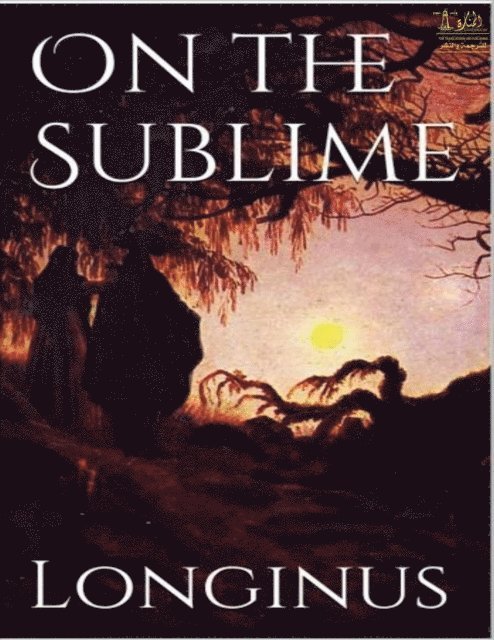
Longinus, also called Dionysius Longinus or Pseudo-Longinus, (flourished 1st century ad), name sometimes assigned to the author of On the Sublime (Greek Peri Hypsous), one of the great seminal works of literary criticism. The earliest surviving manuscript, from the 10th century, first printed in 1554, ascribes it to Dionysius Longinus. Later it was noticed that the index to the manuscript read “Dionysius or Longinus.” The problem of authorship embroiled scholars for centuries, attempts being made to identify him with Dionysius of Halicarnassus, Cassius Longinus, Plutarch, and others. The solution has been to name him Pseudo-Longinus.
On the Sublime apparently dates from the 1st century ad, because it was a response to a work of that period by Caecilius of Calacte, a Sicilian rhetorician. About a third of the manuscript is lost. Longinus defines sublimity (Greek hypsos) in literature as “the echo of greatness of spirit,” that is, the moral and imaginative power of the writer that pervades a work. Thus, for the first time greatness in literature is ascribed to qualities innate in the writer rather than in the art.
The author suggests that greatness of thought, if not inborn, may be acquired by emulating great authors such as his models (chief among them Homer, Demosthenes, and Plato). Quotations that were chosen to illustrate the sublime and its opposite occasionally also preserve work that would otherwise now be lost—e.g., one of Sappho’s odes. Longinus is one of the first Greeks to cite a passage from the Bible (Genesis 1:3–9). See also sublime.
32 kr
Läs direkt efter köp
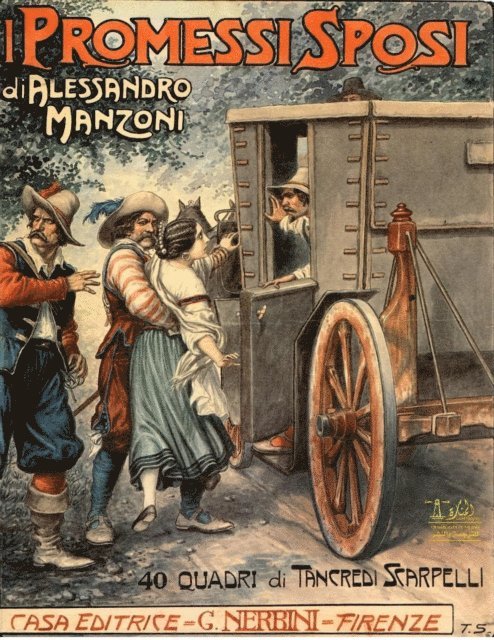
I promessi sposi, novel by Alessandro Manzoni, published in three volumes in 1825–26; the complete edition was issued in 1827. It was initially translated into English as The Betrothed Lovers, but it was more commonly translated as simply The Betrothed. Set in early 17th-century Lombardy during the period of the Thirty Years’ War and the plague, the novel is a sympathetic portrayal of the struggle of two peasant lovers whose wish to marry is thwarted by a vicious local tyrant and the cowardice of their parish priest. A courageous friar takes up the lovers’ cause and helps them through many adventures to safety and marriage. The novel brought Manzoni immediate acclaim and had enormous patriotic appeal for Italians of the nationalistic Risorgimento period. It became a model for many later Italian writers.
33 kr
Läs direkt efter köp
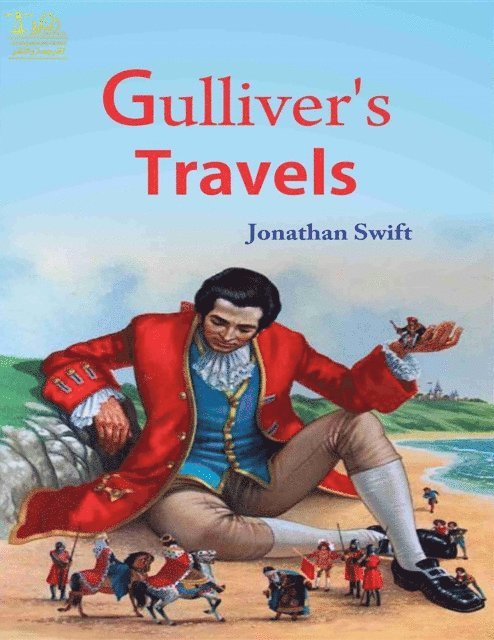
. A keystone of English literature, it was one of the books that gave birth to the novel form, though it did not yet have the rules of the genre as an organizing tool. A parody of the then popular travel narrative, Gulliver’s Travels combines adventure with savage satire, mocking English customs and the politics of the day.
The book is written in the first person from the point of view of Lemuel Gulliver, a surgeon and sea captain who visits remote regions of the world, and it describes four adventures. In the first one, Gulliver is the only survivor of a shipwreck, and he swims to Lilliput, where he is tied up by people who are less than 6 inches (15 cm) tall. He is then taken to the capital city and eventually released. The Lilliputians indulge in ridiculous customs and petty debates. Political affiliations, for example, are divided between men who wear high-heeled shoes (symbolic of the English Tories) and those who wear low ones (representing the English Whigs), and court positions are filled by those who are best at rope dancing. Gulliver is asked to help defend Lilliput against the empire of Blefuscu, with which Lilliput is at war over which end of an egg should be broken, this being a matter of religious doctrine. Gulliver captures Blefuscu’s naval fleet, thus preventing an invasion, but declines to assist the emperor of Lilliput in conquering Blefuscu. Later Gulliver extinguishes a fire in the royal palace by urinating on it. Eventually he falls out of favour and is sentenced to be blinded and starved. He flees to Blefuscu, where he finds a normal-size boat and is thus able to return to England.
33 kr
Läs direkt efter köp
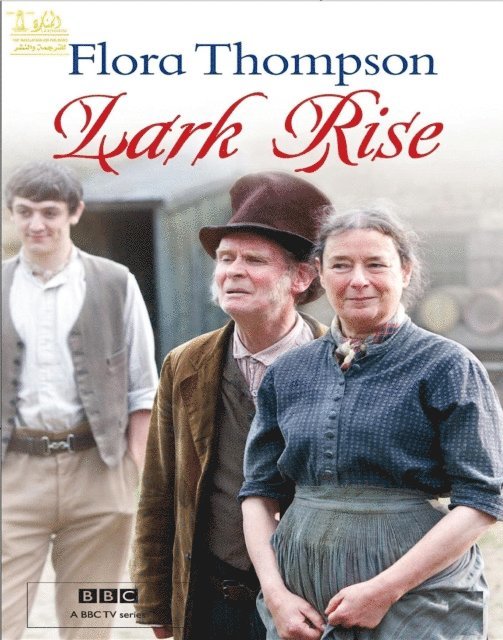
Flora Jane Thompson (5 December 1876 – 21 May 1947) was an English novelist and poet famous for her semi-autobiographical trilogy about the English countryside, Lark Rise to Candleford.
Flora benefited from good access to books when the public library opened in Winton, in 1907. Not long after, in 1911, she won an essay competition in The Ladies Companion for a 300-word essay about Jane Austen.[6] She later wrote extensively, publishing short stories and magazine and newspaper articles. She was a keen self-taught naturalist and many of her nature articles were anthologised in 1986.
Her most famous works are the Lark Rise to Candleford trilogy, which she sent as essays to Oxford University Press in 1938 and which were published soon after. She wrote a sequel Heatherley which was published posthumously. The books are a fictionalised, if autobiographical, social history of rural English life in the late 19th and early 20th century and are now considered minor classics
.
Flora Jane Thompson (nee Timms) was born in 1876 at Juniper Hill, a hamlet near the borders of Oxfordshire and Northamptonshire. After leaving school she was sent as assistant to the postmistress (who also kept the forge) at a town eight miles away, and was for some time employed to carry the letters in a locked leather bag to the big house near by. So began her long connection with the Post Office. She married young and her husband later became a postmaster. His work took them to Bournemouth, where she obtained from the public library the Greek and Roman classics in translation, as well as Ibsen and the English poets, novelists and critics - especially Shaw and Yeats. Her first book was a collection of poems, Bog Myrtle and Peat. However, she is best remembered for three autobiographical volumes: Lark Rise (1939), Over to Candleford (1941) and Candleford Green (1943), reissued in one volume as Lark Rise to Candleford (1945). A fourth volume, Still Glides the Stream, was published posthumously in 1948. Flora Thompson died at Brixham, Devon on 21 May 1947.
31 kr
Läs direkt efter köp
Fyodor Dostoyevsky, in full Fyodor Mikhaylovich Dostoyevsky, Dostoyevsky also spelled Dostoevsky, (born November 11 [October 30, Old Style], 1821, Moscow, Russia—died February 9 [January 28, Old Style], 1881, St. Petersburg), Russian novelist and short-story writer whose psychological penetration into the darkest recesses of the human heart, together with his unsurpassed moments of illumination, had an immense influence on 20th-century fiction.
Dostoyevsky is usually regarded as one of the finest novelists who ever lived. Literary modernism, existentialism, and various schools of psychology, theology, and literary criticism have been profoundly shaped by his ideas. His works are often called prophetic because he so accurately predicted how Russia’s revolutionaries would behave if they came to power. In his time he was also renowned for his activity as a journalist.
In Russia, the novels of Fyodor Dostoyevsky, particularly Crime and Punishment (1866) and The Brothers Karamazov (1880), revealed a world of paradox, alienation, and loss of identity, prophetic of the major tragic themes of the 20th
Major works and their characteristics
Dostoyevsky is best known for his novella Notes from the Underground and for four long novels, Crime and Punishment, The Idiot, The Possessed (also and more accurately known as The Demons and The Devils), and The Brothers Karamazov. Each of these works is famous for its psychological profundity, and, indeed, Dostoyevsky is commonly regarded as one of the greatest psychologists in the history of literature. He specialized in the analysis of pathological states of mind that lead to insanity, murder, and suicide and in the exploration of the emotions of humiliation, self-destruction, tyrannical domination, and murderous rage. These major works are also renowned as great “novels of ideas” that treat timeless and timely issues in philosophy and politics. Psychology and philosophy are closely linked in Dostoyevsky’s portrayals of intellectuals, who “feel ideas” in the depths of their souls. Finally, these novels broke new ground with their experiments in literary form.
17 kr
Läs direkt efter köp
Frankenstein; or, The Modern Prometheus is a novel written by English author Mary Shelley that tells the story of Victor Frankenstein, a young scientist who creates a hideous, sapient creature in an unorthodox scientific experiment.Mary Shelley began writing Frankenstein when she was only eighteen. At once a Gothic thriller, a passionate romance, and a cautionary tale about the dangers of science, Frankenstein tells the story of committed science student Victor Frankenstein. Obsessed with discovering the cause of generation and life and bestowing animation upon lifeless matter, Frankenstein assembles a human being from stolen body parts but; upon bringing it to life, he recoils in horror at the creature's hideousness. Tormented by isolation and loneliness, the once-innocent creature turns to evil and unleashes a campaign of murderous revenge against his creator, Frankenstein.
Frankenstein, an instant bestseller and an important ancestor of both the horror and science fiction genres, not only tells a terrifying story, but also raises profound, disturbing questions about the very nature of life and the place of humankind within the cosmos: What does it mean to be human? What responsibilities do we have to each other? How far can we go in tampering with Nature? In our age, filled with news of organ donation genetic engineering, and bio-terrorism, these questions are more relevant than ever
33 kr
Läs direkt efter köp
Dracula comprises journal entries, letters, and telegrams written by the main characters. It begins with Jonathan Harker, a young English lawyer, as he travels to Transylvania. Harker plans to meet with Count Dracula, a client of his firm, in order to finalize a property transaction. When he arrives in Transylvania, the locals react with terror after he discloses his destination: Castle Dracula. Though this unsettles him slightly, he continues onward. The ominous howling of wolves rings through the air as he arrives at the castle. When Harker meets Dracula, he acknowledges that the man is pale, gaunt, and strange. Harker becomes further concerned when, after Harker cuts himself while shaving, Dracula lunges at his throat. Soon after, Harker is seduced by three female vampires, from whom he barely escapes. He then learns Dracula’s secret—that he is a vampire and survives by drinking human blood. Harker correctly assumes that he is to be the count’s next victim. He attacks the count, but his efforts are unsuccessful. Dracula leaves Harker trapped in the castle and then, along with 50 boxes of dirt, departs for England.
Meanwhile, in England, Harker’s fiancée Mina is visiting a friend named Lucy Westenra, who has recently gotten engaged after declining a number of suitors. One night Mina must search for Lucy, as she has fallen back into her old habit of sleepwalking. When Mina finds her outside near a graveyard, there appears to be a shape hovering over her for a split second. Mina notices two small red marks on Lucy’s neck and assumes that she must have inadvertently pricked Lucy with a pin. Over the following days, Lucy falls ill and is at times seen through a window next to a bat. Mina is worried, but she is called away once she receives correspondence from Jonathan. Lucy goes into the care of Dr. Seward and Dr. Van Helsing, who, after a number of failed blood transfusions, decide further action is needed. They then drape Lucy and her room with garlic—a strategy used to ward off vampires. Lucy, however, soon dies.