Paulo Ribenboim – författare
Visar alla böcker från författaren Paulo Ribenboim. Handla med fri frakt och snabb leverans.
34 produkter
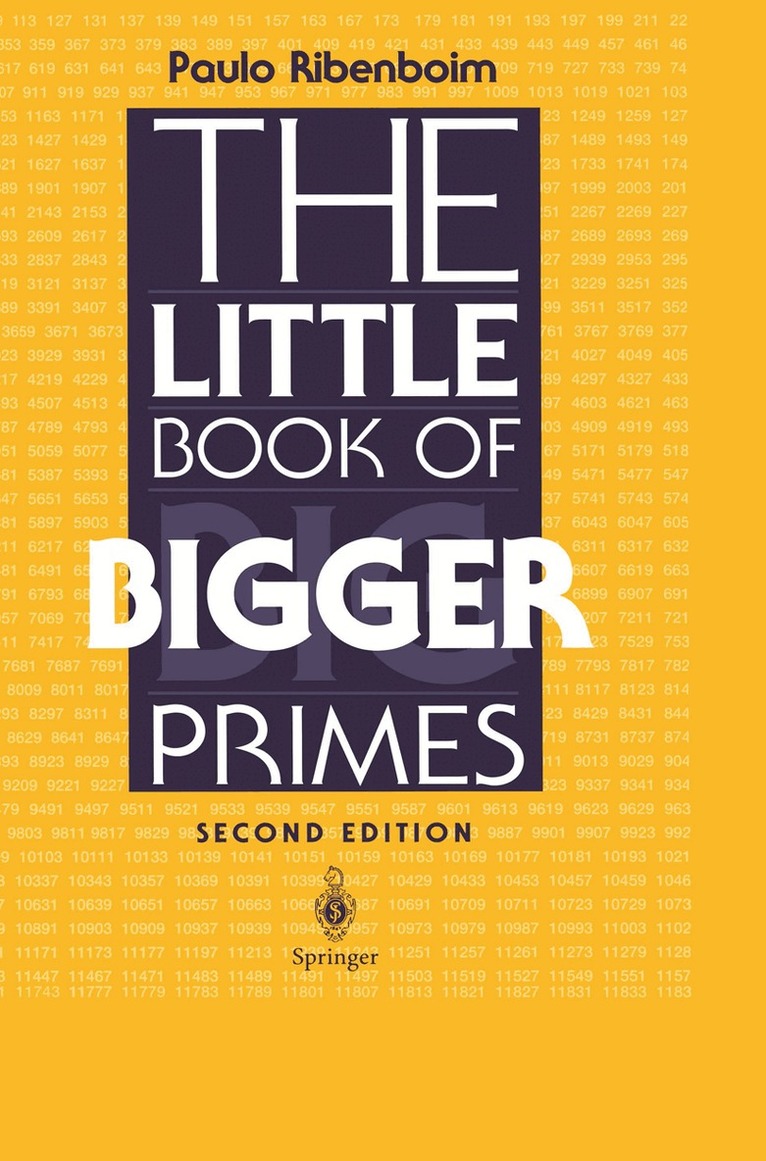
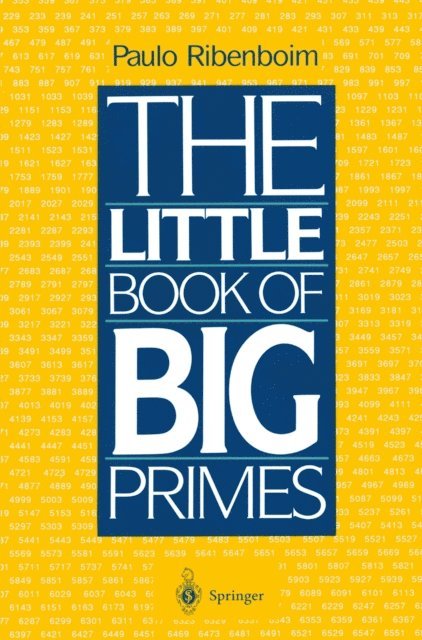
Little Book of Bigger Primes
Häftad, 2004
550 kr
Lägg i varukorg
A deep understanding of prime numbers is one of the great challenges in mathematics. In this new edition, fundamental theorems, challenging open problems, and the most recent computational records are presented in a language without secrets. The impressive wealth of material and references will …
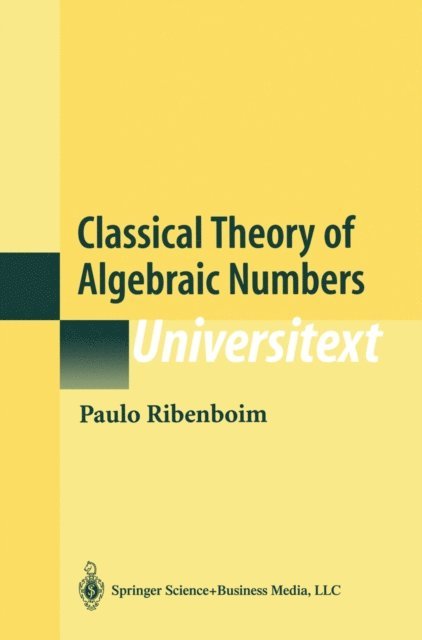
Classical Theory of Algebraic Numbers
E-bok, 2013
1141 kr
Lägg i varukorg
Gauss created the theory of binary quadratic forms in "Disquisitiones Arithmeticae" and Kummer invented ideals and the theory of cyclotomic fields in his attempt to prove Fermat''s Last Theorem. These were the starting points for the theory of algebraic numbers, developed in the classical papers of …
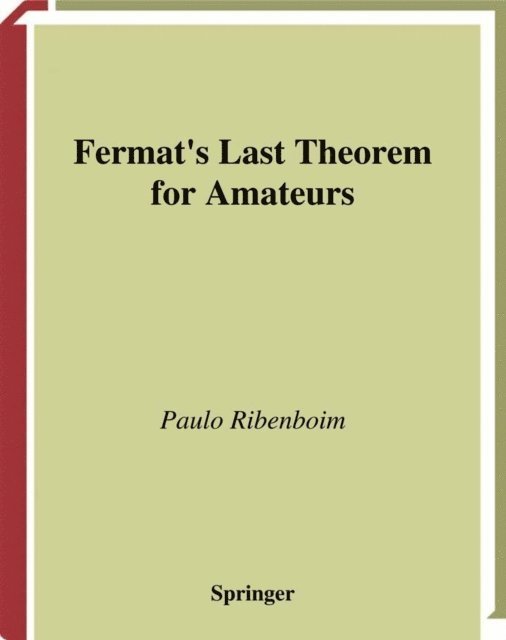
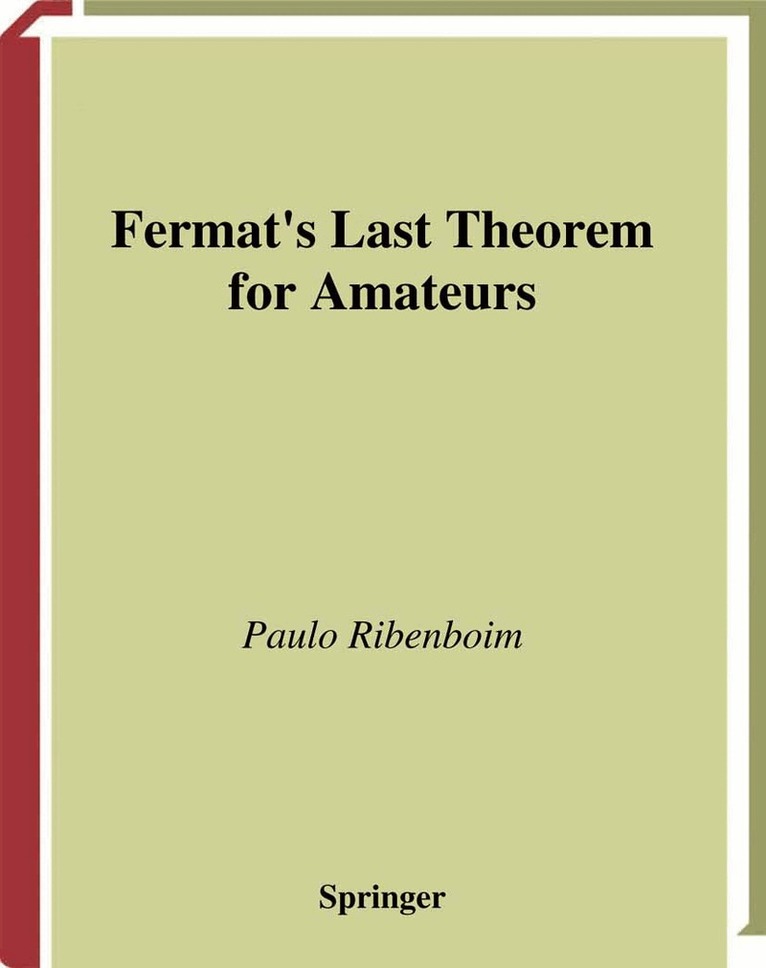
Fermat's Last Theorem for Amateurs
E-bok, 2008
815 kr
Lägg i varukorg
ItisnowwellknownthatFermat’slasttheoremhasbeenproved. For more than three and a half centuries, mathematicians — from the greatnamestothecleveramateurs—triedtoproveFermat’sfamous statement. The approach was new and involved very sophisticated theories. Finallythelong-soughtproofwasachieved. …
Little Book of Bigger Primes
E-bok, 2006
734 kr
Lägg i varukorg
A deep understanding of prime numbers is one of the great challenges in mathematics. In this new edition, fundamental theorems, challenging open problems, and the most recent computational records are presented in a language without secrets. The impressive wealth of material and references will …
My Numbers, My Friends
Popular Lectures on Number Theory
E-bok, 2006
718 kr
Lägg i varukorg
Dear Friends of Numbers: This little book is for you. It should o?er an exquisite int- lectual enjoyment, which only relatively few fortunate people can experience. May these essays stimulate your curiosity and lead you to books and articles where these matters are discussed at a more technical …
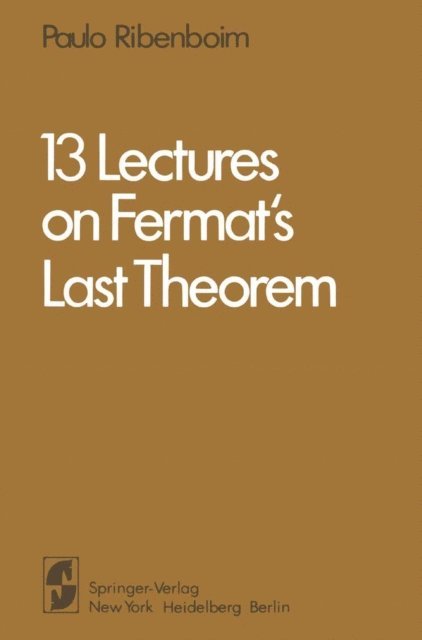
13 Lectures on Fermat's Last Theorem
Inbunden, 1979
550 kr
Lägg i varukorg
Fermat's problem, also ealled Fermat's last theorem, has attraeted the attention of mathematieians far more than three eenturies. Many clever methods have been devised to attaek the problem, and many beautiful theories have been ereated with the aim of proving the theorem. Yet, despite all the …
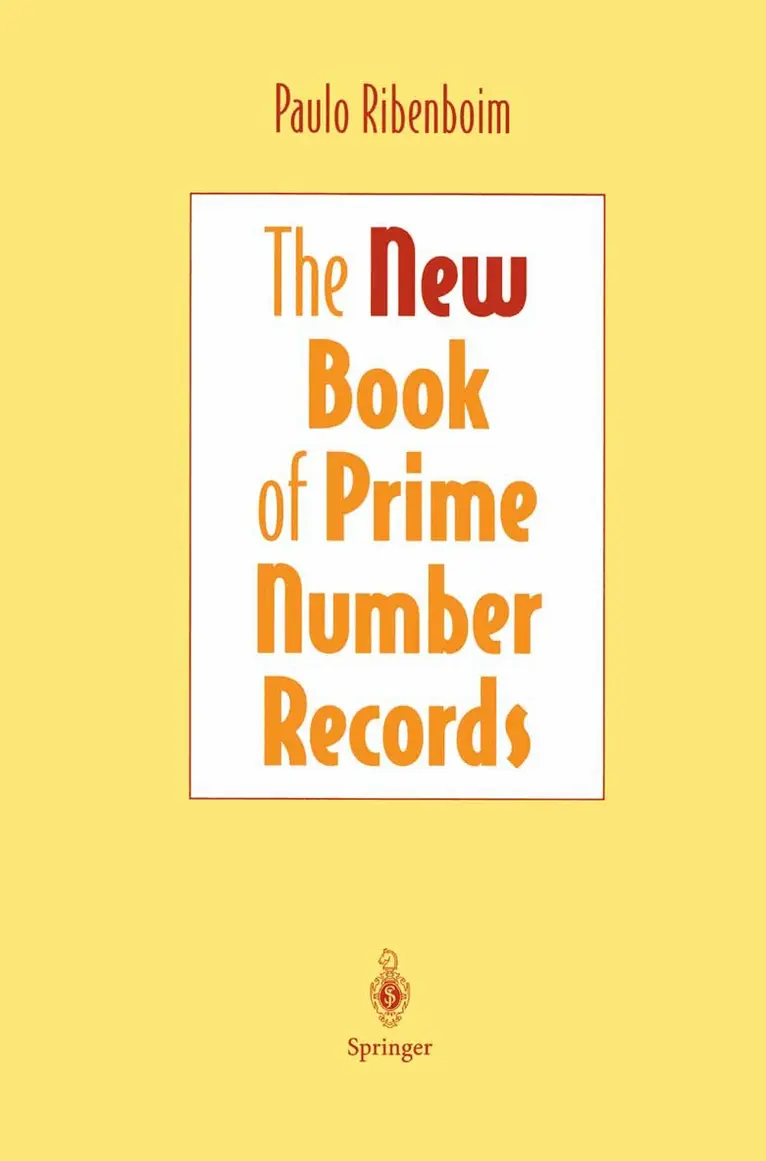
New Book of Prime Number Records
Inbunden, 1996
1093 kr
Lägg i varukorg
This text originated as a lecture delivered November 20, 1984, at Queen's University, in the undergraduate colloquium senes. In another colloquium lecture, my colleague Morris Orzech, who had consulted the latest edition of the Guinness Book of Records, reminded me very gently that the most …
Classical Theory of Algebraic Numbers
Inbunden, 2001
1202 kr
Lägg i varukorg
Gauss created the theory of binary quadratic forms in "Disquisitiones Arithmeticae" and Kummer invented ideals and the theory of cyclotomic fields in his attempt to prove Fermat's Last Theorem. These were the starting points for the theory of algebraic numbers, developed in the classical papers of …
Fermat’s Last Theorem for Amateurs
Inbunden, 1999
876 kr
Lägg i varukorg
ItisnowwellknownthatFermat’slasttheoremhasbeenproved. For more than three and a half centuries, mathematicians — from the greatnamestothecleveramateurs—triedtoproveFermat’sfamous statement. The approach was new and involved very sophisticated theories. Finallythelong-soughtproofwasachieved. …
Theory of Classical Valuations
Inbunden, 1999
1093 kr
Lägg i varukorg
In his studies of cyclotomic fields, in view of establishing his monumental theorem about Fermat's last theorem, Kummer introduced "local" methods. They are concerned with divisibility of "ideal numbers" of cyclotomic fields by lambda = 1 - psi where psi is a primitive p-th root of 1 (p any odd …
My Numbers, My Friends
Popular Lectures on Number Theory
Häftad, 2000
550 kr
Lägg i varukorg
Dear Friends of Numbers: This little book is for you. It should o?er an exquisite int- lectual enjoyment, which only relatively few fortunate people can experience. May these essays stimulate your curiosity and lead you to books and articles where these matters are discussed at a more technical …
13 Lectures on Fermat's Last Theorem
Häftad, 2010
550 kr
Lägg i varukorg
Fermat's problem, also ealled Fermat's last theorem, has attraeted the attention of mathematieians far more than three eenturies. Many clever methods have been devised to attaek the problem, and many beautiful theories have been ereated with the aim of proving the theorem. Yet, despite all the …
Classical Theory of Algebraic Numbers
Häftad, 2010
876 kr
Lägg i varukorg
Gauss created the theory of binary quadratic forms in "Disquisitiones Arithmeticae" and Kummer invented ideals and the theory of cyclotomic fields in his attempt to prove Fermat's Last Theorem. These were the starting points for the theory of algebraic numbers, developed in the classical papers of …
Theory of Classical Valuations
E-bok, 2012
1459 kr
Lägg i varukorg
In his studies of cyclotomic fields, in view of establishing his monumental theorem about Fermat''s last theorem, Kummer introduced "local" methods. They are concerned with divisibility of "ideal numbers" of cyclotomic fields by lambda = 1 - psi where psi is a primitive p -th root of 1 (p any odd …
New Book of Prime Number Records
E-bok, 2012
734 kr
Lägg i varukorg
This text originated as a lecture delivered November 20, 1984, at Queen''s University, in the undergraduate colloquium senes. In another colloquium lecture, my colleague Morris Orzech, who had consulted the latest edition of the Guinness Book of Records, reminded me very gently that the most …
Theory of Classical Valuations
Häftad, 2012
1093 kr
Lägg i varukorg
In his studies of cyclotomic fields, in view of establishing his monumental theorem about Fermat's last theorem, Kummer introduced "local" methods. They are concerned with divisibility of "ideal numbers" of cyclotomic fields by lambda = 1 - psi where psi is a primitive p-th root of 1 (p any odd …
New Book of Prime Number Records
Häftad, 2012
550 kr
Lägg i varukorg
This text originated as a lecture delivered November 20, 1984, at Queen's University, in the undergraduate colloquium senes. In another colloquium lecture, my colleague Morris Orzech, who had consulted the latest edition of the Guinness Book of Records, reminded me very gently that the most …
Book of Prime Number Records
E-bok, 2012
1500 kr
Lägg i varukorg
This text originated as a lecture delivered November 20, 1984, at Queen''s University, in the undergraduate colloquim series established to honor Professors A. J. Coleman and H. W. Ellis and to acknow ledge their long lasting interest in the quality of teaching under graduate students. In another …
Book of Prime Number Records
E-bok, 2012
1174 kr
Lägg i varukorg
This text originated as a lecture delivered November 20, 1984, at Queen''s University, in the undergraduate colloquium series established to honour Professors A. J. Coleman and H. W. Ellis and to acknowledge their long-lasting interest in the quality of teaching undergraduate students. In another …
Little Book of Bigger Primes
E-bok, 2013
1140 kr
Lägg i varukorg
This book could have been called "Selections from the Book of Prime Number Records." However, I prefered the title which propelled you on the first place to open it, and perhaps (so I hope) to buy it! Richard K. Guy, with his winning ways, suggested the title to me, and I am grateful. But the book …
Fermat’s Last Theorem for Amateurs
Häftad, 2013
626 kr
Lägg i varukorg
ItisnowwellknownthatFermat’slasttheoremhasbeenproved. For more than three and a half centuries, mathematicians — from the greatnamestothecleveramateurs—triedtoproveFermat’sfamous statement. The approach was new and involved very sophisticated theories. Finallythelong-soughtproofwasachieved. …
Wolfgang Krull: Gesammelte Abhandlungen / Collected Papers. Volume 1+2
Av Wolfgang Krull, Paulo Ribenboim
E-bok, 2013
6529 kr
Lägg i varukorg
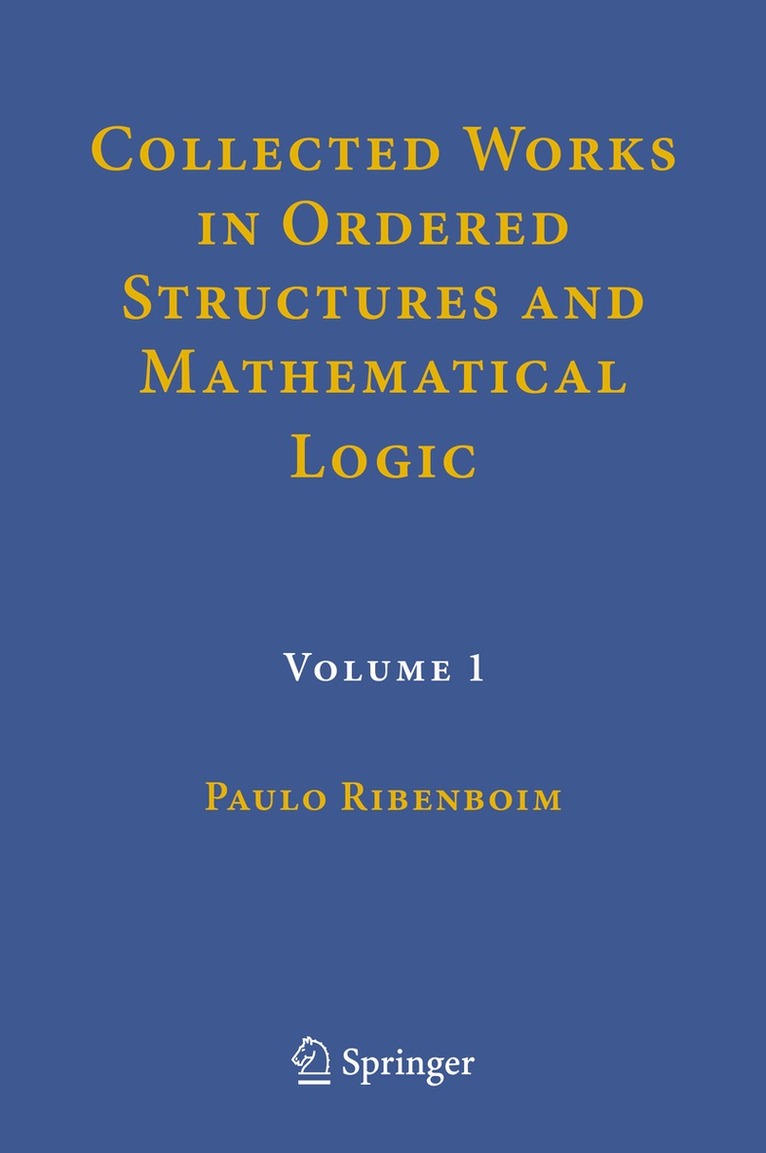
Collected Works in Ordered Structures and Mathematical Logic
Volume 1
Inbunden, 2019
1093 kr
Lägg i varukorg
This two-volume collection contains Paulo Ribenboim’s work on ordered structures and mathematical logic. Two long unpublished papers and a reproduction of his first book on abelian groups are also featured in these volumes. With over 240 publications, including 13 books, Ribenboim is responsible …
Collected Works in Ordered Structures and Mathematical Logic
Volume 2
Inbunden, 2020
1636 kr
Lägg i varukorg
This two-volume collection contains Paulo Ribenboim’s work on ordered structures and mathematical logic. Two long unpublished papers and a reproduction of his first book on abelian groups are also featured in these volumes. With over 240 publications, including 13 books, Ribenboim is responsible …
Die Welt der Primzahlen
Geheimnisse und Rekorde
E-bok, 2006
319 kr
Lägg i varukorg
Die Welt der Primzahlen - in faszinierender Weise werden die wesentlichen Ergebnisse über die elementaren Bausteine der natürlichen Zahlen vorgestellt. Grundlegende Sätze und die wichtigsten offenen Fragen und ungelösten Probleme werden von einer wohl einmaligen Sammlung von Rekorden über …
Meine Zahlen, meine Freunde
Glanzlichter der Zahlentheorie
Häftad, 2009
413 kr
Lägg i varukorg
Paulo Ribenboim behandelt Zahlen in dieser außergewöhnlichen Sammlung von Übersichtsartikeln wie seine persönlichen Freunde. In leichter und allgemein zugänglicher Sprache berichtet er über Primzahlen, Fibonacci-Zahlen (und das Nordpolarmeer!), die klassischen Arbeiten von Gauss über binäre …
Meine Zahlen, meine Freunde
Glanzlichter der Zahlentheorie
E-bok, 2009
415 kr
Lägg i varukorg
Paulo Ribenboim behandelt Zahlen in dieser außergewöhnlichen Sammlung von Übersichtsartikeln wie seine persönlichen Freunde. In leichter und allgemein zugänglicher Sprache berichtet er über Primzahlen, Fibonacci-Zahlen (und das Nordpolarmeer!), die klassischen Arbeiten von Gauss über binäre …
Die Welt der Primzahlen
Geheimnisse und Rekorde
Häftad, 2011
464 kr
Lägg i varukorg
Die Welt der Primzahlen - in faszinierender Weise werden die wesentlichen Ergebnisse über die elementaren Bausteine der natürlichen Zahlen vorgestellt. Grundlegende Sätze und die wichtigsten offenen Fragen und ungelösten Probleme werden von einer wohl einmaligen Sammlung von Rekorden über …
Die Welt der Primzahlen
Geheimnisse und Rekorde
E-bok, 2011
458 kr
Lägg i varukorg
Die Welt der Primzahlen - in faszinierender Weise werden die wesentlichen Ergebnisse über die elementaren Bausteine der natürlichen Zahlen vorgestellt. Grundlegende Sätze und die wichtigsten offenen Fragen und ungelösten Probleme werden von einer wohl einmaligen Sammlung von Rekorden über …