Peter Baccini – författare
Visar alla böcker från författaren Peter Baccini. Handla med fri frakt och snabb leverans.
7 produkter
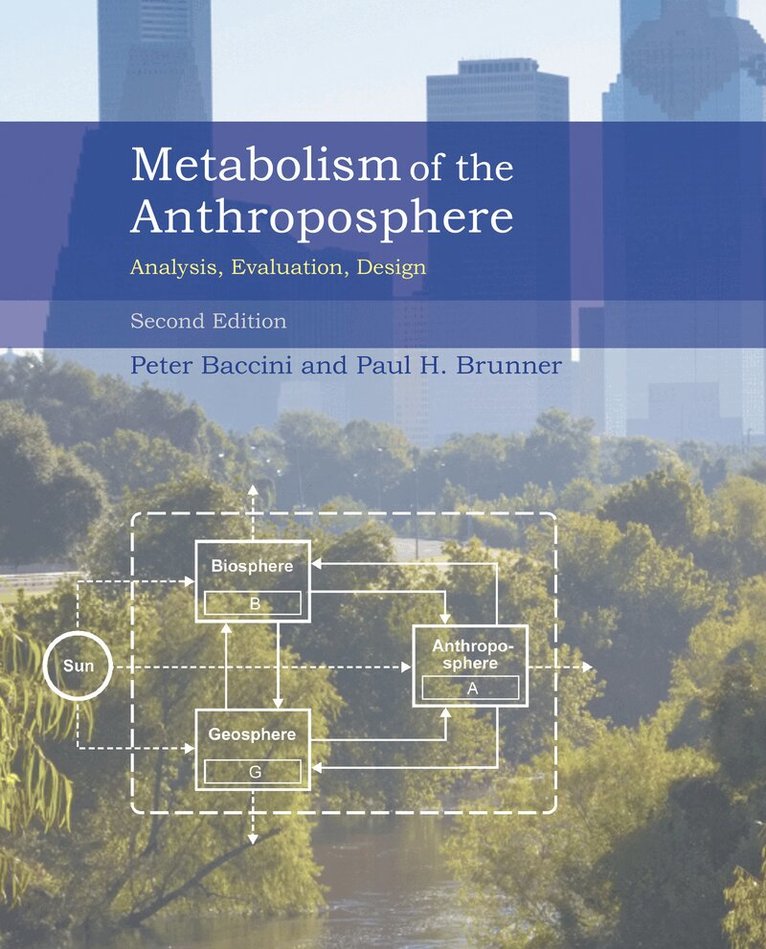
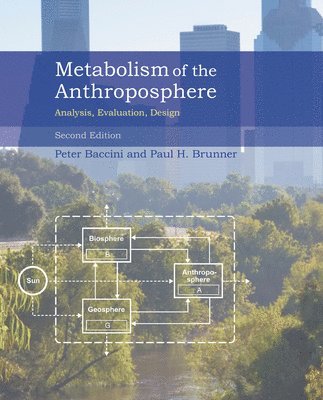
Metabolism of the Anthroposphere, second edition
Analysis, Evaluation, Design
Av Peter Baccini, Paul H. Brunner
Häftad, 2023
737 kr
Lägg i varukorg
Future Cities: Dynamics and Sustainability
Av Keisuke Hanaki, Peter Baccini m. fl.
Inbunden, 2002
1101 kr
Lägg i varukorg
CITIES: CHALLENGES AND OPPORTUNITIES FOR SUSTAINABILITY BRANTLEY LIDDLE AND FRED MOAVENZADEH OR at least 4000 years, cities have been centers of cultural, social, technological Fand economic innovation, inventions and their application, and political power. Only in the last 200 years, the …
Future Cities: Dynamics and Sustainability
Av F. Moavenzadeh, Keisuke Hanaki m. fl.
Häftad, 2002
1101 kr
Lägg i varukorg
CITIES: CHALLENGES AND OPPORTUNITIES FOR SUSTAINABILITY BRANTLEY LIDDLE AND FRED MOAVENZADEH OR at least 4000 years, cities have been centers of cultural, social, technological Fand economic innovation, inventions and their application, and political power. Only in the last 200 years, the …
Die Domestikation der Erde
Raubbau, Verschwendung, Sparsamkeit. Unser Umgang mit den Ressourcen
E-bok, 2025
344 kr
Lägg i varukorg
Seit die Menschen sesshaft wurden, haben sie ihre Ansprüche an die Menge Wasser, Bodenflächen, Nahrungsmittel, Energieträger und Baustoffe über die Jahrtausende langsam gesteigert. Erst in den vergangenen drei Jahrhunderten spannten sie mit exponenziellem Wachstum ein urbanes Netz über den ganzen …
Landfill
Reactor and Final Storage Swiss Workshop on Land Disposal of Solid Wastes Gerzensee, March 14–17, 1988
Häftad, 1989
1098 kr
Lägg i varukorg
Landfill, as an indispensable part of every waste management system, is subject to a critical revision. The existing scientific, technical, and regulatory concepts are discussed in group reports on the basis of 14 review papers. Landfills are considered as chemical and biological reactors, which …
Future Cities: Dynamics and Sustainability
Av Peter Baccini, Keisuke Hanaki m. fl.
E-bok, 2012
1459 kr
Lägg i varukorg
Metabolism of the Anthroposphere
Analysis, Evaluation, Design
Av Peter Baccini, Paul H. (Vienna University of Technology) Brunner
Inbunden, 2012
368 kr
Tillfälligt slut