F. Moavenzadeh - Böcker
Visar alla böcker från författaren F. Moavenzadeh. Handla med fri frakt och snabb leverans.
4 produkter
4 produkter
1 064 kr
Skickas inom 10-15 vardagar
CITIES: CHALLENGES AND OPPORTUNITIES FOR SUSTAINABILITY BRANTLEY LIDDLE AND FRED MOAVENZADEH OR at least 4000 years, cities have been centers of cultural, social, technological Fand economic innovation, inventions and their application, and political power. Only in the last 200 years, the industrial era, have urban areas grown so rapidly, and their populations increased so dramatically that their impacts on the natural environ- ment are being felt beyond their immediate geographic surroundings. As the 21" cen- tury dawns, megacities-great and far-reaching concentrations of power and influ- ence-have become centers of the phenomena of globalization and information ex- change. These concentrations of people and activity are placing stress on the natural environment so great that it is beginning to have extensive regional, and even global impacts. However, asconcentrations ofpower-political, economic, andintellectual- these great urban centers share with the ancestral cities of past millennia the resources to consciously shape the future.The management of these megacities (those having populations of over eight million) in their current formative stages so taxing to natural systems,paradoxicallypresents theopportunity torestoresustainableregional and global environments. Environmental problems consequent to urban growth have two sources: pov- erty and affluence. These two conditions often coexist in dramatic contrast within the same city, particularly in developing countries. In terms of environmental impact, poverty-based problems tend to have local effects, while affluence-based problems usually have transboundary and/or global effects.
Del 1 - Alliance for Global Sustainability Bookseries
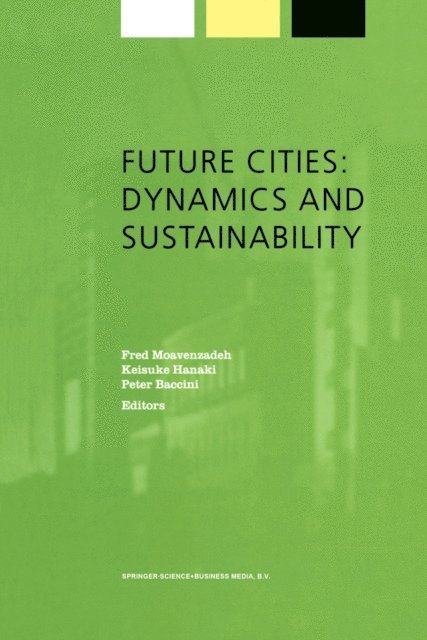
Future Cities: Dynamics and Sustainability
Häftad, Engelska, 2002
1 064 kr
Skickas inom 10-15 vardagar
CITIES: CHALLENGES AND OPPORTUNITIES FOR SUSTAINABILITY BRANTLEY LIDDLE AND FRED MOAVENZADEH OR at least 4000 years, cities have been centers of cultural, social, technological Fand economic innovation, inventions and their application, and political power. Only in the last 200 years, the industrial era, have urban areas grown so rapidly, and their populations increased so dramatically that their impacts on the natural environ- ment are being felt beyond their immediate geographic surroundings. As the 21" cen- tury dawns, megacities-great and far-reaching concentrations of power and influ- ence-have become centers of the phenomena of globalization and information ex- change. These concentrations of people and activity are placing stress on the natural environment so great that it is beginning to have extensive regional, and even global impacts. However, asconcentrations ofpower-political, economic, andintellectual- these great urban centers share with the ancestral cities of past millennia the resources to consciously shape the future.The management of these megacities (those having populations of over eight million) in their current formative stages so taxing to natural systems,paradoxicallypresents theopportunity torestoresustainableregional and global environments. Environmental problems consequent to urban growth have two sources: pov- erty and affluence. These two conditions often coexist in dramatic contrast within the same city, particularly in developing countries. In terms of environmental impact, poverty-based problems tend to have local effects, while affluence-based problems usually have transboundary and/or global effects.
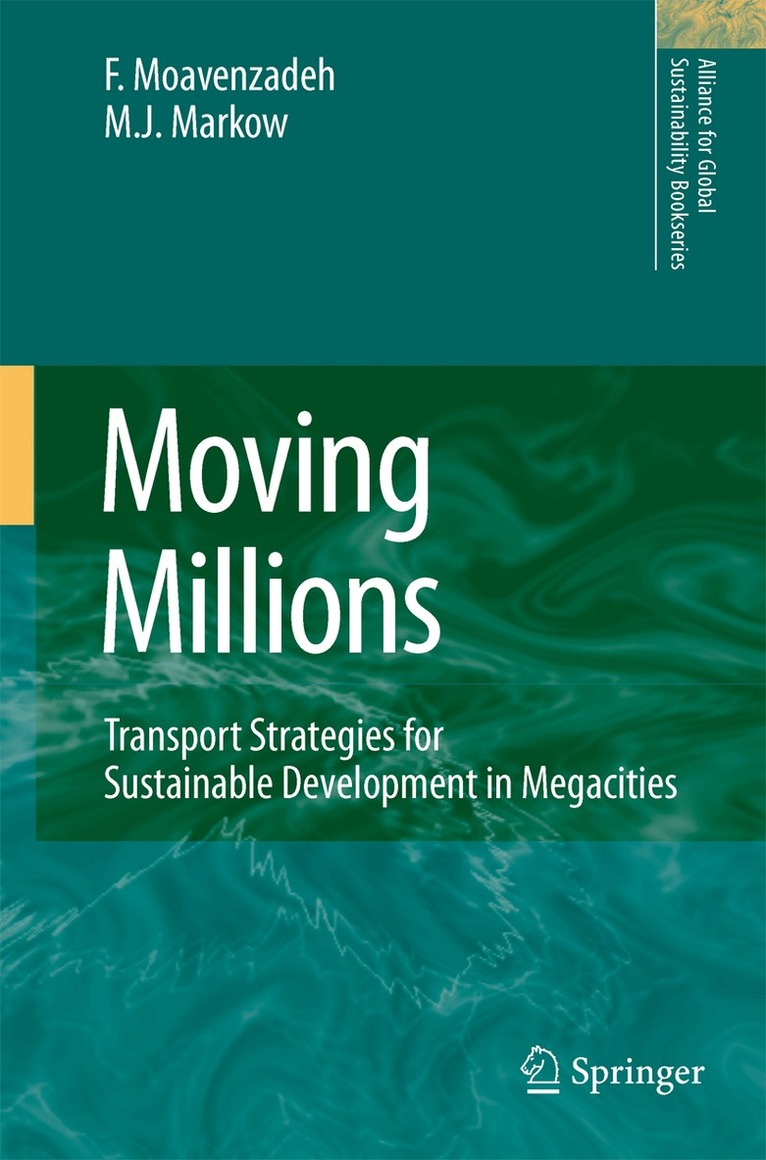
Moving Millions
Transport Strategies for Sustainable Development in Megacities
Inbunden, Engelska, 2007
1 064 kr
Skickas inom 10-15 vardagar
This book has been several years in the making. It has grown out of basic areas of inquiry begun under the auspices of the Alliance for Global Sustainability in the late 1990s, and has culminated with a series of on-site, collaborative studies conducted through AGS in cooperation with of?cials in Guangzhou, People’s Republic of China (PRC), during the early 2000s. Many individuals have made important contributions to the ideas, ?ndings, and results that have been compiled in this volume. The authors wish to recognize these signi?cant contributions below. The Alliance for Global Sustainability is an international partnership among four of the leading scienti?c and technological universities worldwide: • The Massachusetts Institute of Technology (MIT-AGS); • The University of Tokyo (UT); • The Swiss Federal Institute of Technology (ETH); and • The Chalmers University of Technology. Created in 1997, the AGS today brings together hundreds of university scientists, engineers, and social scientists to address complex issues that lie at the intersection of environmental, economic, and social policy goals. Since its inception, the AGS has promoted and supported multidisciplinary research teams drawn from its partner institutions. Working on critical issues in sustainability across several ?elds encompassing energy and climate, mobility, urban systems, water and agriculture, cleaner technologies, public policy, and communications, these teams have developed a signi?cant body of new knowledge. Furthermore, A- sponsored teamshave worked withengaged,farsighted leaders of global businesses and industries, governments, and non-governmental organizations (NGOs) to provide innovative but practical solutions to urgent environmental problems worldwide.
Del 14 - Alliance for Global Sustainability Bookseries
Moving Millions
Transport Strategies for Sustainable Development in Megacities
Häftad, Engelska, 2010
1 069 kr
Skickas inom 10-15 vardagar
This book has been several years in the making. It has grown out of basic areas of inquiry begun under the auspices of the Alliance for Global Sustainability in the late 1990s, and has culminated with a series of on-site, collaborative studies conducted through AGS in cooperation with of?cials in Guangzhou, People’s Republic of China (PRC), during the early 2000s. Many individuals have made important contributions to the ideas, ?ndings, and results that have been compiled in this volume. The authors wish to recognize these signi?cant contributions below. The Alliance for Global Sustainability is an international partnership among four of the leading scienti?c and technological universities worldwide: • The Massachusetts Institute of Technology (MIT-AGS); • The University of Tokyo (UT); • The Swiss Federal Institute of Technology (ETH); and • The Chalmers University of Technology. Created in 1997, the AGS today brings together hundreds of university scientists, engineers, and social scientists to address complex issues that lie at the intersection of environmental, economic, and social policy goals. Since its inception, the AGS has promoted and supported multidisciplinary research teams drawn from its partner institutions. Working on critical issues in sustainability across several ?elds encompassing energy and climate, mobility, urban systems, water and agriculture, cleaner technologies, public policy, and communications, these teams have developed a signi?cant body of new knowledge. Furthermore, A- sponsored teamshave worked withengaged,farsighted leaders of global businesses and industries, governments, and non-governmental organizations (NGOs) to provide innovative but practical solutions to urgent environmental problems worldwide.