Keisuke Hanaki - Böcker
Visar alla böcker från författaren Keisuke Hanaki. Handla med fri frakt och snabb leverans.
7 produkter
7 produkter
1 280 kr
Skickas inom 7-10 vardagar
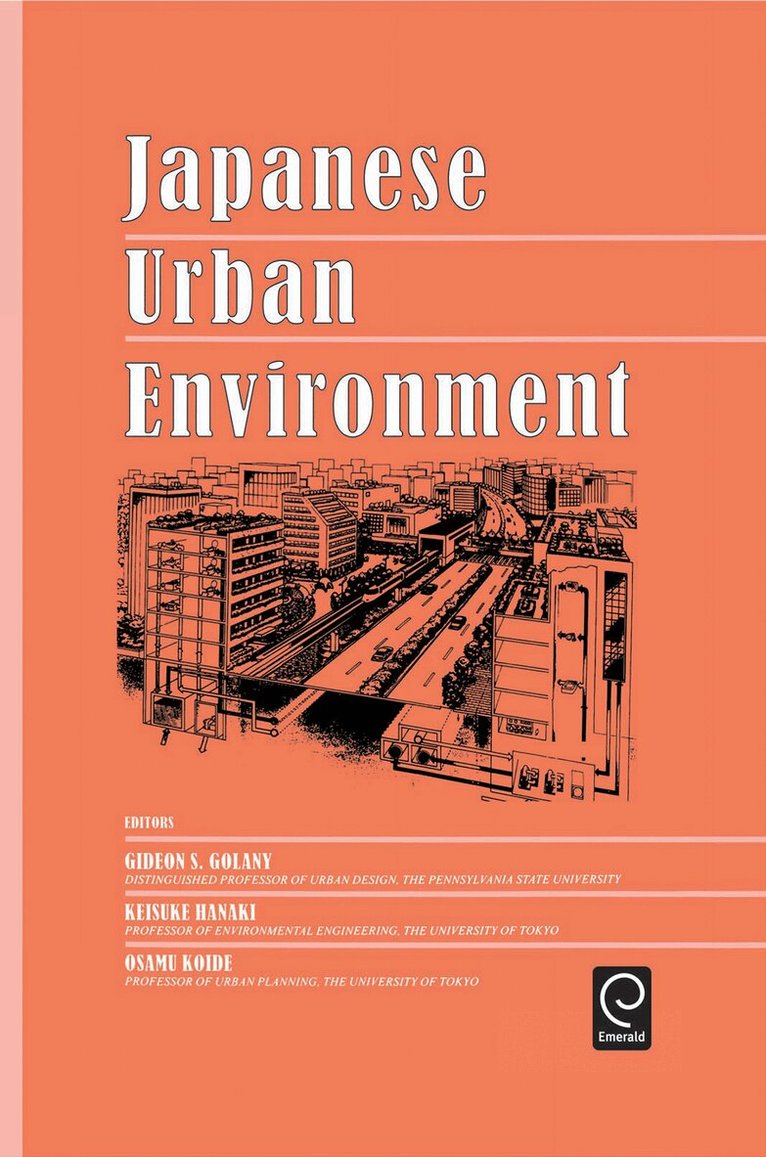
Japan has led the world in urban innovation, design and planning, successfully combining high population with functionality, cleanliness and low levels of crime. "The Japanese Urban Environment" sets out to explain the reasons for this success, showing how both natural and human-made factors influence urban life. Interdisciplinary, comprehensive and up-to-date, this major new book shows how the physical cityscape of climate, buildings and infrastructure interacts with social and cultural factors to produce a unique environment. Divided into four parts, the volume addresses: the social, cultural and physical determinants of the Japanese urban environment, showing how cultural values have influenced the historical evolution of cities; the climate, energy use and leisure provision in the city from an environmental perspective; and the infrastructure of the Japanese city and its growth since the Second World War, illustrating how technical 'hardware', such as the subway systems, operates effectively because of the social, economic and cultural 'software'; and, the future of urban design in Japan, indicating the impact of national and local planning, the uses of advanced technology and methods for urban redevelopment. With contributions by a wide range of Japanese specialists, this work addresses the full complexity of the urban environment. The authors show how a dynamic synthesis of traditional Eastern socio-cultural influences with Western building and engineering techniques led to the modern Japanese city. Edited with extensive introductions to each section by Gideon Golany, the "Japanese Urban Environment" makes existing Japanese scholarship available to a wider audience. Scholars and policy makers will discover remarkable insights into successful urban design which can be applied to the cities across the industrialised and newly industrialising world.
1 069 kr
Skickas inom 10-15 vardagar
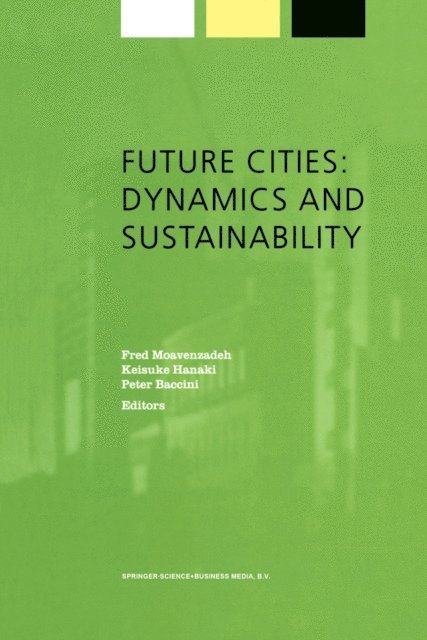
CITIES: CHALLENGES AND OPPORTUNITIES FOR SUSTAINABILITY BRANTLEY LIDDLE AND FRED MOAVENZADEH OR at least 4000 years, cities have been centers of cultural, social, technological Fand economic innovation, inventions and their application, and political power. Only in the last 200 years, the industrial era, have urban areas grown so rapidly, and their populations increased so dramatically that their impacts on the natural environ- ment are being felt beyond their immediate geographic surroundings. As the 21" cen- tury dawns, megacities-great and far-reaching concentrations of power and influ- ence-have become centers of the phenomena of globalization and information ex- change. These concentrations of people and activity are placing stress on the natural environment so great that it is beginning to have extensive regional, and even global impacts. However, asconcentrations ofpower-political, economic, andintellectual- these great urban centers share with the ancestral cities of past millennia the resources to consciously shape the future.The management of these megacities (those having populations of over eight million) in their current formative stages so taxing to natural systems,paradoxicallypresents theopportunity torestoresustainableregional and global environments. Environmental problems consequent to urban growth have two sources: pov- erty and affluence. These two conditions often coexist in dramatic contrast within the same city, particularly in developing countries. In terms of environmental impact, poverty-based problems tend to have local effects, while affluence-based problems usually have transboundary and/or global effects.
Del 1 - Alliance for Global Sustainability Bookseries
Future Cities: Dynamics and Sustainability
Häftad, Engelska, 2002
1 069 kr
Skickas inom 10-15 vardagar
CITIES: CHALLENGES AND OPPORTUNITIES FOR SUSTAINABILITY BRANTLEY LIDDLE AND FRED MOAVENZADEH OR at least 4000 years, cities have been centers of cultural, social, technological Fand economic innovation, inventions and their application, and political power. Only in the last 200 years, the industrial era, have urban areas grown so rapidly, and their populations increased so dramatically that their impacts on the natural environ- ment are being felt beyond their immediate geographic surroundings. As the 21" cen- tury dawns, megacities-great and far-reaching concentrations of power and influ- ence-have become centers of the phenomena of globalization and information ex- change. These concentrations of people and activity are placing stress on the natural environment so great that it is beginning to have extensive regional, and even global impacts. However, asconcentrations ofpower-political, economic, andintellectual- these great urban centers share with the ancestral cities of past millennia the resources to consciously shape the future.The management of these megacities (those having populations of over eight million) in their current formative stages so taxing to natural systems,paradoxicallypresents theopportunity torestoresustainableregional and global environments. Environmental problems consequent to urban growth have two sources: pov- erty and affluence. These two conditions often coexist in dramatic contrast within the same city, particularly in developing countries. In terms of environmental impact, poverty-based problems tend to have local effects, while affluence-based problems usually have transboundary and/or global effects.
Environmental Leadership Capacity Building in Higher Education
Experience and Lessons from Asian Program for Incubation of Environmental Leaders
Häftad, Engelska, 2013
535 kr
Skickas inom 10-15 vardagar
The Graduate Program in Sustainability Science under the Department of Urban Engineering of The University of Tokyo has been running an environmental leadership education program at the graduate student level since 2007 called the Asian Program for Incubation of Environmental Leaders (APIEL).
1 064 kr
Skickas inom 10-15 vardagar
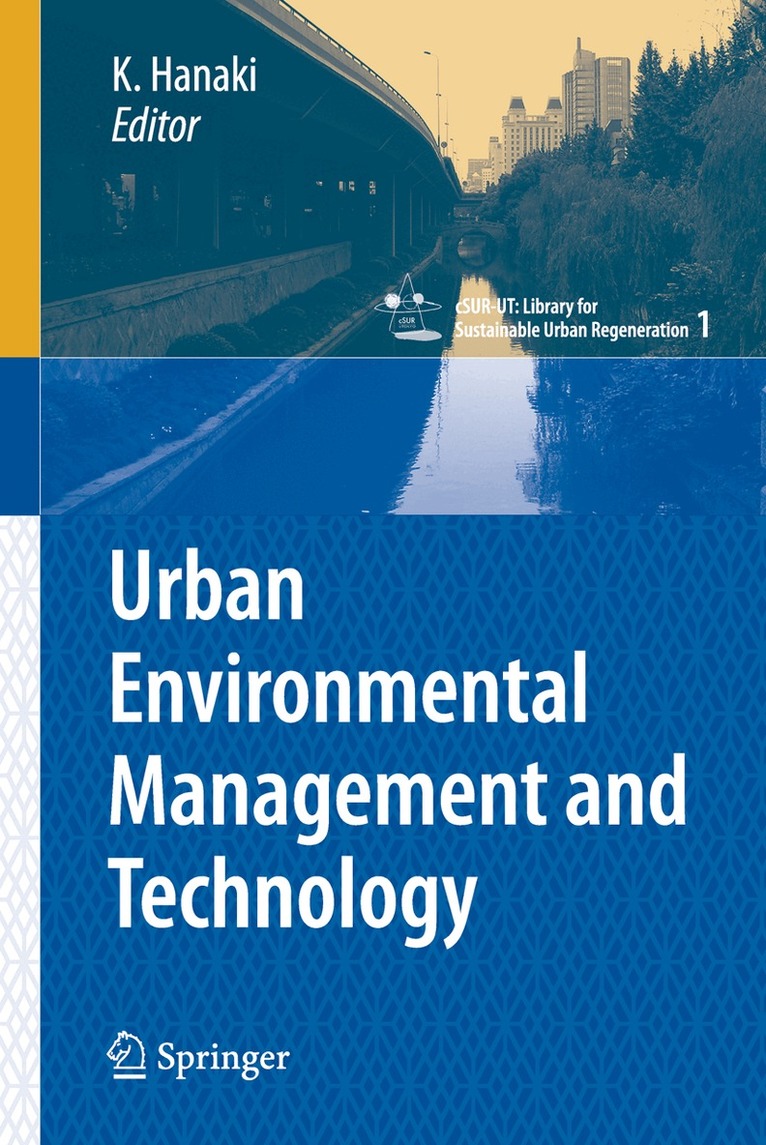
The environmental aspect of cities is nowadays well recognized as a cri- cal element of urban development, management and regeneration. There are various environmental issues related to cities, and they have been a- lyzed in an individualized manner. Many types of technologies, such as wastewater treatment, have been developed to solve particular envir- mental problems. However, many of these problems are related to each other, and social and economic aspects are also important for urban reg- eration. A holistic view combining knowledge of various urban environmental f- tors such as water, heat, energy, air, materials and waste, and a practical approach based on such understandings are essential to manage contem- rary urban environmental issues, from a local scale to a global scale. The University of Tokyo has been conducting the 21st Century COE (C- ters of Excellence) Program on Sustainable Urban Regeneration. Transd- ciplinary courses have been offered for graduate students from the depa- ments of Urban Engineering, Civil Engineering and Architecture to present a holistic view of urban regeneration.This book is based on the contents of the transdisciplinary course on en- ronmental management and technology. I hope that its content will be u- ful for undergraduate and graduate students and for experts and policy makers in developed and developing countries. Shinichiro Ohgaki Project Leader, COE Program on Sustainable Urban Regeneration The University of Tokyo Contents Preface v Part I Water Environment 1. Water Management in Sustainable Buildings ...3 Motoyasu Kamata and Masayuki Mae
Advancing Health and Wellbeing in the Changing Urban Environment
Implementing a Systems Approach
Inbunden, Engelska, 2017
1 095 kr
Skickas inom 10-15 vardagar
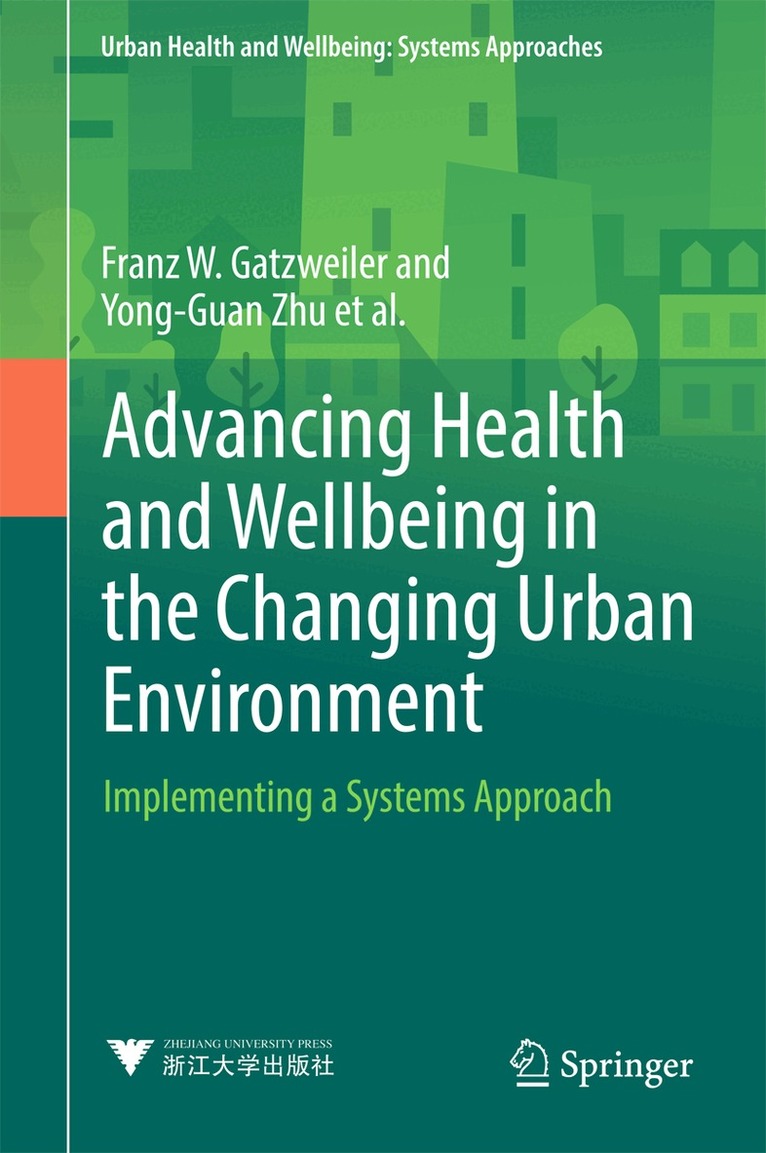
This book addresses up-to-date urban health issues from a systems perspective and provides an appealing integrated urban development strategy based on a 10-year global interdisciplinary research programme created by the International Council for Science (ICSU), and sponsored by the InterAcademy Partnership (IAP) and the United Nations University (UNU). The unique feature of this book is its “systems approach” to urban health and wellbeing: solution-oriented for science and society and not purely theoretical, it can be applied in the context of decision-making, and has the potential to unlock cities’ unused potential by promoting health and wellbeing. Furthermore, the inter- and transdisciplinary urban issues addressed in this book are examined from a cross-sectoral perspective – e.g. the transport sector is addressed in connection with air pollution, respiratory and cardiovascular diseases and the loss of productivity. The interconnected thinking to urban health and wellbeing makesthe book a particularly valuable resource. Decision makers in city administrations and civil society organizations from different geographical regions will find the book an informative and inspiring guide for delivering towards the goals of the New Urban Agenda, for which health can be the vital indicator of progress. Graduate students and researchers will be attracted by the case studies, systems methods and models provided in the book.
Advancing Health and Wellbeing in the Changing Urban Environment
Implementing a Systems Approach
Häftad, Engelska, 2018
1 095 kr
Skickas inom 10-15 vardagar
This book addresses up-to-date urban health issues from a systems perspective and provides an appealing integrated urban development strategy based on a 10-year global interdisciplinary research programme created by the International Council for Science (ICSU), and sponsored by the InterAcademy Partnership (IAP) and the United Nations University (UNU). The unique feature of this book is its “systems approach” to urban health and wellbeing: solution-oriented for science and society and not purely theoretical, it can be applied in the context of decision-making, and has the potential to unlock cities’ unused potential by promoting health and wellbeing. Furthermore, the inter- and transdisciplinary urban issues addressed in this book are examined from a cross-sectoral perspective – e.g. the transport sector is addressed in connection with air pollution, respiratory and cardiovascular diseases and the loss of productivity. The interconnected thinking to urban health and wellbeing makesthe book a particularly valuable resource. Decision makers in city administrations and civil society organizations from different geographical regions will find the book an informative and inspiring guide for delivering towards the goals of the New Urban Agenda, for which health can be the vital indicator of progress. Graduate students and researchers will be attracted by the case studies, systems methods and models provided in the book.