Peter Fritzsche - Böcker
Visar alla böcker från författaren Peter Fritzsche. Handla med fri frakt och snabb leverans.
12 produkter
12 produkter
354 kr
Skickas
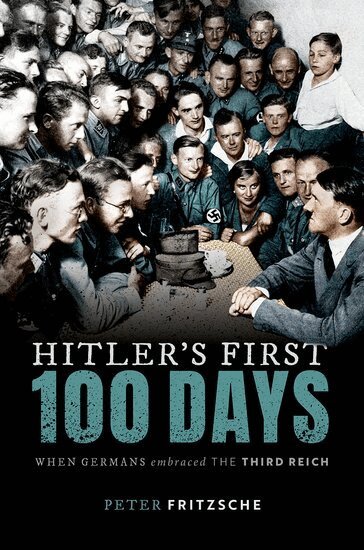
The story of how Germans came to embrace the Third Reich.Germany in early 1933 was a country ravaged by years of economic depression and increasingly polarized between the extremes of left and right. Over the spring of that year, Germany was transformed from a republic, albeit a seriously faltering one, into a one-party dictatorship. In Hitler's First Hundred Days, award-winning historian Peter Fritzsche examines the pivotal moments during this fateful period in which the Nazis apparently won over the majority of Germans to join them in their project to construct the Third Reich. Fritzsche scrutinizes the events of the period - the elections and mass arrests, the bonfires and gunfire, the patriotic rallies and anti-Jewish boycotts - to understand both the terrifying power that the National Socialists came to exert over ordinary Germans and the powerful appeal of the new era that they promised.
412 kr
Skickas inom 11-20 vardagar
Coming to terms with a troubled past is the mark of the modern condition. But how does memory operate? This powerful collection of original essays probes this question by focusing on Germany, where historical trauma and political turbulence over the past century have deeply scarred modern memory and identity. Tracing the role of memory in German history between the Reformation and reunification, contributors show how memory has a history and the presence of the past has historical context. With scholarly zeal and keen insight, these essays draw on ghost stories and the postwar fiction of Heinrich BÖll, among other memory sites, escorting the reader through the streets of Alt Hildesheim and the grocery aisles of East Germany. By historicizing memory, this volume surpasses the efforts of previous memory scholarship in confronting Germany's National Socialist past. Standard approaches to memory in modern Germany have explored how the past represents social relations and is commemorated in literature, art, and personal narrative. In taking memory "out of the museum" and "beyond the monument," The Work of Memory investigates the ways memory forms social relations and is integral to the construction of identities, communities, and policies. Profound and provocative, The Work of Memory contributes to a much-needed anthropology of memory in modern Germany.
268 kr
Skickas inom 7-10 vardagar
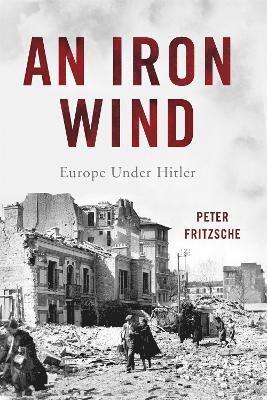
World War II reached into the homes and lives of ordinary people in an unprecedented way. Civilian men, women, and children made up the vast majority of those killed by the war, and the conflict displaced millions more. On Europe's home fronts, the war brought the German blitzkrieg, followed by long occupations and the racial genocide of the Holocaust. In An Iron Wind , historian Peter Fritzsche draws on diaries, letters, and other first-person accounts to show how civilians in occupied Europe struggled to understand this terrifying chaos. As the Third Reich targeted Europe's Jews for deportation and death, confusion and mistrust reigned. What were Hitler's aims? Did Germany's rapid early victories mark the start of an enduring new era? Was collaboration or resistance the wisest response to occupation? How far should solidarity and empathy extend? And where was God? People tried desperately to answer such questions and make sense of the horrors around them, but the stories they told themselves often justified a selfish indifference to their neighbours' fates.Piecing together the broken words of World War II's witnesses and victims,probing what they saw and what they failed to see,Fritzsche offers a haunting picture of the most violent conflict in modern history.
227 kr
Skickas inom 7-10 vardagar
On January 30, 1933, hearing about the celebrations for Hitler’s assumption of power, Erich Ebermayer remarked bitterly in his diary, “We are the losers, definitely the losers.” Learning of the Nuremberg Laws in 1935, which made Jews non-citizens, he raged, “hate is sown a million-fold.” Yet in March 1938, he wept for joy at the Anschluss with Austria: “Not to want it just because it has been achieved by Hitler would be folly.”In a masterful work, Peter Fritzsche deciphers the puzzle of Nazism’s ideological grip. Its basic appeal lay in the Volksgemeinschaft—a “people’s community” that appealed to Germans to be part of a great project to redress the wrongs of the Versailles treaty, make the country strong and vital, and rid the body politic of unhealthy elements. The goal was to create a new national and racial self-consciousness among Germans. For Germany to live, others—especially Jews—had to die. Diaries and letters reveal Germans’ fears, desires, and reservations, while showing how Nazi concepts saturated everyday life. Fritzsche examines the efforts of Germans to adjust to new racial identities, to believe in the necessity of war, to accept the dynamic of unconditional destruction—in short, to become Nazis.Powerful and provocative, Life and Death in the Third Reich is a chilling portrait of how ideology takes hold.
268 kr
Skickas inom 7-10 vardagar
In this inventive book, Peter Fritzsche explores how Europeans and Americans saw themselves in the drama of history, how they took possession of a past thought to be slipping away, and how they generated countless stories about the sorrowful, eventful paths they chose to follow. In the aftermath of the French Revolution, contemporaries saw themselves as occupants of an utterly new period. Increasingly disconnected from an irretrievable past, worried about an unknown and dangerous future, they described themselves as indisputably modern. To be cast in the new time of the nineteenth century was to recognize the weird shapes of historical change, to see landscapes scattered with ruins, and to mourn the remains of a bygone era. Tracing the scars of history, writers and painters, revolutionaries and exiles, soldiers and widows, and ordinary home dwellers took a passionate, even flamboyant, interest in the past. They argued politics, wrote diaries, devoured memoirs, and collected antiques, all the time charting their private paths against the tremors of public life. These nostalgic histories take place on battlefields trampled by Napoleon, along bucolic English hedges, against the fairytale silhouettes of the Grimms' beloved Germany, and in the newly constructed parlors of America's western territories. This eloquent book takes a surprising, completely original look at the modern age: our possessions, our heritage, and our newly considered selves.
Turbulent World of Franz Göll
An Ordinary Berliner Writes the Twentieth Century
Inbunden, Engelska, 2011
421 kr
Skickas inom 10-15 vardagar
Franz Göll was a thoroughly typical Berliner. He worked as a clerk, sometimes as a postal employee, night watchman, or publisher's assistant. He enjoyed the movies, ate spice cake, wore a fedora, tamed sparrows, and drank beer or schnapps. He lived his entire life in a two-room apartment in Rote Insel, Berlin's famous working-class district. What makes Franz Göll different is that he left behind one of the most comprehensive diaries available from the maelstrom of twentieth-century German life. Deftly weaving in Göll’s voice from his diary entries, Fritzsche narrates the quest of an ordinary citizen to make sense of a violent and bewildering century.Peter Fritzsche paints a deeply affecting portrait of a self-educated man seized by an untamable impulse to record, who stayed put for nearly seventy years as history thundered around him. Determined to compose a “symphony” from the music of everyday life, Göll wrote of hungry winters during World War I, the bombing of Berlin, the rape of his neighbors by Russian soldiers in World War II, and the flexing of U.S. superpower during the Reagan years. In his early entries, Göll grappled with the intellectual shockwaves cast by Darwin, Freud, and Einstein, and later he struggled to engage with the strange lifestyles that marked Germany's transition to a fluid, dynamic, unmistakably modern society.With expert analysis, Fritzsche shows how one man's thoughts and desires can give poignant shape to the collective experience of twentieth-century life, registering its manifold shocks and rendering them legible.
268 kr
Skickas inom 7-10 vardagar
Why did ordinary Germans vote for Hitler? In this dramatically plotted book, organized around crucial turning points in 1914, 1918, and 1933, Peter Fritzsche explains why the Nazis were so popular and what was behind the political choice made by the German people.Rejecting the view that Germans voted for the Nazis simply because they hated the Jews, or had been humiliated in World War I, or had been ruined by the Great Depression, Fritzsche makes the controversial argument that Nazism was part of a larger process of democratization and political invigoration that began with the outbreak of World War I.The twenty-year period beginning in 1914 was characterized by the steady advance of a broad populist revolution that was animated by war, drew strength from the Revolution of 1918, menaced the Weimar Republic, and finally culminated in the rise of the Nazis. Better than anyone else, the Nazis twisted together ideas from the political Left and Right, crossing nationalism with social reform, anti-Semitism with democracy, fear of the future with hope for a new beginning. This radical rebelliousness destroyed old authoritarian structures as much as it attacked liberal principles.The outcome of this dramatic social revolution was a surprisingly popular regime that drew on public support to realize its horrible racial goals. Within a generation, Germans had grown increasingly self-reliant and sovereign, while intensely nationalistic and chauvinistic. They had recast the nation, but put it on the road to war and genocide.
308 kr
Skickas inom 10-15 vardagar
From huge, fragile airships hanging in the sky to dashing young war pilots obsessed with death and destruction, this text describes Germany’s perilous romance with aviation, covering the bright idealism of flight and its darker service in total war.
468 kr
Skickas inom 10-15 vardagar
The great cities at the turn of the century were mediated by words--newspapers, advertisements, signs, and schedules--by which the inhabitants lived, dreamed, and imagined their surroundings. In this original study of the classic text of urban modernism--the newspaper page--Peter Fritzsche analyzes how reading and writing dramatized Imperial Berlin and anticipated the modernist sensibility that celebrated discontinuity, instability, and transience. It is a sharp-edged story with cameo appearances by Georg Simmel, Walter Benjamin, and Alfred Döblin. This sumptuous history of a metropolis and its social and literary texts provides a rich evocation of a particularly exuberant and fleeting moment in history.
320 kr
Skickas inom 7-10 vardagar
A penetrating history of the year World War II became a global conflict and humankind confronted both destruction and deliverance on a planetary scaleBy the end of the Second World War, more than seventy million people across the globe had been killed, most of them civilians. Cities from Warsaw to Tokyo lay in ruins, and fully half of the world's two billion people had been mobilized, enslaved, or displaced.In 1942, historian Peter Fritzsche offers a gripping, ground-level portrait of the decisive year when World War II escalated to global catastrophe. With the United States joining the fight following Japan's attack on Pearl Harbor, all the world's great powers were at war. The debris of ships sunk by Nazi submarines littered US beaches, Germans marauded in North Africa, and the Japanese swept through the Pacific. Military battles from Singapore to Stalingrad riveted the world. But so, too, did dramas on the war's home fronts: battles against colonial overlords, assaults on internal "enemies," massive labor migrations, endless columns of refugees.With an eye for detail and an eye on the big story, Fritzsche takes us from shipyards on San Francisco Bay to townships in Johannesburg to street corners in Calcutta to reveal the moral and existential drama of a people's war filled with promise and terror.
284 kr
Skickas inom 3-6 vardagar
184 kr
Skickas inom 7-10 vardagar
'A profoundly significant exploration of how Europeans--both Germans and those under German occupation--struggled to make sense of the conflict.' - Richard Overy, Wall Street JournalIn An Iron Wind, historian Peter Fritzsche draws on first-person accounts to show how civilians in occupied Europe struggled to understand the terrifying chaos of World War II. As the Third Reich targeted Europe's Jews, confusion and mistrust reigned. Was collaboration or resistance the wisest response? And where was God? Piecing together the broken words of the war's witnesses and victims, Fritzsche offers a haunting picture of the most violent conflict in modern history.