• Fri frakt över 249 kr
  • •
  • Snabba leveranser
  • •
  • Billiga böcker
Kundservice

Du är på sajten för privatpersoner.

Företag, bibliotek eller offentlig verksamhet?

Du handlar på classic.bokus.com, där alla dina funktioner finns intakta.
Till classic.bokus.com
Bokus logotyp. Gå till startsidan.
  • Erbjudanden
  • Student
  • Topplistor
  • Barn & ungdom
  • Bokus Play
  • E-böcker
  • Ljudböcker
  • Pocketböcker
  • Spel och pussel

Pocketfynda! Hundratals böcker för 49 kr/st →

Sidfot

Mina sidor

    Hjälp

    • Kundservice
    • Vanliga frågor och svar
    • Frakt och leverans
    • Retur vid ångerrätt
    • Reklamera vara
    • Betalning
    • Köpvillkor
    • Allmänna villkor
    • Information om webbplatsens tillgänglighet

    Om Bokus

    • Om oss
    • Pressrum
    • För studenter
    • För företag
    • För bibliotek och offentlig verksamhet
    • För leverantörer
    • Hållbarhet

    Populärt

    • Aktuella erbjudanden
    • Presentkort
    • Studentlitteratur
    • Nya böcker
    • Topplistor
    • Signerade böcker
    • Engelska böcker

    Inspiration

    • Boktips
    • BookTok
    • Barnbokskaraktärer
    • Populära författare
    Logotyp för Bokus
    Följ oss på Facebook (extern länk)Följ oss på Instagram (extern länk)Följ oss på YouTube (extern länk)Följ oss på TikTok (extern länk)
    bokus @ CookiesAnpassa cookiesIntegritetspolicyKöpvillkor
    Till Citymail hemsida (extern länk)Till Budbee hemsida (extern länk)Till Postnord hemsida (extern länk)Till Schenker hemsida (extern länk)Till Early Bird hemsida (extern länk)Till Walleys hemsida (extern länk)
    1. Samhälle och politik
    2. Politik och statsskick
    3. Politiska ideologier och rörelser
    4. Högerradikalism och högerextremism

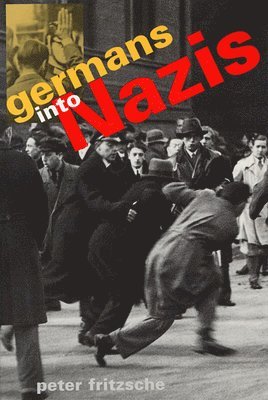
    Germans into Nazis

    AvPeter Fritzsche

    Häftad, Engelska, 1999

    276 kr

    Beställningsvara. Skickas inom 5-8 vardagar. Fri frakt över 249 kr.

    Beskrivning

    Why did ordinary Germans vote for Hitler? In this dramatically plotted book, organized around crucial turning points in 1914, 1918, and 1933, Peter Fritzsche explains why the Nazis were so popular and what was behind the political choice made by the German people.Rejecting the view that Germans voted for the Nazis simply because they hated the Jews, or had been humiliated in World War I, or had been ruined by the Great Depression, Fritzsche makes the controversial argument that Nazism was part of a larger process of democratization and political invigoration that began with the outbreak of World War I.The twenty-year period beginning in 1914 was characterized by the steady advance of a broad populist revolution that was animated by war, drew strength from the Revolution of 1918, menaced the Weimar Republic, and finally culminated in the rise of the Nazis. Better than anyone else, the Nazis twisted together ideas from the political Left and Right, crossing nationalism with social reform, anti-Semitism with democracy, fear of the future with hope for a new beginning. This radical rebelliousness destroyed old authoritarian structures as much as it attacked liberal principles.The outcome of this dramatic social revolution was a surprisingly popular regime that drew on public support to realize its horrible racial goals. Within a generation, Germans had grown increasingly self-reliant and sovereign, while intensely nationalistic and chauvinistic. They had recast the nation, but put it on the road to war and genocide.

    Produktinformation

    • Utgivningsdatum:1999-10-01
    • Mått:140 x 210 x 19 mm
    • Vikt:340 g
    • Format:Häftad
    • Språk:Engelska
    • Antal sidor:288
    • Förlag:Harvard University Press
    • ISBN:9780674350922

    Utforska kategorier

    • Högerradikalism och högerextremism inom Samhälle och politik
    • Europas historia inom Historia och arkeologi

    Mer om författaren

    Peter Fritzsche is Professor of History at the University of Illinois, Urbana-Champaign.

    Recensioner i media

    Peter Fritzsche, in his Germans into Nazis, makes a…crucial point about public opinion in the 1930s and 1940s. He recalls—and this is something that foreigners living in Germany have always understood more readily than academics—that the popular appeal of Hitler’s movement lay much more in the hope and optimism it generated than in its various invitations to hate and to fear.

    Innehållsförteckning

    • Introduction July 1914 November 1918 January 1933 May 1933 Notes Index