Peter Ingman – Författare
Visar alla böcker från författaren Peter Ingman. Handla med fri frakt och snabb leverans.
11 produkter
11 produkter
390 kr
Skickas
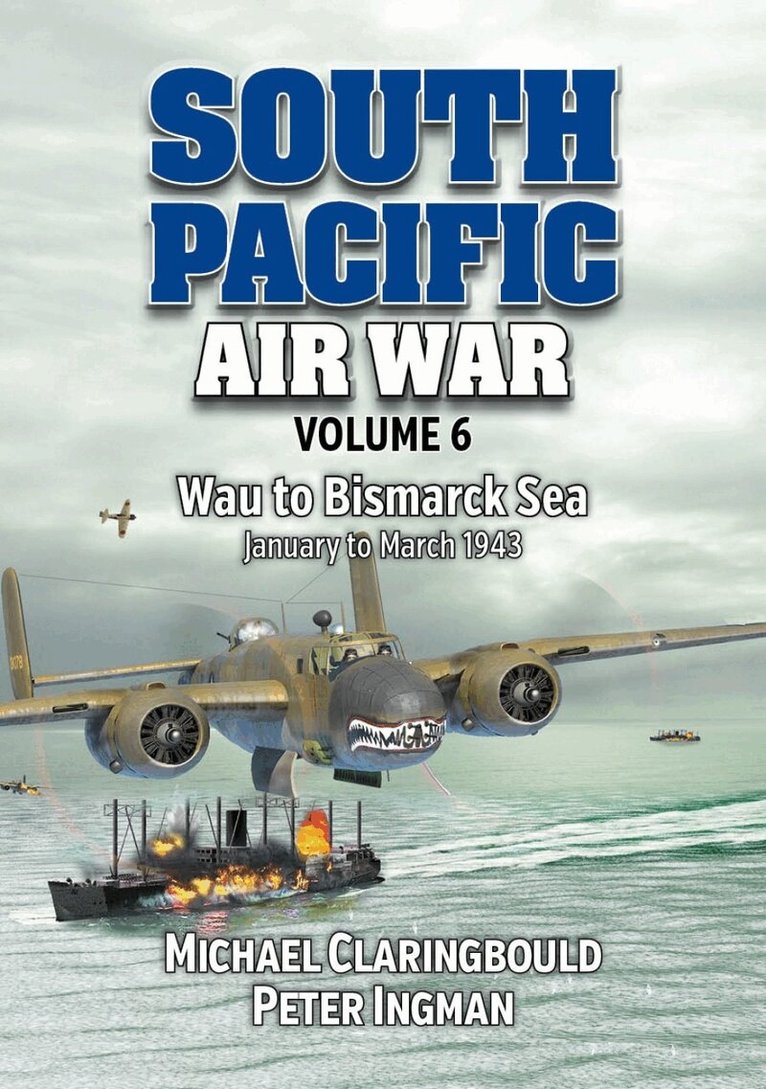
Volume Six of this series chronicles aerial warfare in the New Guinea theatre in the critical period of January to March 1943. It can be read alone or as a continuation of the previous five volumes which span the first thirteen months of the Pacific War.January 1943 saw a successful Japanese supply and reinforcement convoy arrive at Lae from Rabaul, in the face of fierce opposition from Allied air power. The fresh troops soon threatened to overrun the Australian mountain stronghold of Wau, before a massive airlift by Fifth Air Force C47s delivered reinforcements just in time.Meanwhile the air war over New Guinea was increasingly fought by newly arrived JAAF units who shared the air war burden alongside their veteran IJN counterparts. Against this background many of the Fifth Air Force bomber squadrons moved up from Australia to Port Moresby. This greatly increased the combat efficiency of these units, enabling, among other things, sustained daily pressure on the Japanese bastion of Rabaul.Then in March 1943 the Japanese sent a second convoy from Rabaul to Lae which resulted in the Battle of the Bismarck Sea, one of the landmark combats of the entire Pacific War. Using refined attack and bombing tactics, Fifth Air Force and RAAF squadrons conducted an allout shipdestroying effort which made world headlines.Never before has this campaign been chronicled in such detail, with Allied and Japanese accounts matched for a factual and thoroughly detailed account of the conflict.
390 kr
Skickas
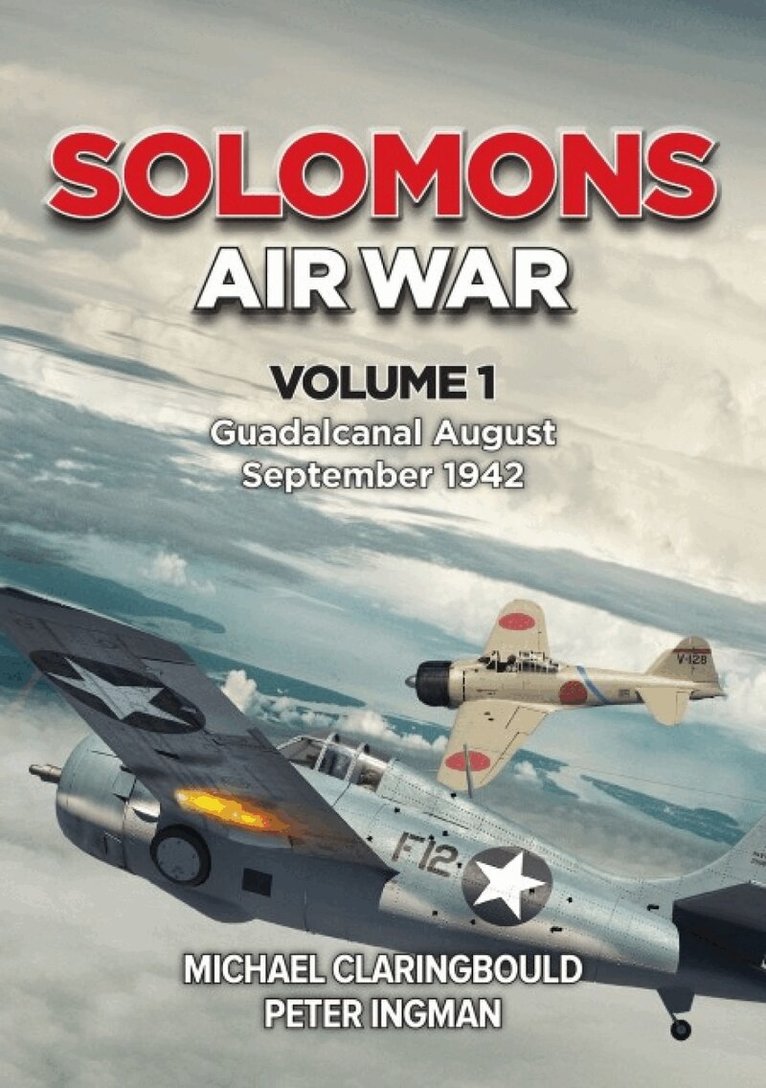
This first volume of Solomons Air War chronicles aerial warfare in the opening phase of the war in the Solomons Islands theatre, being the critical period of August-September 1942. After occupying the Solomon Islands capital of Tulagi with ease in May 1942, the Imperial Japanese Navy commenced building an airfield on the adjacent island of Guadalcanal. The indispensable airfield was over 600 miles distant from their main base of Rabaul and promised to extend the reach of their aircraft into the Allied occupied island chains of Fiji, the New Hebrides and New Caledonia. Much was at stake and the airfield would be held at all costs. Then, in early August 1942 a bold American invasion of both Tulagi and Guadalcanal caught the IJN completely off guard. Nevertheless, Japanese air power responded swiftly and in some cases desperately. So began the knife-edge struggle for Guadalcanal. An ever-increasing variety and number of IJN units was poured into the struggle, met initially with USN carrier-based Wildcats backed up by SBD Dauntless dive-bombers and the new TBF torpedo bomber. These were soon joined by USAAF fighters operating from the newly operational Henderson Field. From late August, Japanese carriers entered the fight, adding more complexity to the intense and frenzied air battles. For the first time belligerents are closely matched and the rationale of the IJN’s sometimes erratic response is explained. The full extent of both Japanese and US involvement is outlined to a level of detail never before presented.
390 kr
Tillfälligt slut
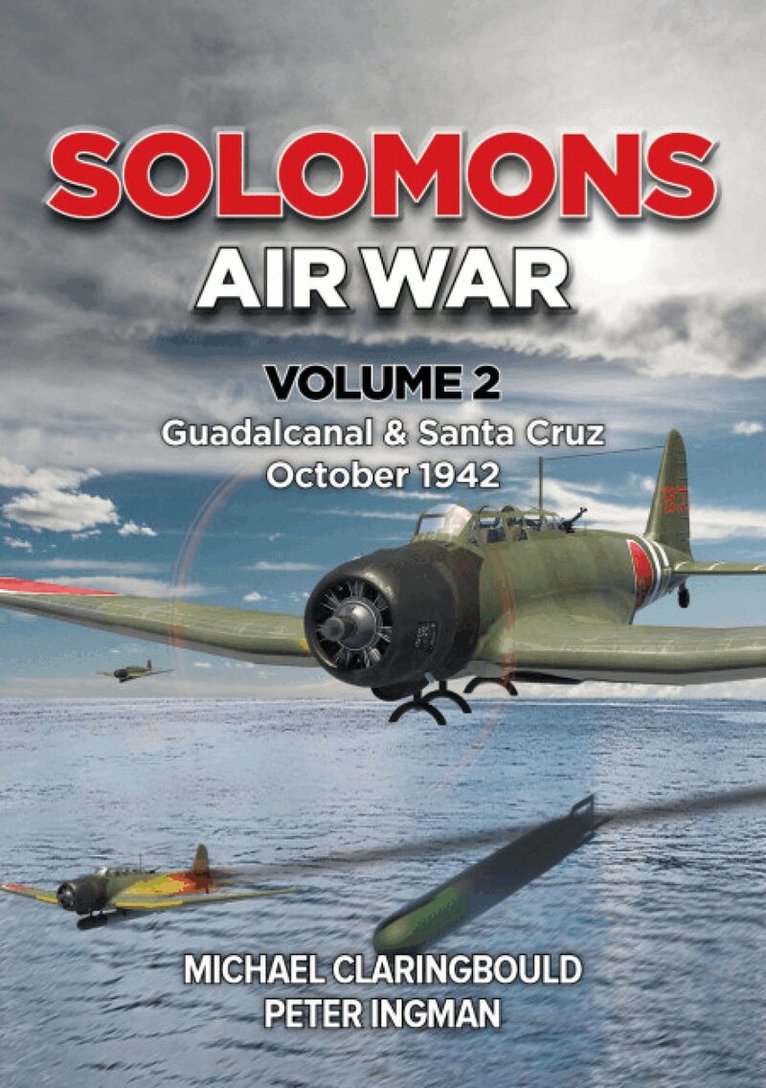
This second volume of Solomons Air War chronicles aerial warfare in the Solomon Islands theatre during the critical month of October 1942. It can be read alone or as part of the ongoing Solomons Air War series. October 1942 saw an explosion of air activity in the Solomons. During the first three weeks of the month busy Tokyo Express runs landed thousands of IJA troops on Guadalcanal in advance of a new offensive to be launched against the Marine garrison. This was presaged by a battleship bombardment of Henderson Field and daily air raids against the same target. Against this background Cactus Air Force was fighting for its life, and very nearly reached the level of exhaustion. Somehow just enough replacement F4Fs and SBDs were scraped together from the New Hebrides to keep it in business. Important support was provided by COMAIRSOPAC B-17s and PBYs operating from Espiritu Santo. In the middle of the month an enormously powerful IJN force arrived in the theatre, based around five aircraft carriers. This force threatened to overwhelm the USN which at the time had only one carrier in the South Pacific, the USS Hornet. However, the timely arrival of the USS Enterprise evened the ledger and the fourth carrier battle of the Pacific War, the Battle of the Santa Cruz Islands, was fought over 25-27 October. This chronicle has been written using both Allied and Japanese sources, to give a fresh, factual and highly detailed account of all aspects of the Solomons air campaign.
390 kr
Skickas
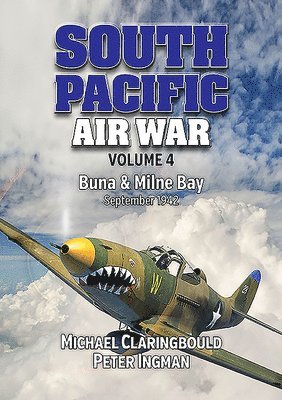
Volume Four chronicles aerial warfare in the South Pacific in the critical period between 19 June and 8 September 1942. It can be read alone or as a continuation of the first three volumes that spanned the first six months of the Pacific War, culminating in the Battle of the Coral Sea. Unlike the previous three volumes, no aircraft carriers appeared in New Guinea waters. Instead, the air war was fought solely by land-based air units. This was in the face of an increasingly complex strategic situation that saw the Japanese land at both Buna and Milne Bay. For the first time, airpower in the theatre was tasked to support the land forces of both sides which became engaged in a bloody struggle in the mountains of Papua and then the narrow muddy quagmire of Milne Bay. Two veteran Japanese air groups, the Tainan and No. 4 Kokutai, continued their Herculean struggle against mounting Allied opposition. In the face of continued attrition, Japanese pilots had many notable successes including several coveted aerial victories against B-17s. Then, from August a plethora of fresh Japanese units arrived in theatre including the No. 2, No. 6, Chitose, Misawa and Kisarazu Kokutai. USAAF P-39s and RAAF P-40Es responded with low level close support missions and B-25s, B-26s and B-17s ramped up an unrelenting bombing campaign. Towards the end of the period A-20A strafers made their combat debut, portending a radical blueprint for future attack tactics in the theatre. Never before has this campaign been chronicled in such detail, with Allied accounts matched against Japanese records for a truly factual account of the conflict.
317 kr
Skickas
Volume Five of this series chronicles aerial warfare primarily in the New Guinea theatre in the critical period between September and December 1942. It can be read alone or as a continuation of the previous four volumes which span the first nine months of the Pacific War. By early September the strategic picture in the theatre had changed markedly within just six weeks. From their new Buna beachhead the Japanese Army commenced a Papuan mountain campaign which threatened the Allied bastion of Port Moresby. Meanwhile the battle for Guadalcanal was raging, with the outcome of the wider Pacific War in the balance. Against this background a strengthened US Fifth Air Force took the fight to the IJA with direct air support. While this was being conducted by P-39s, P-40Es, A-20As and B-25s, raids by B-17s against Rabaul aided US forces in the neighbouring Solomons. RAAF Beaufighters, Beauforts, Bostons and Hudsons also contributed substantially to these efforts. At Rabaul a wide variety of fresh IJN fighter and bomber units poured in the theatre, although these became focused mainly on the Solomons. Such were the massive losses experienced, by November the IJN undertook a complete operational and administrative reorganisation of its air power. Then, despite a strong reluctance to become involved, the IJA sent an advance reconnaissance detachment to Rabaul, the forerunner of major reinforcements that would arrive in December. Never before has this campaign been chronicled in such detail, with Allied and Japanese accounts matched together for a truly factual account of the conflict.
390 kr
Skickas
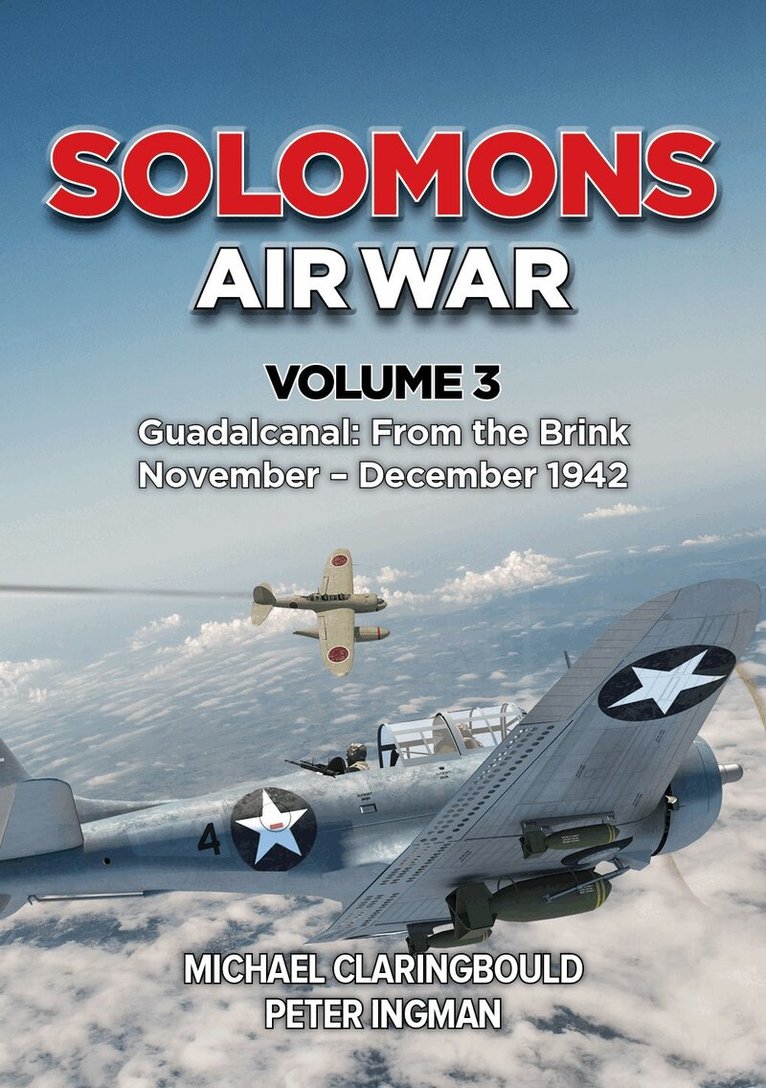
This third volume of Solomons Air War chronicles aerial warfare in the Solomon Islands theatre during the months of November and December 1942. It can be read alone or as part of the ongoing Solomons Air War series.At the start of November 1942, the American position on Guadalcanal was precarious. Cactus Air Force had suffered extremely high attrition in October and virtually all of the available reserves had been drawn on, while the damaged USS Enterprise was the only carrier that could lend assistance. Against this environment the Japanese continued to wage a savage air war and determined to try to wipe out Cactus Air Force through battleship bombardments, while they rolled the dice with the largest yet Tokyo Express convoy.Hence the Americans were pushed to the brink as the frenzied activity known as the Naval Battle of Guadalcanal played out over 12-15 November. Following this the Japanese were forced to admit that they couldn’t supply their troops on Guadalcanal and began to focus on building a new airfield at Munda. In response American bombers returned to Henderson Field and took the fight north to Munda and beyond for the remainder of 1942. This period saw new tactics being trialled, including the use of P-38s as long-range escort fighters and the first PBY-5A Black Cat missions. Meanwhile Cactus Air Force expanded, gaining P-40s, B-26s, OS2U Kingfishers and RNZAF Hudsons.This chronicle has been written using primary Allied and Japanese sources, to give a fresh, factual and highly detailed account of all aspects of the complex Solomons air campaign.
266 kr
Skickas
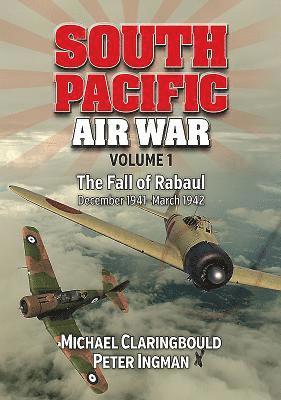
This volume chronicles aerial warfare in the South Pacific from December 1941 until March 1942, durign which air operations by both sides became a daily occurrence. As Imperial Japanese Navy flying boats and land-based bombers penetrated over vast distances, a few under-strength squadrons of the Royal Australian Air Force put up a spirited fight. However it was the supreme power of aircraft carriers that had the biggest impact. Four Japanese fleet carriers facilitated the capture of Rabaul over a devastating four-day period in January 1942. The following month, the USS Lexington’s fighter squadron VF-3 scored one of the most one-sided victories of the entire Pacific War. By March 1942 the Japanese had landed on mainland New Guinea, and the scene was set for a race to control Port Moresby. This is the full story of both sides of an air war that could have been won by either incumbent, but for timing, crucial decisions and luck.
390 kr
Skickas
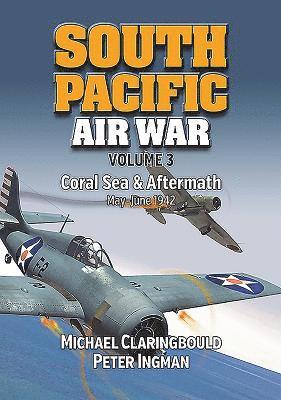
South Pacific Air War Volume 3 chronicles aerial warfare in the South Pacific during the critical months of May and June 1942. For the first time in history, opposing carriers faced each other in the Battle of the Coral Sea. The battle is portrayed in a complete regional context which includes the land-based air forces of both sides. The events were both complex and surprising: when the respective carrier forces departed an intense regional air war continued. This volume can be read alone or as part of a trilogy which spans the first six months of the Pacific War from December 1941 until June 1942.
158 kr
Tillfälligt slut
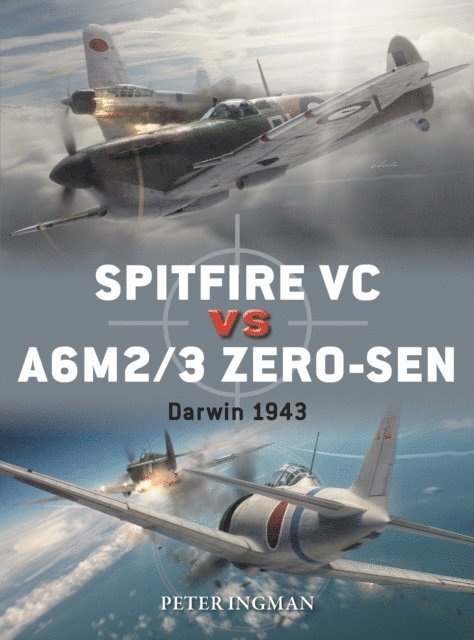
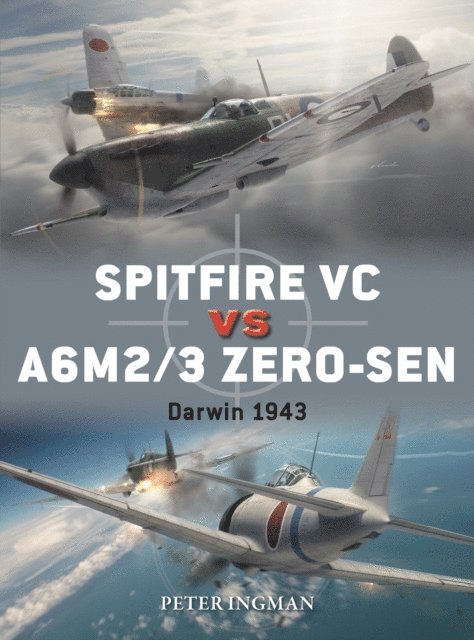
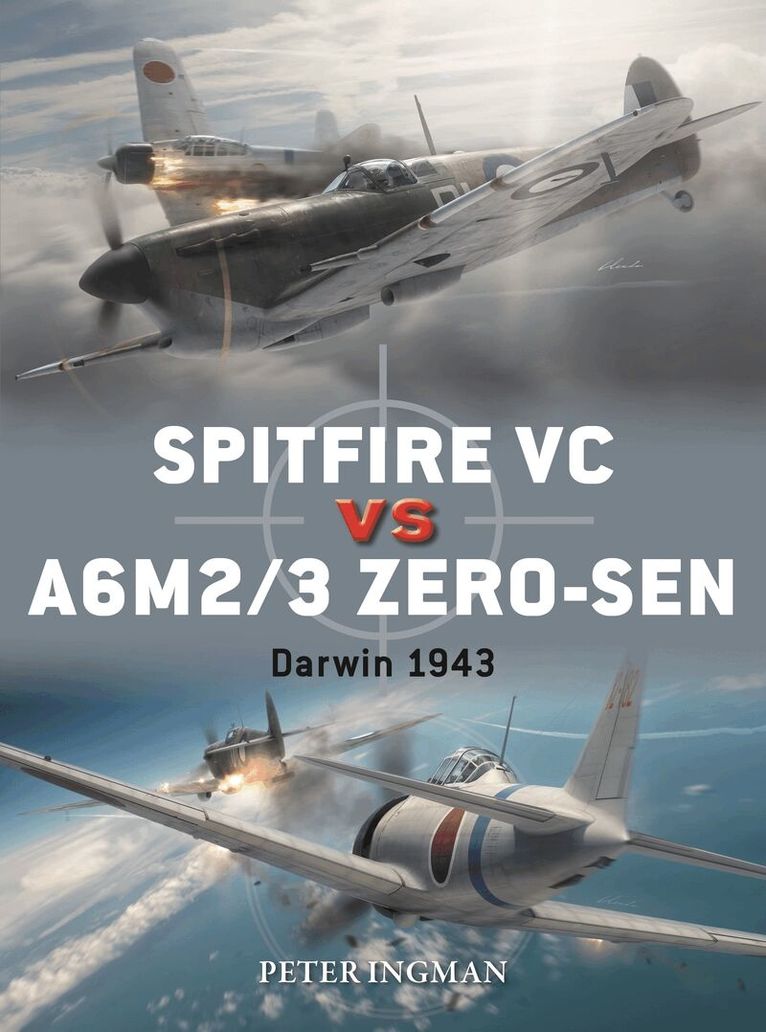
Just weeks after Pearl Harbor, Darwin was mauled by a massive Japanese attack. Without a single fighter to defend Australian soil, the Australian government made a special appeal to Britain for Spitfires. A year later the Spitfire VC-equipped No 1 Fighter Wing, RAAF, faced the battle-hardened 202nd Kokutai of the IJNAF, equipped with A6M2 Zero-sens, over Darwin. This was a gruelling campaign between evenly matched foes, fought in isolation from the main South Pacific battlegrounds. Pilots on either side had significant combat experience, including a number of Battle of Britain veterans. The Spitfire had superior flight characteristics but was hampered by short range and material defects in the tropical conditions, while the Japanese employed better tactics and combat doctrine inflicting serious losses on the over-confident Commonwealth forces. Fully illustrated with detailed full-colour artwork, this is the gripping story of two iconic aircraft facing off against each other above Australia.
184 kr
Skickas inom 7-10 vardagar
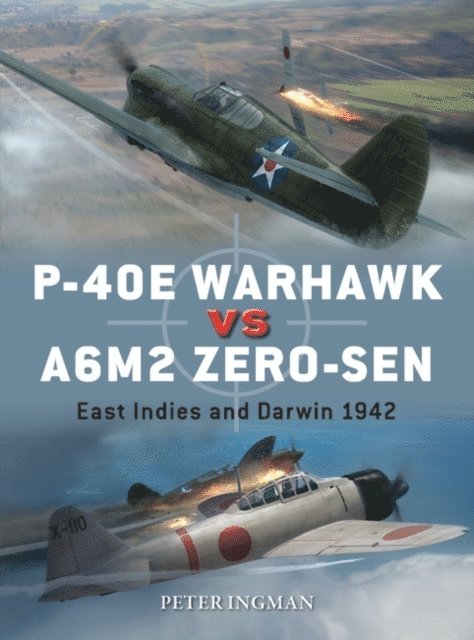
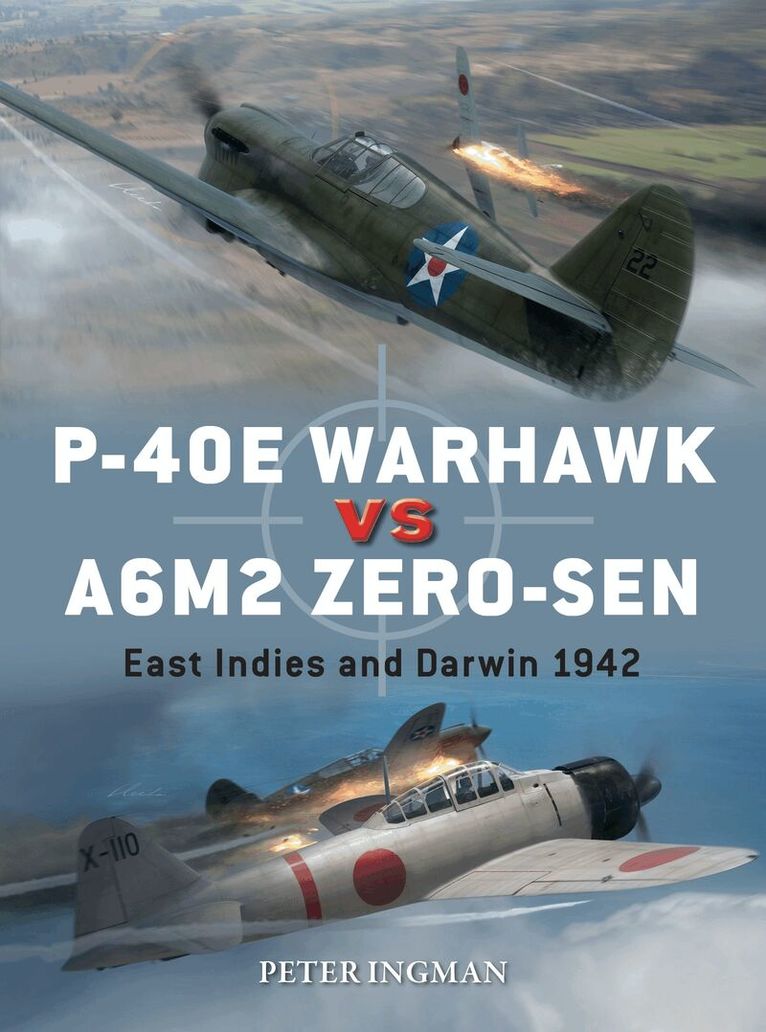
The P-40E Warhawk is often viewed as one of the less successful American fighter designs of World War II, but in 1942 the aircraft was all that was available to the USAAC in-theatre.Units equipped with the aircraft were duly forced into combat against the deadly A6M2 Zero-sen, which had already earned itself a near-mythical reputation following its exploits over China and Pearl Harbor. During an eight-month period in 1942, an extended air campaign was fought out between the two fighters for air superiority over the Javanese and then northern Australian skies. During this time, the P-40Es and the Zero-sens regularly clashed without interference from other fighter types. In respect to losses, the Japanese ‘won’ these engagements, for many more P-40Es were shot down than Zero-sens. However, the American Warhawks provided a potent deterrent that forced the IJNAF to attack from high altitudes, where crews’ bombing efficiency was much poorer.Fully illustrated throughout, and supported by rare and previously unpublished photographs, this book draws on both American and Japanese sources to tell the full story of the clashes between these iconic two fighters in Darwin and the East Indies.
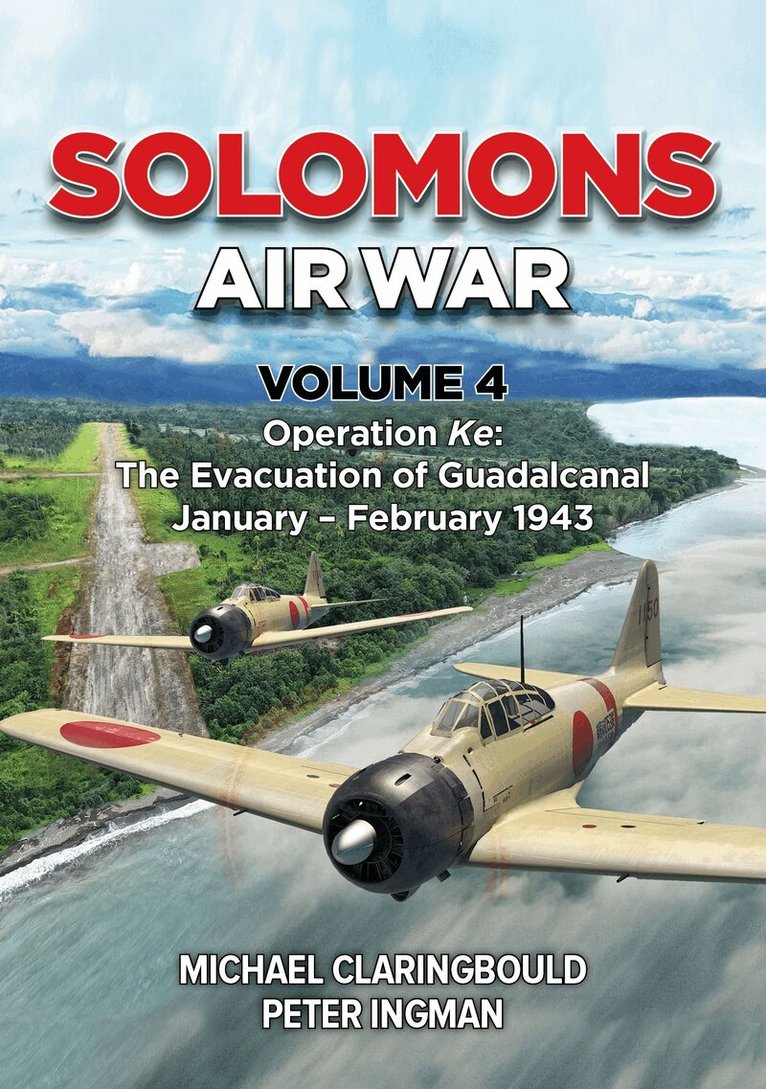
Solomons Air War Volume 4
Operation Ke: The Evacuation of Guadalcanal January - February 1943
Häftad, Engelska, 2025
510 kr
Skickas inom 3-6 vardagar
This fourth volume of Solomons Air War chronicles aerial warfare throughout the Solomons theatre during the months of January and February 1943. It can be read alone or as part of the ongoing Solomons Air War series.This crucial period saw the Japanese swallow a bitter pill and launch Operation Ke, which was the evacuation of Guadalcanal. It was a complex operation conceived under utmost secrecy, which then unfolded over several weeks. Included was a widespread air offensive that saw the Japanese Army Air Force in the Solomons for the first time. Ironically, this operation was arguably the most successful yet for the Japanese in the theatre.Against this background the intense air campaign continued. Enjoying a secure foothold on Guadalcanal and ever-growing facilities, Cactus Air Force expanded and pushed operations northwards into the Solomons chain where the Japanese were operating from Munda and building a new airfield at Vila. Temporary reinforcements were provided by carrier squadrons from both sides operating from land bases, including for the first time air units from USN escort carriers.Among new types to debut in this period were USMC F4U Corsair fighters and USN PB4Y-1 Liberators. However, despite the emerging American ascendency, the Japanese were still capable of striking killer blows. The cruiser USS Chicago was sunk in a skilful night torpedo attack by antiquated Nell bombers, and over southern Bougainville the Americans suffered landmark heavy losses on the 14 February 1943 “Saint Valentine’s Day Massacre”.This chronicle has been written using primary Allied and Japanese records, to give a fresh, factual and highly detailed account of all aspects of the intricate Solomons air campaign.