Peter Katzenstein - Böcker
Visar alla böcker från författaren Peter Katzenstein. Handla med fri frakt och snabb leverans.
6 produkter
6 produkter
323 kr
Skickas inom 7-10 vardagar
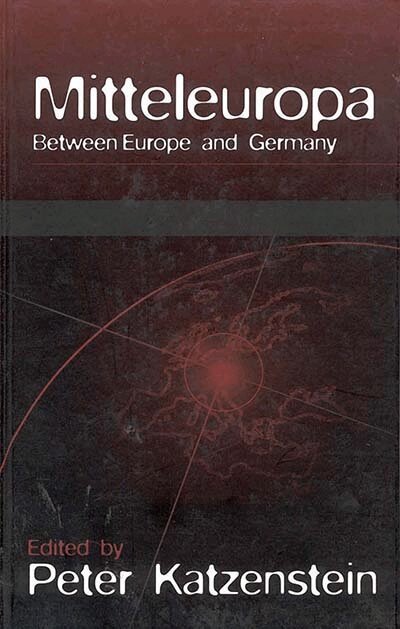
Contributors ask whether it is more useful to conceive of the world as arrayed in regional, cultural, institutional complexes or organized along the conventional dimensions of power, alliance, and geography. They argue that perspectives that neglect the roles of culture and identity are no longer adequate to explain the complexities of a world undergoing rapid change.
889 kr
Skickas inom 10-15 vardagar
This package offers a trilogy of important titles edited by Peter J Katzenstein:Civilizations in World PoliticsA highly original and readily accessible examination of the cultural dimension of international politics, this book provides a sophisticated and nuanced account of the relevance of cultural categories for the analysis of world politics. Sinicization and the Rise of ChinaThis book tries to avoid the reifications and celebrations that mark much of the contemporary public debate about China’s rise. It highlights instead complex processes and political practices bridging East and West that avoid easy shortcuts. The analytical perspectives of this book are laid out in Katzenstein’s opening and concluding chapters. They are explored in six outstanding case studies, written by widely known authors, which over questions of security, political economy and culture.Anglo-America and Its DiscontentsAnglo-America is a clearly identifiable part of what is commonly referred to as the West. The West exists, this book argues, in the form of multiple traditions that have currency in America, Europe, the Americas, and a few outposts in the Southern hemisphere. Featuring an exceptional line-up and representing a diversity of theoretical views within one integrative perspective, this work will be of interest to all scholars and students of international relations, sociology and political science.
665 kr
Skickas inom 3-6 vardagar
Is there a natural tendency toward the political integration of states that are united in culture but divided in politics? Disjoined Partners arrives at a largely negative response. In an application of political science techniques to a subject traditionally in the domain of history, Peter J. Katzenstein analyzes Austro-German relations since 1815 in six chronologically arranged case studies. Asking why these partners remain disjoined, Katzenstein finds the answer in the persistence of Austria’s political autonomy. In an appendix, the author illustrates how this type of analysis could be extended to include an examination of the unification of Germany and of Italy in the middle of the nineteenth century and of the fragmentation of Sweden-Norway and England-Ireland at the beginning of the twentieth. His study sheds new light on the reasons for the continued political autonomy of nation-states. Disjoined Partners derives from the author's dissertation, which was awarded the Charles Sumner Prize at Harvard and the American Political Science Association’s Helen Dwight Reid Award for the best dissertation of the year in the field of international relations, law, and politics.This title is part of UC Press's Voices Revived program, which commemorates University of California Press’s mission to seek out and cultivate the brightest minds and give them voice, reach, and impact. Drawing on a backlist dating to 1893, Voices Revived makes high-quality, peer-reviewed scholarship accessible once again using print-on-demand technology. This title was originally published in 1976.
1 469 kr
Skickas inom 3-6 vardagar
Is there a natural tendency toward the political integration of states that are united in culture but divided in politics? Disjoined Partners arrives at a largely negative response. In an application of political science techniques to a subject traditionally in the domain of history, Peter J. Katzenstein analyzes Austro-German relations since 1815 in six chronologically arranged case studies. Asking why these partners remain disjoined, Katzenstein finds the answer in the persistence of Austria’s political autonomy. In an appendix, the author illustrates how this type of analysis could be extended to include an examination of the unification of Germany and of Italy in the middle of the nineteenth century and of the fragmentation of Sweden-Norway and England-Ireland at the beginning of the twentieth. His study sheds new light on the reasons for the continued political autonomy of nation-states. Disjoined Partners derives from the author's dissertation, which was awarded the Charles Sumner Prize at Harvard and the American Political Science Association’s Helen Dwight Reid Award for the best dissertation of the year in the field of international relations, law, and politics.This title is part of UC Press's Voices Revived program, which commemorates University of California Press’s mission to seek out and cultivate the brightest minds and give them voice, reach, and impact. Drawing on a backlist dating to 1893, Voices Revived makes high-quality, peer-reviewed scholarship accessible once again using print-on-demand technology. This title was originally published in 1976.
387 kr
Skickas inom 7-10 vardagar
Examines in detail how West German policy and politics interrelate
1 956 kr
Skickas inom 3-6 vardagar
German unification and the political and economic transformations in central Europe signal profound political changes that pose many questions. Will post-Communism push ahead with the task of institutionalizing a democratic capitalism? How will that process be aided or disrupted by international developments in the East and West? And how will central Europe relate to united Germany? Based on original field research this book offers, through more than a dozen case studies, a cautiously optimistic set of answers to these questions. The end of the Cold War and German unification, the empirical evidence indicates, are not returning Germany and central Europe to historically troubled, imbalanced, bilateral relationships. Rather changes in the character of German and European politics as well as the transformations now affecting Poland, Hungary, the Czech Republic and Slovakia point to the emergence of multilateral relationships linking Germany and central Europe in an internationalizing, democratic Europe.