P.H. Hofschneider – författare
Visar alla böcker från författaren P.H. Hofschneider. Handla med fri frakt och snabb leverans.
3 produkter
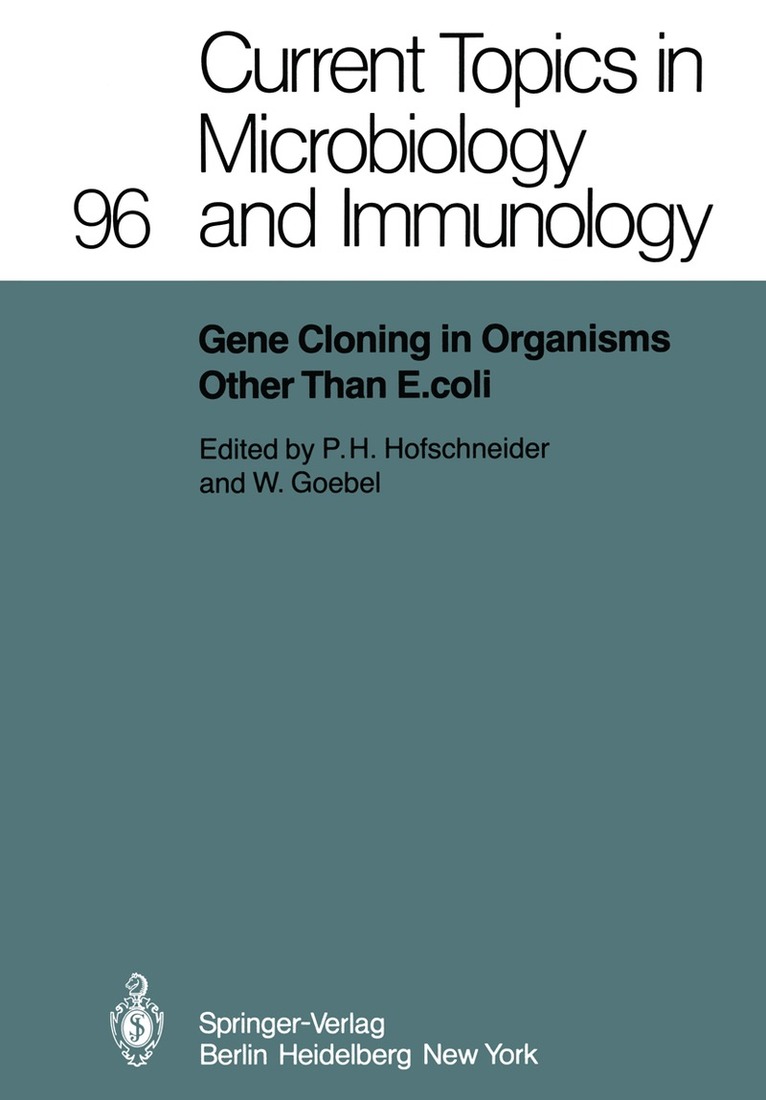
Gene Cloning in Organisms Other Than E. coli
Av P.H. Hofschneider, W. Goebel
Häftad, 2011
1128 kr
Lägg i varukorg
Gene cloning for the production of recombinant DNA is usually performed with E. coli. There is, however, no doubt that gene cloning in organisms other than E. coli will assume a much more important role in the future: efficient cloning systems are needed for the analysis of gene expression and its …
Integration and Excision of DNA Molecules
28. Colloquium der Gesellschaft für Biologische Chemie, am 21.–23. April 1977 in Mosbach/Baden
Av P. Starlinger, P.H. Hofschneider
E-bok, 2012
734 kr
Lägg i varukorg
The topic of this years'' ~osbach Colloquium was DNA integration. We have tried to bring together experts from different fields of research who are studying natural processes by which DNA molecules from differ ent sources are linked. It has been known for a long time that such linkage occurs …
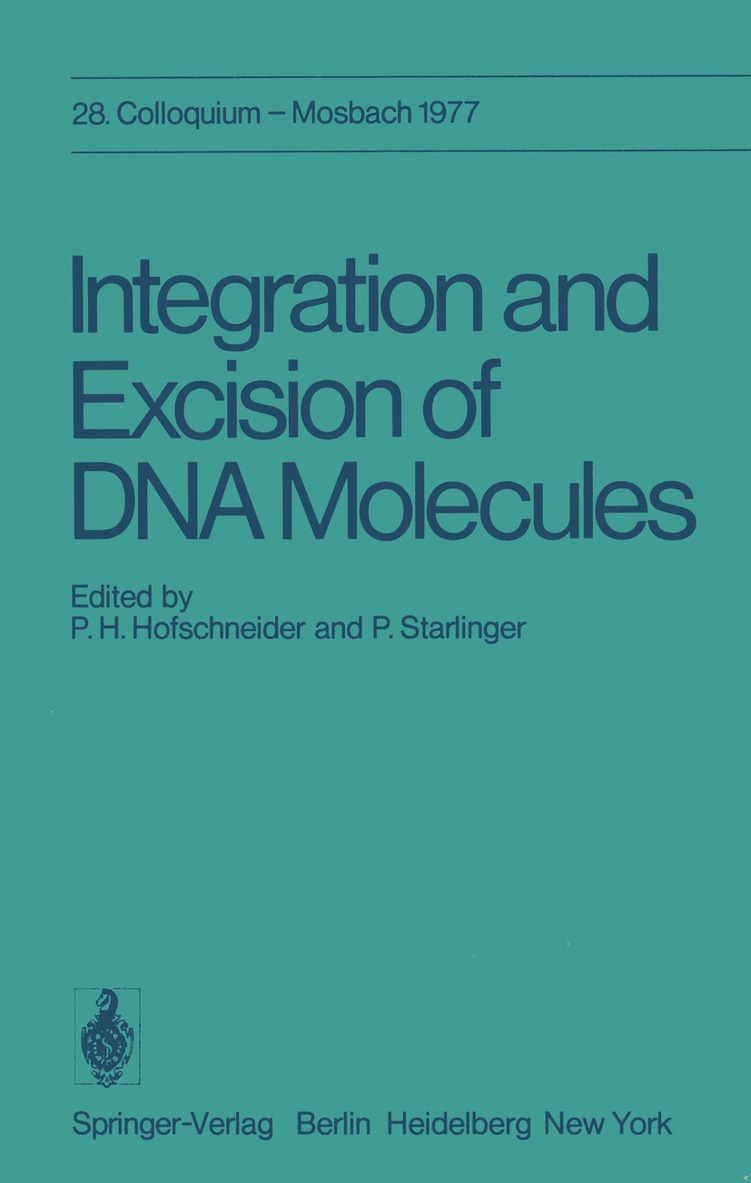
Integration and Excision of DNA Molecules
28. Colloquium der Gesellschaft für Biologische Chemie, am 21.–23. April 1977 in Mosbach/Baden
Av P.H. Hofschneider, P. Starlinger
Häftad, 2014
551 kr
Lägg i varukorg
The topic of this years' ~osbach Colloquium was DNA integration. We have tried to bring together experts from different fields of research who are studying natural processes by which DNA molecules from differ ent sources are linked. It has been known for a long time that such linkage occurs …