Philippe Borgeaud - Böcker
Visar alla böcker från författaren Philippe Borgeaud. Handla med fri frakt och snabb leverans.
6 produkter
6 produkter
727 kr
Skickas inom 5-8 vardagar
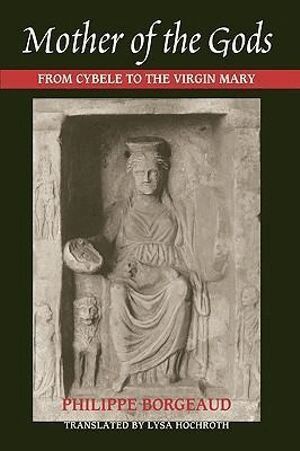
This important work by a major scholar of ancient religion traces the history of the Mother of the Gods, originally an Anatolian deity whose cult spread through the Hellenistic, Roman, and ultimately Christian worlds, through shifting cultural and historical contexts.
322 kr
Kommande
How should we explain differences in religious belief and practice? Philippe Borgeaud's ambitious intellectual history tells the story of how reflection on religious phenomena emerged, throughout the centuries, in European consciousness and scholarship. Christianity in particular, as Borgeaud shows, long wrestled with how to understand polytheistic cultures versus its own belief in a single omnipotent God. The Church Fathers, the author argues, sought to inherit the core of Graeco-Roman culture while rejecting its deities and religious practices; and patristic ideas were later adopted when Europeans travelling and colonising the world encountered ever more varied polytheistic traditions. At times detached, at times enchanted, these travellers' reflections provided the basis for the modern study of 'religions', and have since conditioned the mindset of anyone brought up in a European culture. The book concludes by arguing for the importance of liberation from these assumptions and instead considering religion as a form of 'play'.
Auslegungskulturen
Grundlagen Einer Komparatistischen Beschreibung Islamischer Und Christlicher Hermeneutiktraditionen
Häftad, Tyska, 2003
678 kr
Skickas inom 5-8 vardagar
Del 9 - Studia Religiosa Helvetica
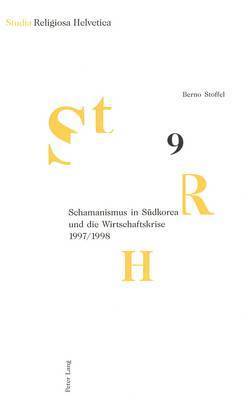
Schamanismus in Suedkorea Und Die Wirtschaftskrise 1997/1998
Die Interaktion Zwischen Anomie Und Religion
Häftad, Tyska, 2003
943 kr
Tillfälligt slut
Del 7 - Studia Religiosa Helvetica
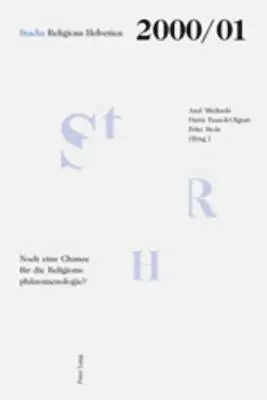
Noch Eine Chance Fuer Die Religionsphaenomenologie?
Vol. 6/7
Häftad, Tyska, 2001
886 kr
Tillfälligt slut
Del 10 - Jerusalem Studies in Religion and Culture
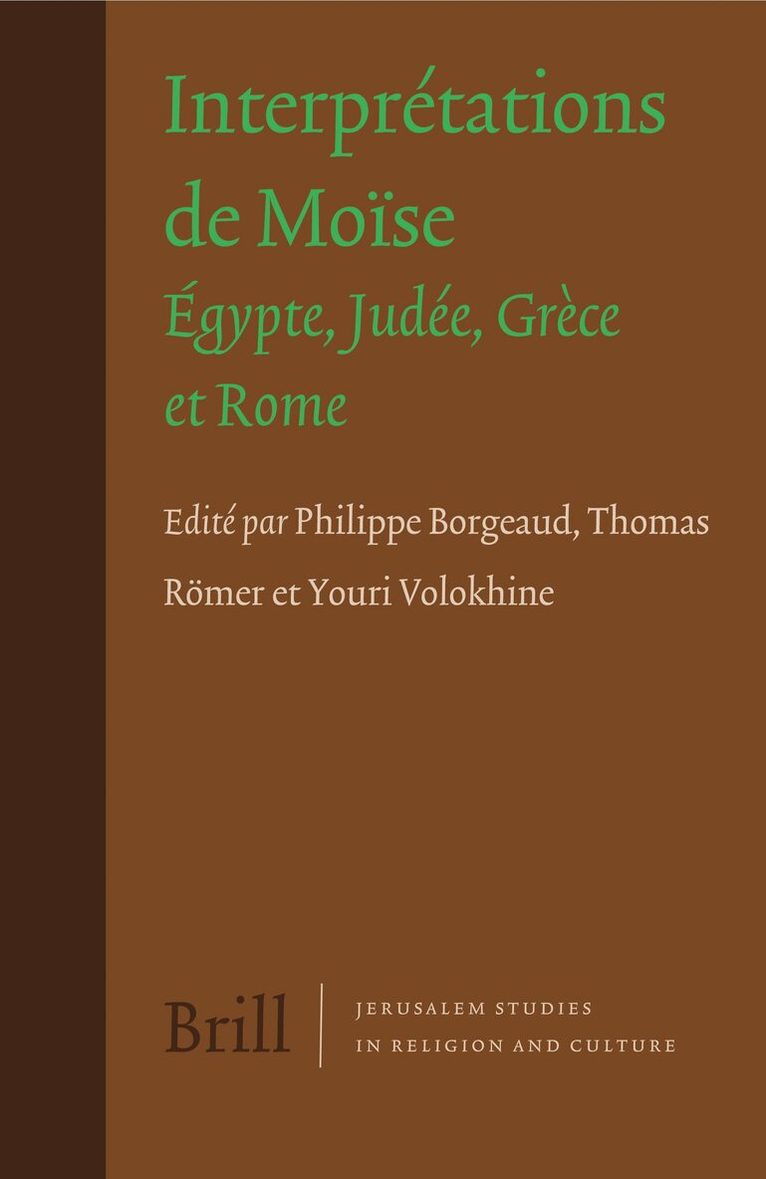
Interprétations de Moïse
Égypte, Judée, Grèce et Rome
Inbunden, Franska, 2009
2 406 kr
Skickas inom 5-8 vardagar
The present volume is the result of a team research which gathered biblical scholars, philologists, and historians of religions, on the issue of the multiple "Interpretations of Moses" inherited from the ancient mediterranean cultures. The concrete outcome of this comparative inquiry is the common translation and commentary of the fragments from the works of the mysterious Artapanus. The comparative perspective suggested here is not so much methodological, or thematic. It is first of all an invitation to cross disciplinary boundaries and to take account of the contributions of diverse cultures to the formation of a single mythology, in the case, a Moses mythology. With respect to Judea, Greece, Egypt or Rome, and further more an emerging christianity and its "gnostic" counterpart, the figure of Moses is at the heart of a cross-cultural dialogue the pieces of which, if they can be seperated for the confort of their specific study, mostly gain by being put together.Contributions by: Daniel Barbu, René Bloch, Philippe Borgeaud, Sabrina Inowlocki-Meister, Caterina Moro, Thomas Römer, Matthieu Smyth, Youri Volokhine, and Claudio ZamagniCe volume est le fruit d’un travail d’équipe, qui a réuni des biblistes, des philologues, et des historiens des religions autour des multiples « Interprétations de Moïse » que nous ont léguées les cultures de la Méditerranée antique. Le résultat pratique de cette enquête comparatiste culmine dans la traduction et le commentaire à « douze mains » des fragments du mystérieux Artapan, qui ouvrent le volume. Le comparatisme proposé dans le présent volume ne se veut ni méthodologique ni thématique, mais vise d’abord à franchir les frontières disciplinaires, tout en envisageant les apports culturels respectifs contribuant à la formation d’une mythologie, en l’occurrence celle de Moïse. Entre la Judée, l’Egypte, la Grèce, Rome, et bien-sûr le christianisme naissant et l’univers « gnostique » qui l’accompagne, la figure de Moïse est au cœur d’un dialogue, dont les pièces, si elles peuvent être disjointes pour la commodité de l’étude, gagnent surtout à être rapprochées.