Pierre Jacob – författare
Visar alla böcker från författaren Pierre Jacob. Handla med fri frakt och snabb leverans.
8 produkter
Ways of Seeing
The scope and limits of visual cognition
Av Pierre Jacob, Marc Jeannerod
Häftad, 2003
1316 kr
Lägg i varukorg
Ways of seeing is a book about human vision. It results from the collaboration between a world famous cognitive neuroscientist and an eminent philosopher. In the past forty years, cognitive neuroscience has made many startling discoveries about the human brain, and about the human visual system in …
Human Mentalizing: Its Scope and Limits
Av Pierre Jacob
Inbunden, 2026
1319 kr
Lägg i varukorg
The main function of mentalizing is to provide human adults with intuitive higher-order beliefs about others' mental states. Behavioral evidence for false-belief attribution has been widely regarded as the hallmark of an attributor's mentalistic expectations about an agent's instrumental action. As …
Human Mentalizing: Its Scope and Limits
Av Pierre Jacob
E-bok, 2026
750 kr
Lägg i varukorg
The main function of mentalizing is to provide human adults with intuitive higher-order beliefs about others' mental states. Behavioral evidence for false-belief attribution has been widely regarded as the hallmark of an attributor's mentalistic expectations about an agent's instrumental action. As …
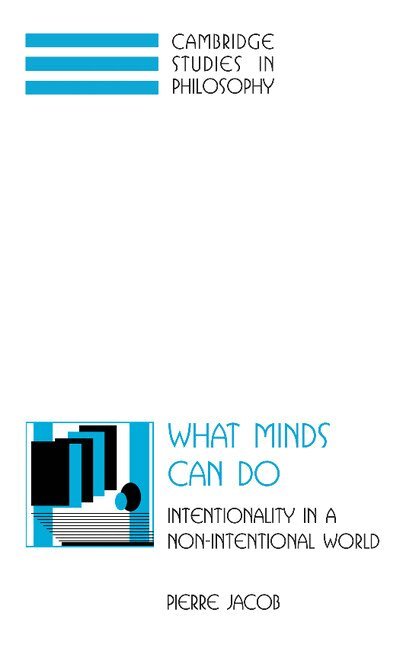
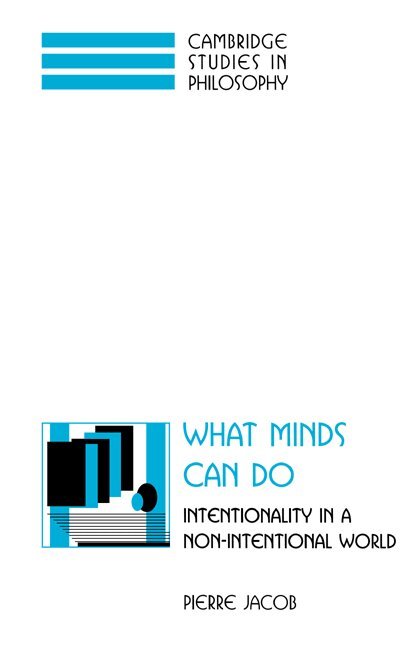
What Minds Can Do
Intentionality in a Non-Intentional World
Av Pierre Jacob
E-bok, 1997
543 kr
Lägg i varukorg
What Minds Can Do
Intentionality in a Non-Intentional World
Av Pierre Jacob
Inbunden, 1997
1563 kr
Lägg i varukorg
Some of a person's mental states have the power to represent real and imagined states of affairs: they have semantic properties. What Minds Can Do has two goals: to find a naturalistic or non-semantic basis for the representational powers of a person's mind, and to show that these semantic …
What Minds Can Do
Intentionality in a Non-Intentional World
Häftad, 1997
569 kr
Lägg i varukorg
Some of a person's mental states have the power to represent real and imagined states of affairs: they have semantic properties. What Minds Can Do has two goals: to find a naturalistic or non-semantic basis for the representational powers of a person's mind, and to show that these semantic …
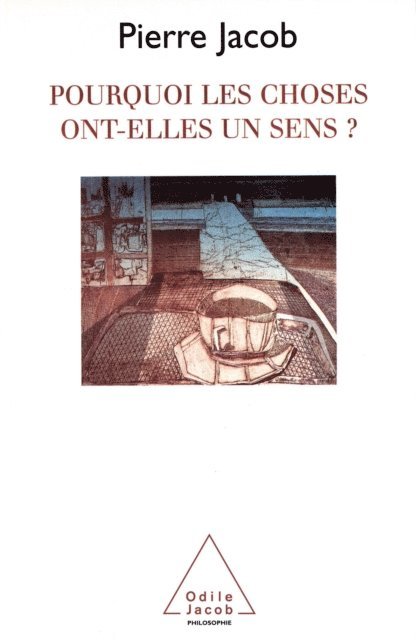
Pourquoi les choses ont-elles un sens ?
Av Pierre Jacob
E-bok, 1997
202 kr
Lägg i varukorg
Pierre Jacob est l''un de nos (rares) philosophes analytiques. Son livre, publié simultanément en anglais par Cambridge University Press et en français, entreprend de résoudre deux questions:La première est un dilemme : si d''une part les choses ont un sens et si d''autre part nos représentations …