Pierre Pellegrin - Böcker
Visar alla böcker från författaren Pierre Pellegrin. Handla med fri frakt och snabb leverans.
9 produkter
9 produkter
Aristotle's Classification of Animals
Biology and the Conceptual Unity of the Aristotelian Corpus
Häftad, Engelska, 2021
321 kr
Skickas inom 7-10 vardagar
Aristotle’s classification of animals, and indeed his approach to biology, challenges modern assumptions about scientific progress. Historians often view Aristotle’s attempts at classification as incomplete precursors to the rigorous taxonomies of later scientists, such as Linnaeus, but this perspective may impose a retrospective, evolution-based understanding of science onto Aristotle's distinct worldview. While it’s clear that Aristotle categorized animals based on their parts, characteristics, and behaviors, his classifications were not necessarily intended to function as comprehensive taxonomies. Instead, Aristotle’s groupings reflect his philosophical quest to understand the essence of living things and the order of nature rather than a systematic effort to codify all species in a rigid structure. In his approach, classification served to illustrate larger principles and relationships rather than to build a finalized biological hierarchy.Moreover, Aristotle’s classificatory efforts differ fundamentally from later biological taxonomies in their conceptual basis and purpose. Modern commentators, including Georges Cuvier, acknowledge Aristotle’s influence on fields like comparative anatomy but note that Aristotle did not apply a structured taxonomic system as his successors did. Instead, Aristotle’s categories were flexible, reflecting his ideas on the “essence” and “form” of living beings rather than any fixed biological grid. This distinction becomes crucial when interpreting Aristotle’s work: rather than regarding it as an incomplete taxonomy, we might view it as a philosophical framework that integrates observations with conceptual exploration of life’s diversity and order. This approach, which seeks to understand each organism within a broader natural order, is less about classifying individual species and more about investigating the fundamental nature of life.This title is part of UC Press's Voices Revived program, which commemorates University of California Press’s mission to seek out and cultivate the brightest minds and give them voice, reach, and impact. Drawing on a backlist dating to 1893, Voices Revived makes high-quality, peer-reviewed scholarship accessible once again using print-on-demand technology. This title was originally published in 1986.
Aristotle's Classification of Animals
Biology and the Conceptual Unity of the Aristotelian Corpus
Inbunden, Engelska, 2021
1 469 kr
Skickas inom 3-6 vardagar
Aristotle’s classification of animals, and indeed his approach to biology, challenges modern assumptions about scientific progress. Historians often view Aristotle’s attempts at classification as incomplete precursors to the rigorous taxonomies of later scientists, such as Linnaeus, but this perspective may impose a retrospective, evolution-based understanding of science onto Aristotle's distinct worldview. While it’s clear that Aristotle categorized animals based on their parts, characteristics, and behaviors, his classifications were not necessarily intended to function as comprehensive taxonomies. Instead, Aristotle’s groupings reflect his philosophical quest to understand the essence of living things and the order of nature rather than a systematic effort to codify all species in a rigid structure. In his approach, classification served to illustrate larger principles and relationships rather than to build a finalized biological hierarchy.Moreover, Aristotle’s classificatory efforts differ fundamentally from later biological taxonomies in their conceptual basis and purpose. Modern commentators, including Georges Cuvier, acknowledge Aristotle’s influence on fields like comparative anatomy but note that Aristotle did not apply a structured taxonomic system as his successors did. Instead, Aristotle’s categories were flexible, reflecting his ideas on the “essence” and “form” of living beings rather than any fixed biological grid. This distinction becomes crucial when interpreting Aristotle’s work: rather than regarding it as an incomplete taxonomy, we might view it as a philosophical framework that integrates observations with conceptual exploration of life’s diversity and order. This approach, which seeks to understand each organism within a broader natural order, is less about classifying individual species and more about investigating the fundamental nature of life.This title is part of UC Press's Voices Revived program, which commemorates University of California Press’s mission to seek out and cultivate the brightest minds and give them voice, reach, and impact. Drawing on a backlist dating to 1893, Voices Revived makes high-quality, peer-reviewed scholarship accessible once again using print-on-demand technology. This title was originally published in 1986.
1 729 kr
Tillfälligt slut
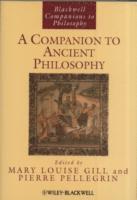
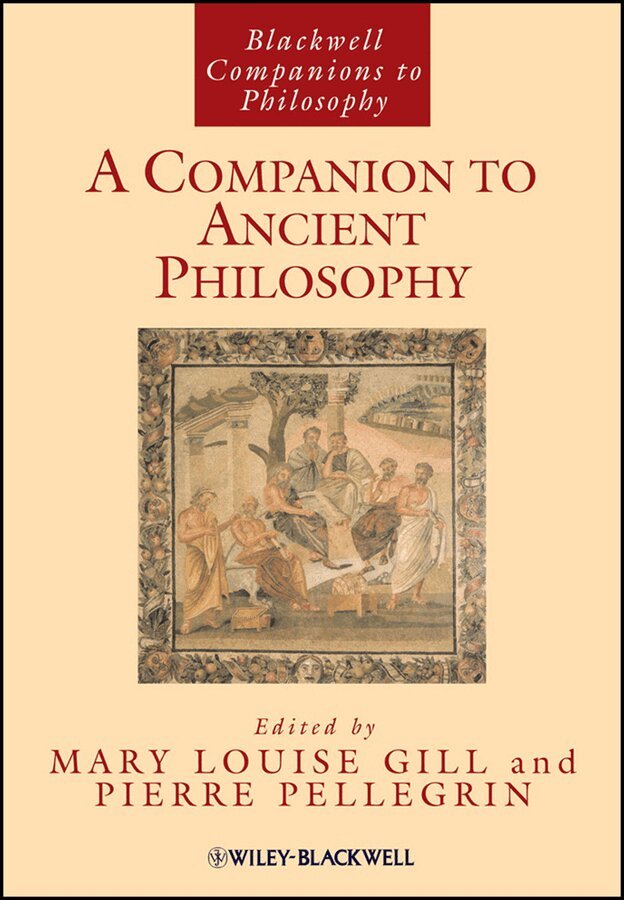
A Companion to Ancient Philosophy provides a comprehensive and current overview of the history of ancient Greek and Roman philosophy from its origins until late antiquity. Comprises an extensive collection of original essays, featuring contributions from both rising stars and senior scholars of ancient philosophyIntegrates analytic and continental traditionsExplores the development of various disciplines, such as mathematics, logic, grammar, physics, and medicine, in relation to ancient philosophyIncludes an illuminating introduction, bibliography, chronology, maps and an index
543 kr
Skickas inom 7-10 vardagar
A Companion to Ancient Philosophy provides a comprehensive and current overview of the history of ancient Greek and Roman philosophy from its origins until late antiquity. Comprises an extensive collection of original essays, featuring contributions from both rising stars and senior scholars of ancient philosophyIntegrates analytic and continental traditionsExplores the development of various disciplines, such as mathematics, logic, grammar, physics, and medicine, in relation to ancient philosophyIncludes an illuminating introduction, bibliography, chronology, maps and an index
608 kr
Skickas inom 3-6 vardagar
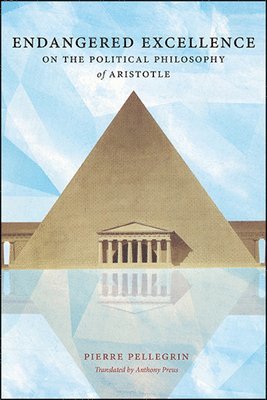
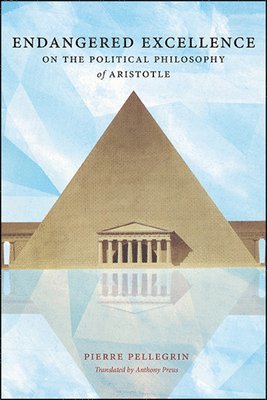
A fresh look at Aristotle's political theory with attention to the resonance of his thought for contemporary concerns.In Endangered Excellence, Pierre Pellegrin provides a fresh interpretation of Aristotle's Politics, revealing the extent to which Aristotle diverged from other ancient writers on politics, and the extent to which many of his positions resemble modern attitudes in political philosophy. Pellegrin highlights a number of strikingly original positions in his thought. Aristotle took humans to be inherently political, for example, even as he believed this characteristic developed more completely in men than in women, and in Greeks more than in barbarians. He maintained a nuanced and flexible conception of the way that cities ought to develop their constitutions, one that would be responsive to their particular social and historical contexts. Realist enough to recognize that virtuous men are rare and that class conflict is inevitable, Aristotle envisioned a political system that would be resilient in navigating the choppy waters of civic life. With this original approach to Aristotle's Politics, and incorporating key developments in European and English-language scholarship on the subject, Pellegrin demonstrates Aristotle's important and often unrecognized innovations in understanding political life.
1 456 kr
Skickas inom 3-6 vardagar
A fresh look at Aristotle's political theory with attention to the resonance of his thought for contemporary concerns.In Endangered Excellence, Pierre Pellegrin provides a fresh interpretation of Aristotle's Politics, revealing the extent to which Aristotle diverged from other ancient writers on politics, and the extent to which many of his positions resemble modern attitudes in political philosophy. Pellegrin highlights a number of strikingly original positions in his thought. Aristotle took humans to be inherently political, for example, even as he believed this characteristic developed more completely in men than in women, and in Greeks more than in barbarians. He maintained a nuanced and flexible conception of the way that cities ought to develop their constitutions, one that would be responsive to their particular social and historical contexts. Realist enough to recognize that virtuous men are rare and that class conflict is inevitable, Aristotle envisioned a political system that would be resilient in navigating the choppy waters of civic life. With this original approach to Aristotle's Politics, and incorporating key developments in European and English-language scholarship on the subject, Pellegrin demonstrates Aristotle's important and often unrecognized innovations in understanding political life.
594 kr
Skickas inom 3-6 vardagar
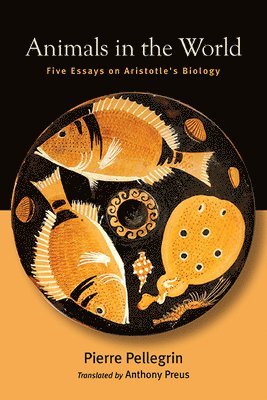
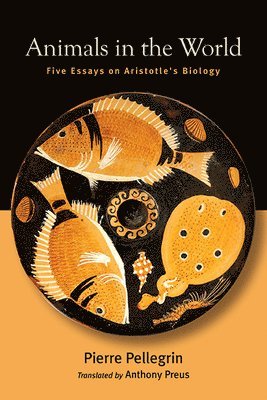
Five innovative essays demonstrating how Aristotle's biology is an integral part of Aristotle's understanding of the universe.In Animals in the World, renowned Aristotle scholar Pierre Pellegrin attempts to demonstrate that Aristotle, by proposing an original version of natural perfection, opposes the whole of the Greek tradition. Nature is perfect, not only in its harmony of a complete and well-organized whole, but also because it brings together functionally perfect individuals.
987 kr
Skickas
Five innovative essays demonstrating how Aristotle's biology is an integral part of Aristotle's understanding of the universe.In Animals in the World, renowned Aristotle scholar Pierre Pellegrin attempts to demonstrate that Aristotle, by proposing an original version of natural perfection, opposes the whole of the Greek tradition. Nature is perfect, not only in its harmony of a complete and well-organized whole, but also because it brings together functionally perfect individuals.
2 054 kr
Kommande