Pinaki Chakraborty - Böcker
Visar alla böcker från författaren Pinaki Chakraborty. Handla med fri frakt och snabb leverans.
5 produkter
5 produkter
1 668 kr
Skickas inom 7-10 vardagar
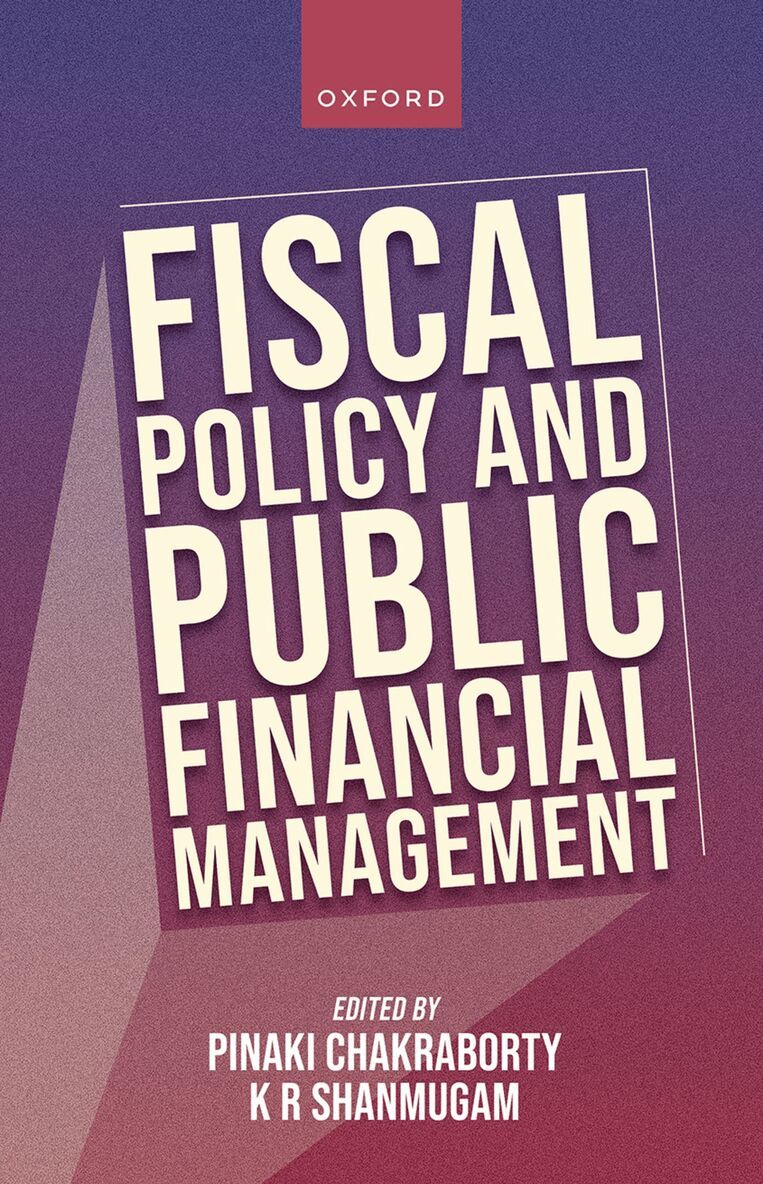
Over time, the scope of public finance, as a branch of economics, has expanded with the changing role of governments. When considered from the positive as well as normative perspectives, this subject is no longer confined to the understanding of only public revenue or taxation, public expenditure, and public debt. Issues related to climate finance and climate change, environmental federalism, and the trans-jurisdictional implications of global public goods have emerged as themes of critical relevance. When it comes to public financial management, several new areas have become relevant for policy, including the understanding of fiscal transparency, legislative control over borrowing, and the establishment of independent fiscal institutions such as fiscal councils. Fiscal Policy and Public Financial Management presents a range of contributions dealing with the evolving frontiers of research on the subject. It highlights specific themes related to direct and indirect taxes, tax evasion, public expenditure and debt, fiscal and environmental federalism, fiscal transparency, budget management, climate change and climate finance, and public sector investment appraisals. The diverse array of issues covered in this volume thus provides important analytical insights on the complexity and challenges of fiscal management in India and the emerging issues in public financial management, including climate finance.
685 kr
Skickas
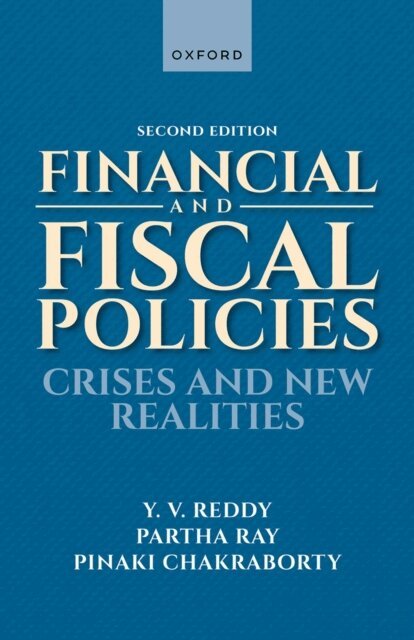
What started as a sub-prime mortgage crisis in the United States in 2007 snowballed into global recession and later transformed into an economic crisis, if not a sociopolitical one. This was followed by the euro area debt crisis. While the period 2014–9 was marked by a return to the growth trajectory, albeit of the new normal variety, various headwinds affected such growth, including the United States–China trade war and the initially ambiguous Brexit signals culminating in the United Kingdom's exit from the European Union. In 2020, the world witnessed the emergence of the COVID-19 pandemic and a return to more aggressive fiscal and monetary stimuli. In this revised edition of Financial and Fiscal Policies, the authors highlight the challenges posed by the global crisis and analyse the interactions between monetary, fiscal, and financial policies, exploring cross-country experiences, especially the economics of the euro area and India. Focusing on public debt management, sovereign debt restructuring, taxation, and financial sector and sub-national finance regulation, this book offers an understanding of future institutional arrangements.
685 kr
Skickas
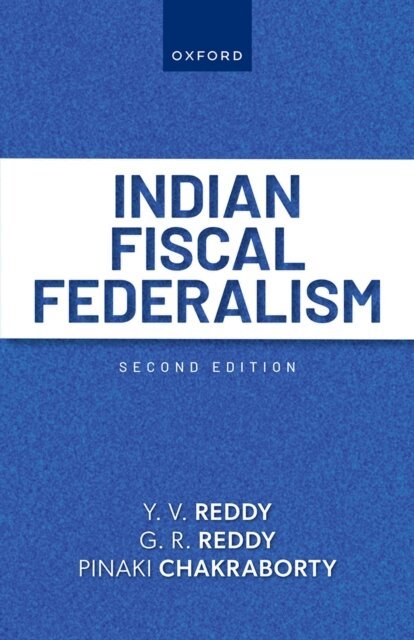
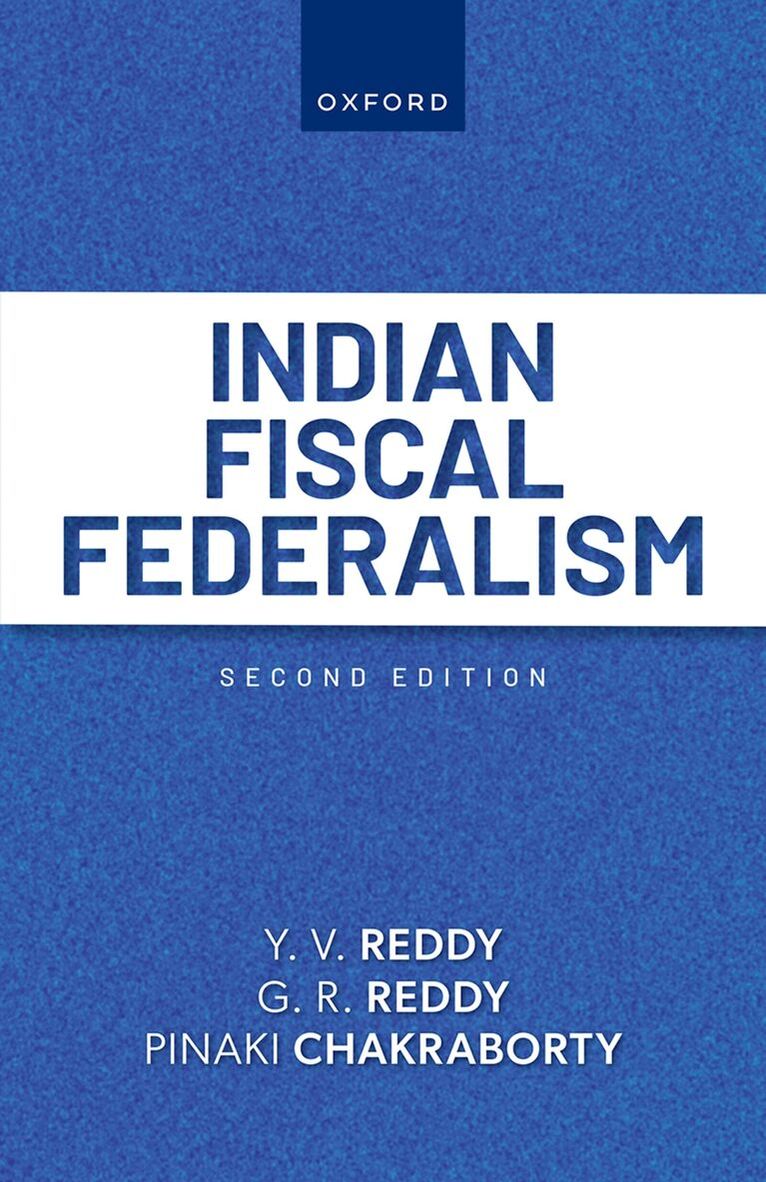
Likening fiscal federalism to a game between the Union and the states, and among the states themselves, Indian Fiscal Federalism lays bare the complex rules of play. In this new edition, the authors examine the pivotal and expanding role of Finance Commissions and momentous changes since 2015, such as the replacement of the Planning Commission by the NITI Aayog and the emergence of the GST Council. The book looks at the changes in the rules of the game, with the Union deviating from the established convention of treating the Finance Commission's recommendations as a package and award by not accepting the state-specific and sector-specific grants recommended by the Fifteenth Finance Commission. It presents a historical perspective on fiscal federalism, its evolution through various phases, and the interplay and overlap of institutional mechanisms, with a focus on the challenges before the Sixteenth Finance Commission. A contemporary, timely, and comprehensive analysis of federalism in India, this practitioners' perspective is a must-read that offers a way forward to address persistent and immediate concerns.
1 074 kr
Skickas inom 5-8 vardagar
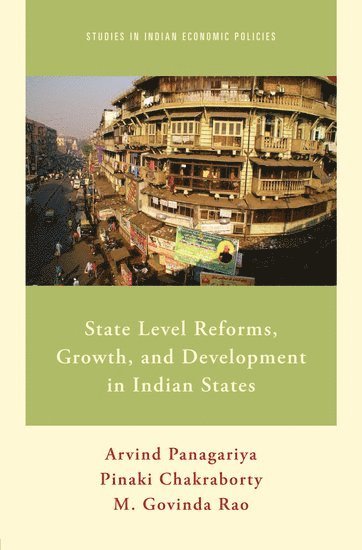
Most discussions of India's substantive economic growth since the 1990s tend to focus on national level statistics or on particular sectors such as the financial and call service sectors or on the pharmaceutical industry. But with a population of 1.2 billion, India demands to be treated like a collection of individual "countries, " rather than a unified nation. Ten of its states have populations equaling or exceeding that of the United Kingdom. If the state of Uttar Pradesh were a country, it would be the fourth largest, behind China, India, and the United States. These facts pointedly tell us that if we are to understand the ongoing experiment in economic reforms and poverty alleviation, we must study India at the level of the state.In this spirit, State Level Reforms and Growth and Development in Indian States provides the first-ever comprehensive analysis of growth at the highly diverse state level. The authors argue that when the national government loosened its stronghold on industry and services, state governments were able to shape the fortunes of their citizens through state-level policy reforms. Because of this, every Indian state experienced accelerated growth, unlike China during the first two decades of its development when the eastern half flourished as the western half lagged. Every Indian state has grown faster in the last decade than any other decade in the post-independence era. In fact, some of the poorest states, notably Bihar and Orissa, have been growing the fastest.Professors Panagariya and Chakraborty and Dr. Rao refute the common assumptions that growth has not occurred or that poverty has not been reduced in all Indian states. The recent reforms have also led to improved access in every state to basic amenities such as permanent houses, electricity, water, and sanitation. These accomplishments notwithstanding, regional inequality on a per capita basis has grown as well. Reforms in state-controlled sectors such as agriculture, industry, healthcare, and education have not advanced as far as some analysts previously predicted. The authors outline the reforms in these areas and draw on the experience of states that have successfully carried out some of them. The authors pay special attention to reforms in the areas of education and health while recognizing that the Indian constitution vests in the states much of this legislative and other authority and while considering the real absolute rise in income, literacy, and health status across all the states.
1 145 kr
Skickas inom 5-8 vardagar
This book is an analytical examination of financing and public service delivery challenges in a decentralized framework. It also provides critical insights into the effectiveness of public expenditure, through benefit incidence analysis of education and healthcare services in India. The benefits of decentralization always come with conflicts and trade-offs. By unpacking the process of decentralization, the authors identify that 'unfunded mandates', arising from the asymmetry between finances and functions at local levels, are a major challenge. The analysis is carried out by distilling the existing studies in this area, and through an empirical investigation of public finance data at different public sector levels in India, as well as in some selected developing countries. Using the household survey statistics of consumption expenditure, an analysis of utilization or benefit incidence of public spending on social sectors in India is achieved, covering education and health sectors. This title is available as Open Access on Cambridge Core.