Qianshen Bai - Böcker
Visar alla böcker från författaren Qianshen Bai. Handla med fri frakt och snabb leverans.
2 produkter
2 produkter
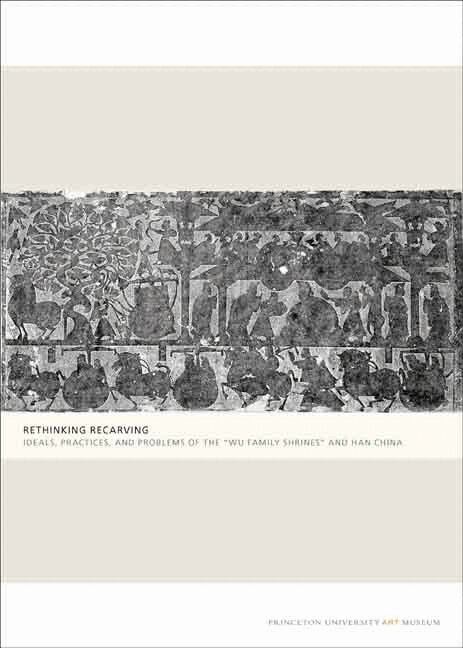
Rethinking Recarving
Ideals, Practices, and Problems of the "Wu Family Shrines" and Han China
Häftad, Engelska, 2008
519 kr
Skickas inom 7-10 vardagar
The "Wu Family Shrines" pictorial carvings from Han dynasty China (206 BCE–220 CE) are among the earliest works of Chinese art examined in an international arena. Since the eleventh century, the carvings have been identified by scholars as one of the most valuable and authentic materials for the study of antiquity. This important book presents essays by archaeologists, art and architectural historians, curators, and historians that reexamine the carvings, adding to our understanding of the long cultural history behind them and to our knowledge of Han practices. The authors offer a thorough analysis of surviving physical and visual sources, invoking fresh perspectives from new disciplines. Essays address the ideals, practices, and problems of the "Wu Family Shrines" and Han China; Han funerary art and architecture in Shandong and other regions; architectural functions and carved meanings; Qing Dynasty Reception of the Wu Family Shrines; and more.Distributed for the Princeton University Art Museum
Del 220 - Harvard East Asian Monographs
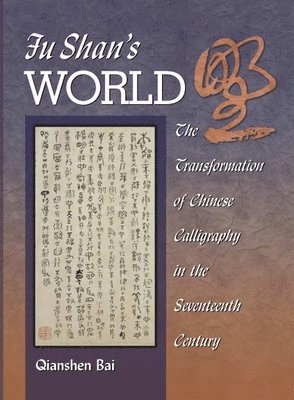
Fu Shan’s World
The Transformation of Chinese Calligraphy in the Seventeenth Century
Inbunden, Engelska, 2003
509 kr
Skickas inom 7-10 vardagar
For 1,300 years, Chinese calligraphy was based on the elegant art of Wang Xizhi (A.D. 303–361). But the seventeenth-century emergence of a style modeled on the rough, broken epigraphs of ancient bronzes and stone artifacts brought a revolution in calligraphic taste. By the eighteenth century, this led to the formation of the stele school of calligraphy, which continues to shape Chinese calligraphy today.A dominant force in this school was the eminent calligrapher and art theorist Fu Shan (1607–1685). Because his work spans the late Ming–early Qing divide, it is an ideal prism through which to view the transformation in calligraphy.Rather than seek a single explanation for the change in calligraphic taste, the author demonstrates and analyzes the heterogeneity of the cultural, social, and political processes behind it. Among other subjects, the book covers the late Ming interaction between high and low culture; the role of publishing; the Ming loyalist response to the Qing; and early Qing changes in intellectual discourse. In addition to the usual approach of art historians, it adopts the theoretical perspectives of such fields as material culture, print culture, and social and intellectual history.