• Fri frakt över 249 kr
  • •
  • Snabba leveranser
  • •
  • Billiga böcker
Kundservice

Du är på sajten för privatpersoner.

Företag, bibliotek eller offentlig verksamhet?

Du handlar på classic.bokus.com, där alla dina funktioner finns intakta.
Till classic.bokus.com
Bokus logotyp. Gå till startsidan.
  • Erbjudanden
  • Nyheter
  • Student
  • Topplistor
  • Barn & ungdom
  • Bokus Play
  • E-böcker
  • Pocketböcker
  • Spel & pussel

10% rabatt på allt med kod NYSTART10 →

Sidfot

Mina sidor

    Hjälp

    • Kundservice
    • Vanliga frågor och svar
    • Frakt och leverans
    • Retur vid ångerrätt
    • Reklamera vara
    • Betalning
    • Köpvillkor
    • Allmänna villkor
    • Information om webbplatsens tillgänglighet

    Om Bokus

    • Om oss
    • Pressrum
    • För studenter
    • För företag
    • För bibliotek och offentlig verksamhet
    • För leverantörer
    • Hållbarhet

    Populärt

    • Aktuella erbjudanden
    • Presentkort
    • Studentlitteratur
    • Nya böcker
    • Topplistor
    • Signerade böcker
    • Engelska böcker

    Inspiration

    • Boktips
    • BookTok
    • Populära bokserier
    • Barnbokskaraktärer
    • Populära författare
    Logotyp för Bokus
    Följ oss på Facebook (extern länk)Följ oss på Instagram (extern länk)Följ oss på YouTube (extern länk)Följ oss på TikTok (extern länk)
    bokus @ CookiesAnpassa cookiesIntegritetspolicyKöpvillkor
    Till Citymail hemsida (extern länk)Till Budbee hemsida (extern länk)Till Postnord hemsida (extern länk)Till Schenker hemsida (extern länk)Till Early Bird hemsida (extern länk)Till Walleys hemsida (extern länk)
    1. Sport, fritid och hobby
    2. Hantverk och handarbete
    3. Pappslöjd

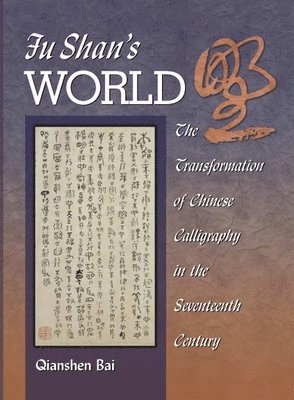
    Fu Shan’s World

    The Transformation of Chinese Calligraphy in the Seventeenth Century

    AvQianshen Bai

    Inbunden, Engelska, 2003

    Del 220 i serien Harvard East Asian Monographs

    526 kr

    Beställningsvara. Skickas inom 5-8 vardagar. Fri frakt över 249 kr.

    Beskrivning

    For 1,300 years, Chinese calligraphy was based on the elegant art of Wang Xizhi (A.D. 303–361). But the seventeenth-century emergence of a style modeled on the rough, broken epigraphs of ancient bronzes and stone artifacts brought a revolution in calligraphic taste. By the eighteenth century, this led to the formation of the stele school of calligraphy, which continues to shape Chinese calligraphy today.A dominant force in this school was the eminent calligrapher and art theorist Fu Shan (1607–1685). Because his work spans the late Ming–early Qing divide, it is an ideal prism through which to view the transformation in calligraphy.Rather than seek a single explanation for the change in calligraphic taste, the author demonstrates and analyzes the heterogeneity of the cultural, social, and political processes behind it. Among other subjects, the book covers the late Ming interaction between high and low culture; the role of publishing; the Ming loyalist response to the Qing; and early Qing changes in intellectual discourse. In addition to the usual approach of art historians, it adopts the theoretical perspectives of such fields as material culture, print culture, and social and intellectual history.

    Produktinformation

    • Utgivningsdatum:2003-06-30
    • Mått:216 x 273 x 27 mm
    • Vikt:1 175 g
    • Format:Inbunden
    • Språk:Engelska
    • Serie:Harvard East Asian Monographs
    • Antal sidor:368
    • Förlag:Harvard University Press
    • ISBN:9780674010925
    • Utmärkelser:Nominated for Joseph Levenson Book Prize 2005

    Utforska kategorier

    • Pappslöjd inom Sport, fritid och hobby

    Mer om författaren

    Qianshen Bai is Assistant Professor of Chinese and Asian Art at Boston University.

    Recensioner i media

    This is an ambitious and wide-ranging book. Qianshen Bai endeavors to construct the historical circumstances under which the scholar-artist Fu Shan (1607–1684) contributed to dramatic changes in the practice of calligraphy during the late seventeenth century… There is much to be learned in the densely argued pages of this book. By analyzing the craft of Fu’s calligraphy, Bai generously shares his own expertise as a calligrapher, which doubtless aided his comprehension of Fu Shan’s famously difficult writing.