R. Mahendran - Böcker
Visar alla böcker från författaren R. Mahendran. Handla med fri frakt och snabb leverans.
7 produkter
7 produkter
2 441 kr
Skickas inom 10-15 vardagar
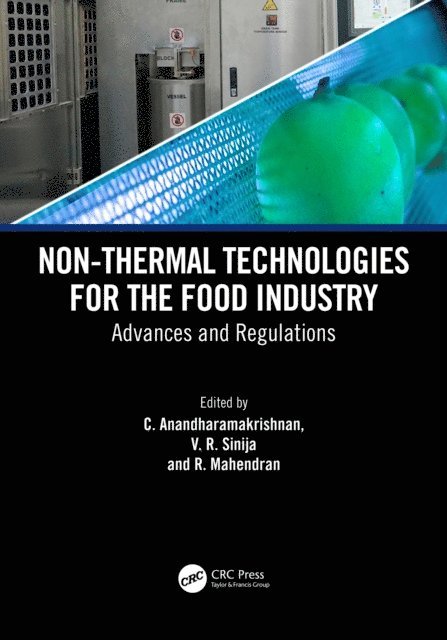
Depending on the mechanisms involved in non-thermal technologies (such as ozonization, irradiation, ultrasound processing, plasma processing, and advanced oxidative processes), interaction with food molecules differs, which might lead to desirable reactions. Non-Thermal Technologies for the Food Industry: Advances and Regulations explores the possibility of using non-thermal technologies for various purposes such as shelf-life extension, reduced energy consumption, adhesion, and safety improvement. Further, it reviews the present status of these technologies, international regulations, and sustainability aspects in food processing including global case studies.Features:Provides a comprehensive overview of all the non-thermal processing technologies that have potential for use within food manufacturingCovers novel disinfectant technologies and packaging methods for non-thermal processingIncludes electro-spraying and electrospinning; low-temperature drying techniques, cold plasma techniques, hydrodynamic cavitation, oscillating magnetic field processing, and so forthFocus on topics such as the valorization of agri-food wastes and by-products and sustainabilityReviews ClO2 in combined/hybrid technologies for food processingThis book is aimed at researchers and graduate students in food and food process engineering.
940 kr
Skickas inom 10-15 vardagar
Depending on the mechanisms involved in non-thermal technologies (such as ozonization, irradiation, ultrasound processing, plasma processing, and advanced oxidative processes), interaction with food molecules differs, which might lead to desirable reactions. Non-Thermal Technologies for the Food Industry: Advances and Regulations explores the possibility of using non-thermal technologies for various purposes such as shelf-life extension, reduced energy consumption, adhesion, and safety improvement. Further, it reviews the present status of these technologies, international regulations, and sustainability aspects in food processing including global case studies.Features:Provides a comprehensive overview of all the non-thermal processing technologies that have potential for use within food manufacturingCovers novel disinfectant technologies and packaging methods for non-thermal processingIncludes electro-spraying and electrospinning; low-temperature drying techniques, cold plasma techniques, hydrodynamic cavitation, oscillating magnetic field processing, and so forthFocus on topics such as the valorization of agri-food wastes and by-products and sustainabilityReviews ClO2 in combined/hybrid technologies for food processingThis book is aimed at researchers and graduate students in food and food process engineering.
2 001 kr
Skickas inom 7-10 vardagar
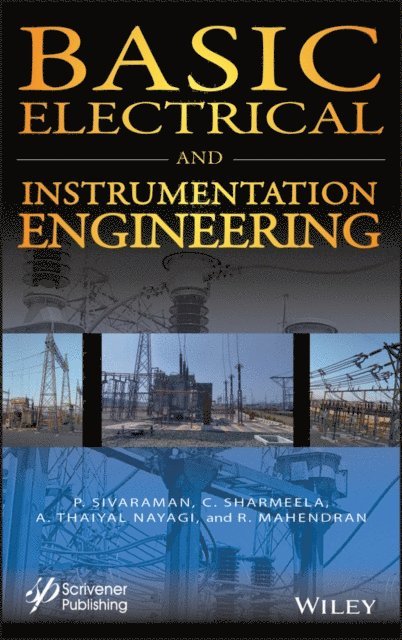
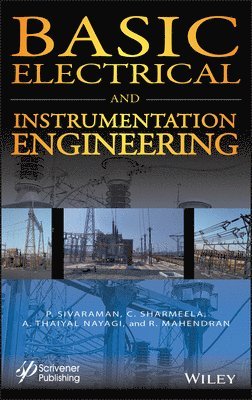
Electrical and instrumentation engineering is changing rapidly, and it is important for the veteran engineer in the field not only to have a valuable and reliable reference work which he or she can consult for basic concepts, but also to be up to date on any changes to basic equipment or processes that might have occurred in the field. Covering all of the basic concepts, from three-phase power supply and its various types of connection and conversion, to power equation and discussions of the protection of power system, to transformers, voltage regulation, and many other concepts, this volume is the one-stop, "go to" for all of the engineer's questions on basic electrical and instrumentation engineering.There are chapters covering the construction and working principle of the DC machine, all varieties of motors, fundamental concepts and operating principles of measuring, and instrumentation, both from a "high end" point of view and the point of view of developing countries, emphasizing low-cost methods.A valuable reference for engineers, scientists, chemists, and students, this volume is applicable to many different fields, across many different industries, at all levels. It is a must-have for any library.
2 467 kr
Kommande
2 554 kr
Kommande
2 441 kr
Skickas inom 10-15 vardagar
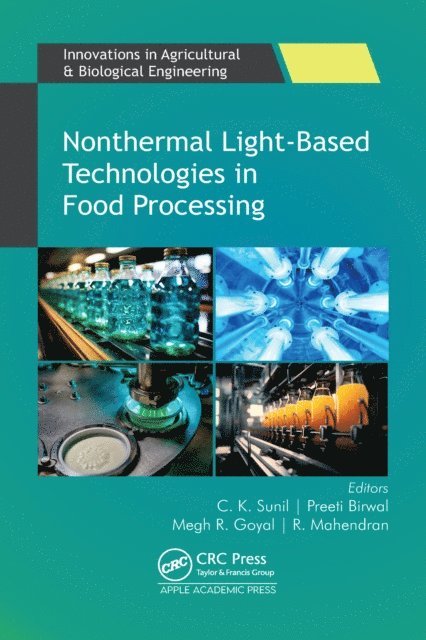
Food preservation has existed since time immemorial with techniques that focused on prolonging shelf-life of food products. The current challenge, though, is to preserve food in terms of loss of nutrients, texture, and sensorial characteristics along with prolonging its shelf-life. This new volume, Nonthermal Light-Based Technologies in Food Processing, explores and provides in-depth knowledge and understanding of current and emerging light-based technologies and their application in food processing. This book also introduces the role of nonthermal technology for novel food product development.In four detailed parts, this handbook covers light-based technologies, ultraviolet (UV) light technology, pulsed light (PL) technology, and light-emitting diode (LED) technology. It details a range of modern and emerging light-based food preservation technologies that include ozone, ohmic heading, high-pressure processing, cold plasma, pulsed electric field (PEF), microwave, irradiation, light-based technologies (ultraviolet, pulsed light, light-emitting diode [LED]), supercritical fluid extraction, cold plasma, and more. Each technology is thoroughly covered, starting with an introduction and proceeding to design, applications, and quality and regulatory aspects, providing comprehensive knowledge and detailed explanations.This book will be a valuable resource on nonthermal light-based technologies in food processing for many academicians and professionals in the field of food science, food technology, and food engineering around the world. It will also act as an important reference for researchers, students, scholars, industries, universities, and research centers.
2 441 kr
Skickas inom 10-15 vardagar
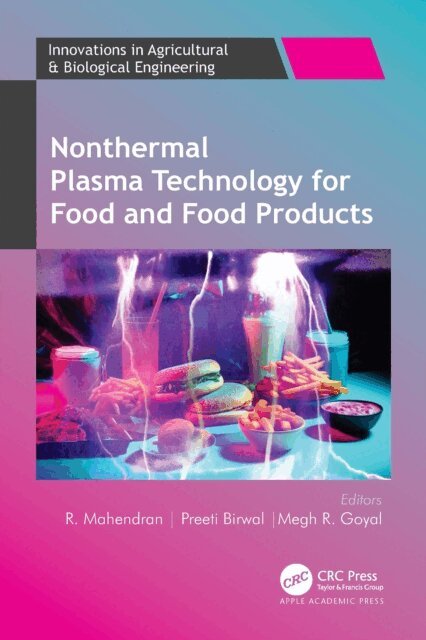
Cold plasma technology in the food industry is increasingly being adopted for its effective decontamination of food from foodborne pathogens and for its ability for enhanced pest mitigation in stored products. This new volume explores the techniques and methods of processing food products without subjecting them to heat treatment, using the promising cutting-edge technology of cold plasma for food preservation and food safety. The book discusses the design and generation of cold plasma along with the interaction with food molecules and covers applications in agri-food systems such as in solid foods, liquid foods, and food packaging. It presents the effects of cold plasma on starch modification, food surface modification, and its influence on toxin reduction. It also reports on advances and research being conducted to deal with simulation, modeling, and emerging other combination technologies. A chapter also reports on adopting cold plasma for spaceflight-grown produce.