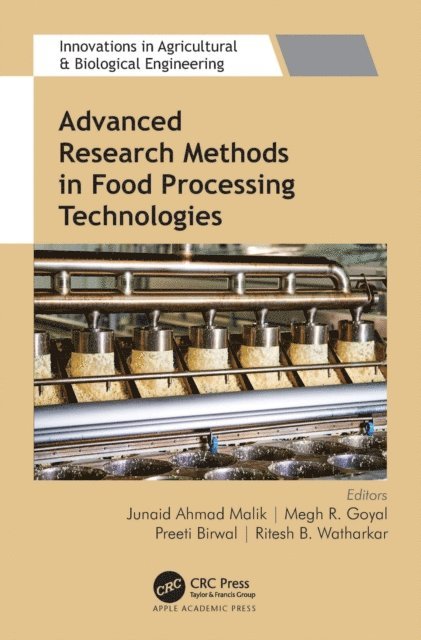
Preeti Birwal – författare
2 189 kr
Läs direkt efter köp
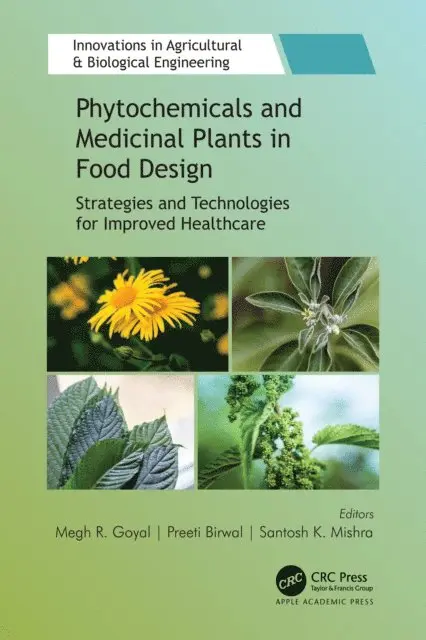
Phytochemicals and Medicinal Plants in Food Design: Strategies and Technologies for Improved Healthcare explores the therapeutic potential of various natural and novel phytochemicals in the design of new foods.
Divided into two parts, the first section discusses plant-based secondary metabolites for healthcare, focusing on the health aspects of herbs and medicinal plants and nutraceuticals for livestock production and for the treatment of diseases such as HIV and diabetes. The authors also address the benefits of preserving indigenous knowledge of medicinal plants and current consumer views of health issues from foods.
The second part delves into the design and utilization of healthy foods. This section discusses the application of novel designs and herbal formulations in conjunction with other biomolecules for the development and utilization for food products with health benefits.
Key features:
Encourages the preservation of indigenous knowledge on herbs and medicinal plants Explains the health-promoting effects of some herbs and medicinal plants Discusses the therapeutics and their mechanisms of actions of the biological compounds for food safetyThis informative volume will be valuable for faculty, students, scientists, researchers, and industry professionals in the development of superfoods from phytochemicals and medicinal plants.
2 189 kr
Läs direkt efter köp
Phytochemicals and Medicinal Plants in Food Design: Strategies and Technologies for Improved Healthcare explores the therapeutic potential of various natural and novel phytochemicals in the design of new foods.
Divided into two parts, the first section discusses plant-based secondary metabolites for healthcare, focusing on the health aspects of herbs and medicinal plants and nutraceuticals for livestock production and for the treatment of diseases such as HIV and diabetes. The authors also address the benefits of preserving indigenous knowledge of medicinal plants and current consumer views of health issues from foods.
The second part delves into the design and utilization of healthy foods. This section discusses the application of novel designs and herbal formulations in conjunction with other biomolecules for the development and utilization for food products with health benefits.
Key features:
Encourages the preservation of indigenous knowledge on herbs and medicinal plants Explains the health-promoting effects of some herbs and medicinal plants Discusses the therapeutics and their mechanisms of actions of the biological compounds for food safetyThis informative volume will be valuable for faculty, students, scientists, researchers, and industry professionals in the development of superfoods from phytochemicals and medicinal plants.
2 125 kr
Läs direkt efter köp
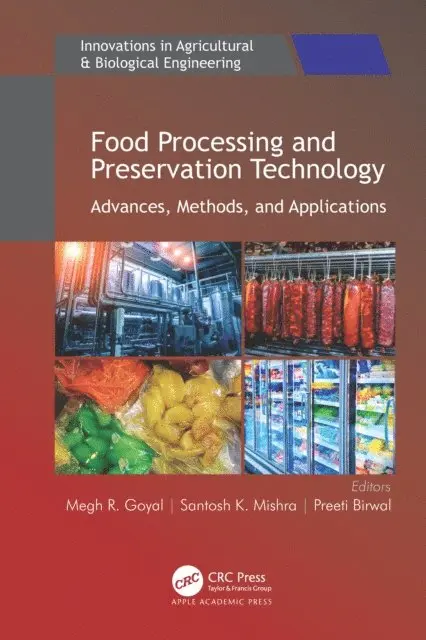
Food Processing and Preservation Technology: Advances, Methods, and Applications confronts the challenges of food preservation by providing new research and information on the use of novel processing and preservation technologies during production, processing, and transportation in the food industry for the improvement of shelf life and the safety of foods.
The book is organized in two main parts. The first section focuses on novel and nonthermal processing of food and food products. It looks at dielectric heating and ohmic heating as well as three-dimensional printing of foods and ozonization of food products.
Part two delves into process interventions for food processing and preservations, discussing the applications of diverse novel food processing. The authors discuss drying technologies, advances in food fermentation technologies, mechanization of traditional indigenous products for preservation of food and safety, and different properties and concepts of bakery products.
Key features:
Examines different properties and attributes of some bakery foods, etc. Elucidates on novel nonthermal processing techniques and their mechanisms of actions for minimal loss of food nutrients and for food safety Discusses a variety of modern technologies that aim to reduce the spoilage of food products This volume presents valuable research on food processing, quality control, and safety measures for food products by means of novel processing and preservation technologies during production, processing, and transportation in the food industry.2 144 kr
Läs direkt efter köp
Food Processing and Preservation Technology: Advances, Methods, and Applications confronts the challenges of food preservation by providing new research and information on the use of novel processing and preservation technologies during production, processing, and transportation in the food industry for the improvement of shelf life and the safety of foods.
The book is organized in two main parts. The first section focuses on novel and nonthermal processing of food and food products. It looks at dielectric heating and ohmic heating as well as three-dimensional printing of foods and ozonization of food products.
Part two delves into process interventions for food processing and preservations, discussing the applications of diverse novel food processing. The authors discuss drying technologies, advances in food fermentation technologies, mechanization of traditional indigenous products for preservation of food and safety, and different properties and concepts of bakery products.
Key features:
Examines different properties and attributes of some bakery foods, etc. Elucidates on novel nonthermal processing techniques and their mechanisms of actions for minimal loss of food nutrients and for food safety Discusses a variety of modern technologies that aim to reduce the spoilage of food products This volume presents valuable research on food processing, quality control, and safety measures for food products by means of novel processing and preservation technologies during production, processing, and transportation in the food industry.2 125 kr
Läs direkt efter köp
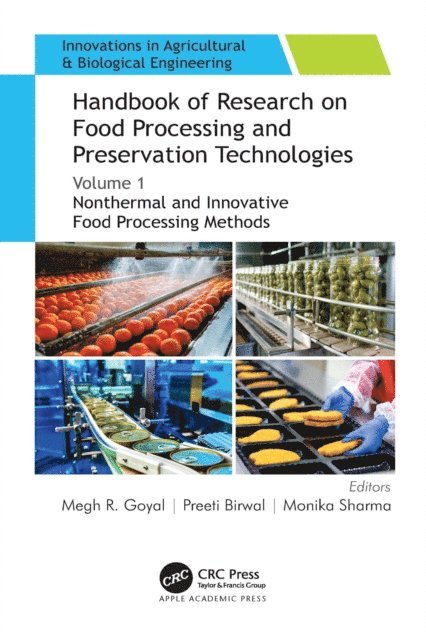
Handbook of Research on Food Processing and Preservation Technologies will be a 5-volume collection that attempts to illustrate various design, development, and applications of novel and innovative strategies for food processing and preservation. The role and applications of minimal processing techniques (such as ozone treatment, vacuum drying, osmotic dehydration, dense phase carbon dioxide treatment, pulsed electric field, and high-pressure assisted freezing) are also discussed, along with a wide range of applications. The handbook also explores some exciting computer-aided techniques emerging in the food processing sector, such as robotics, radio frequency identification (RFID), three-dimensional food printing, artificial intelligence, etc. Some emphasis has also been given on nondestructive quality evaluation techniques (such as image processing, terahertz spectroscopy imaging technique, near infrared, Fourier transform infrared spectroscopy technique, etc.) for food quality and safety evaluation. The significant roles of food properties in the design of specific foods and edible films have been elucidated as well.
The first volume in this set, Nonthermal and Innovative Food Processing Methods, provides a detailed discussion of many nonthermal food process techniques. These include high-pressure processing, ultraviolet light technology, microwave-assisted extraction, high pressure assisted freezing, microencapsulation, dense phase carbon dioxide aided preservation, to name a few.
The volume is a treasure house of valuable information and will be an excellent reference for researchers, scientists, students, growers, traders, processors, industries, and others.
2 125 kr
Läs direkt efter köp
Handbook of Research on Food Processing and Preservation Technologies will be a 5-volume collection that attempts to illustrate various design, development, and applications of novel and innovative strategies for food processing and preservation. The role and applications of minimal processing techniques (such as ozone treatment, vacuum drying, osmotic dehydration, dense phase carbon dioxide treatment, pulsed electric field, and high-pressure assisted freezing) are also discussed, along with a wide range of applications. The handbook also explores some exciting computer-aided techniques emerging in the food processing sector, such as robotics, radio frequency identification (RFID), three-dimensional food printing, artificial intelligence, etc. Some emphasis has also been given on nondestructive quality evaluation techniques (such as image processing, terahertz spectroscopy imaging technique, near infrared, Fourier transform infrared spectroscopy technique, etc.) for food quality and safety evaluation. The significant roles of food properties in the design of specific foods and edible films have been elucidated as well.
The first volume in this set, Nonthermal and Innovative Food Processing Methods, provides a detailed discussion of many nonthermal food process techniques. These include high-pressure processing, ultraviolet light technology, microwave-assisted extraction, high pressure assisted freezing, microencapsulation, dense phase carbon dioxide aided preservation, to name a few.
The volume is a treasure house of valuable information and will be an excellent reference for researchers, scientists, students, growers, traders, processors, industries, and others.
2 125 kr
Läs direkt efter köp
In this volume, several new food processing and preservation technologies have been investigated by researchers that have the potential to increase shelf life and preserve the quality of foods.
This handbook introduces some emerging techniques in the food processing sector, focusing on nonthermal techniques such as high-pressure processing, ultrasonication of foods, microwave vacuum dehydration, thermoelectric refrigeration technology, advanced methods of encapsulation, ozonation, electrospinning, and mechanical expellers for dairy, food, and agricultural processing. These all have a wide range of application.
The volume includes studies that show the successful application of these new technologies on a large number of juices, cheeses, yogurts, soups, egg whites and eggs, vegetable slices, purees, and milk, and the extraction, drying enhancement, and modification of enzymes are reported.
This volume, part of the multi-volume Handbook of Research on Food Processing and Preservation Technologies will have tremendous application in different areas of the food industry, including food processing, preservation, safety, and quality evaluation. Other volumes of this handbook cover a wide of other emerging technologies.
Handbook of Research on Food Processing and Preservation Technologies: Volume 2: Nonthermal Food Preservation and Novel Processing Strategies is an excellent reference resource for researchers, scientists, faculty and students, growers, traders, processors, industries, and others for looking for new nonthermal approaches for food processing and preservation.
2 125 kr
Läs direkt efter köp
In this volume, several new food processing and preservation technologies have been investigated by researchers that have the potential to increase shelf life and preserve the quality of foods.
This handbook introduces some emerging techniques in the food processing sector, focusing on nonthermal techniques such as high-pressure processing, ultrasonication of foods, microwave vacuum dehydration, thermoelectric refrigeration technology, advanced methods of encapsulation, ozonation, electrospinning, and mechanical expellers for dairy, food, and agricultural processing. These all have a wide range of application.
The volume includes studies that show the successful application of these new technologies on a large number of juices, cheeses, yogurts, soups, egg whites and eggs, vegetable slices, purees, and milk, and the extraction, drying enhancement, and modification of enzymes are reported.
This volume, part of the multi-volume Handbook of Research on Food Processing and Preservation Technologies will have tremendous application in different areas of the food industry, including food processing, preservation, safety, and quality evaluation. Other volumes of this handbook cover a wide of other emerging technologies.
Handbook of Research on Food Processing and Preservation Technologies: Volume 2: Nonthermal Food Preservation and Novel Processing Strategies is an excellent reference resource for researchers, scientists, faculty and students, growers, traders, processors, industries, and others for looking for new nonthermal approaches for food processing and preservation.
2 255 kr
Läs direkt efter köp
The Handbook of Research on Food Processing and Preservation Technologies is a rich 5-volume collection that illustrates various design, development, and applications of novel and innovative strategies for food processing and preservation. The roles and applications of minimal processing techniques (such as ozone treatment, vacuum drying, osmotic dehydration, dense phase carbon dioxide treatment, pulsed electric field, and high-pressure assisted freezing) are discussed, along with a wide range of other applications. The handbook also explores some exciting computer-aided techniques emerging in the food processing sector, such as robotics, radio frequency identification (RFID), three-dimensional food printing, artificial intelligence, etc. Some emphasis has also been given on nondestructive quality evaluation techniques (such as image processing, terahertz spectroscopy imaging technique, near infrared, Fourier transform infrared spectroscopy technique, etc.) for food quality and safety evaluation. The significant roles of food properties in the design of specific foods and edible films have been elucidated as well.
Volume 3: Computer-Aided Food Processing and Quality Evaluation Techniques of the multi-volume set reports on a number of applications of computer-aided techniques for quality evaluation and to secure food quality. The chapter authors present emerging nonthermal approaches for food processing and preservation including a detailed discussion on color measurement techniques, RFID, 3D-food printing, potential of robotics, artificial intelligence, terahertz spectroscopy imaging technique, instrumentation techniques and transducers, food labeling as marketing and quality assurance tool, detection of pesticides, mathematical simulation of moisture sorption in food products, numerical methods and modeling techniques, concept of phase change materials, and dielectric properties of animal source foods.
Other volumes in the set include:
Volume 1: Nonthermal and Innovative Food Processing Methods
Volume 2: Nonthermal Food Preservation and Novel Processing Strategies
Volume 3: Computer-Aided Food Processing and Quality Evaluation Techniques
Volume 4: Design and Development of Specific Foods, Packaging Systems, and Food Safety
Volume 5: Emerging Techniques for Food Processing, Quality, and Safety Assurance
Along with the other volumes, Handbook of Research on Food Processing and Preservation Technologies provides an abundance of valuable information and will be an excellent reference for researchers, scientists, students, growers, traders, processors, industries, and others.
2 255 kr
Läs direkt efter köp
The Handbook of Research on Food Processing and Preservation Technologies is a rich 5-volume collection that illustrates various design, development, and applications of novel and innovative strategies for food processing and preservation. The roles and applications of minimal processing techniques (such as ozone treatment, vacuum drying, osmotic dehydration, dense phase carbon dioxide treatment, pulsed electric field, and high-pressure assisted freezing) are discussed, along with a wide range of other applications. The handbook also explores some exciting computer-aided techniques emerging in the food processing sector, such as robotics, radio frequency identification (RFID), three-dimensional food printing, artificial intelligence, etc. Some emphasis has also been given on nondestructive quality evaluation techniques (such as image processing, terahertz spectroscopy imaging technique, near infrared, Fourier transform infrared spectroscopy technique, etc.) for food quality and safety evaluation. The significant roles of food properties in the design of specific foods and edible films have been elucidated as well.
Volume 3: Computer-Aided Food Processing and Quality Evaluation Techniques of the multi-volume set reports on a number of applications of computer-aided techniques for quality evaluation and to secure food quality. The chapter authors present emerging nonthermal approaches for food processing and preservation including a detailed discussion on color measurement techniques, RFID, 3D-food printing, potential of robotics, artificial intelligence, terahertz spectroscopy imaging technique, instrumentation techniques and transducers, food labeling as marketing and quality assurance tool, detection of pesticides, mathematical simulation of moisture sorption in food products, numerical methods and modeling techniques, concept of phase change materials, and dielectric properties of animal source foods.
Other volumes in the set include:
Volume 1: Nonthermal and Innovative Food Processing Methods
Volume 2: Nonthermal Food Preservation and Novel Processing Strategies
Volume 3: Computer-Aided Food Processing and Quality Evaluation Techniques
Volume 4: Design and Development of Specific Foods, Packaging Systems, and Food Safety
Volume 5: Emerging Techniques for Food Processing, Quality, and Safety Assurance
Along with the other volumes, Handbook of Research on Food Processing and Preservation Technologies provides an abundance of valuable information and will be an excellent reference for researchers, scientists, students, growers, traders, processors, industries, and others.
2 275 kr
Läs direkt efter köp
The Handbook of Research on Food Processing and Preservation Technologies is a valuable 5-volume collection that illustrates various design, development, and applications of novel and innovative strategies for food processing and preservation. The roles and applications of minimal processing techniques (such as ozone treatment, vacuum drying, osmotic dehydration, dense phase carbon dioxide treatment, pulsed electric field, and high-pressure assisted freezing) are discussed, along with a wide range of applications. The handbook also explores some exciting computer-aided techniques emerging in the food processing sector, such as robotics, radio frequency identification (RFID), three-dimensional food printing, artificial intelligence, etc. Some emphasis has also been given on nondestructive quality evaluation techniques (such as image processing, terahertz spectroscopy imaging technique, near infrared, Fourier transform infrared spectroscopy technique, etc.) for food quality and safety evaluation. The significant roles of food properties in the design of specific foods and edible films have been elucidated as well.
Volume 4: Design and Development of Specific Foods, Packaging Systems, and Food Safety presents new research on health food formulation, advanced packaging systems, and toxicological studies for food safety. This volume covers in detail the design of functional foods for beneficial gut microflora, design of specific foods for gut microbiota, composite probiotic dairy products: concepts and design with a focus on millets, encapsulation technology for development of specific foods, prospects of edible and alternative food packaging technologies, recent advancements in edible and biodegradable materials for food packaging, potential of ozonation in surface modification of food packaging polymers, characterization applications and safety aspects of nanomaterials used in food and dairy industry, toxic effects of tinplate corrosion, and mitigation measures in canned foods.
Other volumes in the set include:
Volume 1: Nonthermal and Innovative Food Processing Methods
Volume 2: Nonthermal Food Preservation and Novel Processing Strategies
Volume 3: Computer-Aided Food Processing and Quality Evaluation Techniques
Volume 5: Emerging Techniques for Food Processing, Quality, and Safety Assurance
The book helps to provide an understanding of different food formulations and development of edible packaging techniques with emphasis on the assessment of food product safety and quality. The book also provides information on various methods of formulation for development of new and safe products. Together with the other volumes in the set, Handbook of Research on Food Processing and Preservation Technologies will be a valuable resource for researchers, scientists, students, growers, traders, processors, industries, and others.
2 255 kr
Läs direkt efter köp
The Handbook of Research on Food Processing and Preservation Technologies is a valuable 5-volume collection that illustrates various design, development, and applications of novel and innovative strategies for food processing and preservation. The roles and applications of minimal processing techniques (such as ozone treatment, vacuum drying, osmotic dehydration, dense phase carbon dioxide treatment, pulsed electric field, and high-pressure assisted freezing) are discussed, along with a wide range of applications. The handbook also explores some exciting computer-aided techniques emerging in the food processing sector, such as robotics, radio frequency identification (RFID), three-dimensional food printing, artificial intelligence, etc. Some emphasis has also been given on nondestructive quality evaluation techniques (such as image processing, terahertz spectroscopy imaging technique, near infrared, Fourier transform infrared spectroscopy technique, etc.) for food quality and safety evaluation. The significant roles of food properties in the design of specific foods and edible films have been elucidated as well.
Volume 4: Design and Development of Specific Foods, Packaging Systems, and Food Safety presents new research on health food formulation, advanced packaging systems, and toxicological studies for food safety. This volume covers in detail the design of functional foods for beneficial gut microflora, design of specific foods for gut microbiota, composite probiotic dairy products: concepts and design with a focus on millets, encapsulation technology for development of specific foods, prospects of edible and alternative food packaging technologies, recent advancements in edible and biodegradable materials for food packaging, potential of ozonation in surface modification of food packaging polymers, characterization applications and safety aspects of nanomaterials used in food and dairy industry, toxic effects of tinplate corrosion, and mitigation measures in canned foods.
Other volumes in the set include:
Volume 1: Nonthermal and Innovative Food Processing Methods
Volume 2: Nonthermal Food Preservation and Novel Processing Strategies
Volume 3: Computer-Aided Food Processing and Quality Evaluation Techniques
Volume 5: Emerging Techniques for Food Processing, Quality, and Safety Assurance
The book helps to provide an understanding of different food formulations and development of edible packaging techniques with emphasis on the assessment of food product safety and quality. The book also provides information on various methods of formulation for development of new and safe products. Together with the other volumes in the set, Handbook of Research on Food Processing and Preservation Technologies will be a valuable resource for researchers, scientists, students, growers, traders, processors, industries, and others.
2 255 kr
Läs direkt efter köp
The Handbook of Research on Food Processing and Preservation Technologies covers a vast abundance of information on various design, development, and applications of novel and innovative strategies for food processing and preservation. The roles and applications of minimal processing techniques (such as ozone treatment, vacuum drying, osmotic dehydration, dense phase carbon dioxide treatment, pulsed electric field, and high-pressure assisted freezing) are discussed, along with a wide range of applications. The handbook also explores some exciting computer-aided techniques emerging in the food processing sector, such as robotics, radio frequency identification (RFID), three-dimensional food printing, artificial intelligence, etc. Some emphasis has also been given on nondestructive quality evaluation techniques (such as image processing, terahertz spectroscopy imaging technique, near infrared, Fourier transform infrared spectroscopy technique, etc.) for food quality and safety evaluation. The significant roles of food properties in the design of specific foods and edible films have been elucidated as well.
Volume 5: Emerging Techniques for Food Processing, Quality, and Safety Assurance discusses various emerging techniques for food preservation, formulation, and nondestructive quality evaluation techniques. Each chapter covers major aspects pertaining to principles, design, and applications of various food processing methods, such as low temperature-based-ultrasonic drying of foods, hypobaric processing of foods, viability of high-pressure technology, application of pulsed electric fields in food preservation, green nanotechnology for food processing and preservation, advanced methods of encapsulation, basics and methods of food authentication, imaging techniques for quality inspection of spices and nuts, FTIR coupled with chemometrics for food quality and safety, and the use of robotic engineering for quality and safety.
Other volumes in the 5-volume set include:
Volume 1: Nonthermal and Innovative Food Processing Methods
Volume 2: Nonthermal Food Preservation and Novel Processing Strategies
Volume 3: Computer-Aided Food Processing and Quality Evaluation Techniques
Volume 4: Design and Development of Specific Foods, Packaging Systems, and Food Safety
Together with the other volumes in the set, the Handbook of Research on Food Processing and Preservation Technologies will be a valuable resource for researchers, scientists, students, growers, traders, processors, industries, and others.
2 255 kr
Läs direkt efter köp
The Handbook of Research on Food Processing and Preservation Technologies covers a vast abundance of information on various design, development, and applications of novel and innovative strategies for food processing and preservation. The roles and applications of minimal processing techniques (such as ozone treatment, vacuum drying, osmotic dehydration, dense phase carbon dioxide treatment, pulsed electric field, and high-pressure assisted freezing) are discussed, along with a wide range of applications. The handbook also explores some exciting computer-aided techniques emerging in the food processing sector, such as robotics, radio frequency identification (RFID), three-dimensional food printing, artificial intelligence, etc. Some emphasis has also been given on nondestructive quality evaluation techniques (such as image processing, terahertz spectroscopy imaging technique, near infrared, Fourier transform infrared spectroscopy technique, etc.) for food quality and safety evaluation. The significant roles of food properties in the design of specific foods and edible films have been elucidated as well.
Volume 5: Emerging Techniques for Food Processing, Quality, and Safety Assurance discusses various emerging techniques for food preservation, formulation, and nondestructive quality evaluation techniques. Each chapter covers major aspects pertaining to principles, design, and applications of various food processing methods, such as low temperature-based-ultrasonic drying of foods, hypobaric processing of foods, viability of high-pressure technology, application of pulsed electric fields in food preservation, green nanotechnology for food processing and preservation, advanced methods of encapsulation, basics and methods of food authentication, imaging techniques for quality inspection of spices and nuts, FTIR coupled with chemometrics for food quality and safety, and the use of robotic engineering for quality and safety.
Other volumes in the 5-volume set include:
Volume 1: Nonthermal and Innovative Food Processing Methods
Volume 2: Nonthermal Food Preservation and Novel Processing Strategies
Volume 3: Computer-Aided Food Processing and Quality Evaluation Techniques
Volume 4: Design and Development of Specific Foods, Packaging Systems, and Food Safety
Together with the other volumes in the set, the Handbook of Research on Food Processing and Preservation Technologies will be a valuable resource for researchers, scientists, students, growers, traders, processors, industries, and others.
11 354 kr
Läs direkt efter köp
2 072 kr
Läs direkt efter köp
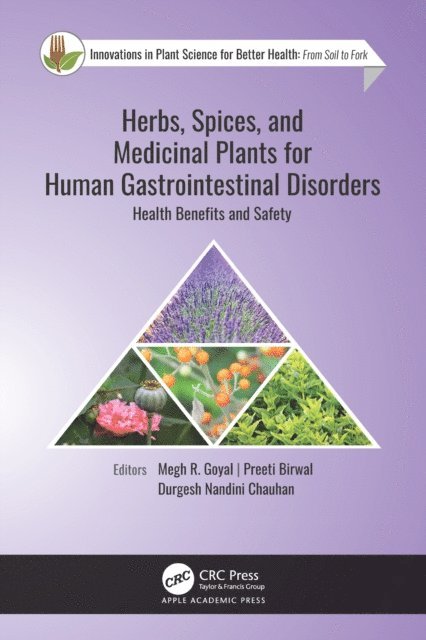
Herbs, Spices, and Medicinal Plants for Human Gastrointestinal Disorders: Health Benefits and Safety presents valuable information for exploring the health claims of plant-based phytochemicals for the treatment and prevention of gastrointestinal disorders. It details the healing benefits of specific spices and herb plant-based remedies, such as garlic, onion, black pepper, aloe vera, Indian gooseberry, chamomile, and dandelion for the treatment of colorectal cancer and hemorrhoids, irritable bowel syndrome, gallstones, celiac disease, peptic ulcers, etc. It also discusses the therapeutic properties of fermented foods and beverages and the healing benefits of lectins in the management of gastrointestinal disorders.
The abundance of research presented in this volume will be valuable for researchers, scientists, growers, students, processors, traders, industries, and others in the development of plant-based therapeutics for gastrointestinal diseases.
2 072 kr
Läs direkt efter köp
Herbs, Spices, and Medicinal Plants for Human Gastrointestinal Disorders: Health Benefits and Safety presents valuable information for exploring the health claims of plant-based phytochemicals for the treatment and prevention of gastrointestinal disorders. It details the healing benefits of specific spices and herb plant-based remedies, such as garlic, onion, black pepper, aloe vera, Indian gooseberry, chamomile, and dandelion for the treatment of colorectal cancer and hemorrhoids, irritable bowel syndrome, gallstones, celiac disease, peptic ulcers, etc. It also discusses the therapeutic properties of fermented foods and beverages and the healing benefits of lectins in the management of gastrointestinal disorders.
The abundance of research presented in this volume will be valuable for researchers, scientists, growers, students, processors, traders, industries, and others in the development of plant-based therapeutics for gastrointestinal diseases.
2 385 kr
Läs direkt efter köp
This new volume presents new studies and research cases on advanced technologies for food processing and preservation to maintain and improve food quality, extend shelf-life, and provide new solutions to food processing challenges.
The volume discusses cold plasma and ultrasound processing of foods, introducing new food processing technologies and applications. It also elaborates on microwave processing of foods, describing applications, potential and intermittent microwave drying of fruits. Other new research focusses on high-pressure processing, electrospinning technology in foods, encapsulation techniques, impact of freezing and thawing processes on textural properties of food products, 3D printing of foods, enzyme-linked immunosorbent assay (ELISA) in food authentication, and state-of-the-art applications of nanotechnology in food processing.
2 385 kr
Läs direkt efter köp
This new volume presents new studies and research cases on advanced technologies for food processing and preservation to maintain and improve food quality, extend shelf-life, and provide new solutions to food processing challenges.
The volume discusses cold plasma and ultrasound processing of foods, introducing new food processing technologies and applications. It also elaborates on microwave processing of foods, describing applications, potential and intermittent microwave drying of fruits. Other new research focusses on high-pressure processing, electrospinning technology in foods, encapsulation techniques, impact of freezing and thawing processes on textural properties of food products, 3D printing of foods, enzyme-linked immunosorbent assay (ELISA) in food authentication, and state-of-the-art applications of nanotechnology in food processing.
2 385 kr
Läs direkt efter köp
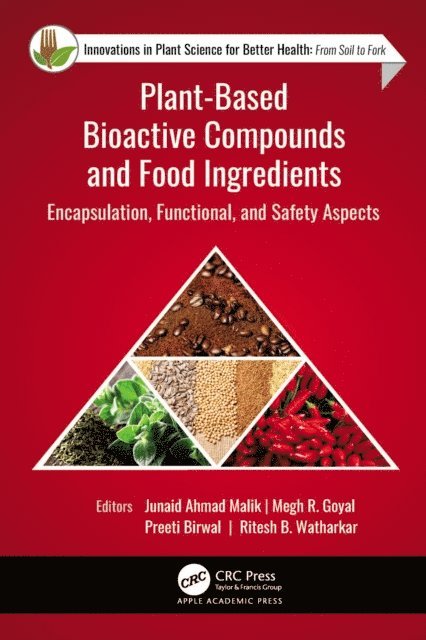
This new book discusses plant-derived bioactive compounds, covering their sources, biological effects, health benefits, and potential prevention and treatment properties for multifactorial diseases. It first describes in detail how encapsulation methods and plant-based materials may be used in a variety of ways, covering the concepts, advantages, and techniques for encapsulating bioactives based on cereals, spices, and coffee. The volume also looks at the functional aspects of plant-based foods and nutraceutical-based functional food design. The role of functional foods in food safety and industrial food safety issues and techniques for monitoring food quality and safety are also addressed.
2 385 kr
Läs direkt efter köp
This new book discusses plant-derived bioactive compounds, covering their sources, biological effects, health benefits, and potential prevention and treatment properties for multifactorial diseases. It first describes in detail how encapsulation methods and plant-based materials may be used in a variety of ways, covering the concepts, advantages, and techniques for encapsulating bioactives based on cereals, spices, and coffee. The volume also looks at the functional aspects of plant-based foods and nutraceutical-based functional food design. The role of functional foods in food safety and industrial food safety issues and techniques for monitoring food quality and safety are also addressed.
2 457 kr
Läs direkt efter köp
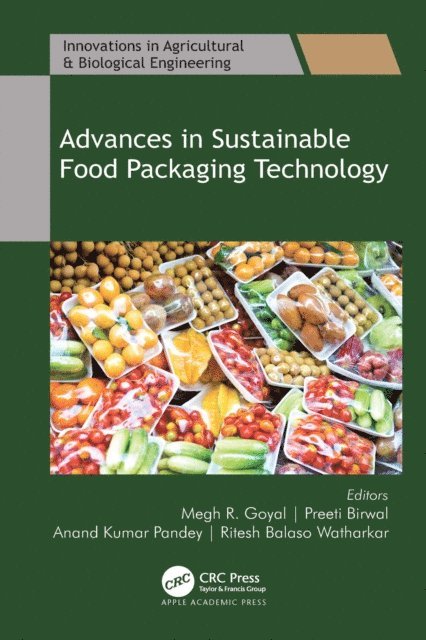
This new volume explores the recent innovations in active, intelligent, and smart packaging systems that embrace packaging potential to not only provide protection to food but to also improve its nutritive value, reduce contamination by releasing antimicrobials, and provide real-time status of food quality. The book presents novel edible food packaging, nanotechnology-based improvements in food packaging, and biodegradation and bio-based approaches for management of food waste and plastic waste from packaging.
2 479 kr
Läs direkt efter köp
This new volume explores the recent innovations in active, intelligent, and smart packaging systems that embrace packaging potential to not only provide protection to food but to also improve its nutritive value, reduce contamination by releasing antimicrobials, and provide real-time status of food quality. The book presents novel edible food packaging, nanotechnology-based improvements in food packaging, and biodegradation and bio-based approaches for management of food waste and plastic waste from packaging.
2 920 kr
Läs direkt efter köp
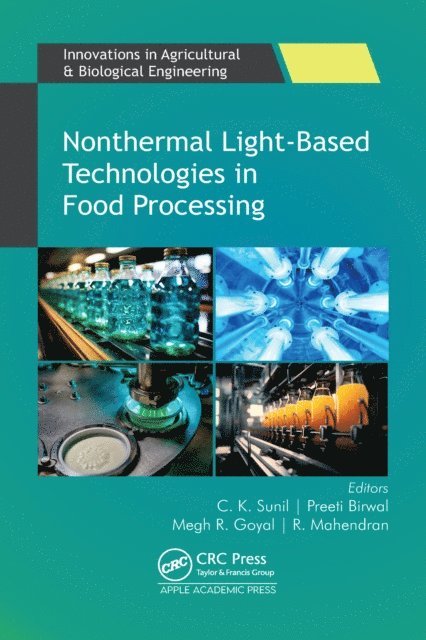
Food preservation has existed since time immemorial with techniques that focused on prolonging shelf-life of food products. The current challenge, though, is to preserve food in terms of loss of nutrients, texture, and sensorial characteristics along with prolonging its shelf-life. This new volume, Nonthermal Light-Based Technologies in Food Processing, explores and provides in-depth knowledge and understanding of current and emerging light-based technologies and their application in food processing. This book also introduces the role of nonthermal technology for novel food product development.
In four detailed parts, this handbook covers light-based technologies, ultraviolet (UV) light technology, pulsed light (PL) technology, and light-emitting diode (LED) technology. It details a range of modern and emerging light-based food preservation technologies that include ozone, ohmic heading, high-pressure processing, cold plasma, pulsed electric field (PEF), microwave, irradiation, light-based technologies (ultraviolet, pulsed light, light-emitting diode [LED]), supercritical fluid extraction, cold plasma, and more. Each technology is thoroughly covered, starting with an introduction and proceeding to design, applications, and quality and regulatory aspects, providing comprehensive knowledge and detailed explanations.
This book will be a valuable resource on nonthermal light-based technologies in food processing for many academicians and professionals in the field of food science, food technology, and food engineering around the world. It will also act as an important reference for researchers, students, scholars, industries, universities, and research centers.
2 920 kr
Läs direkt efter köp
Food preservation has existed since time immemorial with techniques that focused on prolonging shelf-life of food products. The current challenge, though, is to preserve food in terms of loss of nutrients, texture, and sensorial characteristics along with prolonging its shelf-life. This new volume, Nonthermal Light-Based Technologies in Food Processing, explores and provides in-depth knowledge and understanding of current and emerging light-based technologies and their application in food processing. This book also introduces the role of nonthermal technology for novel food product development.
In four detailed parts, this handbook covers light-based technologies, ultraviolet (UV) light technology, pulsed light (PL) technology, and light-emitting diode (LED) technology. It details a range of modern and emerging light-based food preservation technologies that include ozone, ohmic heading, high-pressure processing, cold plasma, pulsed electric field (PEF), microwave, irradiation, light-based technologies (ultraviolet, pulsed light, light-emitting diode [LED]), supercritical fluid extraction, cold plasma, and more. Each technology is thoroughly covered, starting with an introduction and proceeding to design, applications, and quality and regulatory aspects, providing comprehensive knowledge and detailed explanations.
This book will be a valuable resource on nonthermal light-based technologies in food processing for many academicians and professionals in the field of food science, food technology, and food engineering around the world. It will also act as an important reference for researchers, students, scholars, industries, universities, and research centers.
2 920 kr
Läs direkt efter köp
Cold plasma technology in the food industry is increasingly being adopted for its effective decontamination of food from foodborne pathogens and for its ability for enhanced pest mitigation in stored products. This new volume explores the techniques and methods of processing food products without subjecting them to heat treatment, using the promising cutting-edge technology of cold plasma for food preservation and food safety. The book discusses the design and generation of cold plasma along with the interaction with food molecules and covers applications in agri-food systems such as in solid foods, liquid foods, and food packaging. It presents the effects of cold plasma on starch modification, food surface modification, and its influence on toxin reduction. It also reports on advances and research being conducted to deal with simulation, modeling, and emerging other combination technologies. A chapter also reports on adopting cold plasma for spaceflight-grown produce.
2 920 kr
Läs direkt efter köp
Cold plasma technology in the food industry is increasingly being adopted for its effective decontamination of food from foodborne pathogens and for its ability for enhanced pest mitigation in stored products. This new volume explores the techniques and methods of processing food products without subjecting them to heat treatment, using the promising cutting-edge technology of cold plasma for food preservation and food safety. The book discusses the design and generation of cold plasma along with the interaction with food molecules and covers applications in agri-food systems such as in solid foods, liquid foods, and food packaging. It presents the effects of cold plasma on starch modification, food surface modification, and its influence on toxin reduction. It also reports on advances and research being conducted to deal with simulation, modeling, and emerging other combination technologies. A chapter also reports on adopting cold plasma for spaceflight-grown produce.
2 758 kr
Läs direkt efter köp
2 758 kr
Läs direkt efter köp
2 758 kr
Läs direkt efter köp