C. Anandharamakrishnan – författare
1 871 kr
Skickas inom 10-15 vardagar
Liposomal Encapsulation in Food Science and Technology provides all the possible applications of liposomes in food and allied systems, along with recent advances made in these fields. This helps researchers in food science and technology, as well as those in interdisciplinary fields, better explore the opportunities that liposomal encapsulation offers. Among other topics, the book covers formulation and characterization of liposome, liposome mediated encapsulation of antimicrobials and probiotics, liposome-assisted delivery of enzymes and proteins, and liposome for delivery of dietary nutrients and nutraceuticals, etc. This approach facilitates building better dedicated or tandem approaches in respective fields for process/product development.
Written by an international team of contributors, the book will aid academicians in developing more industry useful tools/techniques/products.
Brings a broader overview of different modules of liposomal encapsulation of bioactive food supplements Provides all the possible applications of liposomes in food and allied systems, along with recent advances made in these fields Includes chemical, physical, medical and stability related chapters2 662 kr
Läs direkt efter köp
1 871 kr
Skickas inom 10-15 vardagar
2 662 kr
Läs direkt efter köp
1 871 kr
Skickas inom 10-15 vardagar
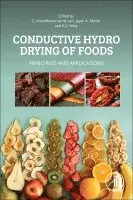
Conductive Hydro Drying of Foods: Principles and Applications presents the current state of this emerging field, touching basics of novel drying approaches, introducing the concept of conductive hydro drying, and detailing its applications in food processing. The book explores novel drying techniques and covers the drying of various foods, including fruits and vegetables, meat, fish, poultry, and egg, spices and herbs, cereals and pulses, and other edible materials. It also brings chapters on trends and prospects, providing emphasis on the scope for low-cost drying, drying, or heat-sensitive foods. Edited by authors with interdisciplinary backgrounds and strong expertise in the field of food drying, this is a valuable resource to research and industry professionals working in allied fields.
Presents in-depth coverage of underlying drying mechanisms and commodity-wise applicationsCovers the latest techniques, including the applications of ICT, modeling, etc., with high emphasis on sustainability, focusing on the UN SDGsBrings detailed information on the current status of commercialization and upcoming projects under the 'more popular' name term refractance window drying2 367 kr
Läs direkt efter köp
2 515 kr
Läs direkt efter köp
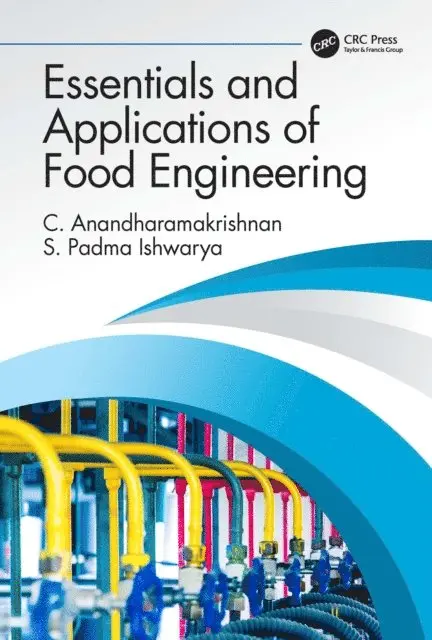
Essentials & Applications of Food Engineering provides a comprehensive understanding of food engineering operations and their practical and industrial utility. It presents pertinent case studies, solved numerical problems, and multiple choice questions in each chapter and serves as a ready reference for classroom teaching and exam preparations.
The first part of this textbook contains the introductory topics on units and dimensions, material balance, energy balance, and fluid flow. The second part deals with the theory and applications of heat and mass transfer, psychrometry, and reaction kinetics. The subsequent chapters of the book present the heat and mass transfer operations such as evaporation, drying, refrigeration, freezing, mixing, and separation. The final section focuses on the thermal, non-thermal, and nanotechnology-based novel food processing techniques, 3D food printing, active and intelligent food packaging, and fundamentals of CFD modeling.
Features
Features 28 case studies to provide a substantial understanding of the practical and industrial applications of various food engineering operations
Includes 178 solved numerical problems and 285 multiple choice questions
Highlights the application of mass balance in food product traceability and the importance of viscosity measurement in a variety of food products
Provides updated information on novel food processing techniques such as cold plasma, 3D food printing, nanospray drying, electrospraying, and electrospinning
The textbook is designed for undergraduate and graduate students pursuing Food Technology and Food Process Engineering courses. This book would also be of interest to course instructors and food industry professionals.
2 515 kr
Läs direkt efter köp
Essentials & Applications of Food Engineering provides a comprehensive understanding of food engineering operations and their practical and industrial utility. It presents pertinent case studies, solved numerical problems, and multiple choice questions in each chapter and serves as a ready reference for classroom teaching and exam preparations.
The first part of this textbook contains the introductory topics on units and dimensions, material balance, energy balance, and fluid flow. The second part deals with the theory and applications of heat and mass transfer, psychrometry, and reaction kinetics. The subsequent chapters of the book present the heat and mass transfer operations such as evaporation, drying, refrigeration, freezing, mixing, and separation. The final section focuses on the thermal, non-thermal, and nanotechnology-based novel food processing techniques, 3D food printing, active and intelligent food packaging, and fundamentals of CFD modeling.
Features
Features 28 case studies to provide a substantial understanding of the practical and industrial applications of various food engineering operations
Includes 178 solved numerical problems and 285 multiple choice questions
Highlights the application of mass balance in food product traceability and the importance of viscosity measurement in a variety of food products
Provides updated information on novel food processing techniques such as cold plasma, 3D food printing, nanospray drying, electrospraying, and electrospinning
The textbook is designed for undergraduate and graduate students pursuing Food Technology and Food Process Engineering courses. This book would also be of interest to course instructors and food industry professionals.
1 871 kr
Skickas inom 10-15 vardagar
Utilizing Microfluidics in the Food Industry: Applications and Techniques thoroughly covers state-of-the-art applications of microfluidic systems in the food sector. The book presents fundamental concepts of microfluidic devices, liquid conduction in microfluidics, fabrication techniques, computational approaches, scalability approaches, and emerging concepts in nanofluidics. The second section provides details on microfluidics for food structure (emulsion, foams, micro and nano carriers) formulation and aspects for food processing food safety and quality analysis. The last section is dedicated to providing a futuristic view of this rapidly advancing field, emphasizing the need for research and market potential.This comprehensive reference written by world renowned scientists provides both fundamentals and principles or other application sectors in the microfluidics on food processing.
Addresses the basic fundamental concepts and principles behind the design and fabrication of microfluidic devicesProvides practical guidance on how to analyze and test microfluidic devicesDiscusses the application of microfluidic technology for food processing and food safety analysisCovers major challenges and provides a futuristic overview of microfluidic applications for the food industryBrings applications, literature reviews, recent developments, methods, and case studies2 367 kr
Läs direkt efter köp
1 991 kr
Skickas inom 10-15 vardagar
2 834 kr
Läs direkt efter köp
2 255 kr
Läs direkt efter köp
With changing consumer preferences and the focus on developing resilient food systems, food processing is finding its place in key policies, government interventions, global trade, and the overall food and nutritional security. Given this, this this new 3-volume collection presents a compilation of emerging and futuristic food processing technologies, introducing fundamental concepts of food technology, trending applications, and a range of interdisciplinary concepts that have found numerous interwoven applications in the food industry.
Volume 1 presents the basics of food preservation, covering hurdle technology, aspects of minimal processing, ohmic heating of foods, edible coatings, and electromagnetics and allied applications in food processing. It also discusses novel methods of food quality evaluation and covers the fundamentals and new applications of nanotechnology in the food sector.
The other volumes in the series are Volume 2: Advances in Nonthermal Processing Technologies, which focuses on the interesting field of nonthermal processing and its applications, and Volume 3: ICT Applications and Future Trends in Food Processing, which provides an exploration of the future of food processing, highlighting certain emerging and disruptive technologies and their gaining influence in the food sector.
2 275 kr
Läs direkt efter köp
With changing consumer preferences and the focus on developing resilient food systems, food processing is finding its place in key policies, government interventions, global trade, and the overall food and nutritional security. Given this, this this new 3-volume collection presents a compilation of emerging and futuristic food processing technologies, introducing fundamental concepts of food technology, trending applications, and a range of interdisciplinary concepts that have found numerous interwoven applications in the food industry.
Volume 1 presents the basics of food preservation, covering hurdle technology, aspects of minimal processing, ohmic heating of foods, edible coatings, and electromagnetics and allied applications in food processing. It also discusses novel methods of food quality evaluation and covers the fundamentals and new applications of nanotechnology in the food sector.
The other volumes in the series are Volume 2: Advances in Nonthermal Processing Technologies, which focuses on the interesting field of nonthermal processing and its applications, and Volume 3: ICT Applications and Future Trends in Food Processing, which provides an exploration of the future of food processing, highlighting certain emerging and disruptive technologies and their gaining influence in the food sector.
2 255 kr
Läs direkt efter köp
With changing consumer preferences and a focus on developing resilient food systems, food processing is finding its place in key policies, government interventions, global trade, and the overall food and nutritional security. Given this, this new 3-volume set presents a compilation of emerging and futuristic food processing technologies, introducing fundamental concepts of food technology, trending applications, and a range of interdisciplinary concepts that have found numerous interwoven applications in the food industry.
Volume 2 focuses on nonthermal processing and its applications, which includes high-pressure processing, ultrasound processing, high intensity pulsed light technology, pulsed electric field processing, cold plasma, ozone processing, as well as the use of sub- and supercritical processing. It also discusses emerging electrohydrodynamic technologies: electrospinning and electrospraying. This volume provides rich content on fundamental concepts, applications, and challenges in nonthermal processing, throwing light on the scope of developing sustainable technologies for the food industry.
The other volumes in the series are Volume 1: Fundamentals of Food Processing Technology, which presents the basics of food preservation, covering hurdle technology, aspects of minimal processing, ohmic heating of foods, edible coatings, and electromagnetics and allied applications in food processing; and Volume 3: ICT Applications and Future Trends in Food Processing, which provides an exploration of the future of food processing, highlighting certain emerging and disruptive technologies and their gaining influence in the food sector.
2 255 kr
Läs direkt efter köp
With changing consumer preferences and a focus on developing resilient food systems, food processing is finding its place in key policies, government interventions, global trade, and the overall food and nutritional security. Given this, this new 3-volume set presents a compilation of emerging and futuristic food processing technologies, introducing fundamental concepts of food technology, trending applications, and a range of interdisciplinary concepts that have found numerous interwoven applications in the food industry.
Volume 2 focuses on nonthermal processing and its applications, which includes high-pressure processing, ultrasound processing, high intensity pulsed light technology, pulsed electric field processing, cold plasma, ozone processing, as well as the use of sub- and supercritical processing. It also discusses emerging electrohydrodynamic technologies: electrospinning and electrospraying. This volume provides rich content on fundamental concepts, applications, and challenges in nonthermal processing, throwing light on the scope of developing sustainable technologies for the food industry.
The other volumes in the series are Volume 1: Fundamentals of Food Processing Technology, which presents the basics of food preservation, covering hurdle technology, aspects of minimal processing, ohmic heating of foods, edible coatings, and electromagnetics and allied applications in food processing; and Volume 3: ICT Applications and Future Trends in Food Processing, which provides an exploration of the future of food processing, highlighting certain emerging and disruptive technologies and their gaining influence in the food sector.
2 255 kr
Läs direkt efter köp
With changing consumer preferences and the focus on developing resilient food systems, food processing is finding its place in key policies, government interventions, global trade, and the overall food and nutritional security. Given this, this new 3-volume collection offers a compilation of emerging and futuristic food processing technologies, presenting fundamental concepts of food technology, trending applications, and a range of interdisciplinary concepts that have found numerous interwoven applications in the food industry.
Volume 3 is an exploration of the future of food processing, highlighting certain emerging and disruptive technologies and their gaining influence in the food sector. The first five chapters focus on computers and information technology-linked applications such as CFD modeling, robotics, automation, artificial intelligence, big data, the Internet of Things, cloud computing, and blockchain management for the food industry. The book then details selected interesting concepts that have made phenomenal advancements in recent years: approaches for improved delivery of nutrients, micro- and nanofluidics, novel drying technologies, smart and intelligent packaging, as well as 3D food printing technology.
The other volumes in the series are Volume 1: Fundamentals of Food Processing Technology, which presents the basics of food preservation, covering hurdle technology, aspects of minimal processing, ohmic heating of foods, edible coatings, and electromagnetics and allied applications in food processing; and Volume 2: Advances in Nonthermal Processing Technologies, which focuses on the interesting field of nonthermal processing and its applications.
2 255 kr
Läs direkt efter köp
With changing consumer preferences and the focus on developing resilient food systems, food processing is finding its place in key policies, government interventions, global trade, and the overall food and nutritional security. Given this, this new 3-volume collection offers a compilation of emerging and futuristic food processing technologies, presenting fundamental concepts of food technology, trending applications, and a range of interdisciplinary concepts that have found numerous interwoven applications in the food industry.
Volume 3 is an exploration of the future of food processing, highlighting certain emerging and disruptive technologies and their gaining influence in the food sector. The first five chapters focus on computers and information technology-linked applications such as CFD modeling, robotics, automation, artificial intelligence, big data, the Internet of Things, cloud computing, and blockchain management for the food industry. The book then details selected interesting concepts that have made phenomenal advancements in recent years: approaches for improved delivery of nutrients, micro- and nanofluidics, novel drying technologies, smart and intelligent packaging, as well as 3D food printing technology.
The other volumes in the series are Volume 1: Fundamentals of Food Processing Technology, which presents the basics of food preservation, covering hurdle technology, aspects of minimal processing, ohmic heating of foods, edible coatings, and electromagnetics and allied applications in food processing; and Volume 2: Advances in Nonthermal Processing Technologies, which focuses on the interesting field of nonthermal processing and its applications.
1 119 kr
Läs direkt efter köp
Depending on the mechanisms involved in non-thermal technologies (such as ozonization, irradiation, ultrasound processing, plasma processing, and advanced oxidative processes), interaction with food molecules differs, which might lead to desirable reactions. Non-Thermal Technologies for the Food Industry: Advances and Regulations explores the possibility of using non-thermal technologies for various purposes such as shelf-life extension, reduced energy consumption, adhesion, and safety improvement. Further, it reviews the present status of these technologies, international regulations, and sustainability aspects in food processing including global case studies.
Features:
Provides a comprehensive overview of all the non-thermal processing technologies that have potential for use within food manufacturing Covers novel disinfectant technologies and packaging methods for non-thermal processing Includes electro-spraying and electrospinning; low-temperature drying techniques, cold plasma techniques, hydrodynamic cavitation, oscillating magnetic field processing, and so forth Focus on topics such as the valorization of agri-food wastes and by-products and sustainability Reviews ClO2 in combined/hybrid technologies for food processingThis book is aimed at researchers and graduate students in food and food process engineering.
1 119 kr
Läs direkt efter köp
Depending on the mechanisms involved in non-thermal technologies (such as ozonization, irradiation, ultrasound processing, plasma processing, and advanced oxidative processes), interaction with food molecules differs, which might lead to desirable reactions. Non-Thermal Technologies for the Food Industry: Advances and Regulations explores the possibility of using non-thermal technologies for various purposes such as shelf-life extension, reduced energy consumption, adhesion, and safety improvement. Further, it reviews the present status of these technologies, international regulations, and sustainability aspects in food processing including global case studies.
Features:
Provides a comprehensive overview of all the non-thermal processing technologies that have potential for use within food manufacturing Covers novel disinfectant technologies and packaging methods for non-thermal processing Includes electro-spraying and electrospinning; low-temperature drying techniques, cold plasma techniques, hydrodynamic cavitation, oscillating magnetic field processing, and so forth Focus on topics such as the valorization of agri-food wastes and by-products and sustainability Reviews ClO2 in combined/hybrid technologies for food processingThis book is aimed at researchers and graduate students in food and food process engineering.
2 526 kr
Skickas inom 10-15 vardagar
973 kr
Skickas inom 10-15 vardagar
2 603 kr
Läs direkt efter köp
Spray drying is a well-established method for transforming liquid materials into dry powder form. Widely used in the food and pharmaceutical industries, this technology produces high quality powders with low moisture content, resulting in a wide range of shelf stable food and other biologically significant products. Encapsulation technology for bioactive compounds has gained momentum in the last few decades and a series of valuable food compounds, namely flavours, carotenoids and microbial cells have been successfully encapsulated using spray drying.
Spray Drying Technique for Food Ingredient Encapsulation provides an insight into the engineering aspects of the spray drying process in relation to the encapsulation of food ingredients, choice of wall materials, and an overview of the various food ingredients encapsulated using spray drying. The book also throws light upon the recent advancements in the field of encapsulation by spray drying, i.e., nanospray dryers for production of nanocapsules and computational fluid dynamics (CFD) modeling.
Addressing the basics of the technology and its applications, the book will be a reference for scientists, engineers and product developers in the industry.
2 287 kr
Skickas inom 5-8 vardagar
2 580 kr
Läs direkt efter köp
Spray drying is a well-established method for transforming liquid materials into dry powder form. Widely used in the food and pharmaceutical industries, this technology produces high quality powders with low moisture content, resulting in a wide range of shelf stable food and other biologically significant products. Encapsulation technology for bioactive compounds has gained momentum in the last few decades and a series of valuable food compounds, namely flavours, carotenoids and microbial cells have been successfully encapsulated using spray drying.
Spray Drying Technique for Food Ingredient Encapsulation provides an insight into the engineering aspects of the spray drying process in relation to the encapsulation of food ingredients, choice of wall materials, and an overview of the various food ingredients encapsulated using spray drying. The book also throws light upon the recent advancements in the field of encapsulation by spray drying, i.e., nanospray dryers for production of nanocapsules and computational fluid dynamics (CFD) modeling.
Addressing the basics of the technology and its applications, the book will be a reference for scientists, engineers and product developers in the industry.
1 997 kr
Skickas inom 11-20 vardagar
2 335 kr
Läs direkt efter köp
Handbook of Drying for Dairy Products is a complete guide to the field’s principles and applications, with an emphasis on best practices for the creation and preservation of dairy-based food ingredients.
Details the techniques and results of drum drying, spray drying, freeze drying, spray-freeze drying, and hybrid drying Contains the most up-to-date research for optimizing the drying of dairy, as well as computer modelling options Addresses the effect of different drying techniques on the nutritional profile of dairy products Provides essential information for dairy science academics as well as technologists active in the dairy industry2 335 kr
Läs direkt efter köp
Handbook of Drying for Dairy Products is a complete guide to the field’s principles and applications, with an emphasis on best practices for the creation and preservation of dairy-based food ingredients.
Details the techniques and results of drum drying, spray drying, freeze drying, spray-freeze drying, and hybrid drying Contains the most up-to-date research for optimizing the drying of dairy, as well as computer modelling options Addresses the effect of different drying techniques on the nutritional profile of dairy products Provides essential information for dairy science academics as well as technologists active in the dairy industry2 845 kr
Läs direkt efter köp
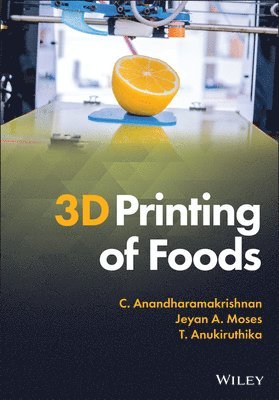
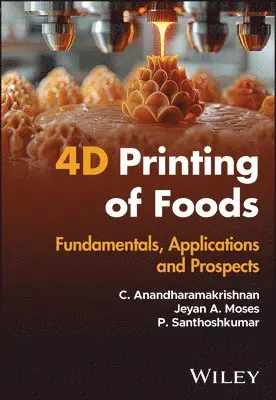
Explore the fascinating realm of 3D food printing and its applications
In 3D Printing of Foods, a team of distinguished researchers delivers a comprehensive and eye-opening exploration of the rapidly developing field of 3D food printing. In the book, the authors offer readers an examination of “food printability,” the foundation of 3D food printing. They discuss the enormous research gap in the subject that remains to be addressed and envisage a robust discipline in which food processing techniques, combined with 3D food printing, gives rise to a range of synergistic applications.
In addition to treatments of safety challenges and research requirements, the book tackles food industry market trends and consumer preferences, as well as the globalization of printed foods and consumer perception of 3D printed foods. 3D Printing of Foods also explores the integration of electrohydrodynamic processes and encapsulation with 3D food printing.
Readers will also find:
Thorough introductions to 3D printing technology, 3D printing approaches, and food components and their printability In-depth examinations of the factors affecting the printability of foods, printability and techniques, and natively printable foods Practical discussions of pre-processing of non-printable foods and alternative ingredients used in food printing Comprehensive explorations of 4D printing technology and the applications of 3D food printing technologyPerfect for 3D printing professionals and enthusiasts, as well as food scientists, 3D Printing of Foods is an indispensable resource for anyone interested in a one-stop resource addressing this cutting-edge technology with nearly limitless potential.